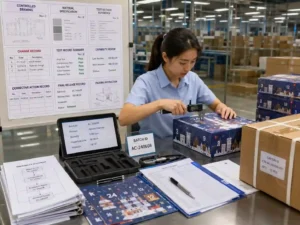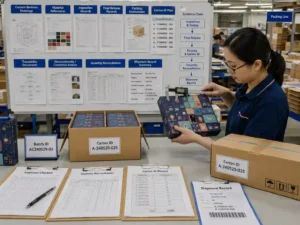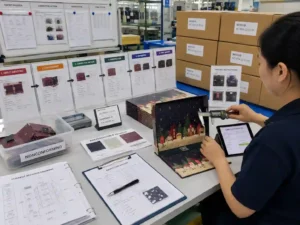
Quick answer: Packaging material composition documentation should clearly identify the board, paper, coatings, adhesives, inserts, and other structural materials used in a packaging design. For retailer reviews, buyers typically need evidence that material descriptions match physical samples, supplier records, and production specifications. A reliable documentation package combines material drawings, sample references, inspection records, and approval notes to reduce risks from material changes, inconsistent descriptions, or sustainability claims that cannot be verified.
Why is packaging material composition documentation important for retailer reviews?
Packaging material composition documentation helps retailers verify what a product package is made from before approval, listing, or ongoing purchasing decisions. The purpose is not only to describe materials, but also to show that the documented construction matches the actual packaging supplied.
For custom advent calendar boxes and seasonal paper gift packaging, composition records commonly need to explain the relationship between the outer paper, structural board, coatings, adhesives, and any supporting components. Clear documentation helps purchasing teams, sustainability reviewers, and quality teams evaluate material consistency and change risks.
What information should be included in packaging material composition documentation?
A complete record should identify each major packaging layer and explain its function. The exact information required depends on retailer review standards, project requirements, and material specifications.
- Structural board information: document the main board type, thickness range, and role in box strength or shape retention.
- Paper surface information: record the outer wrapping paper, printed paper, texture paper, or decorative layer used for appearance and finishing.
- Functional materials: identify coatings, laminations, adhesives, magnets, or reinforcement materials when they affect construction or recycling evaluation.
- Material source records: reference supplier documents, approved samples, and internal material specifications where available.
- Change control records: record approved substitutions or construction adjustments that could influence performance or appearance.
How should teams organize material evidence for retailer review?
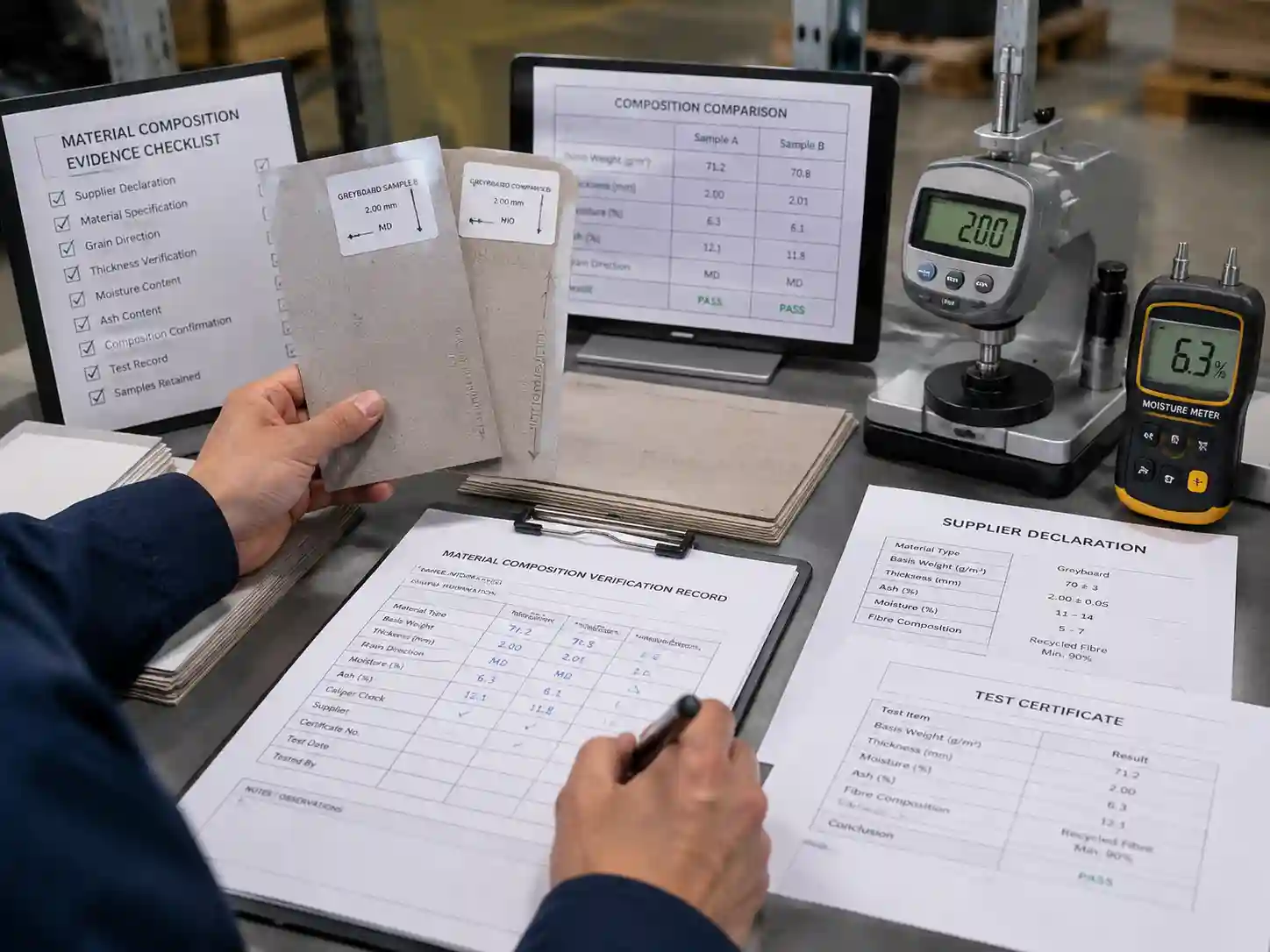
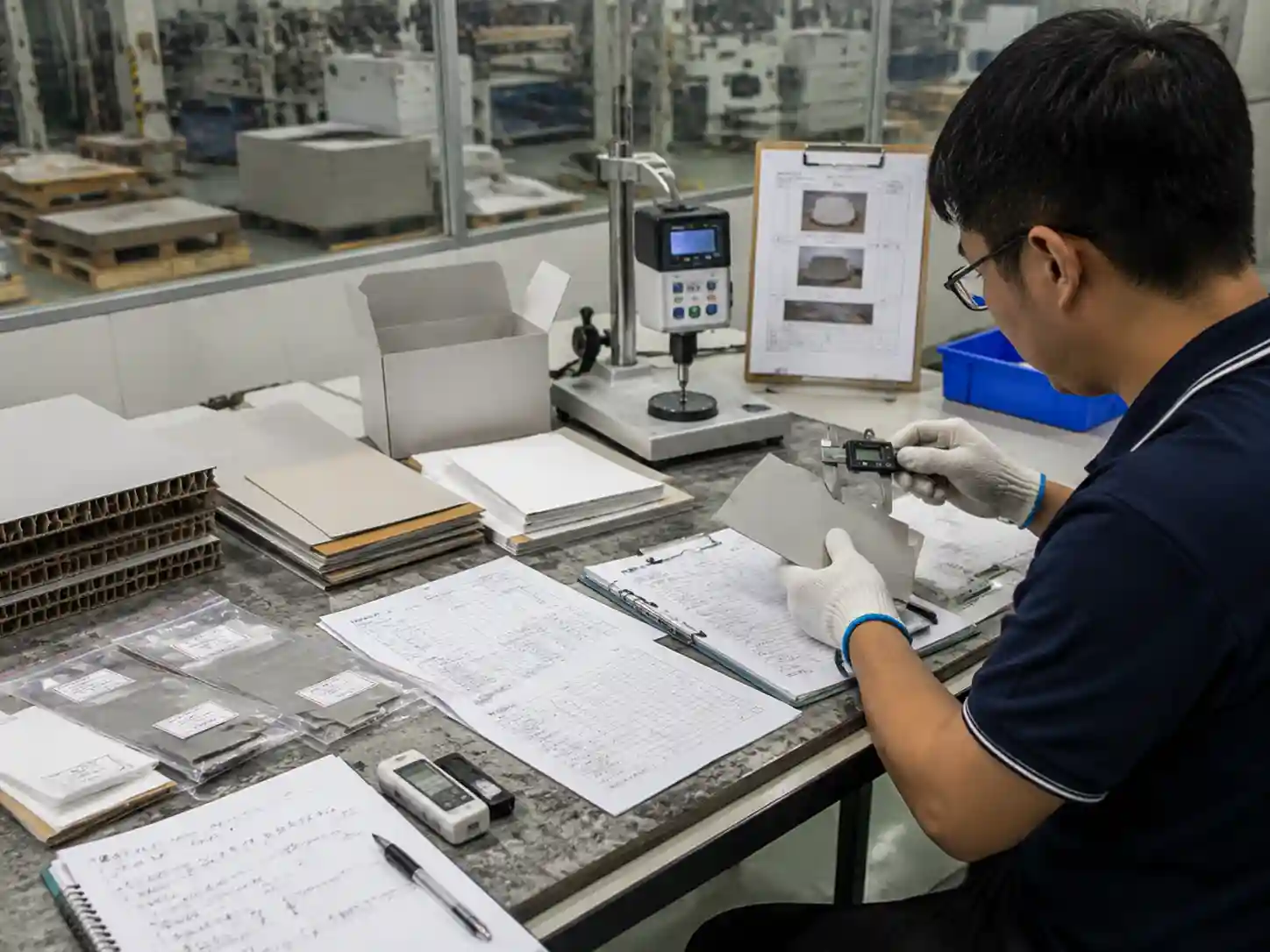
Material evidence should connect written specifications with physical verification. A retailer review package is stronger when each documented material can be traced to a sample, drawing, inspection record, or supplier document.
- Create a material specification sheet: list each packaging component, material description, thickness or grade information, and intended use.
- Match documentation with physical samples: keep approved paperboard, greyboard, and finishing samples linked to the corresponding records.
- Record measurable characteristics: include relevant checks such as board thickness, moisture condition, surface appearance, folding behavior, or dimensional inspection results.
- Maintain approval history: document which samples or specifications were reviewed and approved before production decisions.
Which packaging materials usually require closer composition review?
Materials with visible variation, performance sensitivity, or sustainability considerations usually require more detailed documentation. Paper-based packaging is especially dependent on construction details because fiber characteristics, moisture exposure, and surface treatments can influence final performance.
| Material area | Why documentation matters | Typical evidence |
|---|---|---|
| Greyboard or rigid board | Board thickness and structure affect stiffness, folding behavior, and dimensional stability. | Material specification, thickness measurement, approved board sample |
| Kraft or recycled paper | Natural color and texture variation may affect appearance consistency. | Paper sample comparison, supplier information, visual approval record |
| Laminated or coated surfaces | Surface treatments can influence appearance, scuff resistance, and recycling considerations. | Finishing description, production sample, inspection notes |
| Adhesives and supporting components | Additional materials may affect construction review or end-of-life considerations. | Component list, supplier documentation, assembly records |
How do you verify that documented materials match production packaging?
Verification requires comparing approved information against actual production samples and inspection results. Documentation alone does not confirm material performance unless it is supported by physical checks.
Common verification methods include:
- Comparing production samples against approved reference samples.
- Checking board thickness and material dimensions with measurement tools.
- Reviewing surface quality for scuffing, printing appearance, or texture differences.
- Confirming that approved materials were used after any supplier or construction changes.
- Maintaining inspection records that connect production batches with approved specifications.
What risks occur when packaging material records are incomplete?
Incomplete composition records can create uncertainty during retailer review and increase the chance of approval delays. The main risks usually involve unclear material descriptions, unexpected substitutions, inconsistent appearance, and unsupported sustainability statements.
For example, replacing one paper layer with another visually similar option may change surface texture, moisture response, folding behavior, or recycling evaluation. The impact depends on the specific material structure and project requirements, so any significant change should be reviewed against approved samples and specifications.
What should buyers include in a packaging material approval checklist?
A practical approval checklist should separate confirmed facts, project-specific recommendations, and final buyer decisions.
- Verified material facts: board type, paper layers, measured thickness, documented components, and available supplier records.
- Project-dependent considerations: humidity exposure, surface protection needs, appearance expectations, and structural requirements.
- Buyer approvals: acceptance of samples, material appearance range, construction details, and any approved variations.
Material documentation checklist
- Material composition list completed
- Approved physical samples identified
- Relevant measurements recorded
- Supplier or internal specifications collected
- Material changes reviewed before production approval
- Inspection records linked to final packaging requirements

How does Giftpackpro support packaging material review preparation?
Giftpackpro helps commercial buyers evaluate custom advent calendar packaging through structured material discussions, sample reviews, and production documentation. Material decisions are typically supported through physical samples, construction information, and quality checks rather than unsupported claims.
For buyers reviewing custom seasonal packaging, explore our custom advent calendar box products and custom advent calendar box services to understand available packaging solutions. You can also contact our team through request a custom quote for project-specific requirements.
FAQs
Do retailer reviews always require a full material composition report?
Requirements vary by retailer, product category, and sustainability review process. Some projects require detailed component records, while others may focus on key material specifications and approval samples.
How can buyers confirm that recycled or natural papers are consistent?
Consistency is usually evaluated through approved paper samples, visual comparison, supplier information, and production inspection records. Natural variation should be defined and reviewed before approval.
Should material changes be documented after approval?
Yes. Material changes can affect appearance, strength, moisture behavior, and recycling considerations. Any significant substitution should be reviewed against the original approved specification.