
Dark paper changes how printed colors, metallic foils, and surface finishes appear because the base material influences contrast, reflectivity, and ink visibility. In dark paper foil ink printing, buyers should evaluate the paper tone, coating system, printing method, and approval samples together. The most reliable approach is to compare physical samples, record material specifications, and confirm final appearance under controlled review conditions before production decisions are approved.
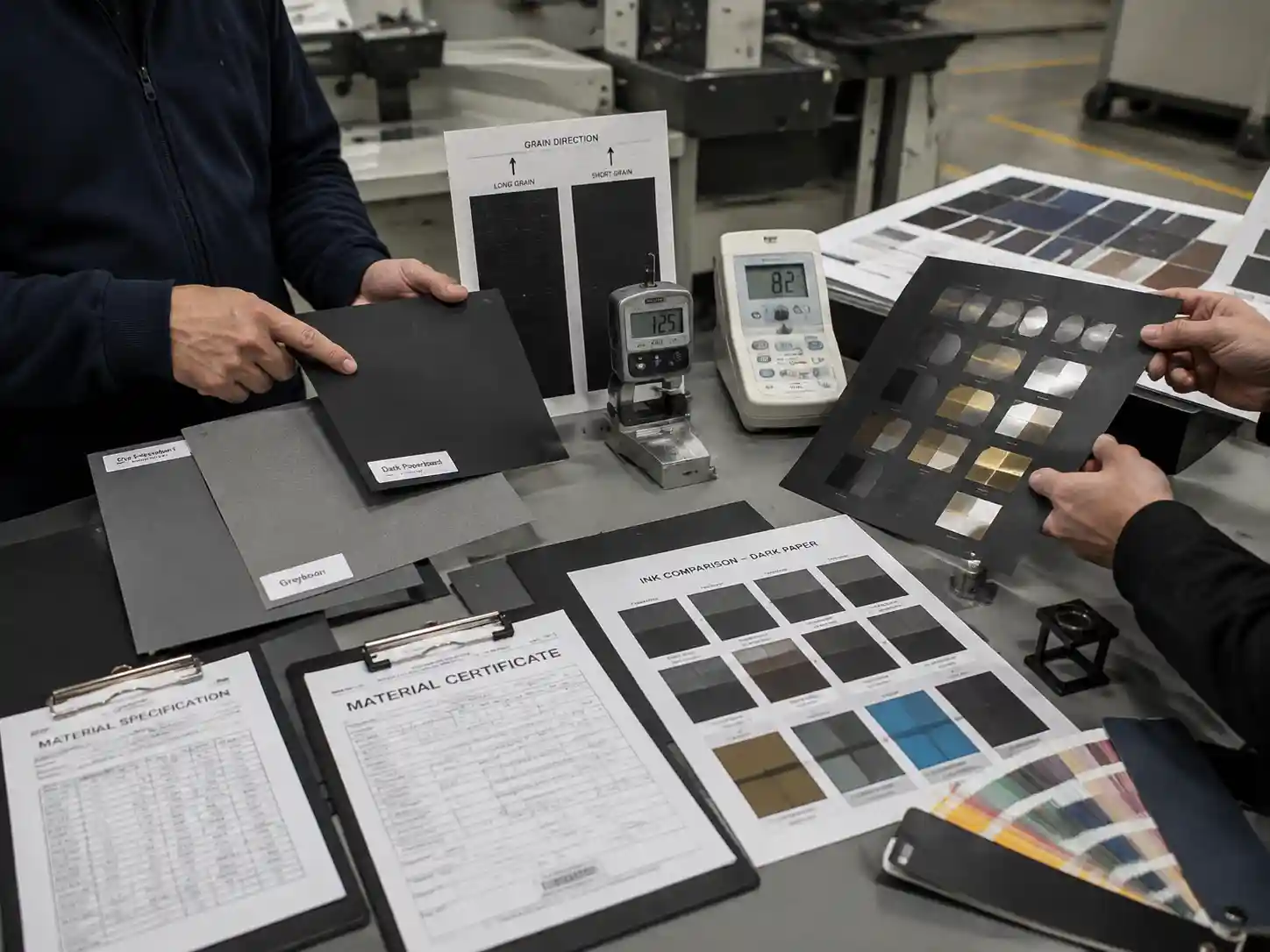
Why do dark papers change foil, ink, and color accuracy?
Dark papers affect visual results because the substrate is part of the final color system. Unlike white paper, a dark board can absorb or alter the appearance of inks, reduce brightness, and change the perceived tone of metallic effects.
For packaging engineers and designers, the key issue is not only the ink formula or foil color. The interaction between paper shade, surface texture, coating, and finishing process determines the final appearance.
- Ink appearance: Light or transparent inks may lose brightness when printed directly on dark paper.
- Foil appearance: Metallic foils can look different depending on paper smoothness, surface reflection, and adhesive performance.
- Color accuracy: Approved artwork colors may not visually match when the substrate changes from white or natural board to dark-colored paper.
- Surface consistency: Variations in paper texture can create uneven coverage or differences between production batches.
How should buyers evaluate dark paper before printing?
Buyers should evaluate the actual paper substrate before approving printing because digital artwork cannot fully represent how dark paper affects the finished packaging.
A practical evaluation process includes:
- Confirm the exact paper type, thickness, surface finish, and base color.
- Review printed samples using the same paper intended for production.
- Compare foil, ink, and coating combinations under consistent lighting.
- Record approved samples and material references for production control.
Giftpackpro supports material review for custom advent calendar packaging through structured design and production discussions. Related packaging options can be reviewed through custom advent calendar box products and custom advent calendar box services.
What printing methods work differently on dark paper?
Different printing and finishing methods respond differently to dark substrates. The suitable approach depends on the required contrast, visual effect, and packaging application.
| Method | Effect on Dark Paper | Key Check |
|---|---|---|
| Opaque ink printing | Can improve visibility compared with transparent inks | Confirm coverage and edge sharpness on the selected paper |
| Metallic foil stamping | Provides strong contrast but may vary with surface reflection | Check foil adhesion, detail reproduction, and appearance consistency |
| White ink underprint | Creates a lighter base for brighter colors | Review registration accuracy and final color effect |
| Coatings and laminations | Can change gloss, depth, and perceived color | Verify whether the finish changes the approved appearance |

How does paper construction influence dark paper printing results?
Paper construction affects printing performance because thickness, fiber structure, surface smoothness, and moisture response can influence how inks and finishes behave.
Important material factors include:
- Surface smoothness: Smoother papers usually provide more consistent foil transfer and finer print details.
- Board structure: Multi-layer paperboard construction can influence stiffness, flatness, and surface stability.
- Humidity exposure: Paper can expand or contract with moisture changes, which may affect registration and finishing alignment.
- Scuff resistance: Dark surfaces often show scratches, fingerprints, or abrasion more clearly than lighter surfaces.
These characteristics should be checked with physical samples rather than assumed from specifications alone.
What evidence should buyers request before approving dark paper packaging?
Buyers should request clear evidence showing that the selected material and finishing combination can achieve the intended appearance. Approval records help prevent unexpected changes during production.
| Evidence Item | Purpose |
|---|---|
| Paper specification record | Confirms the approved substrate type, thickness, and surface characteristics |
| Physical print sample | Shows actual ink and foil performance on the selected dark paper |
| Color and finish approval record | Provides a reference for production comparison |
| Inspection notes | Documents checks for surface quality, alignment, and finishing consistency |
Verifiable approval depends on matching the final production materials with the reviewed samples. If the paper, coating, or finishing process changes, the appearance should be reviewed again.
When can dark paper create material-change risks?
Dark paper creates higher risk when packaging specifications change without rechecking the printing and finishing system. Even small changes in paper shade or surface treatment can affect the final appearance.
Common risk situations include:
- Replacing an approved dark paper with a visually similar alternative.
- Changing from coated to uncoated paper without reviewing ink behavior.
- Adjusting foil type, stamping temperature, or adhesive conditions.
- Changing surface finishes that affect gloss or color perception.
For commercial packaging projects, material changes should be documented and reviewed before production approval.

What is a practical dark paper approval workflow?
A reliable workflow combines material verification, physical samples, and production inspection records.
- Material review: Confirm paper structure, surface finish, and supplier documentation.
- Sample evaluation: Review foil, ink, and color performance on the intended substrate.
- Approval record: Save the accepted sample and define the visual reference.
- Production inspection: Check finished packaging against the approved standard.
This process helps packaging teams reduce appearance risks while maintaining consistent product presentation.
FAQs
Can the same ink color look different on dark and light paper?
Yes. The paper background changes how colors are perceived, especially for transparent or lighter inks. Physical samples are needed for accurate evaluation.
Does foil stamping always look brighter on dark paper?
Not always. Foil appearance depends on the foil type, paper surface, stamping conditions, and finishing combination.
Should dark paper changes require a new approval sample?
Yes. A substrate change can affect color, contrast, and finish performance, so the revised material should be reviewed before production use.
For projects requiring controlled material selection and appearance verification, contact Giftpackpro through request a custom quote to discuss suitable packaging solutions.


