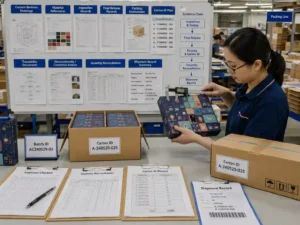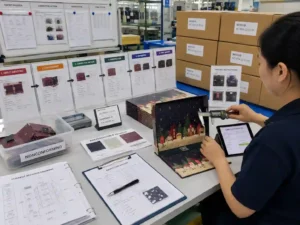
Quick answer: Textured papers can reduce fine print quality when surface irregularity affects ink transfer, dot reproduction, or small text edges. The impact depends on texture depth, paper coating, printing method, artwork detail, and quality controls. Buyers should evaluate actual paper samples, check fine-line performance, and confirm whether the selected texture supports the required artwork standard before production approval.
How does textured paper affect fine print quality on packaging?
Textured paper fine print quality is mainly affected by how the paper surface interacts with ink coverage and image detail. Raised fibers, embossed patterns, and uneven surfaces can change the contact between the printing plate, blanket, or digital print system and the paper surface.
For packaging applications such as custom advent calendar boxes, textured papers are often selected for appearance and tactile value. However, the same texture that creates a premium feel may reduce sharpness in fine artwork, especially for:
- Small typography and legal text.
- Thin lines, borders, and detailed illustrations.
- High-resolution images with subtle color transitions.
- Metallic effects or precise registration areas.
The final effect depends on the relationship between the paper texture and the printing process. A heavily textured uncoated surface may behave differently from a lightly textured coated paper with controlled ink absorption.
Why can small type become less readable on textured paper?
Small type can lose clarity when ink spreads into uneven surface areas or when texture creates visual breaks across letter edges. The risk increases as font size decreases and as the contrast between ink and paper becomes lower.
Common issues include:
- Broken edges around small characters.
- Uneven ink density across textured areas.
- Reduced readability for thin fonts.
- Loss of detail in reversed-out text.
Packaging engineers and designers usually review these risks by placing critical text directly on the selected paper sample rather than relying only on digital artwork previews.
What paper characteristics should buyers check before approving textured papers?
Buyers should evaluate the physical paper structure, not only the appearance shown in supplier samples. Texture pattern, coating condition, thickness, and surface consistency can influence print performance.
| Paper characteristic | Potential print impact | Recommended check |
|---|---|---|
| Texture depth and pattern | May interrupt fine lines and small text edges | Inspect printed samples with detailed artwork |
| Surface absorption | Can affect ink density and color consistency | Compare solid fills and fine color areas |
| Paper coating condition | May improve or limit surface smoothness | Review coating specification and print results |
| Fiber direction and board construction | May influence folding, alignment, and appearance | Confirm material structure during sample review |
How should textured paper artwork be tested before production?
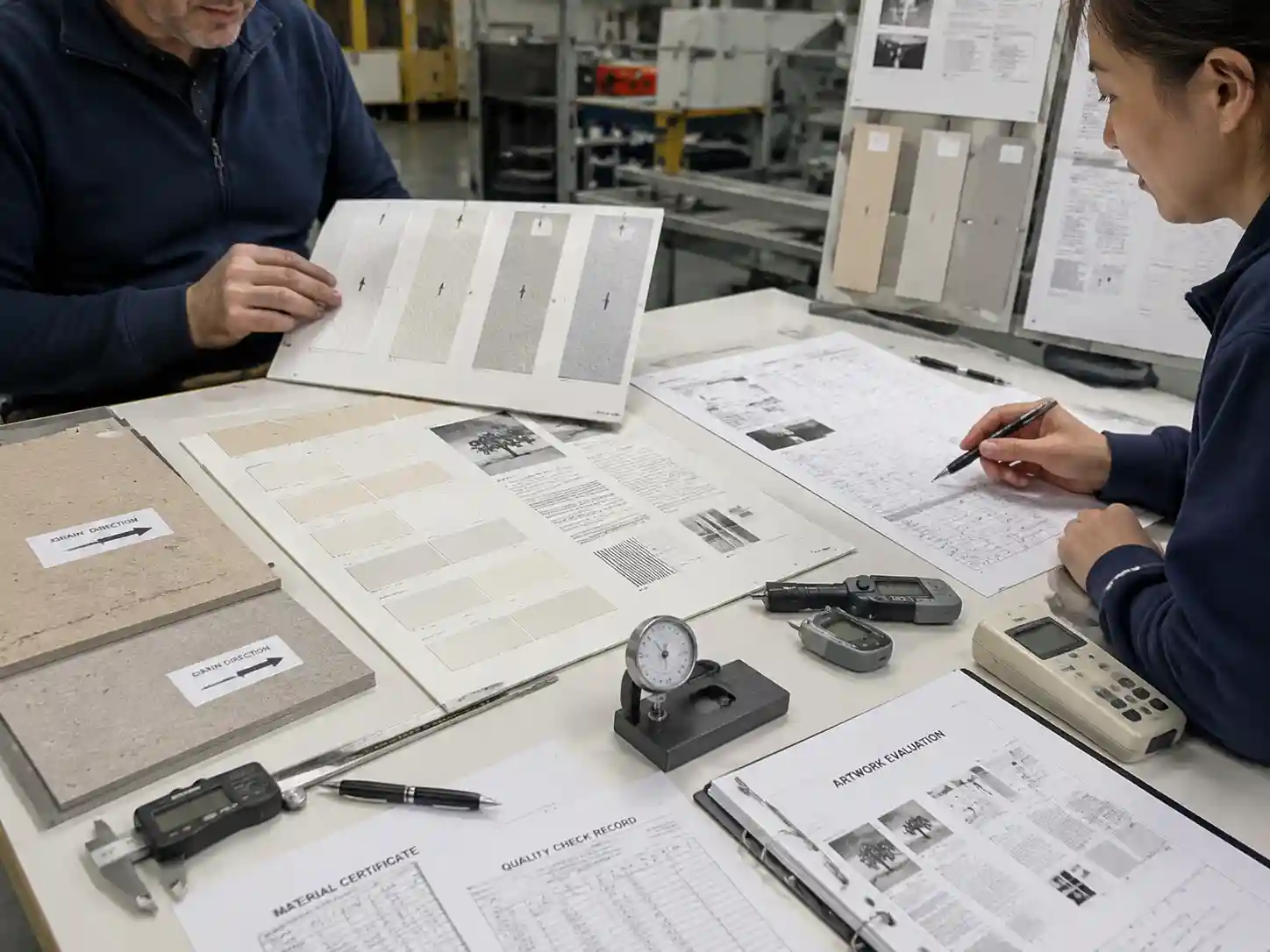
Textured paper artwork should be validated through physical samples, inspection records, and approval procedures. The goal is to confirm that the selected material can reproduce the intended design under realistic production conditions.
- Review paper samples: Check texture consistency, surface feel, thickness, and visual appearance.
- Print critical artwork areas: Include small type, fine lines, logos supplied by the buyer, and detailed illustrations where applicable.
- Measure and inspect: Review color consistency, registration accuracy, ink coverage, and surface defects.
- Record approval decisions: Keep sample references, artwork versions, and inspection notes for production control.
For packaging development projects, Giftpackpro can support material evaluation through custom advent calendar box services and structured sample review before final manufacturing decisions.
What evidence helps confirm textured paper print performance?
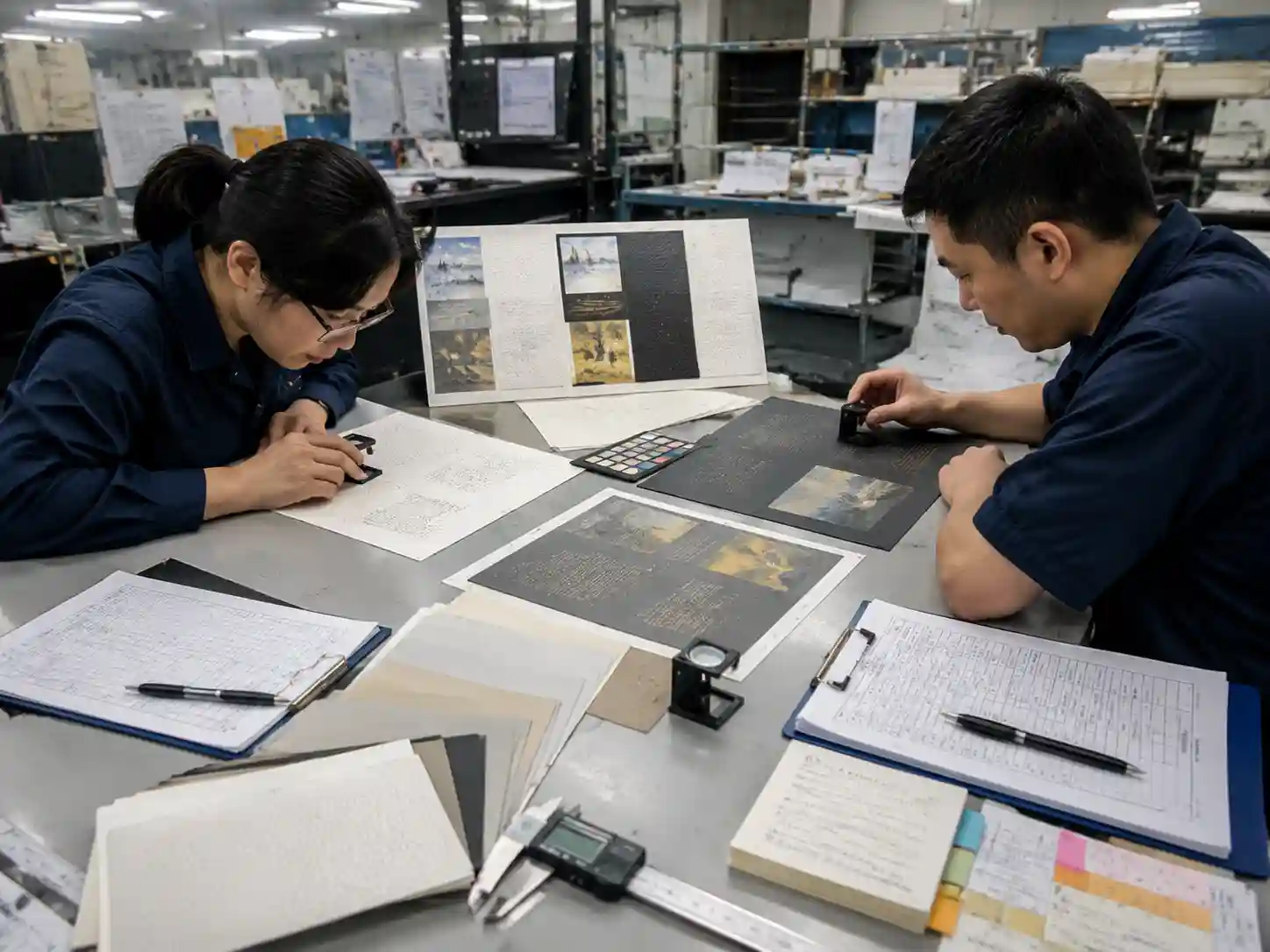
Important material decisions should be supported by physical evidence rather than appearance alone. Buyers can request and review several types of documentation and samples.
- Paper sample sheets showing the exact texture and finish.
- Printed proof samples using representative artwork.
- Inspection records for color, registration, and surface quality.
- Supplier material information describing paper structure and finish.
- Approval records connecting the selected material with the final artwork version.
Which checks are supplier responsibilities and which require buyer approval?
Suppliers typically control production consistency, material handling, printing setup, and inspection records. Buyers usually approve the final balance between appearance, artwork requirements, and material selection.
| Area | Verification approach | Approval responsibility |
|---|---|---|
| Paper texture consistency | Compare incoming material samples and production sheets | Supplier inspection, buyer review if appearance is critical |
| Artwork readability | Review printed samples with detailed design elements | Buyer approval |
| Color and finish expectations | Compare approved references with production samples | Shared review |
Can textured papers affect recyclability or material-change risk?
Textured paper selection can create material-change considerations when finishes, coatings, or added treatments are modified. Any change from an approved paper specification should be reviewed because it may affect appearance, processing behavior, and recycling evaluation.
Buyers should confirm whether changes involve:
- Different paper grades or fiber structures.
- New surface coatings or decorative treatments.
- Alternative suppliers or substitute materials.
- Changes that could influence print performance.
Verifying material details through supplier documents and approval records helps reduce unexpected differences between approved samples and production output.

What is a practical decision example for textured paper selection?
A packaging buyer may choose textured paper for a premium advent calendar cover with detailed artwork and small printed information panels. A practical approach is to keep the textured surface for larger visual areas while testing whether critical text and fine illustrations remain readable.
If the texture reduces clarity, the project team may consider adjustments such as changing artwork details, selecting a different texture level, or using a smoother material surface for high-detail areas. The correct choice depends on the design requirements, production method, and approved appearance standard.
How can buyers reduce risk when using textured papers?
The lowest-risk approach is to evaluate the exact material with representative artwork before production approval. Texture appearance alone does not indicate print capability.
- Define critical artwork areas before material selection.
- Compare multiple paper samples when texture performance is uncertain.
- Document approved paper references and artwork versions.
- Use inspection records to control material changes.
Giftpackpro helps commercial packaging buyers evaluate paper materials, artwork requirements, and production considerations through custom advent calendar box products and Giftpackpro packaging factory. For a project-specific material discussion, request a custom quote.
FAQs
Does textured paper always reduce print quality?
No. Light textures and suitable printing methods can maintain good artwork quality. The result depends on paper construction, texture depth, artwork complexity, and production control.
Should small text be avoided on textured paper?
Not necessarily. Small text can be used when tested and approved on the actual material. Critical information should be checked with physical samples before production.
Is textured paper more difficult to inspect during quality control?
It can require closer visual inspection because surface variation may hide uneven ink coverage or fine defects. Inspection methods should match the material and artwork requirements.