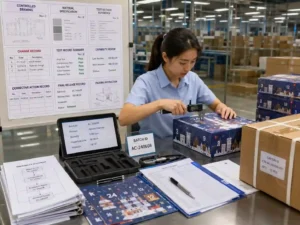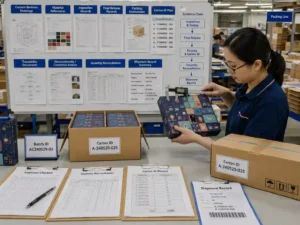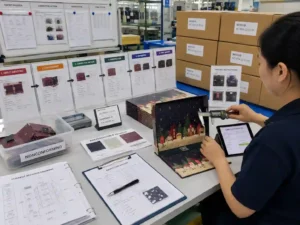
Molded pulp can be a practical alternative to PET inserts when the packaging priority is fiber-based material compatibility, lower plastic use, and sufficient product protection. However, the decision should be based on product shape, moisture exposure, surface requirements, retention performance, and available evidence. A material change should be validated through drawings, samples, measurements, and production checks rather than based only on sustainability claims.
What is the difference between molded pulp and PET inserts?
Molded pulp inserts are formed from fiber-based materials into protective cavities, while PET inserts are thermoformed plastic structures designed for precise product positioning. The main difference is how each material behaves during forming, handling, humidity exposure, and recycling evaluation.
PET often provides high dimensional consistency, smooth surfaces, and strong visibility for premium products. Molded pulp provides a paper-based structure that may better align with fiber packaging strategies but can have more variation in color, texture, and moisture response.
| Factor | Molded Pulp Inserts | PET Inserts |
|---|---|---|
| Material structure | Fiber-based formed material with natural surface variation | Thermoformed plastic sheet with consistent shape definition |
| Product positioning | Suitable when cavity design and fiber strength meet retention needs | Suitable when precise holding and clear presentation are required |
| Surface behavior | May require evaluation for dust, fibers, texture, or contact marks | Generally smoother and easier to clean |
| Humidity response | Requires review because fiber materials can react to moisture changes | Less affected by humidity but still requires structural checks |
| Material claim evidence | Requires documented material composition and processing information | Requires documented plastic type and recycling pathway information |
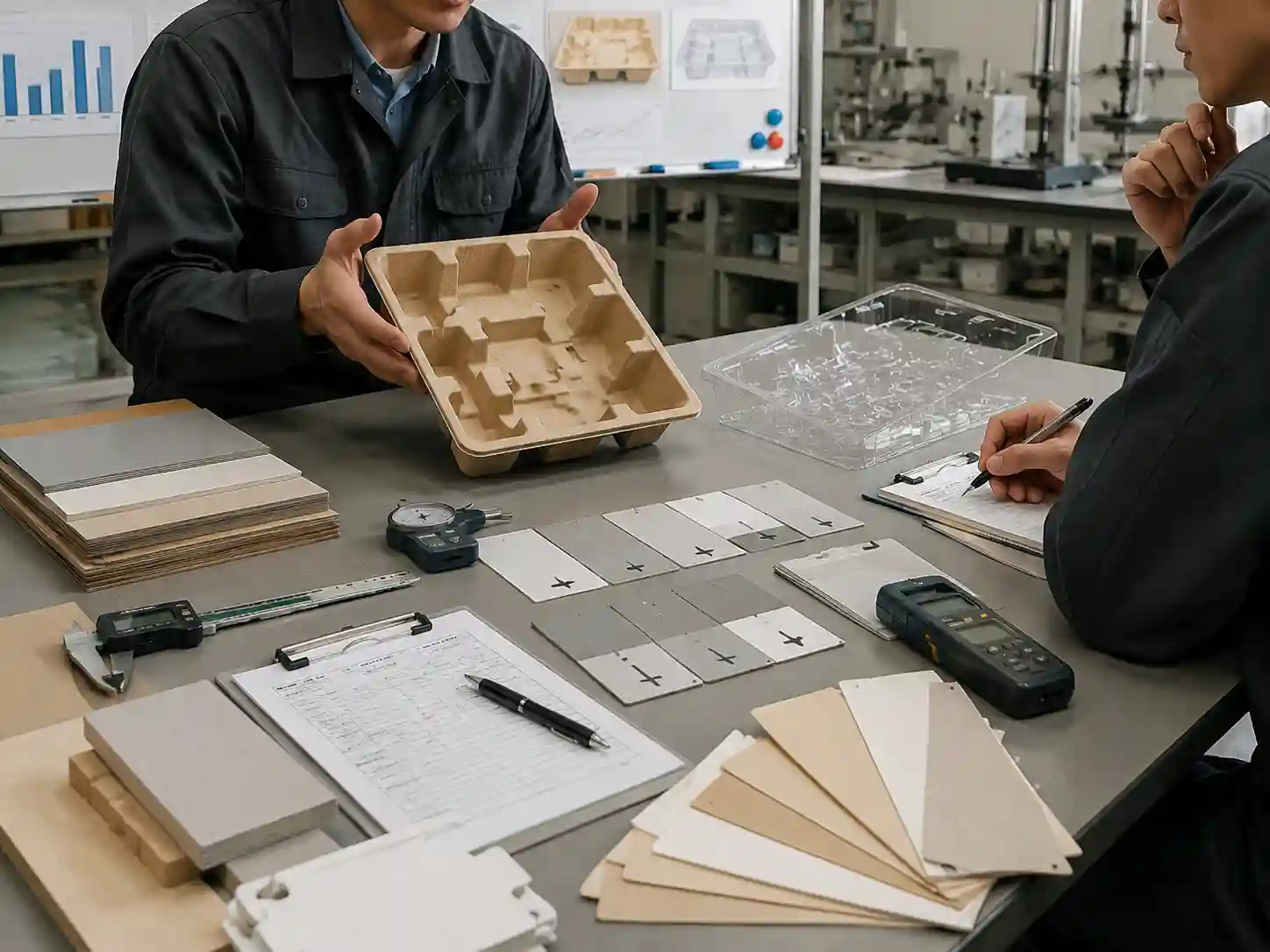
When is molded pulp a practical alternative to PET inserts?
Molded pulp is practical when the product does not require a perfectly transparent display surface and the insert can achieve stable retention through tested cavity geometry. The choice depends on the complete packaging system, not the insert material alone.
Can the product be protected without a plastic insert?
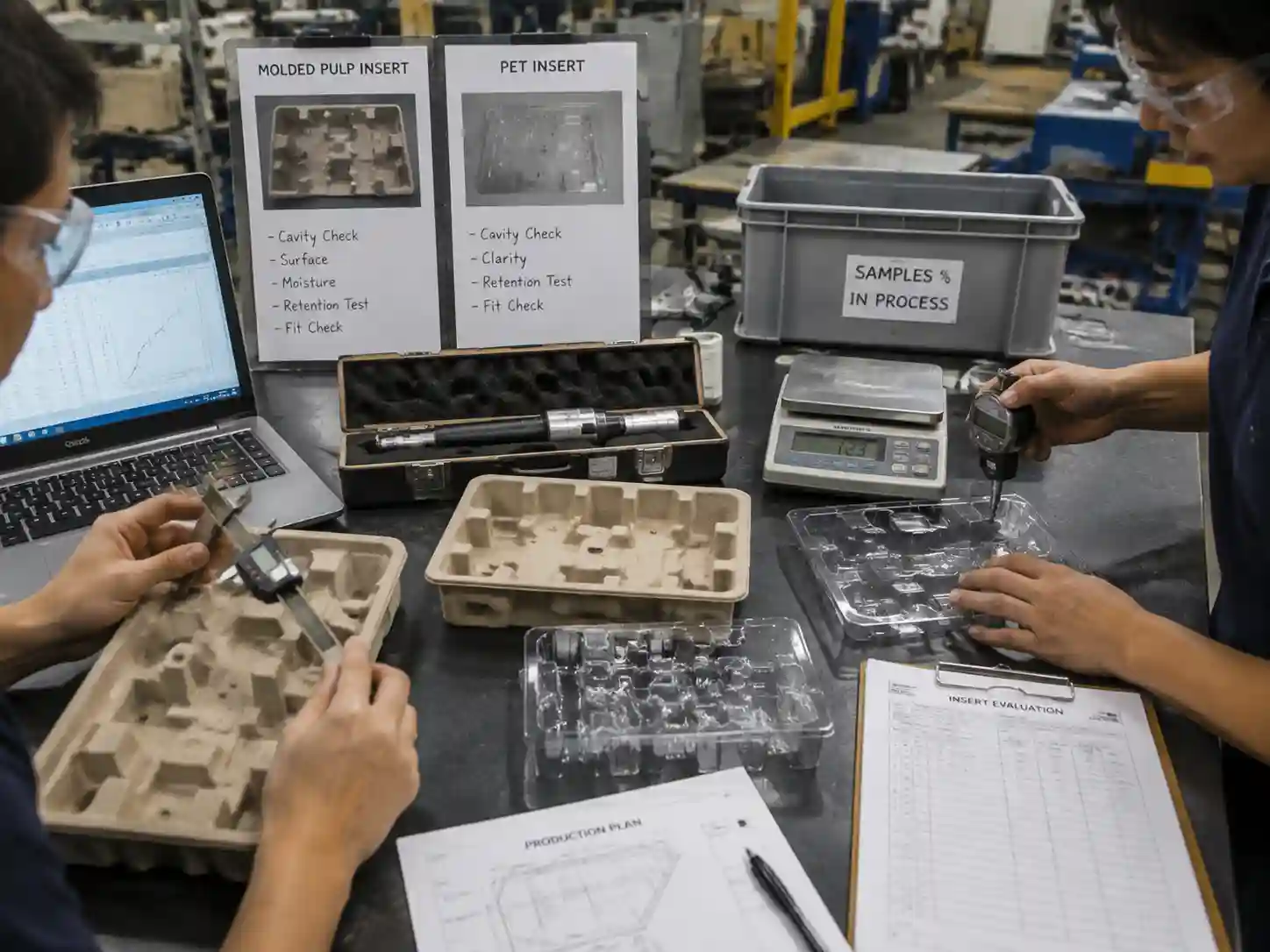
The first check is whether molded pulp can hold the product securely during handling and transport. Packaging teams should review product weight, center of gravity, contact points, and removal force before approving a change.
Useful validation steps include:
- Comparing product dimensions with the molded cavity drawing.
- Checking whether protective coatings, labels, caps, or accessories change the required fit.
- Testing product insertion and removal by actual packing operators.
- Inspecting whether fiber contact creates marks on sensitive surfaces.
Does the product environment create humidity risks?
Humidity is one of the most important factors when comparing molded pulp vs PET inserts. Fiber-based inserts can change stiffness or surface behavior depending on storage and shipping conditions.
Project teams should review:
- Expected warehouse and transport humidity conditions.
- Whether the product itself contains moisture-sensitive components.
- Whether coatings, films, or barrier treatments affect recyclability evaluation.
What evidence should support a molded pulp material decision?
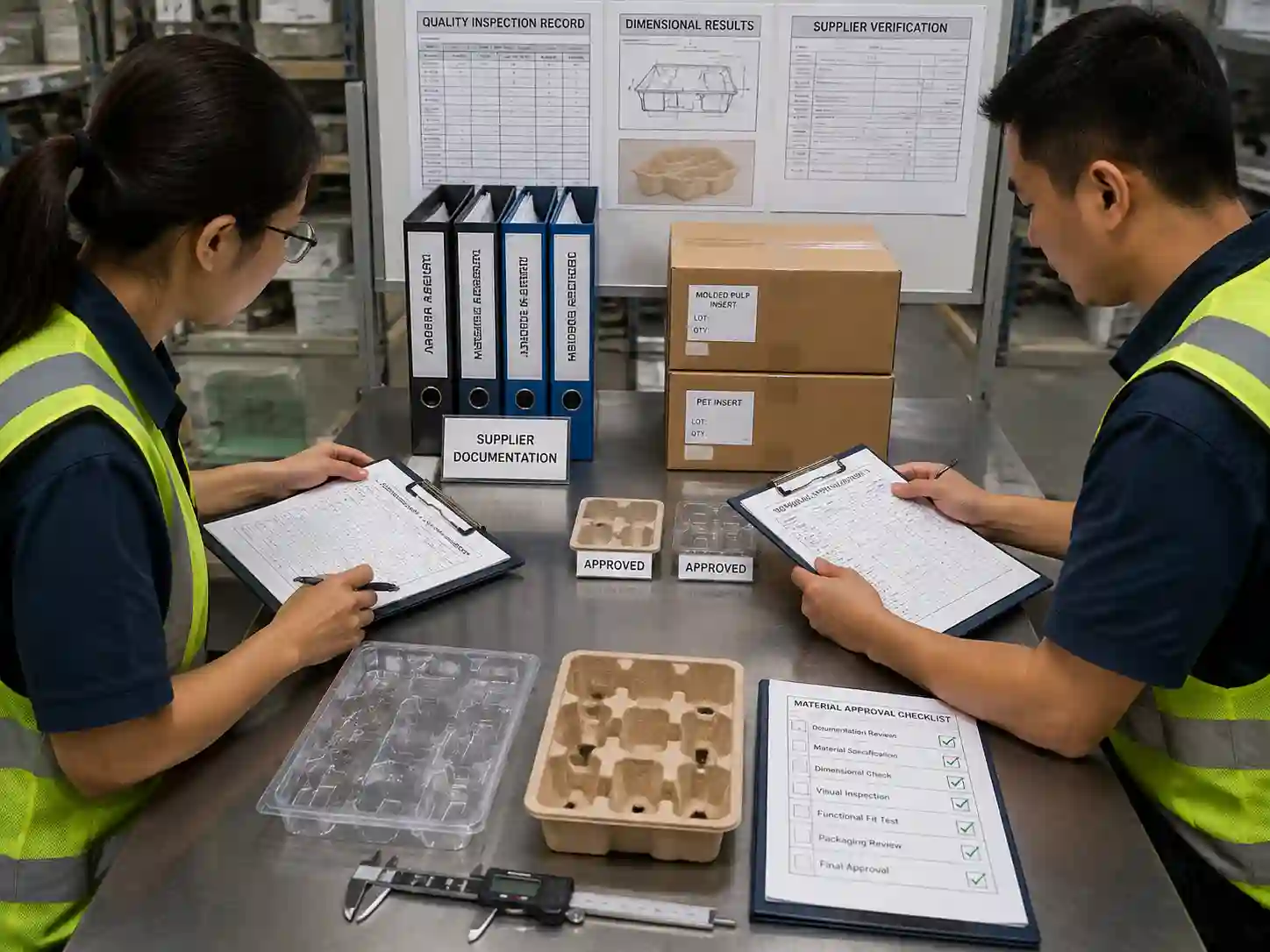
A molded pulp replacement should be supported by physical samples, measurements, and supplier documentation. Sustainability positioning should not replace engineering verification.
| Evidence Type | Purpose |
|---|---|
| Material specification documents | Confirm fiber composition, treatments, and applicable material information. |
| Prototype samples | Check cavity fit, product retention, appearance, and handling performance. |
| Dimensional measurements | Verify that cavity sizes match product drawings and tolerances. |
| Inspection records | Track approved samples and production consistency. |
How should buyers compare molded pulp and PET before approval?
Buyers should compare both materials against the same packaging requirements. A lower-plastic option is only practical if it still protects the product, maintains presentation quality, and meets handling expectations.
A typical decision process includes:
- Define product protection requirements, including weight, shape, and surface sensitivity.
- Review insert drawings and cavity dimensions before tooling or production changes.
- Evaluate prototype samples under realistic packing and handling conditions.
- Confirm material documentation and any required sustainability evidence.
- Approve the final material choice based on performance and project goals.
What are the main risks when replacing PET with molded pulp?
The main risks are usually related to fit variation, surface interaction, moisture exposure, and unsupported environmental claims. A material change should be managed as an engineering change rather than only a material substitution.
- Fit risk: Fiber forming may require careful cavity adjustment to maintain retention.
- Appearance risk: Natural fiber surfaces may create different visual expectations compared with smooth PET.
- Moisture risk: Storage conditions may influence stiffness and dimensional behavior.
- Claim risk: Recyclability or plastic-free statements require clear supporting evidence.
How does molded pulp selection affect advent calendar packaging?
For seasonal gift packaging, molded pulp can work well when the insert supports the product structure and the outer box design. Giftpackpro evaluates material choices together with paperboard construction, product fit, and quality control requirements through its custom advent calendar box services.
The most suitable insert depends on the product category, required presentation, protection level, and documented approval criteria. Buyers can review related advent calendar box buying guides or explore available custom advent calendar box products before defining a final packaging structure.
FAQs about molded pulp vs PET inserts
Is molded pulp always more recyclable than PET?
Not automatically. Recycling outcomes depend on the complete material system, local processing conditions, coatings, additives, and available documentation. Claims should be supported by verified material information.
Can molded pulp protect premium products?
Yes, if the cavity design, fiber strength, and product handling requirements are properly matched. Premium applications require sample evaluation because surface sensitivity and presentation standards vary.
Should buyers replace PET inserts in every project?
No. PET may remain the better option when precise positioning, smooth surfaces, or moisture resistance are critical. The correct choice depends on project requirements and approval evidence.
For packaging projects comparing molded pulp and PET inserts, define the product requirements first, validate the insert design with samples, and confirm material evidence before production approval. Contact Giftpackpro through request a custom quote to discuss suitable advent calendar packaging structures.