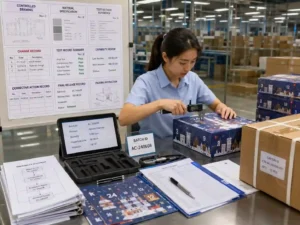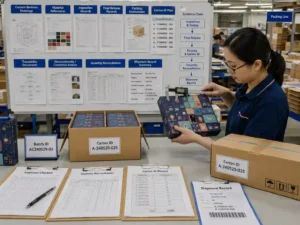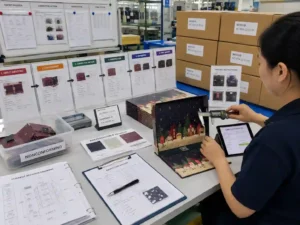
Wrapped rigid boxes can warp when the greyboard core, wrapping paper, adhesive system, and surrounding humidity conditions do not stay balanced. Effective rigid box warping prevention requires controlling board construction, paper grain direction, moisture exposure, wrapping tension, and production inspection points. Buyers can reduce risk by reviewing material samples, confirming supplier processes, and checking finished box flatness before approval.
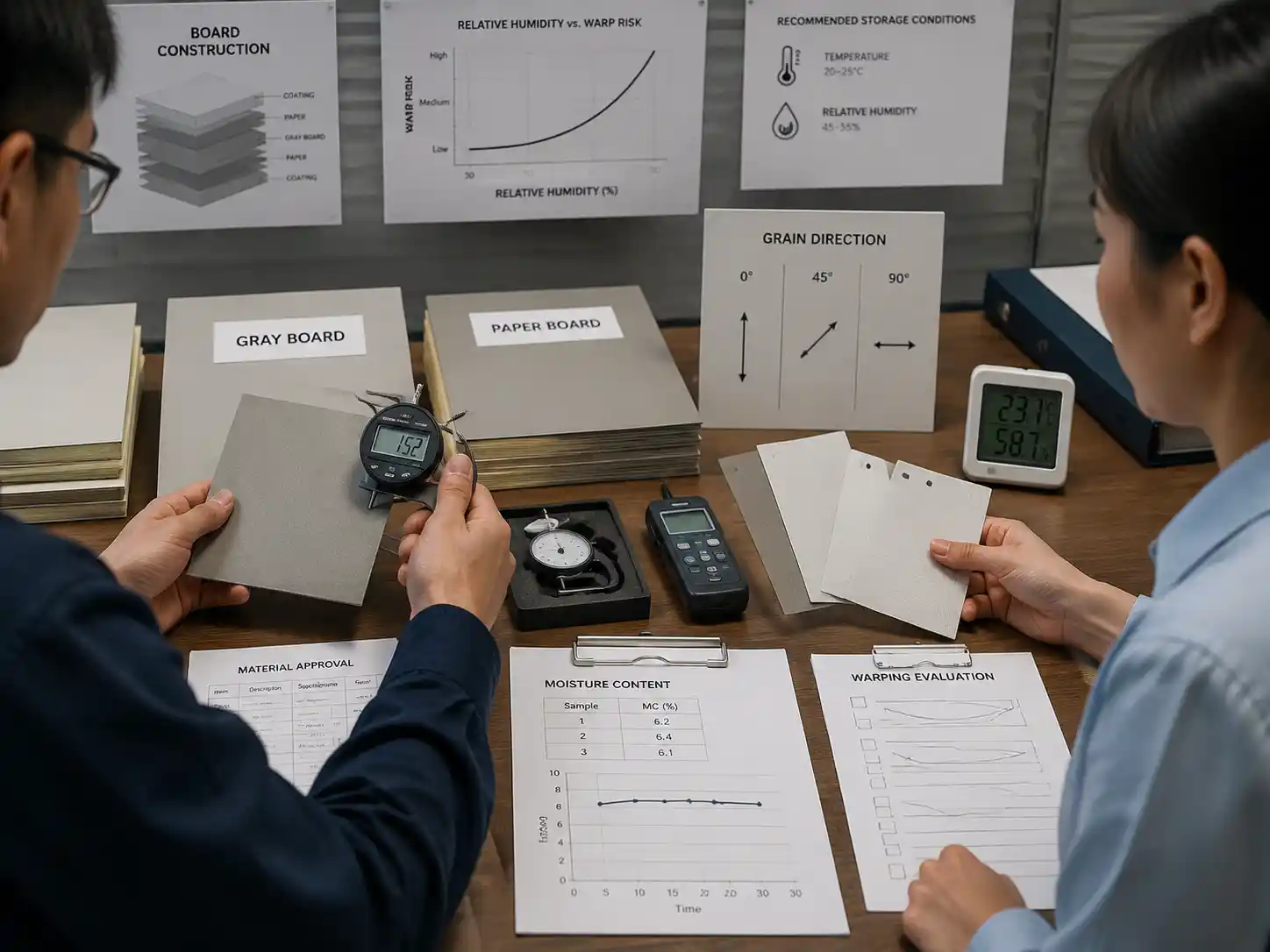
Why do wrapped rigid boxes warp after production?
Warping usually happens because different layers of a rigid box absorb or release moisture at different rates. The greyboard structure, printed wrapping paper, adhesive, and coating layers can expand or contract unevenly, creating panel bending, edge lifting, or surface distortion.
Common causes include:
- Uneven moisture content between board layers and wrapping materials.
- Incorrect paper grain direction during wrapping.
- Excessive adhesive moisture or uneven glue application.
- Insufficient conditioning time before final packing.
- Board thickness or stiffness that does not match the box structure.
For custom advent calendar boxes and premium paper gift packaging, warping risk is usually higher on large flat panels, wide lids, doors, and fold-out structures because these areas have less structural support.
How does board selection affect rigid box warping prevention?
Board selection is one of the first decisions affecting dimensional stability. A rigid box relies on the greyboard core to maintain shape, while the outer paper layer protects the surface and provides appearance.
| Material factor | Warping risk | Practical check |
|---|---|---|
| Greyboard thickness | Thin or unsuitable board may allow panel movement. | Review thickness measurements and compare with the box structure. |
| Board moisture condition | Uneven moisture can create bending after wrapping. | Check moisture readings and storage conditions. |
| Paper grain direction | Incorrect grain alignment can increase curl and tension. | Confirm grain direction on material samples. |
| Surface paper selection | Different papers react differently to humidity changes. | Review paper specifications and wrapped samples. |
Verifiable facts include board thickness, paper specifications, grain direction, and measured moisture levels. The best material combination depends on the box size, structure, finishing method, and expected storage environment.
How should wrapping paper and adhesive be controlled?
Wrapping paper and adhesive must work together because the outer layer can create tension across the rigid board surface. Poor adhesive distribution or excessive moisture can pull panels out of alignment during drying.
What wrapping checks reduce deformation risk?
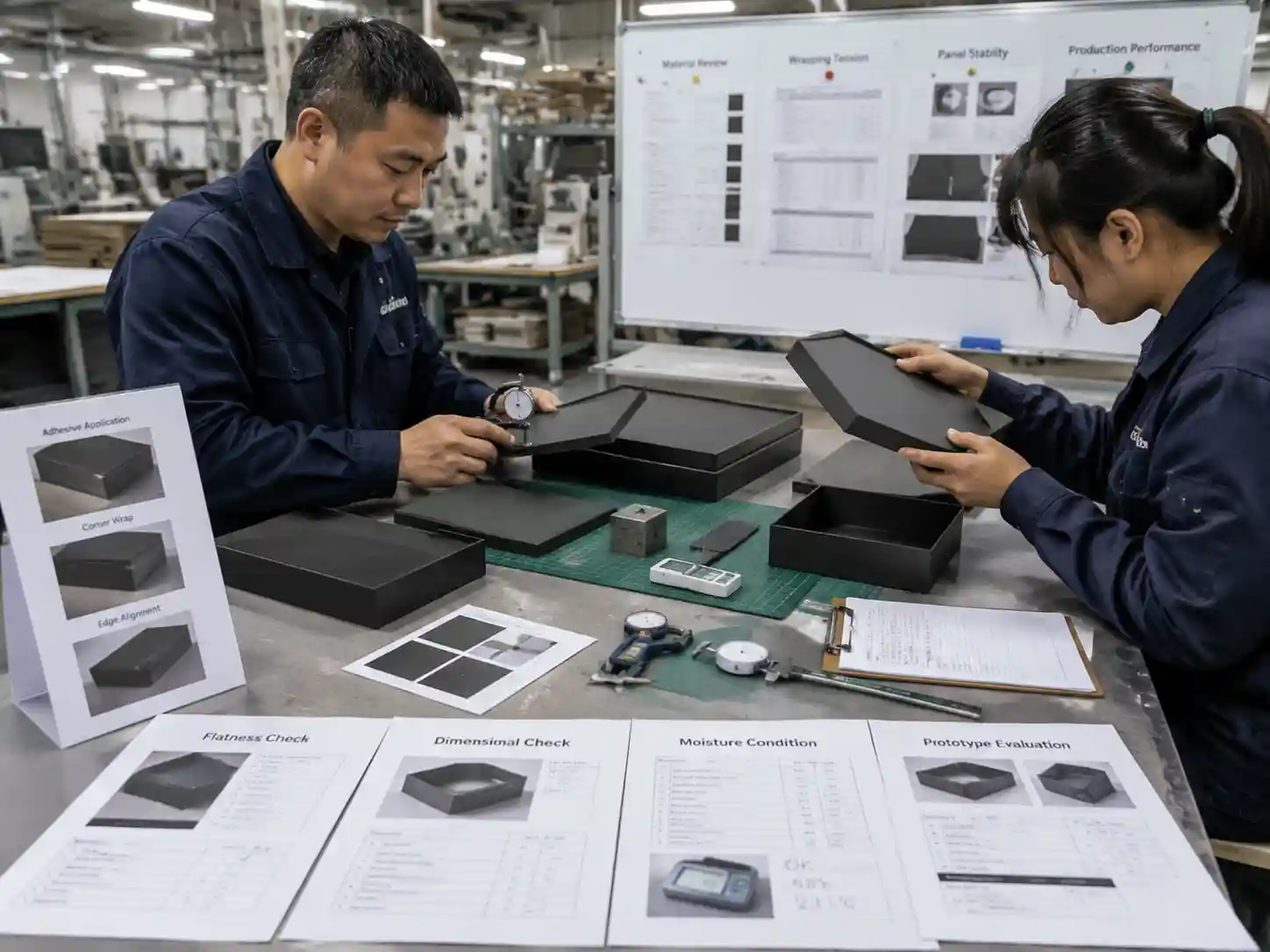
Production teams should check whether wrapping paper is applied evenly and whether corners, edges, and large surfaces remain flat after bonding.
- Inspect paper tension around corners and edges.
- Confirm adhesive coverage is consistent rather than concentrated in specific areas.
- Allow wrapped panels enough time for moisture balance before assembly.
- Review samples after conditioning rather than immediately after wrapping.
For commercial packaging projects, supplier approval should include wrapped samples, production notes, and inspection records showing how flatness and appearance were evaluated.
How can humidity control prevent rigid box warping?
Humidity control is important because paper-based materials continuously exchange moisture with their environment. A box produced in one climate may behave differently when stored or shipped in another.
Practical humidity-related controls include:
- Store board and paper materials in stable conditions before production.
- Avoid exposing finished wrapped boxes to sudden humidity changes.
- Evaluate samples under conditions similar to the intended supply chain environment.
- Record moisture-related observations during quality inspections.
Humidity impact should be treated as a project-dependent risk. A small rigid box with multiple supporting panels may tolerate movement differently from a large advent calendar structure with wide decorative surfaces.
What production inspections should buyers request?
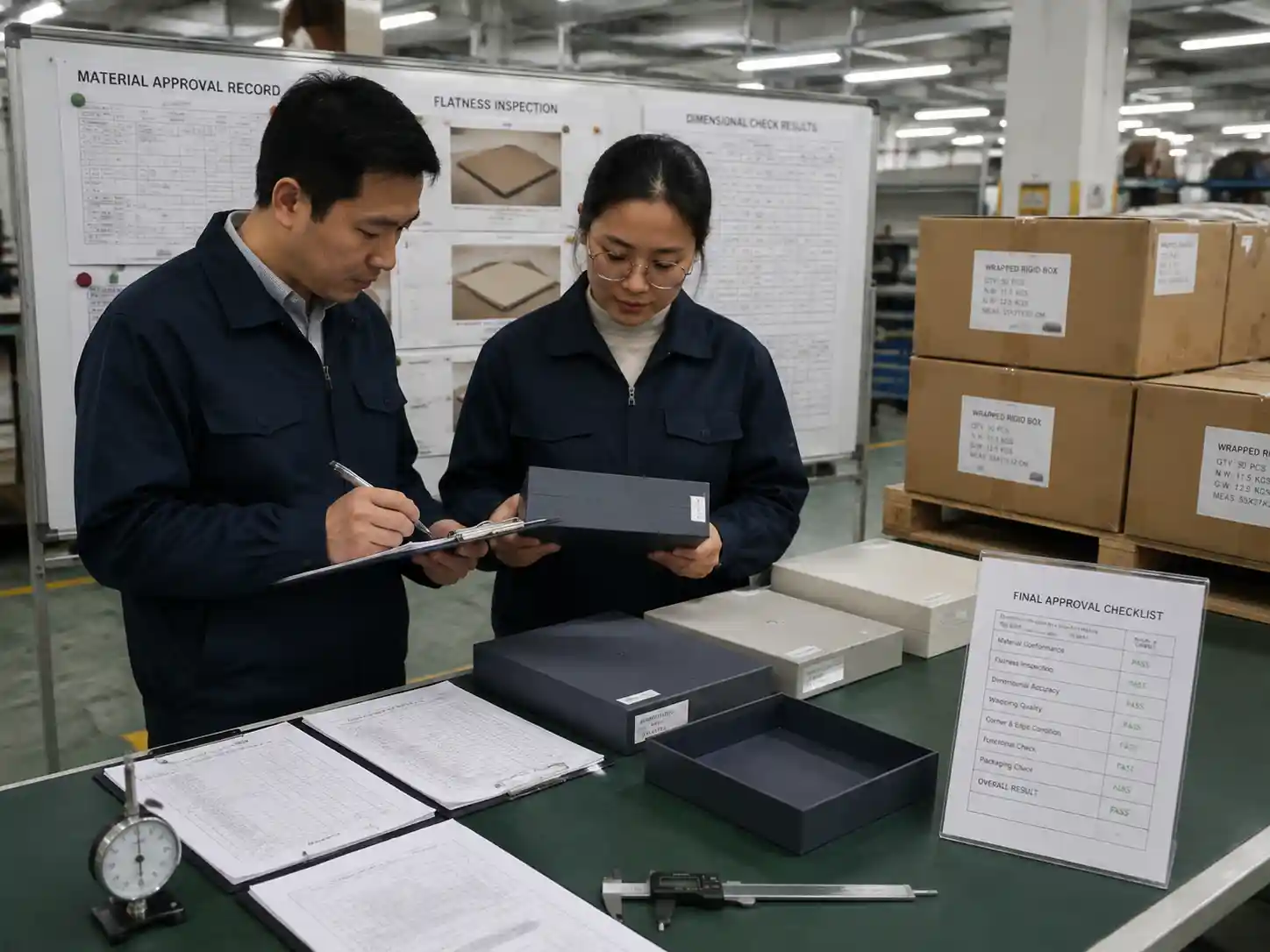
Buyers should request evidence that the supplier checks material stability and finished box performance. Inspection records are more useful than visual approval alone because warping may appear after storage or transportation.
| Inspection evidence | Purpose |
|---|---|
| Material approval records | Confirm selected board and paper specifications. |
| Sample inspection sheets | Document flatness, alignment, and appearance checks. |
| Measurement records | Verify dimensions remain within approved requirements. |
| Supplier process documents | Show how wrapping, drying, and handling steps are controlled. |
Buyer approvals should focus on measurable evidence: approved samples, inspection criteria, material documents, and production records. These provide traceability when investigating changes between sample approval and final production.
What material decisions help avoid warping in large rigid gift boxes?
Large rigid boxes often require a balance between stiffness, weight, surface appearance, and material behavior. Adding more board thickness is not always the only solution because incorrect material balance can create other structural issues.
A practical decision example:
- A large flat lid may require a more stable board structure and controlled wrapping process.
- A humid shipping environment may require closer review of paper behavior and storage conditions.
- A highly finished surface may require additional attention to adhesive compatibility and drying control.
These decisions vary by project structure, dimensions, finishing requirements, and supply chain conditions. Material changes should be reviewed through samples and approval records before production.
How does Giftpackpro approach rigid box material stability?
Giftpackpro supports commercial buyers with custom advent calendar boxes and paper gift packaging solutions that require attention to board construction, wrapping quality, and production verification. Related structural and material options can be reviewed through custom advent calendar box products and custom advent calendar box services.
FAQs about wrapped rigid box warping
Can thicker greyboard completely prevent rigid box warping?
No. Thicker board can improve stiffness, but warping also depends on moisture balance, paper selection, adhesive application, and production conditions.
Should paper grain direction be checked before mass production?
Yes. Grain direction affects how paper reacts during folding, wrapping, and humidity changes, so it should be reviewed during material approval.
How can buyers verify a supplier controls warping risk?
Buyers can review material records, approved samples, inspection sheets, measurement methods, and supplier documentation showing how stability is evaluated.
For projects requiring stable wrapped rigid box performance, review material choices and production requirements early. Contact Giftpackpro through request a custom quote to discuss packaging specifications and approval requirements.