
Fragile glass vials require controlled support, not simply more cushioning material. A well-designed glass vial protective insert uses accurate cavity geometry, controlled retention points, and suitable materials to prevent movement while keeping the package compact. The goal is to secure the vial during handling and transit without creating excessive foam volume that increases size, cost, or removal difficulty.
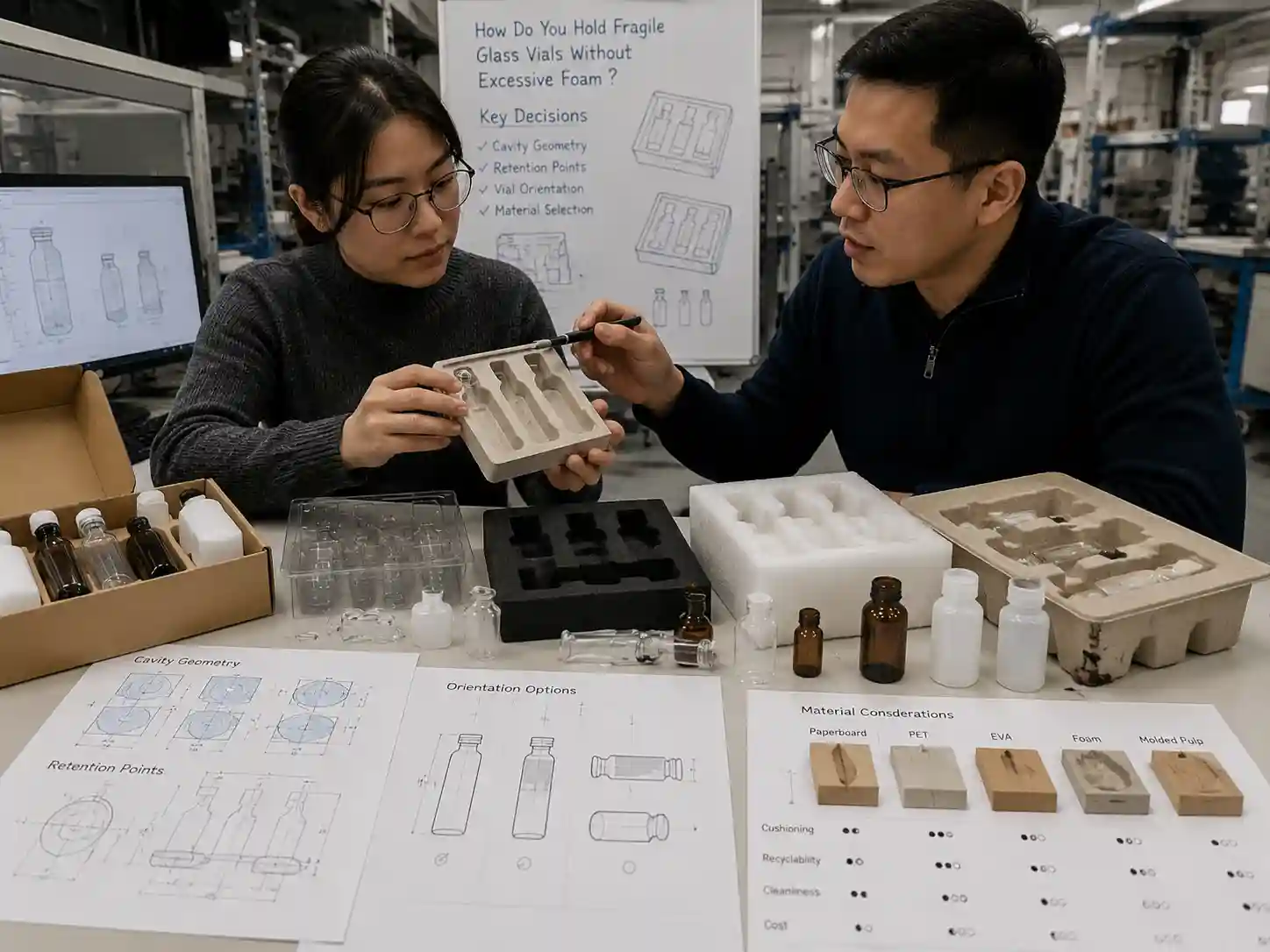
How Do You Design a Glass Vial Protective Insert Without Excessive Foam?
A glass vial protective insert should hold the product through precise contact areas rather than surrounding the entire vial with thick cushioning. The design process starts with measuring the vial body, neck, cap, label area, and fragile points that require protection.
Common engineering considerations include:
- Vial diameter and height variation between samples and final production units.
- Glass thickness and vulnerable areas such as shoulders, necks, or closures.
- Required finger access for product removal.
- Orientation requirements for labels, caps, or presentation.
- Space needed for protective packaging layers or secondary wrapping.
Verified dimensions should be recorded in product drawings, measurement sheets, or insert specifications before cavity tooling or cutting begins.
Which Insert Materials Can Replace Excessive Foam for Glass Vials?
The correct material depends on vial weight, surface sensitivity, required appearance, and packing method. Foam is only one option and is not always the most efficient solution.
| Insert Material | Typical Function | Key Design Consideration |
|---|---|---|
| Paperboard insert | Provides positioning and separation for lightweight vials | Requires accurate folding and locking geometry |
| PET tray | Creates formed cavities with consistent dimensions | Cavity depth and edge contact must avoid pressure points |
| EVA insert | Adds soft retention around sensitive products | Density and compression level affect holding force |
| Molded pulp insert | Provides structured protection with fiber-based material | Surface finish and cavity accuracy must be controlled |
| Foam insert | Provides cushioning for higher-risk applications | Thickness should match actual protection needs |
Material selection should be based on measured performance requirements rather than using maximum cushioning by default.
How Does Cavity Geometry Prevent Glass Vial Damage?
Cavity geometry is the main control point for preventing movement. The insert should support the vial at stable areas while avoiding concentrated pressure on fragile sections.
Should the vial be held by the body or the neck?
In most cases, the main retention area should be around the stronger cylindrical body section. Neck and cap areas usually require clearance unless the design specifically supports them.
How much clearance should a vial cavity have?
Clearance depends on vial dimensions, insert material flexibility, packing process, and expected movement during transportation. The required tolerance should be confirmed through physical fit tests rather than assumed from drawings alone.
Important design checks include:
- The vial can be loaded without excessive force.
- The vial does not rotate or slide freely inside the cavity.
- The insert does not create stress points on glass surfaces.
- The product remains correctly positioned after closing and handling.
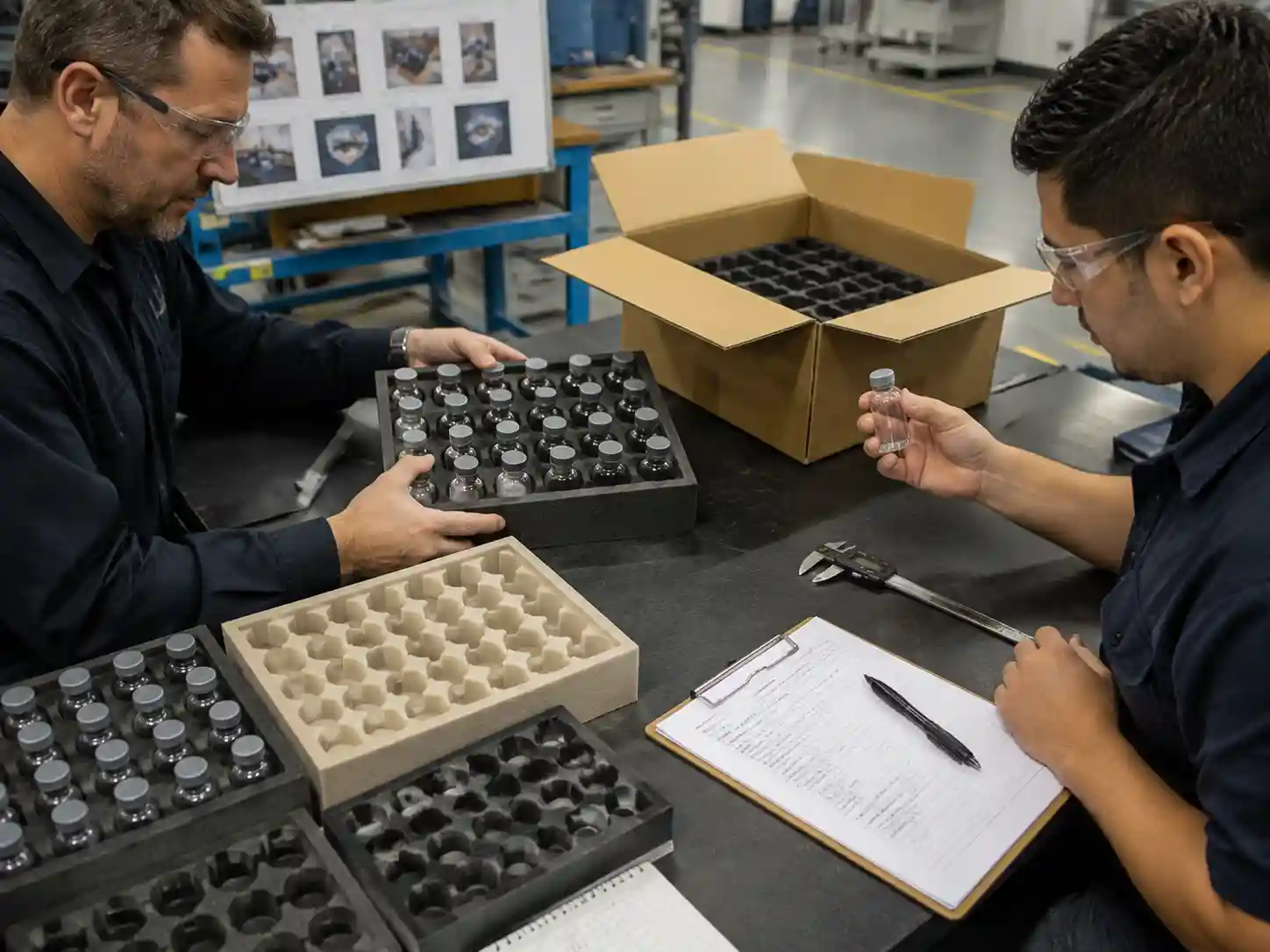
What Retention Methods Hold Glass Vials Securely Without Overpacking?
Effective retention combines cavity shape, contact points, and product orientation instead of relying only on thick cushioning layers.
| Retention Method | Purpose | Verification Method |
|---|---|---|
| Formed cavity wall | Limits side movement | Check loaded samples for rotation and shifting |
| Soft contact pads | Reduces impact between product and insert | Inspect contact marks after handling tests |
| Neck positioning feature | Controls vertical movement when required | Confirm loading force and removal access |
| Locking insert structure | Keeps the insert stable inside the box | Review assembly fit and transport condition |
How Do You Test a Glass Vial Insert Before Production?
Physical validation is required because paper drawings cannot fully predict product movement, removal experience, or transit behavior.
- Create prototype cavities using the selected insert material.
- Load actual glass vial samples or approved dimensional samples.
- Check fit, orientation, removal access, and retention strength.
- Review whether the insert creates pressure points or unwanted contact.
- Inspect loaded samples after handling or simulated transport checks.
- Record approved dimensions and revision details for production reference.
Evidence from these checks can include fit-test records, prototype approval sheets, cavity drawings, inspection notes, and supplier quality documents.
What Risks Occur When Too Much Foam Is Used?
Excessive foam may reduce some impact risks, but it can introduce other packaging problems. Overly thick cushioning can increase package dimensions, reduce available product space, and make product removal more difficult.
- Higher material usage without improved retention.
- Reduced visibility of the product inside the compartment.
- Difficulty maintaining consistent cavity dimensions.
- More complex packing operations.
- Potential mismatch between prototype and production performance.
The preferred solution is usually a balanced structure where the vial is protected at critical points while unnecessary empty volume is removed.
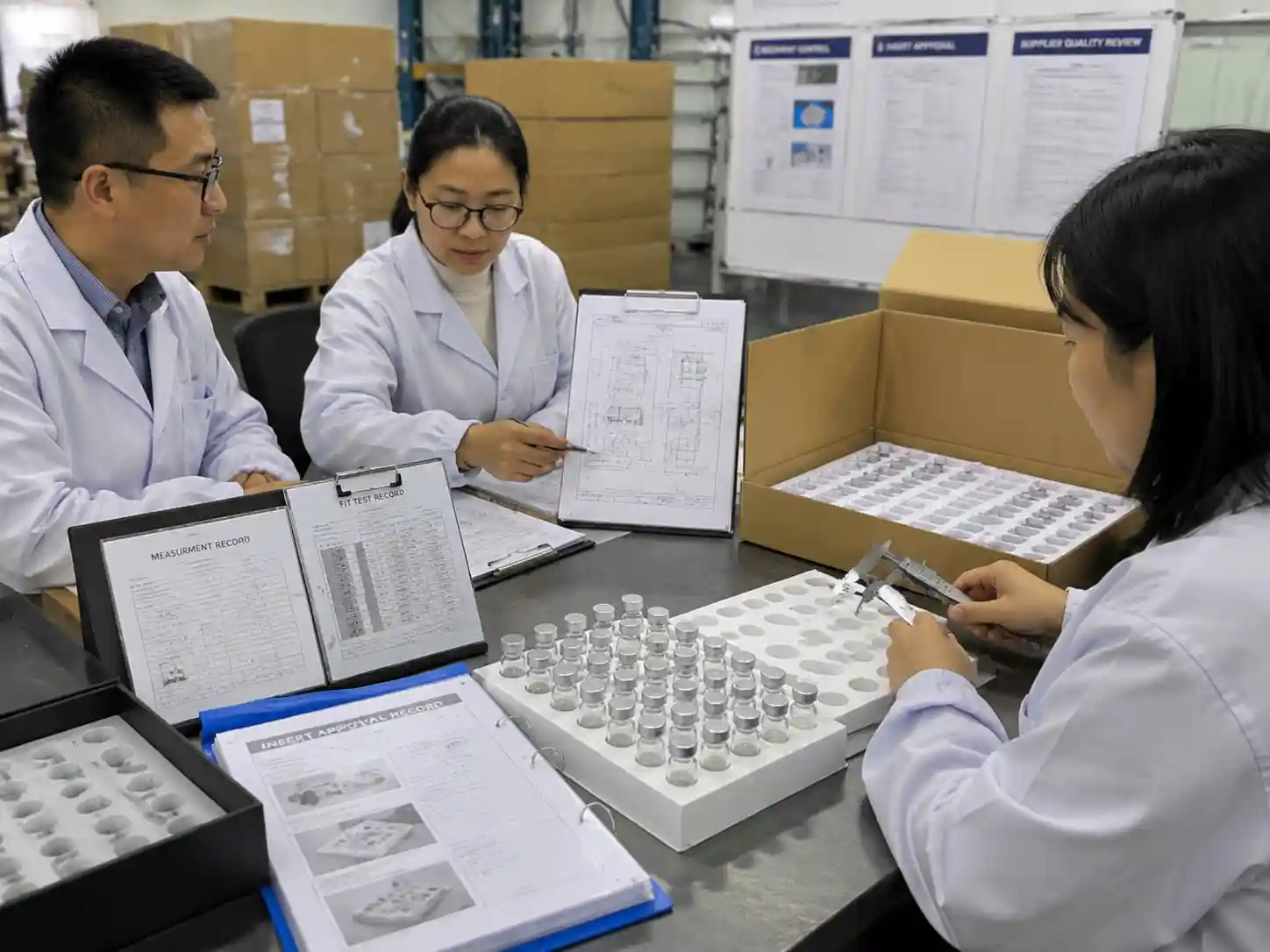
Which Checks Should Buyers Approve Before Final Insert Production?
Buyers should approve the physical relationship between the product and insert, not only the appearance of the empty insert.
Recommended approval points include:
- Final product dimensions used for cavity design.
- Insert drawings showing cavity shape and retention areas.
- Loaded sample photos or physical samples.
- Removal and loading evaluation results.
- Inspection records confirming approved revisions.
Project requirements vary depending on vial size, fragility level, material choice, and distribution conditions. Giftpackpro supports custom advent calendar packaging projects with insert development considerations through custom advent calendar box services and related packaging solutions.
FAQs About Glass Vial Protective Inserts
Can paperboard inserts protect fragile glass vials?
Yes, when cavity geometry and retention features are correctly designed. Paperboard inserts are suitable for some vial applications where positioning control is more important than heavy cushioning.
Is foam always the safest option for glass products?
No. Foam can provide cushioning, but the best solution depends on product weight, vial shape, handling conditions, and required package size.
What information should be provided before insert design?
Buyers should provide accurate vial dimensions, product samples when available, orientation requirements, and any packaging constraints that affect cavity design.
For a custom glass vial packaging structure review, contact Giftpackpro through request a custom quote and provide your product dimensions and packaging requirements.


