
Heavy products can deform or crush an insert when the cavity structure, support points, or material strength are not matched to the loaded weight. Preventing heavy product insert collapse requires balancing cavity geometry, retention force, support areas, and removal access. The process normally starts with accurate product measurements, continues through prototype loading tests, and is verified with inspection records before production approval.
What causes heavy product insert collapse?
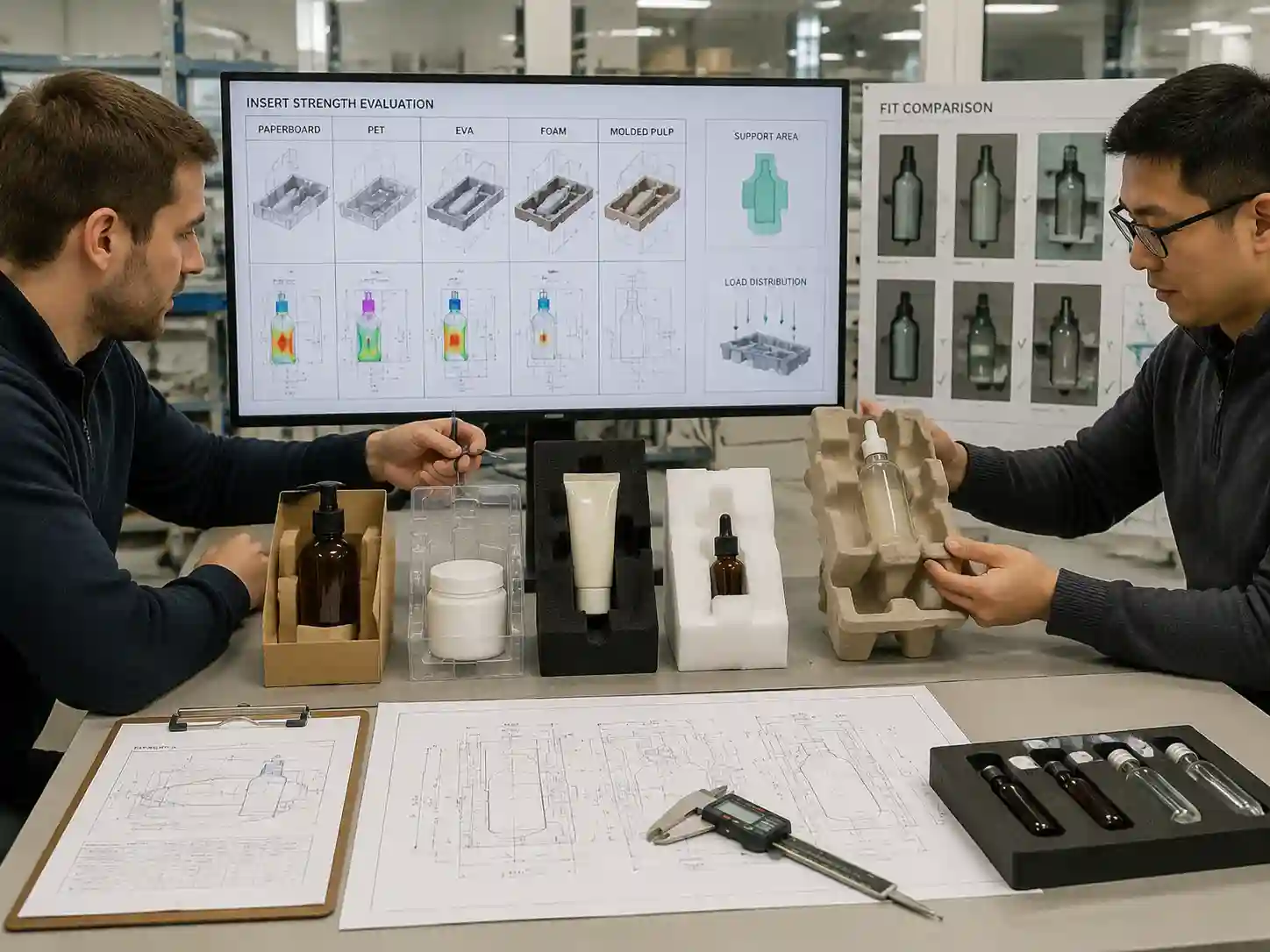
Heavy product insert collapse usually happens when the insert carries weight through unsupported areas instead of distributing the load across designed support points. Common causes include oversized cavities, insufficient material stiffness, weak folding structures, and incorrect product orientation.
Insert performance depends on more than product weight alone. Packaging teams also evaluate:
- Product center of gravity and whether the weight is concentrated on one side.
- Contact area between the product and the insert structure.
- Compression resistance of the chosen insert material.
- How the loaded insert behaves during storage, handling, and parcel movement.
How should cavity geometry be designed for heavy products?
Cavity geometry should transfer product weight into stronger areas of the insert rather than allowing the cavity walls to flex downward. The first design step is defining the correct support zones around the product.
Important design checks include:
- Adding enough supporting surface below the product base.
- Avoiding large unsupported spans in paperboard or molded structures.
- Using side retention points to reduce movement and repeated impact.
- Maintaining enough clearance for easy product removal without weakening the cavity.
For example, a heavy jar may require a wider support ring and stronger base contact than a lightweight tube. A tall bottle may need side stabilization because vertical weight and tipping forces create different stresses.
Which insert materials are suitable for heavier products?
The best insert material depends on the product weight, shape, required appearance, and packing process. Material selection should be confirmed through physical samples rather than assumed from product category alone.
| Insert Type | Strength Consideration | Common Heavy Product Application Check |
|---|---|---|
| Paperboard insert | Requires correct folding structure and load distribution | Check crease strength, support panels, and compression areas |
| PET tray | Uses formed geometry for stiffness | Check cavity depth, wall support, and product contact points |
| EVA insert | Provides cushioning and controlled retention | Check density, compression recovery, and removal force |
| Molded pulp insert | Relies on shaped support structures | Check fiber thickness, cavity accuracy, and base stability |
Giftpackpro evaluates insert options based on the product structure and packaging requirements rather than selecting a material only by appearance. More information about packaging formats is available through custom advent calendar box products.
How do you test whether an insert can support heavy products?
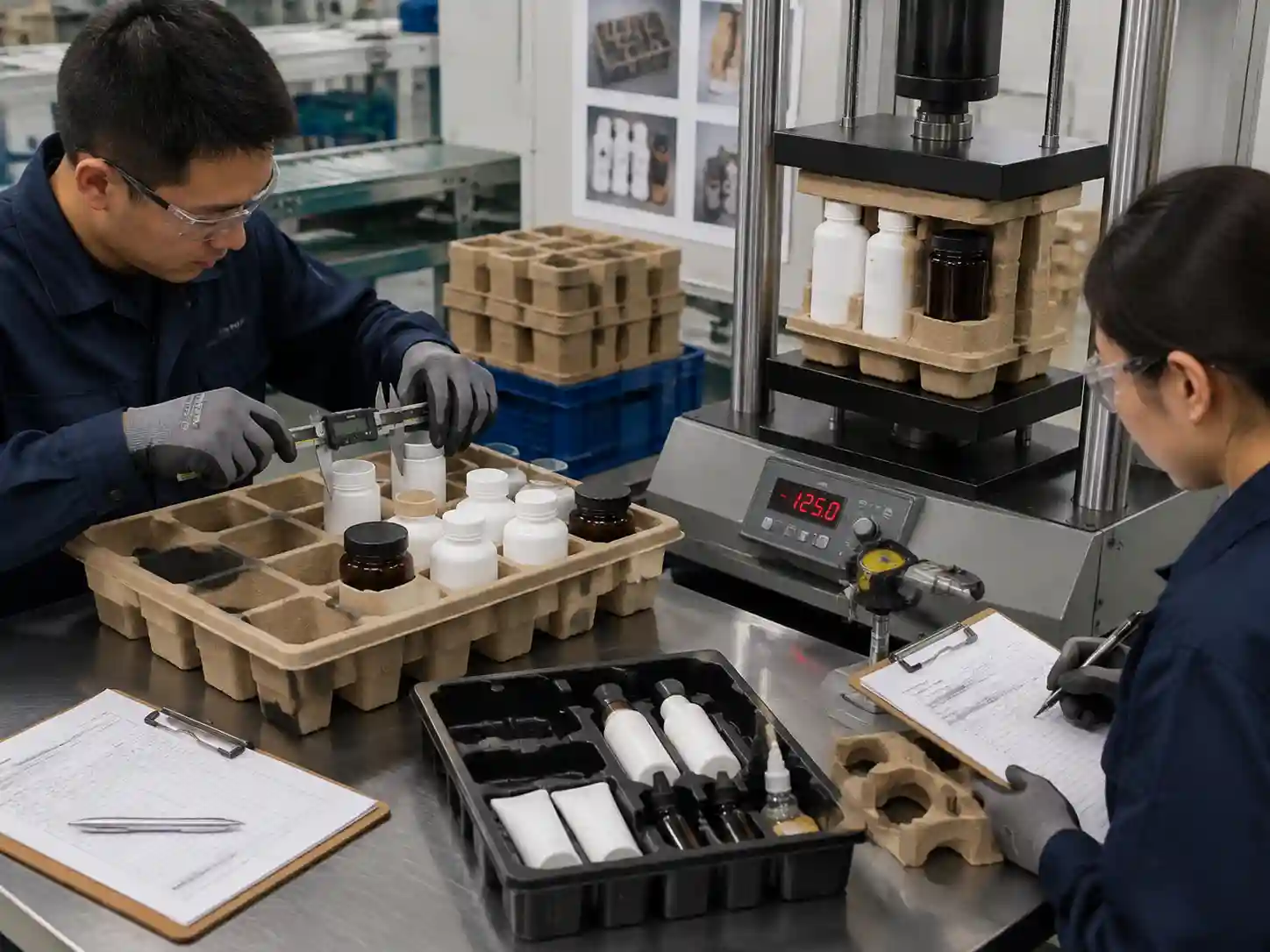
A physical loading test is the most reliable way to confirm whether an insert design performs as expected. Digital drawings can identify potential weak areas, but samples reveal actual deformation, movement, and handling issues.
What fit-test steps should be completed?
- Measure the final product dimensions, including caps, lids, sleeves, or protective packaging.
 /li>
/li>
- Load the product into the insert using the planned packing sequence.
- Check whether the cavity bottom, side walls, and locking areas maintain their shape.
- Inspect product removal access to confirm that stronger retention does not create excessive extraction force.
- Record deformation, movement, and contact marks for design adjustment.
Useful evidence includes prototype samples, cavity drawings, measurement sheets, fit-test notes, and approval records showing the tested product condition.
How can transit performance be checked before production?
Heavy products must remain supported after movement, vibration, and repeated handling. Transit checks should focus on whether the insert maintains product position rather than only whether the empty structure looks strong.
| Transit Check | Verification Point |
|---|---|
| Loaded carton inspection | Check whether inserts remain flat and products stay correctly positioned. |
| Movement review | Confirm products do not shift enough to damage cavities or surrounding packaging. |
| Compression observation | Inspect whether supporting areas permanently deform under load. |
| Packing process review | Confirm operators can load products without forcing or damaging the insert. |
Actual transit requirements vary by product weight, shipping method, carton configuration, and handling conditions. Buyers should approve the tested sample condition before moving into production.
What records should buyers request during insert approval?
Insert approval should be supported by clear documentation showing how the design was evaluated. Important records include approved cavity drawings, product dimension references, sample photos, measurement results, and fit-test feedback.
- Approved insert drawing with cavity dimensions.
- Product measurement information used for the design.
- Sample inspection notes showing fit and retention results.
- Supplier quality records for the approved structure.
These documents help sourcing teams and packaging engineers confirm that the insert design matches the approved product condition.
What design factors vary by project?
The required insert strength changes depending on product weight distribution, material choice, cavity shape, packing method, and final shipping environment. A small dense product may require stronger retention than a larger lightweight item.
Project-dependent decisions include:
- Whether reinforcement layers or additional support panels are needed.
- How much clearance is required for manual packing.
- Whether the product needs cushioning or only position control.
- Which inspection points should be included in supplier approval.
For custom structural development, buyers can review custom advent calendar box services or request a custom quote with product details and insert requirements.
FAQs About Heavy Product Insert Support
Can a paperboard insert hold heavy products?
Yes, if the structure distributes the load correctly through folds, support panels, and cavity geometry. Performance depends on the design and tested sample rather than the material name alone.
Should heavy products always use foam or EVA inserts?
No. Foam and EVA may provide cushioning, but paperboard, PET, or molded pulp solutions can also work when engineered with suitable support structures.
Why does an insert collapse even when the product fits?
A correct fit does not always mean correct load support. The cavity may match product dimensions while still lacking enough structural support under weight.
Giftpackpro helps commercial buyers develop custom advent calendar packaging with insert structures designed around product dimensions, retention needs, and loaded performance.


