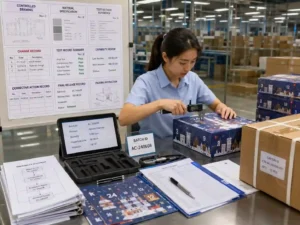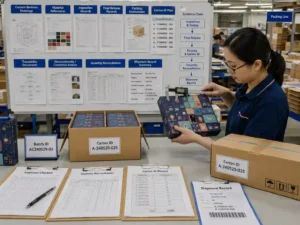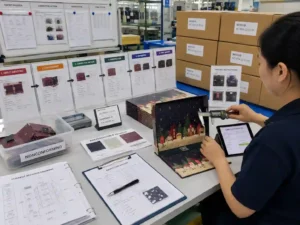
Foam inserts can protect products during storage and transport, but incorrect material choice, tight cavities, or excessive contact pressure can create surface marks on printed products. Foam insert scuff prevention depends on controlling contact points, reducing friction, confirming product orientation, and validating the loaded package through fit checks. The right approach combines cavity design, foam selection, handling tests, and supplier inspection records.
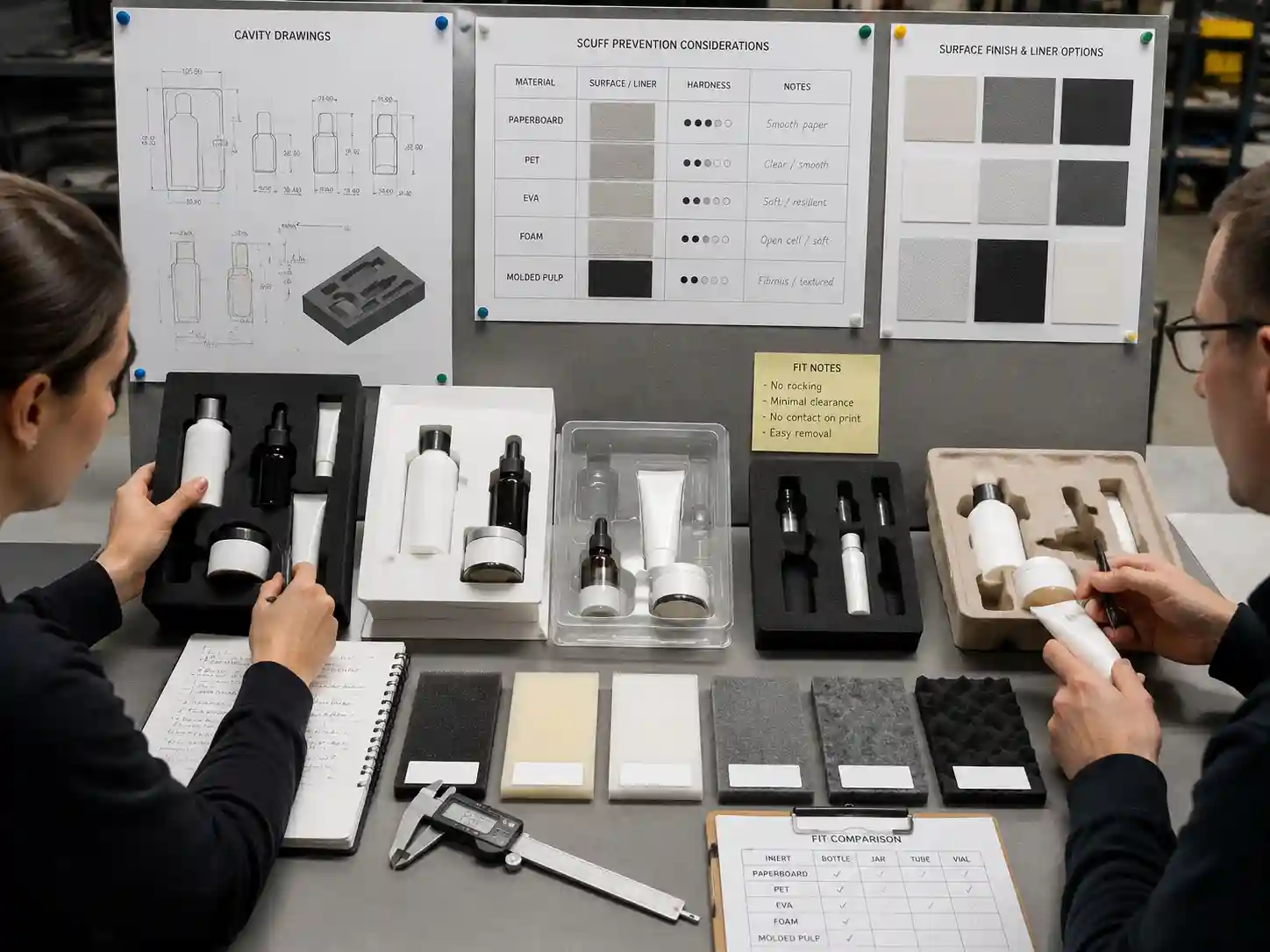
Why can foam inserts cause scuff marks on printed products?
Foam inserts can cause scuffing when the product surface repeatedly rubs against foam during insertion, removal, vibration, or compression. The risk is higher when printed coatings, metallic finishes, soft-touch surfaces, or decorative films are more sensitive to abrasion.
Common causes include:
- Foam cells or surface texture creating friction against printed areas.
- Cavities designed with excessive interference instead of controlled retention.
- Products positioned incorrectly so printed surfaces contact high-pressure areas.
- Movement inside the insert during transportation.
These issues are normally verified through physical samples, cavity drawings, product fit reviews, and inspection records rather than only through material specifications.
How does foam insert scuff prevention start with cavity design?
The first step is designing the cavity to hold the product securely without creating unnecessary surface pressure. A good cavity supports the product at stable areas while avoiding sensitive printed surfaces.
Which cavity design factors reduce surface damage?
Important design factors include:
- Contact location: Place retention points on stronger product areas rather than decorative printed panels.
- Clearance control: Allow enough space for insertion and removal without scraping.
- Edge treatment: Avoid sharp foam edges that can catch on printed finishes.
- Orientation control: Keep products facing the intended direction so labels and graphics avoid unnecessary contact.
Packaging engineers usually confirm these details through cavity drawings, 3D samples, and physical product loading tests.
Which foam properties affect scuffing risk?
Foam type, density, surface texture, and compression behavior all influence how the insert interacts with the product surface. A harder foam may provide stronger support but can create more pressure if the cavity fit is too tight.
| Foam factor | Possible impact | Typical review method |
|---|---|---|
| Surface texture | Higher friction may increase rubbing marks | Visual inspection and handling samples |
| Density and firmness | Changes retention force and compression pressure | Loaded fit comparison |
| Compression recovery | Affects repeated product loading and removal | Insertion and removal testing |
| Thickness | Changes support and cavity depth | Dimensional measurement review |
Material selection is project-dependent. The best foam choice depends on product weight, surface finish, packaging structure, and expected handling conditions.
How should suppliers test foam inserts before production?
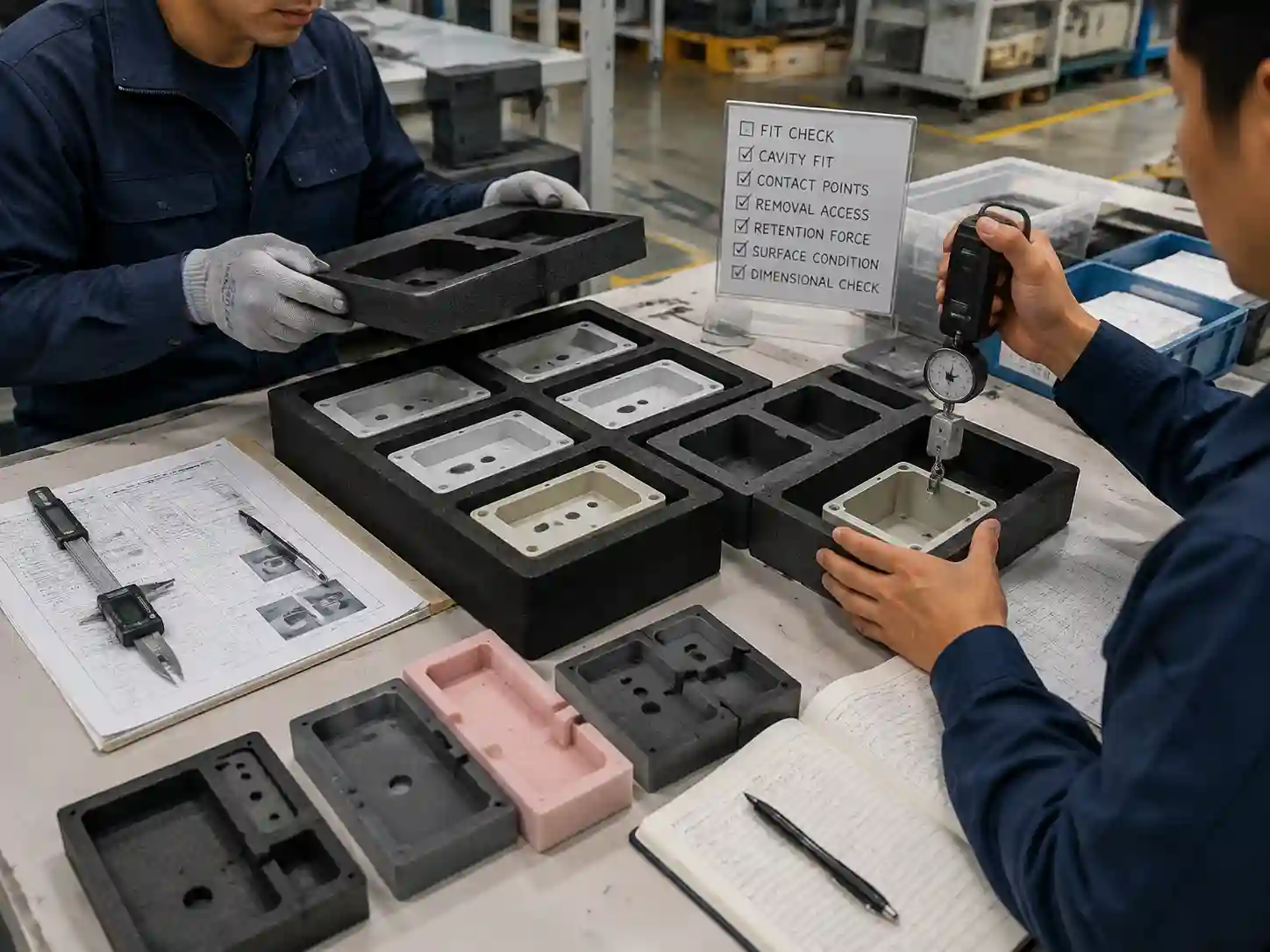
Foam inserts should be evaluated with actual products or representative samples before production approval. Testing should focus on whether the insert protects the product while allowing clean removal.
What fit-test steps help identify scuffing problems?
- Load the actual product into the foam cavity using the planned orientation.
- Check contact points between foam and printed surfaces.
- Remove the product repeatedly and inspect for marks or coating changes.
- Review cavity dimensions against approved drawings.
- Record any adjustments to foam density, cavity size, or product positioning.
Evidence from these checks can include sample approval records, cavity measurement sheets, product inspection photos, and engineering change notes.
How can buyers verify foam insert quality during supplier review?
Buyers can reduce scuffing risks by confirming that the approved sample, production materials, and inspection process match the final packaging requirements.
| Verification item | What to review |
|---|---|
| Approved sample | Product fit, removal feel, visible surface condition |
| Engineering documents | Cavity drawings, dimensions, material details |
| QC records | Inspection points, measurement results, approval status |
| Packing checks | Protection during handling and carton loading |
For custom seasonal packaging projects, Giftpackpro reviews insert structure together with the complete box design through custom advent calendar box services and related engineering processes.

What transportation risks should be considered for foam inserts?
Scuff prevention is not only a material issue. Movement, vibration, compression, and repeated handling can change how the product contacts the foam.
Which transit checks are useful?
- Confirm products remain correctly positioned after movement.
- Check whether foam compression creates pressure marks.
- Inspect printed surfaces after handling simulation.
- Review whether the outer packaging structure prevents excessive internal movement.
Actual requirements vary by product shape, finish sensitivity, insert material, and distribution conditions. Final approval should be based on the project sample and buyer acceptance criteria.
Can a softer foam always prevent scuffing?
No. A softer foam may reduce pressure but can also provide less support, allowing the product to move and create rubbing. The goal is controlled retention, not simply reducing foam firmness.
Does foam insert scuff prevention require special coatings?
Not always. Many scuffing issues are solved through cavity geometry, orientation, clearance, and material matching. Surface treatments may be considered when product finishes require additional protection.
How do buyers avoid foam insert problems before ordering?
Buyers should provide accurate product dimensions, surface finish information, and usage requirements before final insert approval. Reviewing physical samples and inspection records helps confirm that the insert protects both the product and its printed appearance.
Giftpackpro supports custom insert development for seasonal paper gift packaging projects. Buyers can review suitable structures through custom advent calendar box products or request a custom quote for a packaging evaluation.