
Round jars are challenging to secure because their smooth surfaces can rotate, shift, or lift during handling while excessive retention can make removal difficult. Effective round jar packaging retention depends on balancing cavity geometry, controlled clearance, support points, and user access. The correct insert design holds the jar in position during movement while allowing consistent removal without damaging the product or insert.
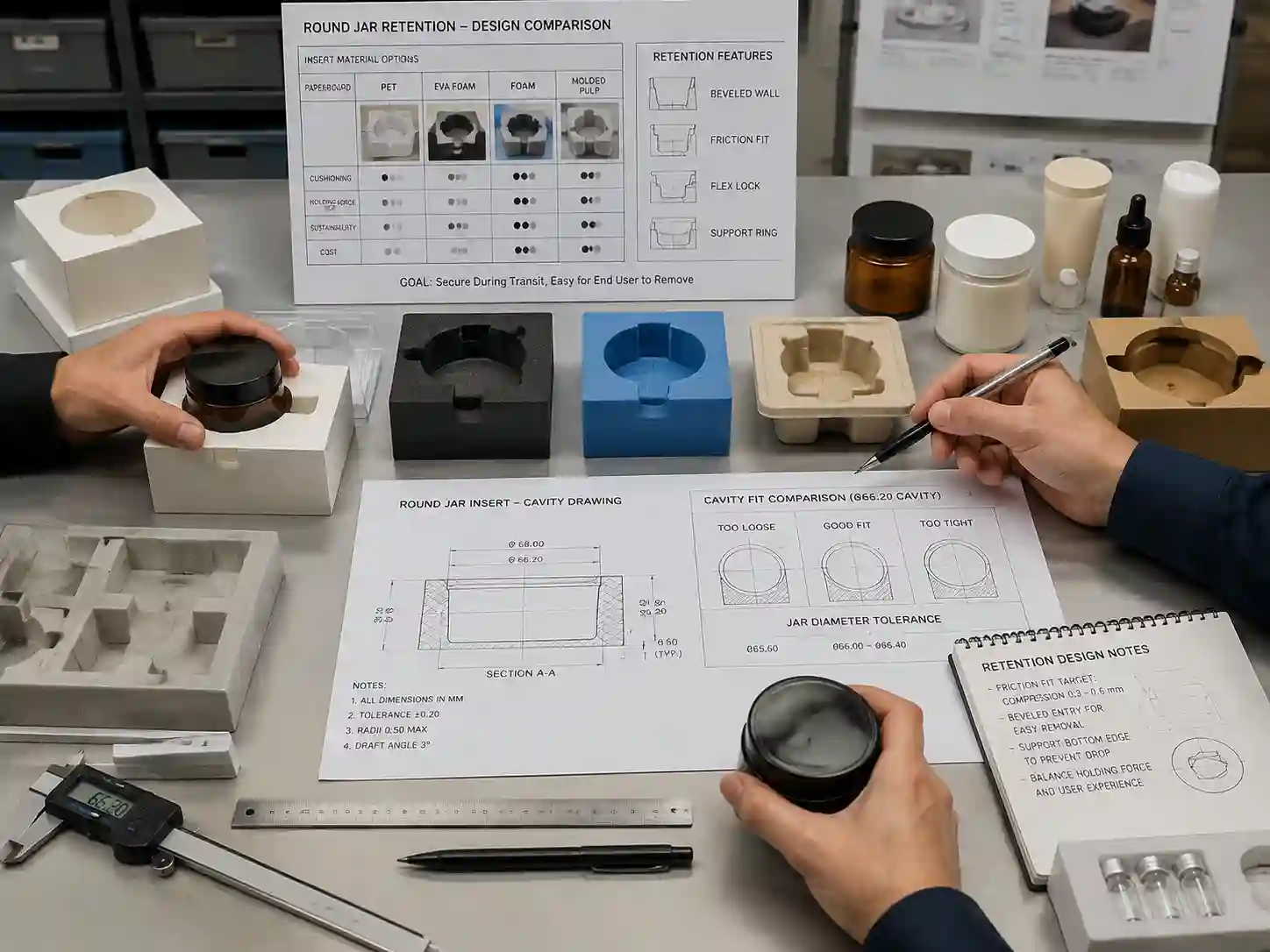
How Does Cavity Geometry Improve Round Jar Packaging Retention?
The cavity shape is the primary factor controlling how securely a round jar sits inside an insert. Instead of simply creating a circular opening, engineers usually design support areas that limit movement while maintaining removal space.
Important cavity considerations include:
- Diameter control: The opening must match the jar size with enough tolerance for production variation and surface finishes.
- Contact location: Support points should stabilize the jar body without creating excessive pressure on glass, plastic, or product labels.
- Depth of engagement: A deeper cavity can improve stability, but too much surrounding height may reduce finger access.
- Anti-rotation features: Small locking sections, shaped shoulders, or controlled friction areas can prevent spinning during transport.
Drawings, product measurements, and physical samples are normally used to confirm whether the cavity supports the jar correctly before production approval.
What Retention Methods Can Hold Round Jars Without Over-Restricting Removal?
The best retention method depends on jar size, weight, material, and how the final package will be handled. Different insert materials provide different levels of support and flexibility.
| Retention Method | How It Works | Main Consideration |
|---|---|---|
| Paperboard locking cavity | Uses folded or die-cut sections to create controlled support around the jar. | Requires accurate dimensions to avoid loose fit or excessive pressure. |
| PET molded tray cavity | Creates a shaped pocket around the jar with consistent positioning. | Clearance must allow easy loading and removal. |
| EVA or foam insert | Uses compression and friction to stabilize the product. | Compression level must be balanced with removal force. |
| Molded pulp cavity | Provides structural support with formed surfaces around the product. | Surface variation must be considered during fit evaluation. |
How Much Clearance Should Be Added Around Round Jars?
Clearance should allow manufacturing tolerance, product loading, and removal access without allowing excessive movement. The correct amount varies depending on jar dimensions, insert material stiffness, and packaging orientation.
Engineers typically review:
- Jar outer diameter at the widest point.
- Height and center of gravity.
- Cap or lid shape that may affect gripping.
- Insert material flexibility and recovery.
- Expected movement during handling and transport.
Recommended dimensions should be verified through drawings and physical samples rather than estimated only from product photos.
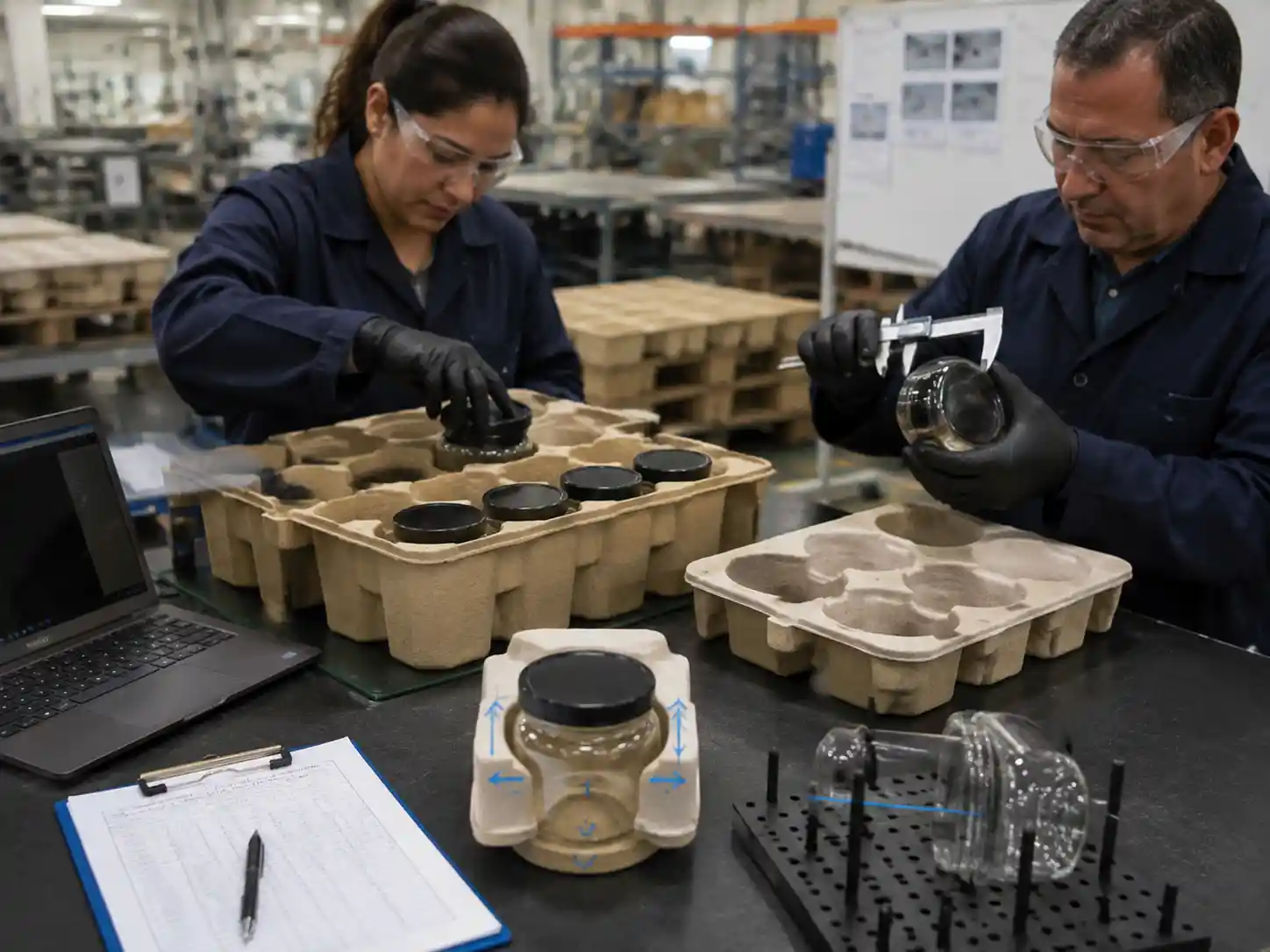
How Do You Test Whether a Round Jar Insert Is Secure but Easy to Remove?
A fit test should evaluate both retention performance and removal access. A jar that stays fixed but requires excessive force may create problems during assembly, inspection, or final use.
What Steps Are Included in a Round Jar Fit Test?
- Measure the actual jar dimensions, including diameter variations and protruding features.
- Review the insert drawing and confirm cavity dimensions match the approved product data.
- Load jars into prototype inserts and check positioning consistency.
- Test removal from different angles to confirm sufficient access.
- Inspect for movement, rubbing marks, compression damage, or unstable positioning.
- Record findings and update cavity dimensions if adjustments are required.
Fit-test records, sample photos, measurement sheets, and approved drawings provide traceable evidence that the retention design matches the product requirement.
How Can Buyers Verify Round Jar Insert Performance Before Production?
Buyers should review physical evidence instead of relying only on supplier descriptions. Important approval materials may include cavity drawings, product measurement records, prototype samples, and inspection notes.
Useful verification points include:
- The approved jar dimensions match the insert specification.
- The loaded insert keeps the jar upright in the intended orientation.
- The product can be removed without tearing, cracking, or excessive deformation of the insert.
- The final packed structure maintains stability during handling simulations or internal validation checks.
What Risks Occur When Round Jar Retention Is Poorly Designed?
Poor retention design can create both product protection and packaging performance issues. Common risks include:
- Jars rotating and presenting incorrectly inside compartments.
- Glass or rigid containers contacting nearby products.
- Loose cavities causing movement noise and visual inconsistency.
- Tight cavities creating difficult removal or damaged inserts.
- Production variation causing some units to fit differently from approved samples.
The final design should separate verified facts from project-specific decisions. Product dimensions and material behavior are measurable inputs, while the final cavity tolerance and retention method depend on the specific jar, insert material, and packaging structure.

Frequently Asked Questions About Round Jar Insert Retention
Can a round jar use the same insert design as a square product?
No. Round jars usually require different support logic because they can rotate more easily and have fewer natural locking surfaces.
Is tighter retention always better for round jars?
No. Excessive retention can increase removal force and may damage the product, insert, or packaging experience.
Which documents help confirm a round jar insert is ready?
Approved cavity drawings, product dimension records, fit-test notes, sample approvals, and inspection records are commonly used to confirm design readiness.
How Should Packaging Teams Apply Round Jar Retention Principles?
A successful round jar insert balances three requirements: secure positioning, controlled movement, and practical removal. By combining accurate measurements, cavity engineering, prototype testing, and documented approval checks, packaging teams can create inserts that protect round jars without making them difficult to access.
Giftpackpro supports custom advent calendar box projects with insert development, structural evaluation, and packaging engineering coordination. Learn more about custom advent calendar box services or explore custom advent calendar box products. For project-specific requirements, request a custom quote.