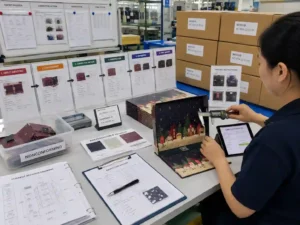
Quick answer: Preventing lipstick tubes from sliding through insert openings requires matching the insert aperture, product diameter, retention structure, and removal force. The opening should support the tube without allowing vertical movement, while still providing enough clearance for easy removal. Engineers normally verify this through dimensional drawings, prototype fit tests, orientation checks, and loaded transit evaluations before production approval.
What Causes Lipstick Tubes to Slide Through Insert Openings?
Lipstick tubes usually slide through insert openings when the cavity diameter is too large, the retention feature is too shallow, or the insert material cannot maintain pressure around the product. The issue is not only the hole size but the complete relationship between the tube geometry and the insert structure.
Common causes include:
- Opening diameter exceeding the stable retention range of the lipstick tube.
- Insufficient shoulder support around the cap or tube body.
- Soft insert materials compressing during storage or transport.
- Product dimensions varying between samples and bulk production units.
- Incorrect product orientation inside multi-compartment packaging.
These risks should be identified from product measurement records, approved drawings, and physical samples rather than estimated from appearance alone.
How Should Lipstick Tube Insert Opening Size Be Determined?
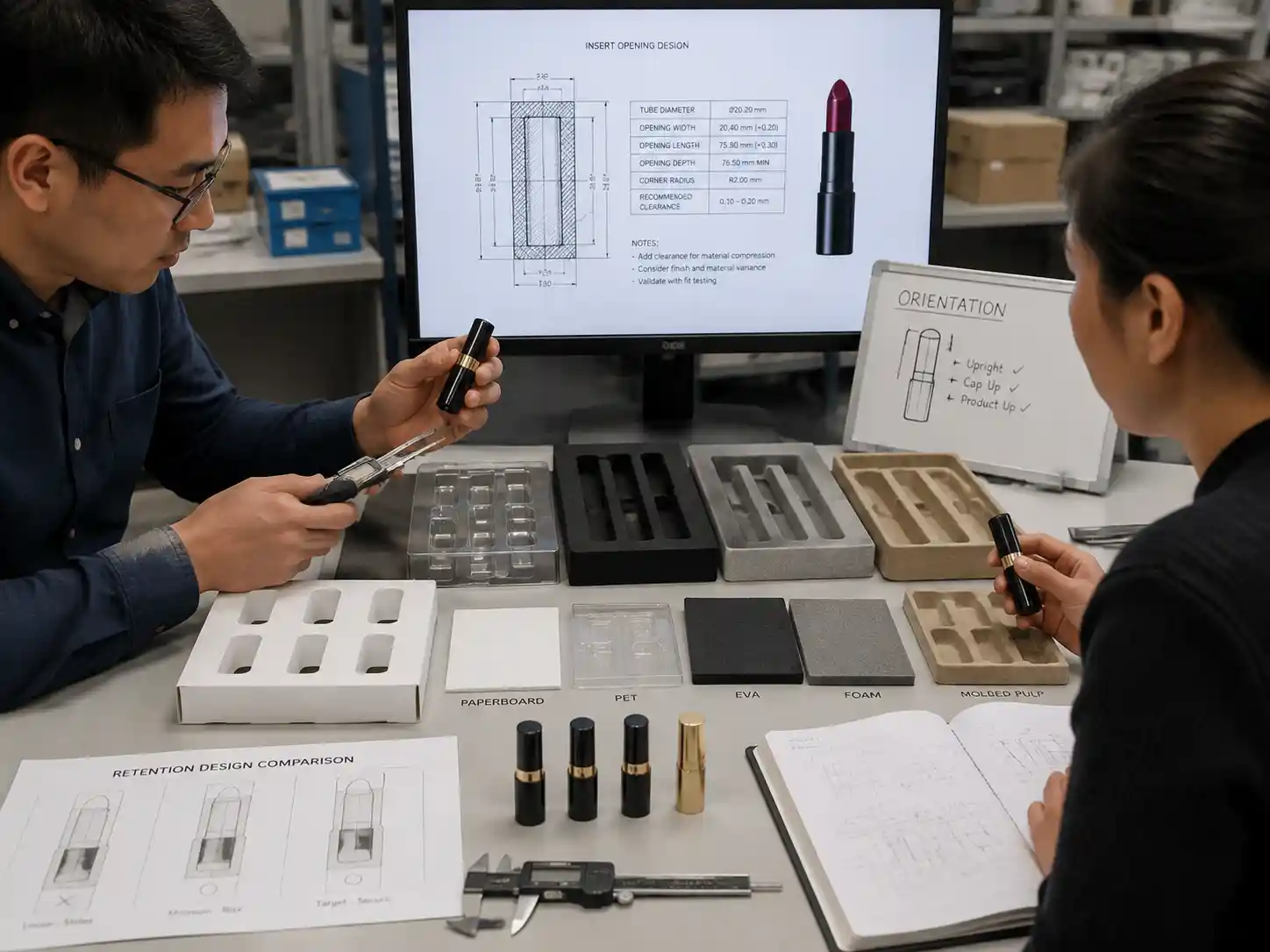
The correct lipstick tube insert opening size is determined by measuring the actual product dimensions and defining the required retention and removal clearance. A successful opening holds the tube securely but avoids excessive friction during removal.
The engineering process normally includes:
- Measure the lipstick tube diameter, height, cap shape, and any tapered sections.
- Record the product orientation required inside the insert.
- Select the insert material and evaluate its flexibility and compression behavior.
- Create cavity drawings showing opening diameter, support depth, and tolerance range.
- Validate the design with physical samples before final production.
The recommended dimensions vary by product shape, insert material, and packaging structure. A rigid PET tray, soft EVA insert, and paperboard insert may require different retention approaches even for the same lipstick tube.
Which Retention Methods Prevent Lipstick Tubes From Falling Through?
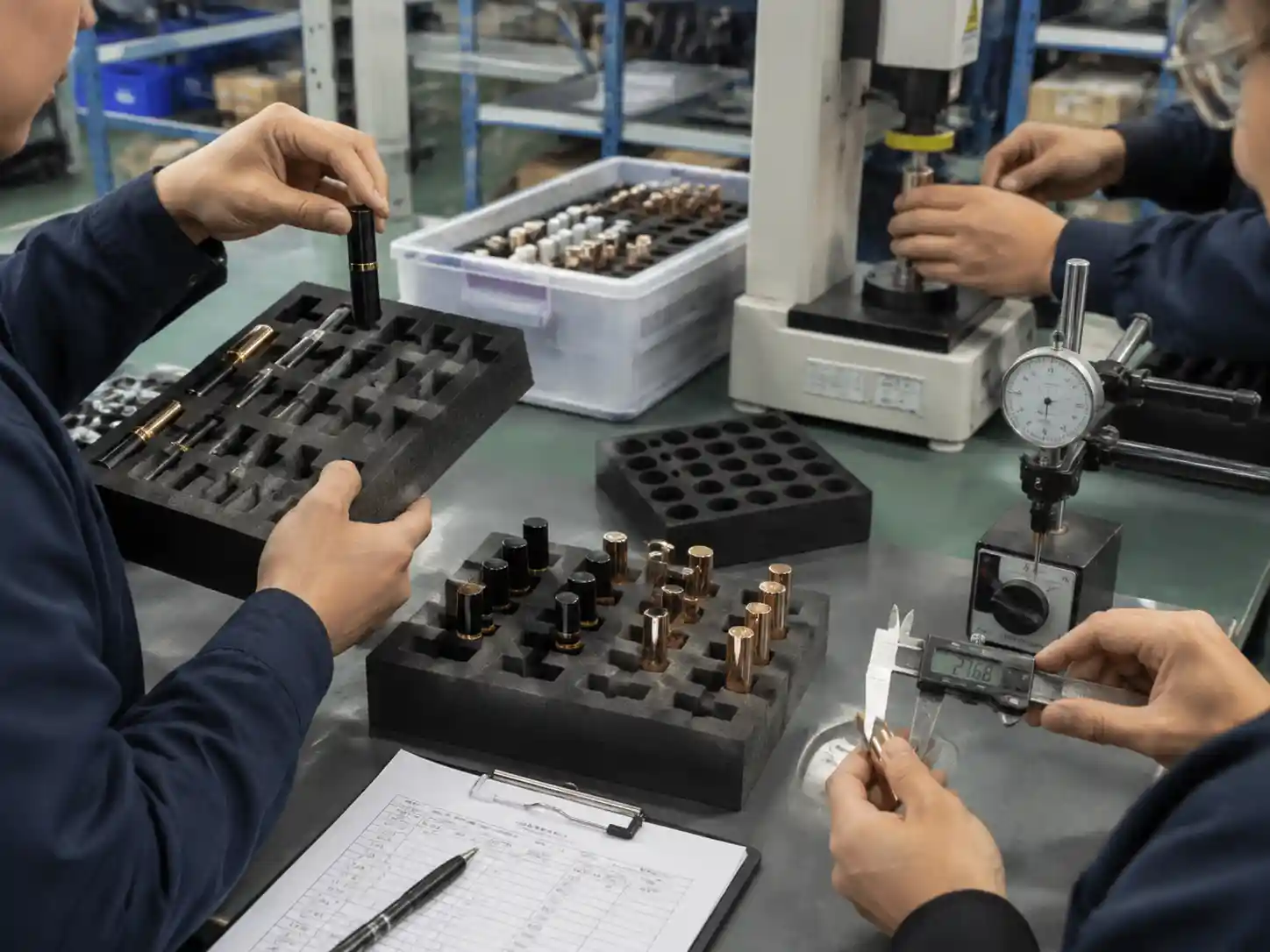
Insert designers use different retention methods depending on product weight, surface finish, orientation requirements, and removal expectations. The opening itself is only one part of the retention system.
| Retention method | How it works | Typical application consideration |
|---|---|---|
| Tight-fit circular opening | The insert opening closely supports the tube body. | Requires accurate diameter control and material evaluation. |
| Shoulder support ring | A wider support area prevents the tube from dropping through. | Useful when the tube has a cap or upper diameter change. |
| Folded paperboard locking tabs | Tabs create controlled pressure around the product. | Requires checking folding accuracy and repeated assembly performance. |
| Foam or EVA friction fit | Compressed material grips the tube surface. | Compression recovery and aging behavior should be considered. |
How Do You Validate Lipstick Insert Fit Before Production?
A fit test confirms whether the insert performs correctly with real products and production-intent materials. Visual approval alone is not enough because small dimensional differences can affect retention.
What Steps Are Included in a Lipstick Tube Fit Test?
- Check product dimensions against the approved measurement sheet.
- Place lipstick tubes into prototype insert openings in the intended orientation.
- Verify that tubes remain stable when the package is moved or inverted.
- Measure removal force to confirm users can access the product without damaging the insert.
- Review product positioning after repeated opening and closing cycles.
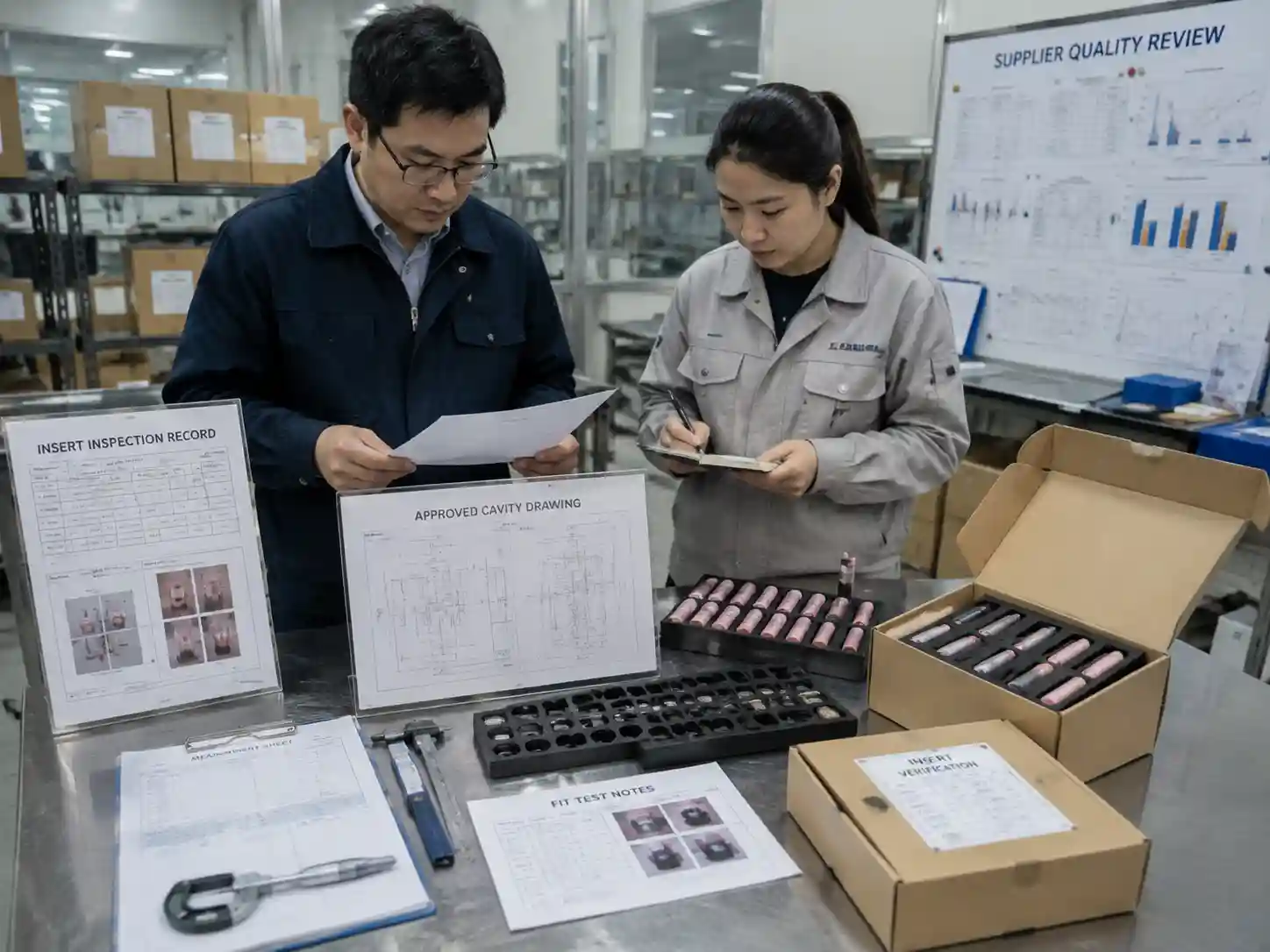
Evidence from this stage may include cavity drawings, prototype photos, measurement records, fit-test notes, and approved sample documentation.
How Can Buyers Check Insert Performance During Production?
Production verification should confirm that the approved insert design is reproduced consistently. Quality checks normally focus on dimensions, material condition, product placement, and finished package performance.
| Inspection item | Verification method |
|---|---|
| Opening dimension | Compare production inserts with approved cavity measurements. |
| Product retention | Load lipstick tubes and check movement or drop-through risk. |
| Orientation accuracy | Confirm products face the approved direction. |
| Packaging stability | Review loaded samples during handling and transport checks. |
What Packaging Risks Should Be Reviewed Before Approval?
The main risks are usually related to tolerance control, material selection, and product variation. A design that works with one sample may require adjustment if production units have different dimensions.
- Oversized openings: can allow tubes to move, tilt, or pass through the insert.
- Undersized openings: can increase removal difficulty or damage the insert.
- Weak retention structure: can fail after repeated handling.
- Incorrect product data: can create inaccurate cavity designs.
Buyers should approve the final insert based on documented measurements, physical samples, and agreed inspection criteria.
Frequently Asked Questions
Can the same insert opening size work for all lipstick tubes?
No. Lipstick tubes differ in diameter, cap design, weight, and surface shape. Each packaging project requires verification using the actual product dimensions.
Is a smaller insert opening always better for retention?
No. An opening that is too small may create excessive friction, slow product removal, or damage the insert. The correct design balances retention and accessibility.
Which insert material is best for lipstick tube retention?
The suitable material depends on product requirements. Paperboard, PET, EVA, foam, and molded pulp each provide different levels of support, flexibility, and appearance.
For custom advent calendar packaging projects, Giftpackpro supports insert structure evaluation, product fit review, and packaging development through custom advent calendar box services. Buyers can also explore custom advent calendar box products or request a custom quote with product details and insert requirements.