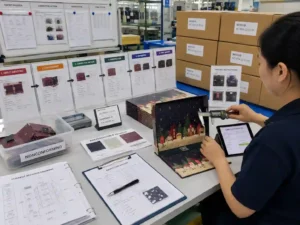
A door-opening calendar must balance easy access with structural durability. The design process starts by matching door construction, hinge style, perforation layout, magnetic closure, and panel strength to the expected handling conditions. Perforated door durability testing helps verify that doors open cleanly, maintain alignment, and avoid tearing, loosening, or cosmetic damage during repeated use.
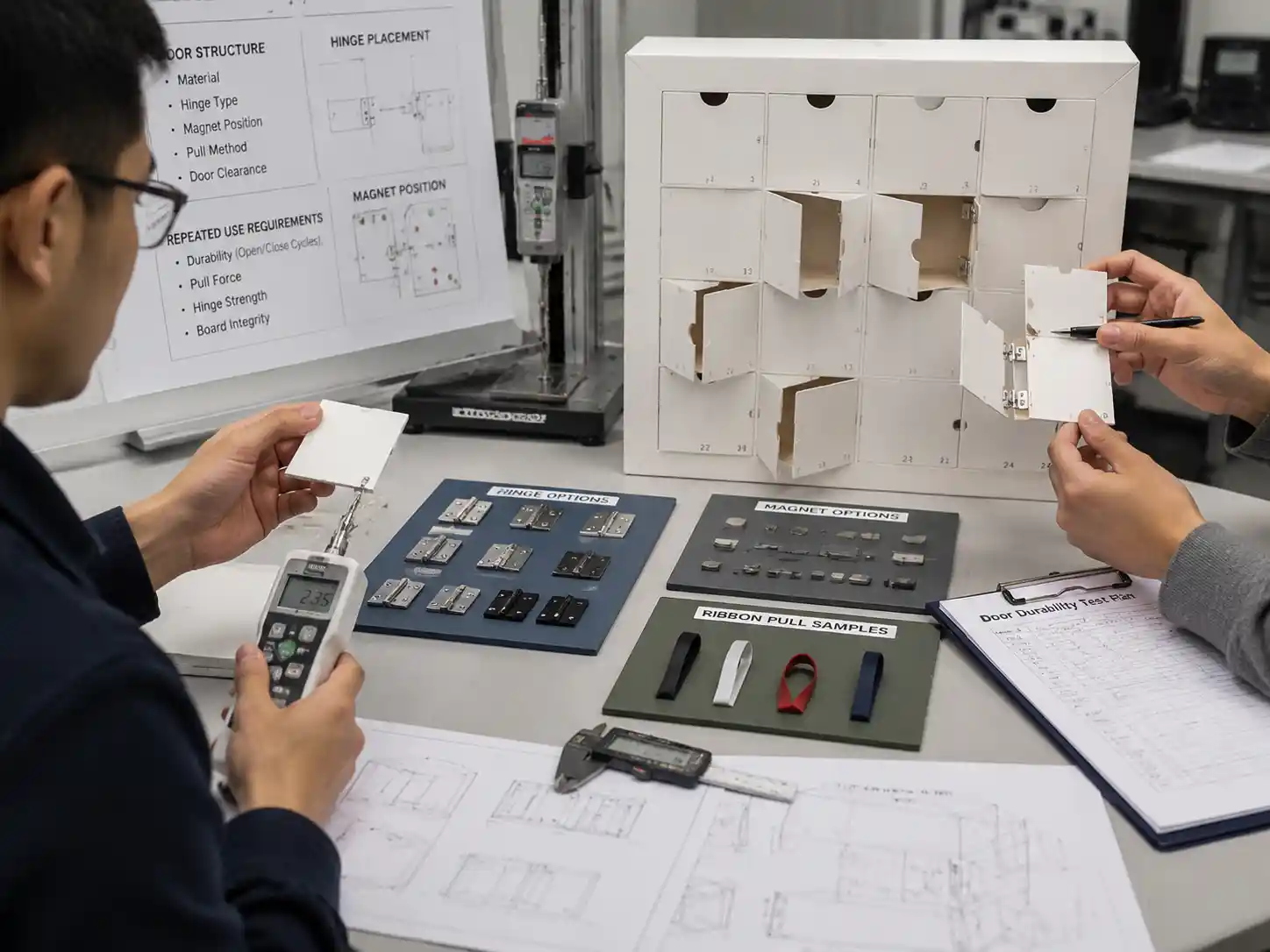
What structural factors determine a durable door-opening calendar design?
The most important factors are door material strength, cut-line position, hinge flexibility, opening resistance, and the connection between the door panel and surrounding structure. Each element affects whether the calendar can withstand repeated opening without damaging the printed surface or paperboard layers.
A structural review normally evaluates:
- Door size and shape compared with the surrounding panel area.
- Perforation or cut-line design around the opening area.
- Hinge or fold-line performance after repeated movement.
- Magnet, ribbon, or locking feature stability.
- Panel stiffness after multiple doors have been opened.
For custom projects, the correct solution depends on the product weight, calendar format, opening frequency, and required user experience. A small lightweight door may use a different reinforcement approach from a large drawer-door combination structure.
How should engineers perform perforated door durability testing?
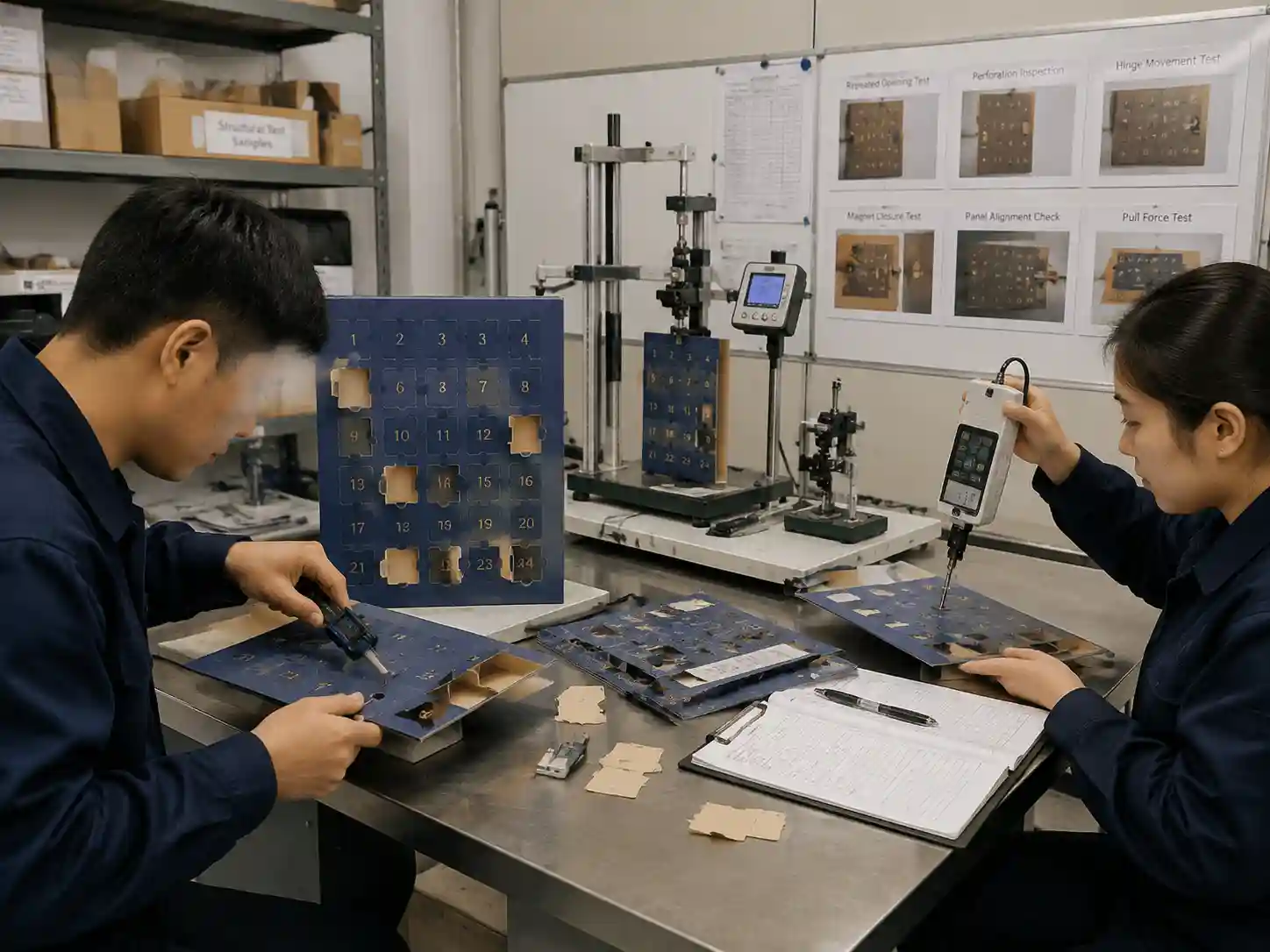
Perforated door durability testing should simulate the actual opening action rather than only checking the finished appearance. The goal is to confirm that the door separates at the intended area while maintaining strength in the remaining structure.
What are the main testing steps for door-opening performance?
- Review structural drawings: Check door dimensions, perforation locations, hinge positions, and reinforcement areas before physical testing.
- Inspect prototype samples: Confirm that the printed panel, board layers, and opening points match the approved design.
- Measure opening resistance: Use appropriate force measurement tools to evaluate whether the door opens smoothly without excessive tearing force.
- Repeat opening cycles: Open and close representative doors multiple times to observe wear, cracking, deformation, or loss of alignment.
- Record inspection results: Keep measurement sheets, sample photos, and approval records for production reference.
| Structural Area | Check Method | Potential Risk |
|---|---|---|
| Perforated door edge | Opening test and visual inspection | Uneven tearing or damaged graphics |
| Hinge area | Repeated movement check | Cracking or weakened folding performance |
| Magnet closure | Closure alignment measurement | Door not staying closed during handling |
| Main panel structure | Dimensional inspection | Warping or reduced stability |
How do door materials and reinforcement choices affect durability?
Door performance depends on the relationship between the paperboard structure and the opening mechanism. Increasing thickness is not always the best solution because excessive stiffness can make doors difficult to open or cause stress concentration around cut areas.
Common engineering decisions include:
- Adjusting board thickness to improve stiffness without reducing opening comfort.
- Adding reinforcement behind high-stress hinge or pull areas.
- Changing perforation length or tie points to control opening behavior.
- Balancing magnetic attraction with door weight and alignment.
These decisions should be verified through prototype inspection rather than assumed from drawings alone. Sample evaluation provides evidence of actual movement, fit, and durability.
What failure modes should be checked before mass production?
A structured failure review helps identify problems before production approval. The most common issues are related to opening force, alignment, and repeated mechanical stress.
- Door tears outside the intended opening path: Usually caused by unsuitable perforation design or weak surrounding material.
- Printed graphics crack along folds: Often related to stress concentration near hinges or cut lines.
- Door becomes loose after repeated use: May indicate insufficient connection strength or reinforcement.
- Magnet position changes: Can create poor closing performance or uneven gaps.
- Main panel bends: May happen when multiple doors remove too much structural support.
Which approvals and records should buyers review before production?
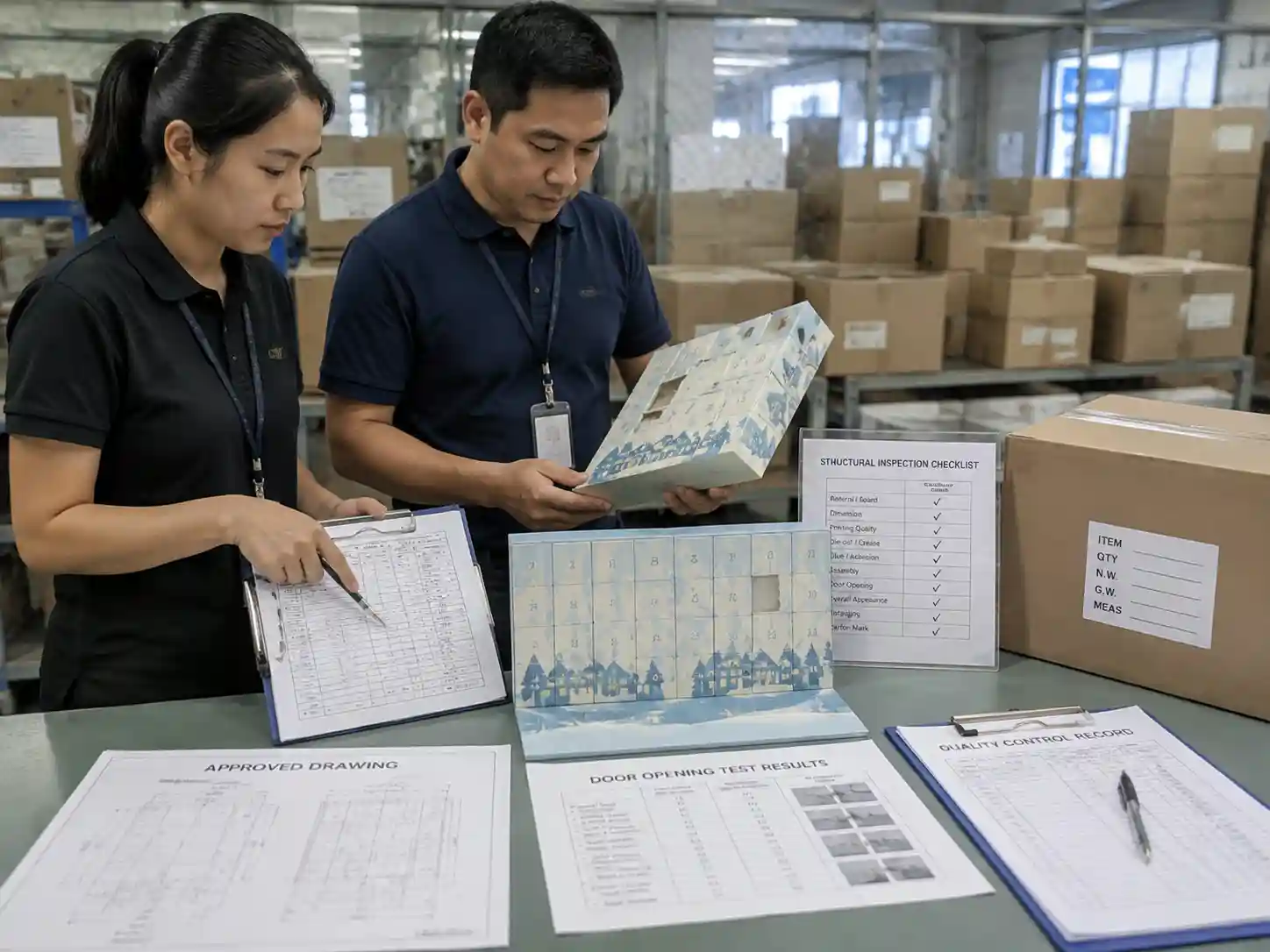
Buyers should approve evidence that connects the final structure with the tested sample. Useful records include approved drawings, prototype review notes, dimensional measurements, opening test observations, and QC inspection documents.
Verifiable information normally includes:
- Approved structural drawings and revision history.
- Sample photos showing door movement and alignment.
- Measurement records for key dimensions.
- Inspection checklists used during supplier verification.
Project-dependent decisions, such as opening resistance targets, reinforcement methods, and acceptable wear levels, should be agreed before production approval.
How does Giftpackpro support door-opening calendar development?
Giftpackpro develops custom advent calendar structures by combining packaging design review, prototype evaluation, and production verification. Projects can be reviewed through custom advent calendar box services and evaluated against specific structural requirements.
For buyers comparing structure options, custom advent calendar box products provide examples of different door, drawer, and panel configurations. A complete project discussion can also begin through a request a custom quote.
FAQs About Door-Opening Calendar Durability
Can a perforated door be both easy to open and durable?
Yes. The balance depends on perforation design, material selection, and reinforcement. Testing helps identify the correct combination between opening comfort and structural stability.
Why should door testing be done on physical samples?
Physical samples reveal practical issues such as tearing direction, hinge movement, alignment changes, and material behavior that may not appear in digital drawings.
What information should be approved before production?
Buyers should confirm the final structural drawings, tested sample condition, inspection requirements, and any project-specific acceptance criteria before production begins.
Need a custom structure review for a door-opening advent calendar project? Contact Giftpackpro to discuss your packaging requirements and structural verification process.