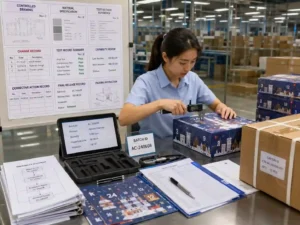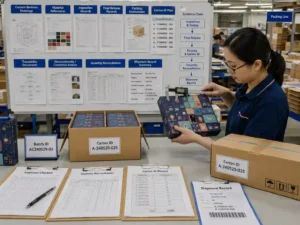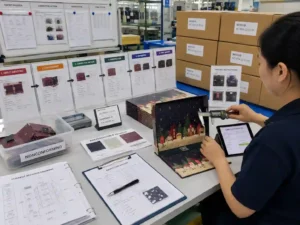
Before final insert tooling begins, suppliers need accurate product samples that represent the real items placed inside the calendar. The samples should include production-intent dimensions, weight, shape, orientation, and packaging conditions. These references allow engineers to confirm cavity size, clearance, support points, and removal performance before tooling decisions are finalized. Incomplete samples can create inaccurate cavities, repeated adjustments, and avoidable tooling changes.
What product samples are required before final insert tooling?
The required samples are the actual products or approved representative samples that will be placed inside the finished advent calendar. Packaging teams typically need samples that match the final product dimensions, external packaging condition, and expected filling orientation.
The most useful sample package normally includes:
- Actual product units or production-equivalent samples
- Outer retail packaging, caps, lids, pumps, handles, or accessories that affect size
- Product weight information or weighed samples
- Approved product orientation instructions
- Notes about fragile areas, pressure limits, or surface protection requirements
Why are actual product samples important for insert tooling?
Actual samples allow engineers to design cavities based on real dimensions instead of assumptions from drawings alone. Product drawings may not show assembly variation, soft materials, flexible packaging changes, or external components that affect fit.
For example, a cosmetic bottle with a pump, a pouch with flexible edges, or a glass container with a protective sleeve may require different cavity support compared with a simple rigid item of the same nominal size.
How should final insert tooling product samples be measured?
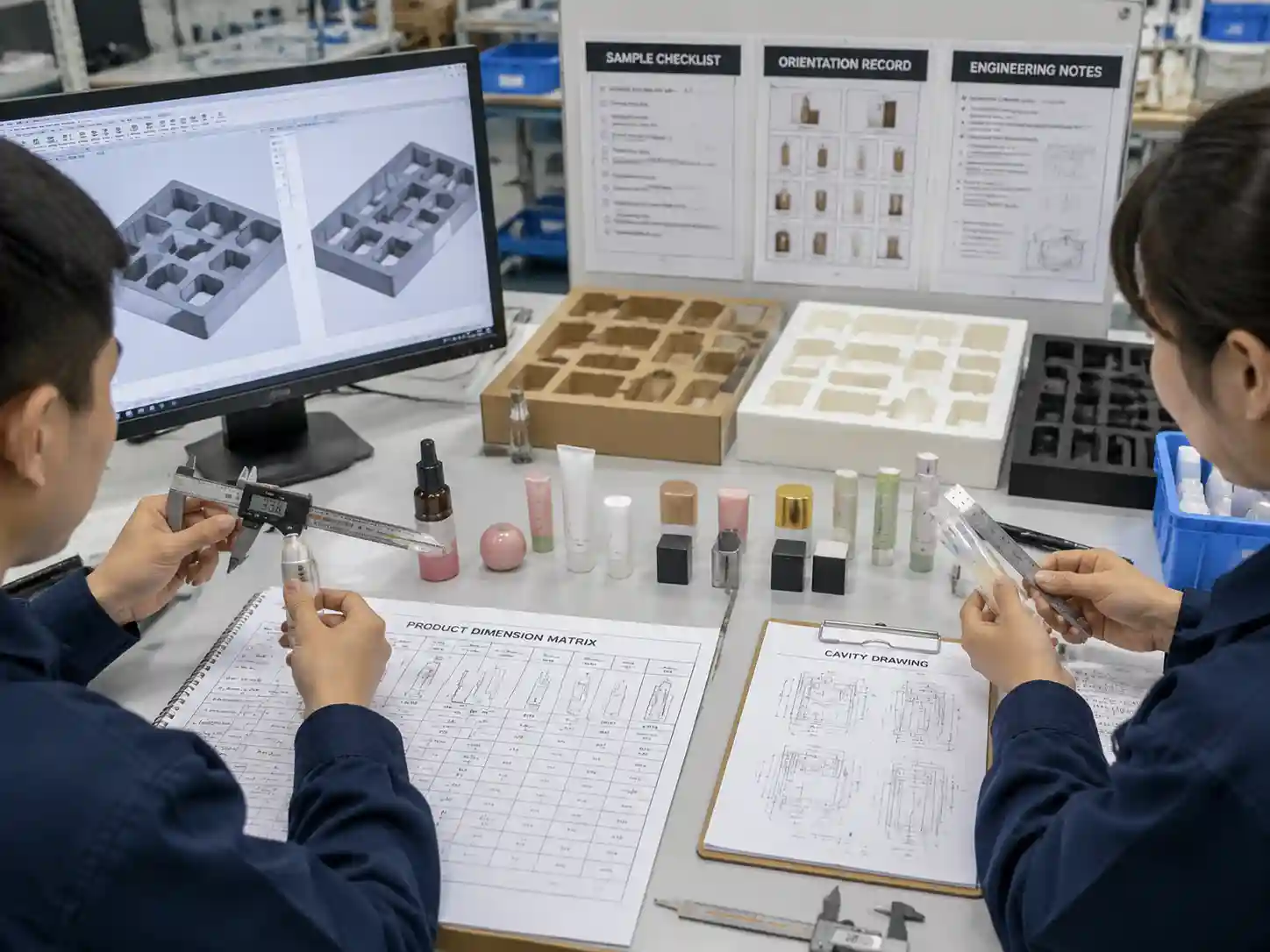
Measurements should be recorded before cavity design starts. The measurement process creates the reference data used for dimension matrices, insert drawings, and tooling approvals.
- Measure maximum length, width, and height of each product sample.
- Record special features such as caps, protrusions, corners, seams, and irregular shapes.
- Measure multiple samples when product variation is expected.
- Record product weight for loaded insert evaluation.
- Confirm the intended product orientation inside each cavity.
| Measurement item | Why it matters | Evidence to keep |
|---|---|---|
| Overall product dimensions | Defines cavity size and available clearance | Measurement sheet or dimension matrix |
| Protruding parts | Prevents collision with inserts or covers | Annotated product drawings |
| Product weight | Checks support strength and balance | Weight records and loaded samples |
| Orientation position | Controls appearance and removal direction | Cavity layout approval record |
How much tolerance should be considered before tooling approval?
Tolerance depends on the product material, insert structure, and required presentation quality. The insert cannot usually match the product size exactly because some clearance is needed for filling, removal, material variation, and production handling.
Project-dependent factors include:
- Whether the product is rigid or flexible
- Whether the product requires a tight premium fit or easier removal
- The insert material being used
- Expected variation between product batches
- Whether additional protective support is required
The recommended clearance should be confirmed through sample testing rather than estimated only from drawings.
What loaded sample checks should be completed before final tooling?
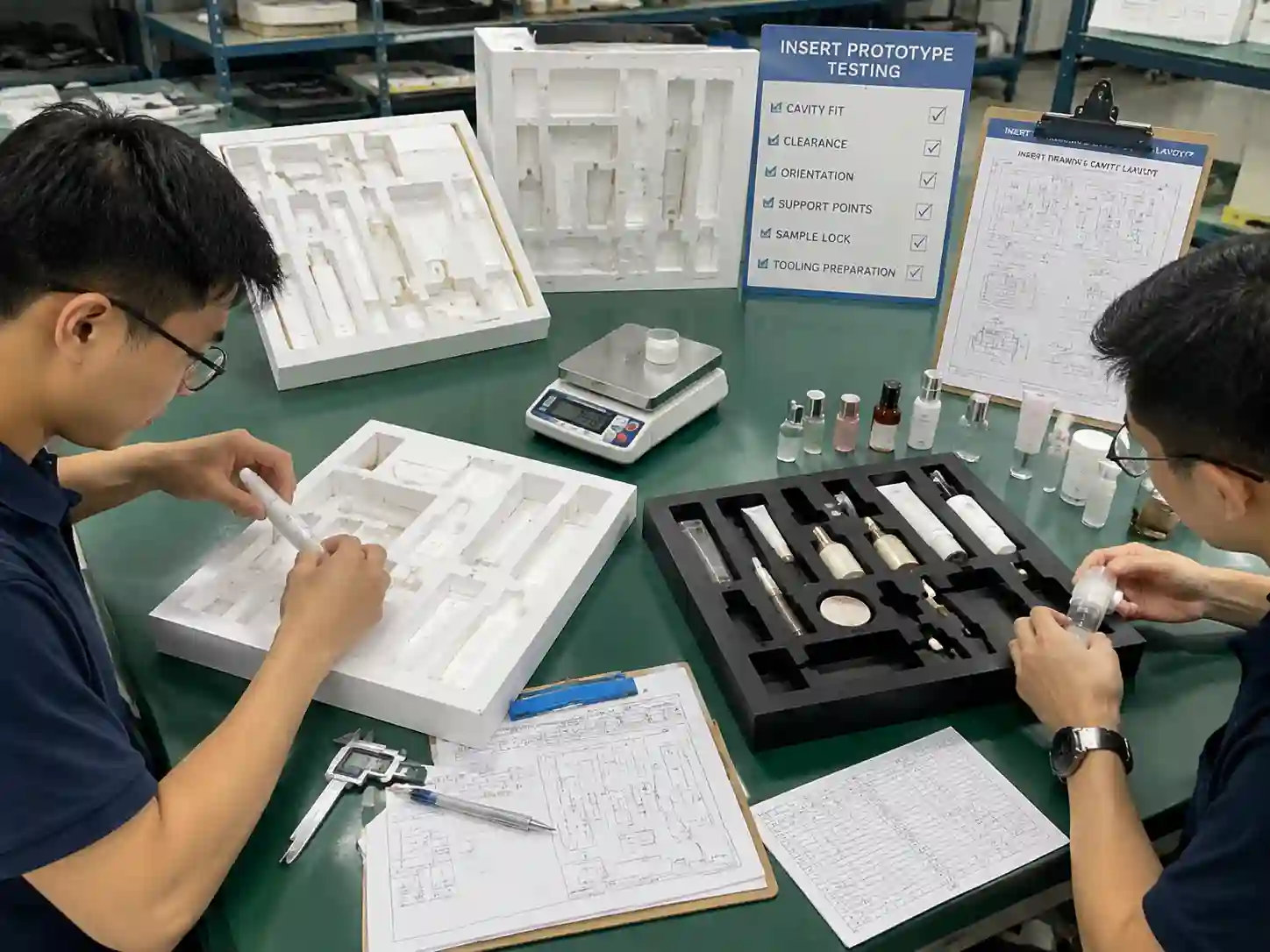
A loaded sample check verifies that the product, insert, and calendar structure work together before tooling is released. The review should use the real product samples supplied for the project.
- Confirm every cavity accepts the intended product orientation.
- Check that products can be inserted without excessive force.
- Verify products can be removed without damaging the insert or outer box.
- Inspect gaps, movement, pressure points, and unsupported areas.
- Record any required cavity adjustments before tooling approval.
Which documents should support sample approval?
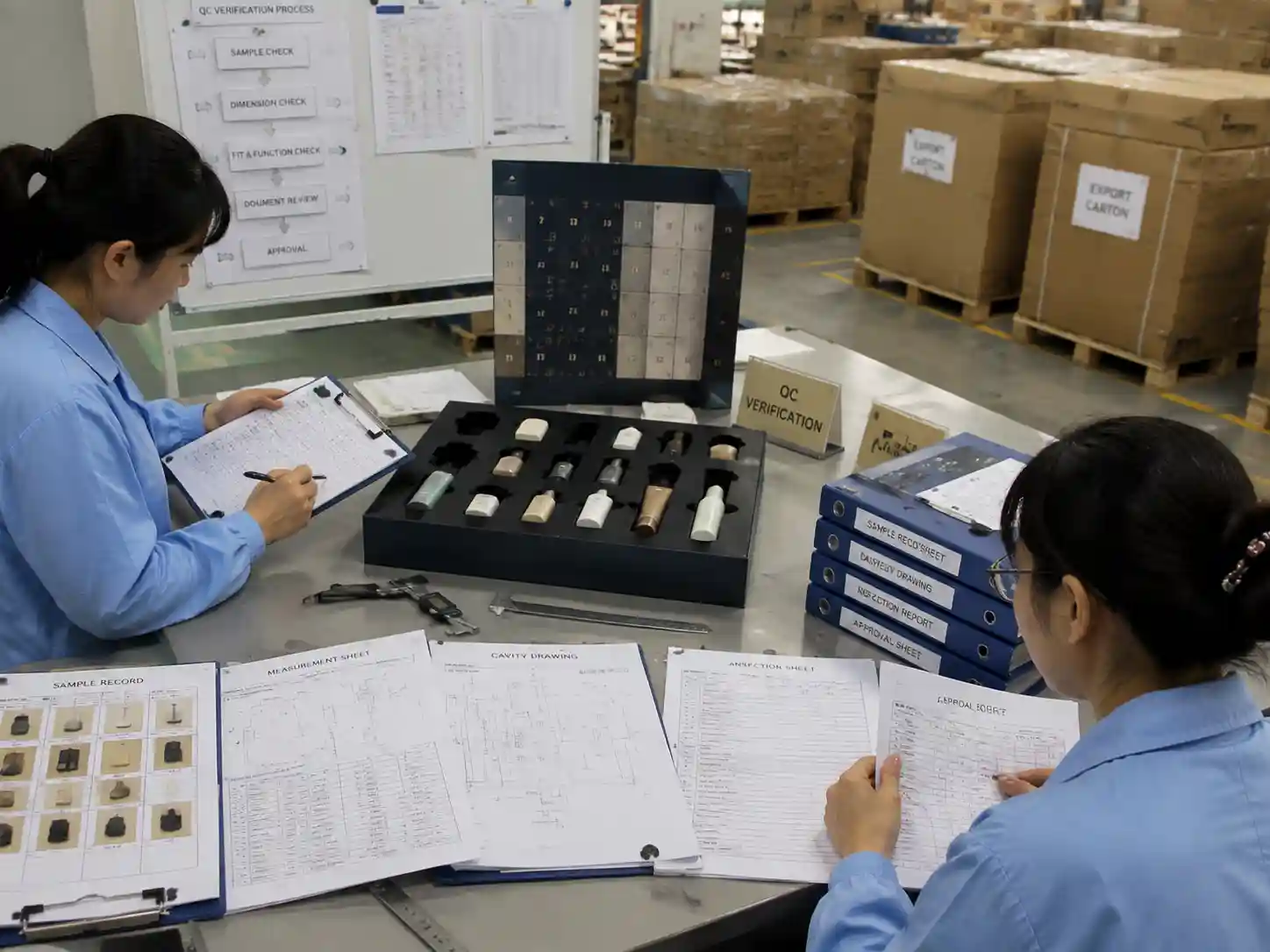
Sample approval should be supported by clear records showing what was measured, tested, and accepted. These records reduce confusion when tooling moves from engineering review into production preparation.
Useful approval evidence includes:
- Product sample photos and identification records
- Dimension measurement sheets
- Cavity drawings with revision numbers
- Loaded sample review notes
- Approval comments from the responsible project team
What happens if samples are incomplete before insert tooling?
Incomplete samples increase the risk of incorrect cavity dimensions, poor product presentation, and tooling revisions. Common problems include missing accessories, incorrect product orientation, and samples that do not represent the final packed condition.
When complete samples are unavailable, the project team should clearly identify assumptions and confirm which dimensions still require validation before tooling release.
How do buyers separate verified facts from project decisions?
Verified facts come from physical samples, measurements, drawings, and inspection records. Project decisions depend on factors such as product protection requirements, appearance expectations, insert material selection, and handling conditions.
- Verifiable: product size, weight, measured features, cavity drawings, and sample test results.
- Project-dependent: clearance preference, insert structure choice, orientation priority, and acceptable movement.
- Buyer approval: final cavity layout, sample acceptance, and tooling release decision.
Frequently asked questions about final insert tooling product samples
Can product drawings replace physical samples before tooling?
Drawings are useful references, but physical samples are preferred when shape, assembly variation, flexible materials, or external parts affect the final cavity design.
Should spare product samples be supplied?
Extra samples are useful when measurements, testing, or repeated fit checks are required. The quantity depends on product complexity and project needs.
When should tooling start after sample review?
Tooling should begin after product dimensions, orientation, and cavity requirements are reviewed and approved according to the project process.
For custom advent calendar packaging projects, providing complete product references early helps engineering teams create more accurate inserts and reduce avoidable adjustments. Learn more about custom advent calendar box services or request a custom quote for your packaging requirements.