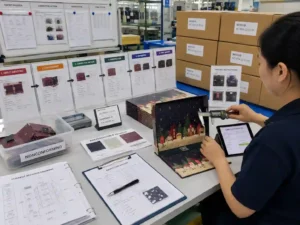
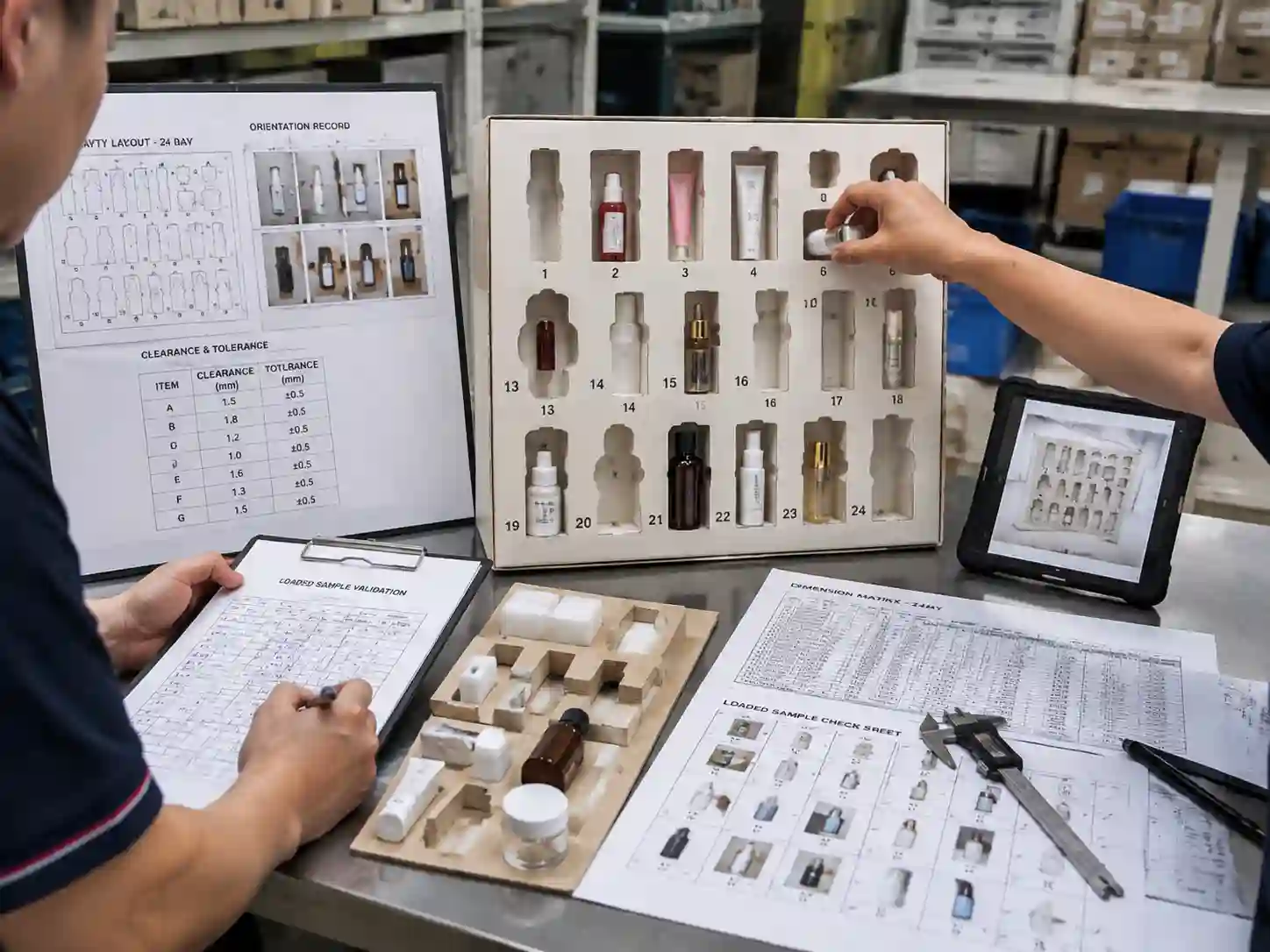
A product dimension matrix converts individual product measurements into structured packaging data for 12-, 24-, or 25-day advent calendars. It records product size, orientation, clearance needs, tolerance limits, cavity requirements, and weight information before insert and box development. A reliable matrix helps packaging teams reduce fit issues by creating a shared reference between product teams, engineers, sampling teams, and quality inspectors.

What Is a 12 24 25 day product dimension matrix?
A 12 24 25 day product dimension matrix is an engineering document that organizes the physical requirements of every item placed inside a multi-compartment calendar. It is used as a reference before cavity design, insert development, and sample validation.
The matrix is not only a size list. It should connect product measurements with packaging decisions, including:
- Product length, width, and height.
- Shape characteristics and irregular areas.
- Required orientation inside the compartment.
- Clearance allowance around the product.
- Weight distribution requirements.
- Special handling notes such as fragile surfaces or protruding parts.
For a 12-day calendar, the matrix normally covers fewer product positions but may contain larger or more varied items. A 24- or 25-day calendar usually requires stronger organization because more cavities must be reviewed and validated.
Why should packaging teams create a dimension matrix before insert design?
Creating the matrix before insert design allows engineers to make cavity decisions based on measured product data rather than assumptions. This reduces the risk of oversized cavities, insufficient clearance, product movement, or difficult product removal.
Typical risks without a structured matrix include:
- Products fitting in height but failing when the lid closes.
- Different product orientations creating inconsistent cavity sizes.
- Heavy products causing uneven stress on the insert structure.
- Sampling changes because product information was incomplete.
The final matrix should be supported by measurement records, product samples, approved drawings, and sample review notes.
How do you build a product dimension matrix step by step?
1. How should product measurements be collected?
Measure each product individually using appropriate tools such as digital calipers, rulers, gauges, or weighing equipment. Record the actual finished product condition, including caps, pumps, handles, lids, and protective components that affect packaging space.
- Identify every product SKU and assign a cavity reference number.
- Measure maximum external dimensions rather than only nominal dimensions.
- Record product weight and any fragile or flexible areas.
- Photograph unusual shapes when needed for engineering review.
- Confirm measurement units and document the measurement method.
| Matrix Field | Purpose |
|---|---|
| Cavity Number | Links each product position to the insert drawing. |
| Product Dimensions | Defines the physical space required. |
| Orientation | Shows how the product should be placed. |
| Clearance Requirement | Defines space needed for fit and removal. |
| Loaded Weight | Supports structural balance review. |
2. How should orientation and clearance requirements be recorded?
Orientation should be documented because the same product can require different cavity dimensions depending on how it is displayed or removed. The matrix should specify whether products are placed upright, flat, angled, or with a specific front-facing direction.
Clearance should be treated as a project-dependent engineering value. The required space varies according to product material, surface finish, insert type, removal method, and tolerance control.
Recommended records include:
- Product reference image or sketch.
- Approved placement direction.
- Minimum clearance area.
- Areas requiring support or protection.
How do you include tolerance and cavity validation in the matrix?
The dimension matrix should connect product measurements with cavity validation results. Engineers use it to compare the planned cavity size against actual loaded samples.
Important validation checks include:
- Does the product enter the cavity without excessive force?
- Does the product remain stable during handling?
- Does the lid close without interference?
- Does the insert maintain its shape under loaded weight?
- Can the product be removed without damaging the box?
Actual findings should be recorded in sample inspection documents, including measurement adjustments, approved changes, and final cavity references.
What should a loaded sample checklist include?
A loaded sample checklist confirms that the dimension matrix works with real products rather than only drawings. It provides evidence for engineering approval and production preparation.
- All product positions filled according to the approved layout.
- Product orientation checked against the matrix.
- Product height verified against lid clearance.
- Weight distribution reviewed across the calendar.
- Insert support points inspected.
- Removal accessibility confirmed.
- Changes recorded after testing.
Project requirements vary depending on product shape, quantity, insert material, and calendar structure. The approved matrix should represent the final product condition used for sampling and production reference.
How do buyers and suppliers approve a dimension matrix?
Approval should be based on shared documentation rather than verbal confirmation. Buyers and suppliers typically review measurement sheets, cavity drawings, prototype samples, and validation records together.
Useful approval evidence includes:
- Final product measurement records.
- Marked-up cavity drawings.
- Sample review comments.
- Approved orientation instructions.
- Inspection records from validation checks.
Giftpackpro uses this type of structured information flow when developing custom advent calendar box services and supporting product-specific packaging requirements.

How does the dimension matrix support final packaging decisions?
The completed matrix becomes a technical reference connecting product information with packaging development. It helps teams verify that the chosen box structure, insert layout, and cavity design match the actual products.
It should be maintained together with approved drawings, sample records, and quality documentation throughout the project. For teams planning a custom calendar project, reviewing product requirements early with a packaging supplier can prevent avoidable design changes. You can also explore custom advent calendar box products or request a custom quote for project evaluation.
FAQs About Advent Calendar Product Dimension Matrices
Can the same dimension matrix be used for different calendar formats?
The product data can often be reused, but cavity layouts and clearance requirements may change between 12-, 24-, and 25-day formats because compartment quantity and arrangement affect the overall design.
Should product weight be included in the dimension matrix?
Yes. Weight information supports structural review, especially when heavy products are placed in specific areas that may affect balance or insert strength.
Who should approve the final dimension matrix?
Approval usually involves the product team, packaging engineering team, and purchasing or sourcing representatives to confirm that product requirements and packaging expectations are aligned.
For custom seasonal packaging projects, a complete product dimension matrix provides the foundation for accurate measurement, cavity design, and validation. Contact Giftpackpro to discuss your advent calendar packaging requirements.