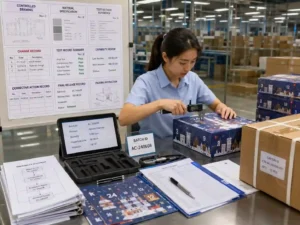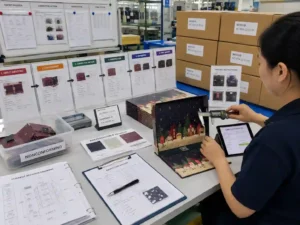
When products include protruding caps, pumps, triggers, or handles, packaging dimensions must account for more than the main body size. The critical measurements include total height, maximum projection, clearance around moving parts, orientation limits, and tolerance allowance. For custom advent calendar inserts and seasonal packaging, these dimensions determine whether products fit securely, remain protected, and can be validated through samples before production.
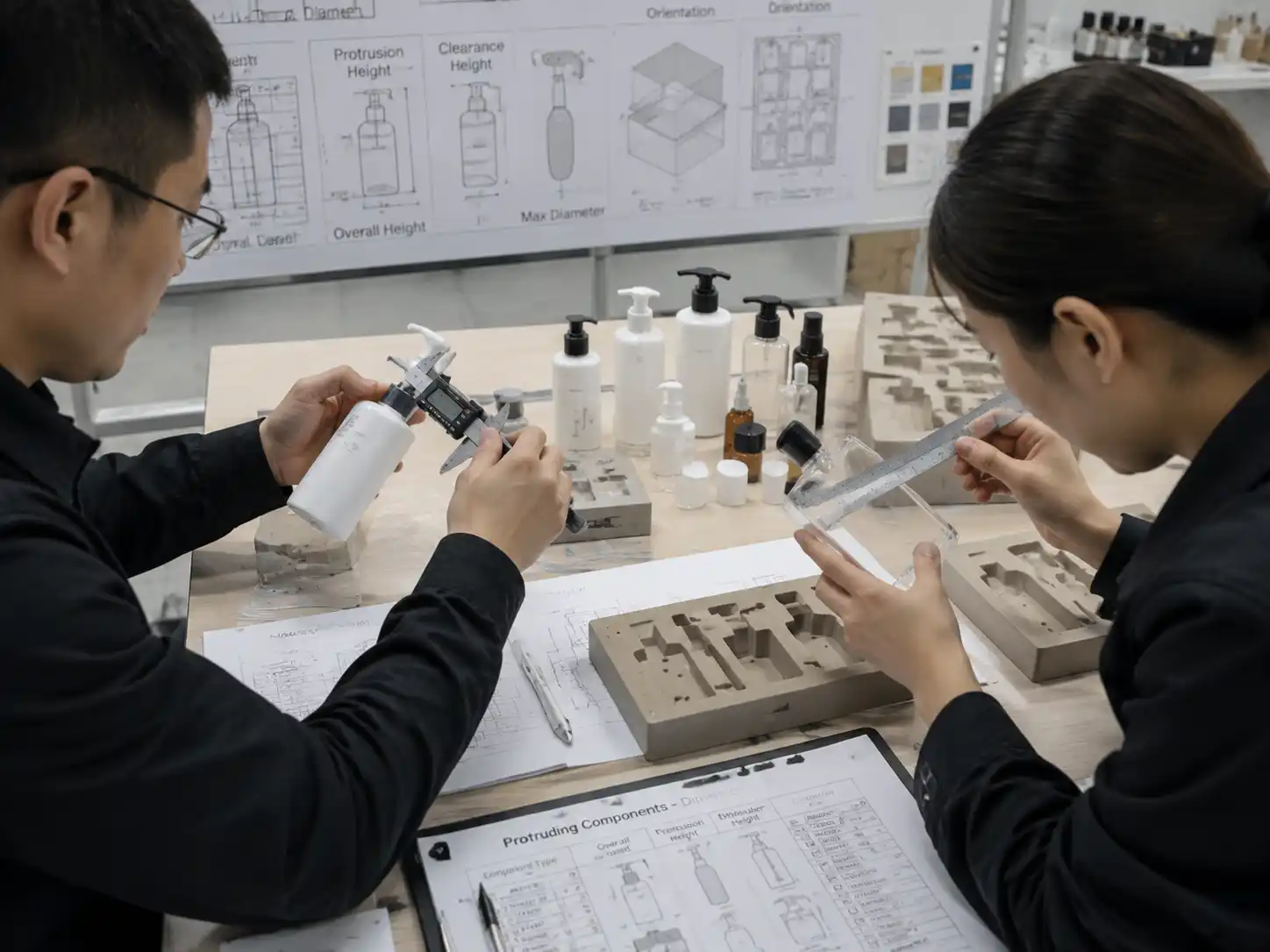
What product dimensions matter when caps, pumps, or handles extend beyond the main body?
The most important dimensions are the full outer envelope of the product, including every protruding component. Measuring only the bottle or container body can create incorrect cavity sizes and prevent proper insert performance.
Packaging engineers typically measure:
- Overall height: The distance from the lowest contact point to the highest protruding point, including caps, pumps, or handles.
- Maximum width and depth: The largest footprint created by the product body and any side extensions.
- Projection distance: How far the cap, pump head, trigger, or handle extends beyond the main product shape.
- Functional movement space: Additional space required for pump heads, rotating caps, or movable handles.
- Contact surfaces: Areas where the insert supports or holds the product.
How should buyers measure products with protruding components?
The measurement process should capture the complete product shape before insert design begins. A dimensional drawing or physical sample should represent the product in its actual packed orientation.
- Place the product on a stable reference surface in the intended package position.
- Measure the full height, including the highest point of the cap, pump, or handle.
- Measure the widest and deepest points created by protruding parts.
- Record irregular shapes using multiple measurement points rather than a single length and width value.
- Confirm whether the protruding component can move, collapse, rotate, or change position during handling.
- Create a dimension record that can be compared with insert drawings and cavity prototypes.
For complex products, digital calipers, rulers, product drawings, and physical samples are commonly used together. The final measurement method depends on product geometry and the required packaging accuracy.
Why is clearance important for caps, pumps, and handles?
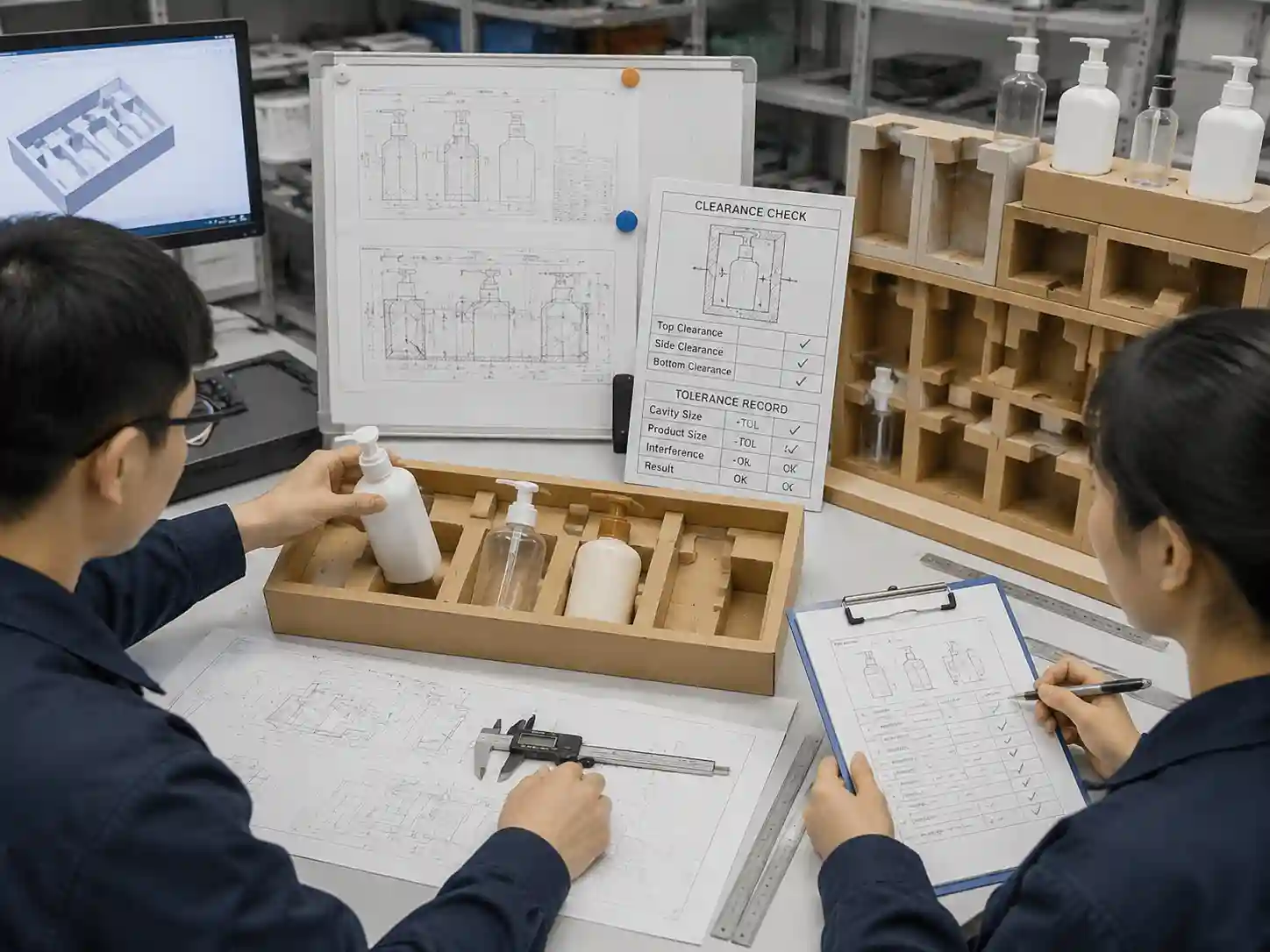
Clearance prevents protruding components from being compressed, damaged, or forced into an incorrect position inside the insert cavity. A cavity that matches the product body but ignores extensions can create pressure points and unstable packing.
Typical clearance considerations include:
| Dimension Check | Purpose | Risk if Incorrect |
|---|---|---|
| Top clearance | Allows space above pumps, caps, or handles | Component pressure, deformation, or lid interference |
| Side clearance | Prevents contact with cavity walls | Scratches, stress marks, or difficult loading |
| Movement clearance | Allows functional parts to remain in position | Pump activation or handle damage |
| Base support area | Keeps the product stable | Tilting or loose fit during transport |
The exact clearance value varies by product material, insert type, product weight, and packaging structure. These values should be confirmed through prototype testing rather than assumed.
How do tolerances affect packaging dimensions for protruding caps pumps?
Tolerance control is necessary because both products and packaging components can vary slightly from approved dimensions. The insert cavity must accommodate normal variation while still holding the product securely.
Important tolerance checks include:
- Variation between product samples from different production batches.
- Differences between measured dimensions and supplier drawings.
- Insert material compression or forming variation.
- Changes caused by labels, protective sleeves, or secondary components.
Verified measurements should be recorded in dimension sheets, cavity drawings, or sample approval documents. These records provide a reference when suppliers, designers, and purchasing teams review fit issues.
How should protruding products be tested inside an advent calendar insert?
A loaded sample test is the most practical way to confirm whether measured dimensions translate into a working package solution. The product should be tested in the actual insert design rather than evaluated only from drawings.
What should a loaded-sample checklist include?
- Product placed in the approved orientation.
- All caps, pumps, and handles checked for pressure or contact marks.
- Insert retention checked during movement and handling.
- Door, drawer, or lid function verified after loading.
- Product removal tested without damaging the packaging structure.
- Final cavity dimensions compared against approved drawings.
Buyer approvals should be based on physical samples, measurement records, and documented fit checks. The final requirement depends on the product shape, packaging style, and handling conditions.
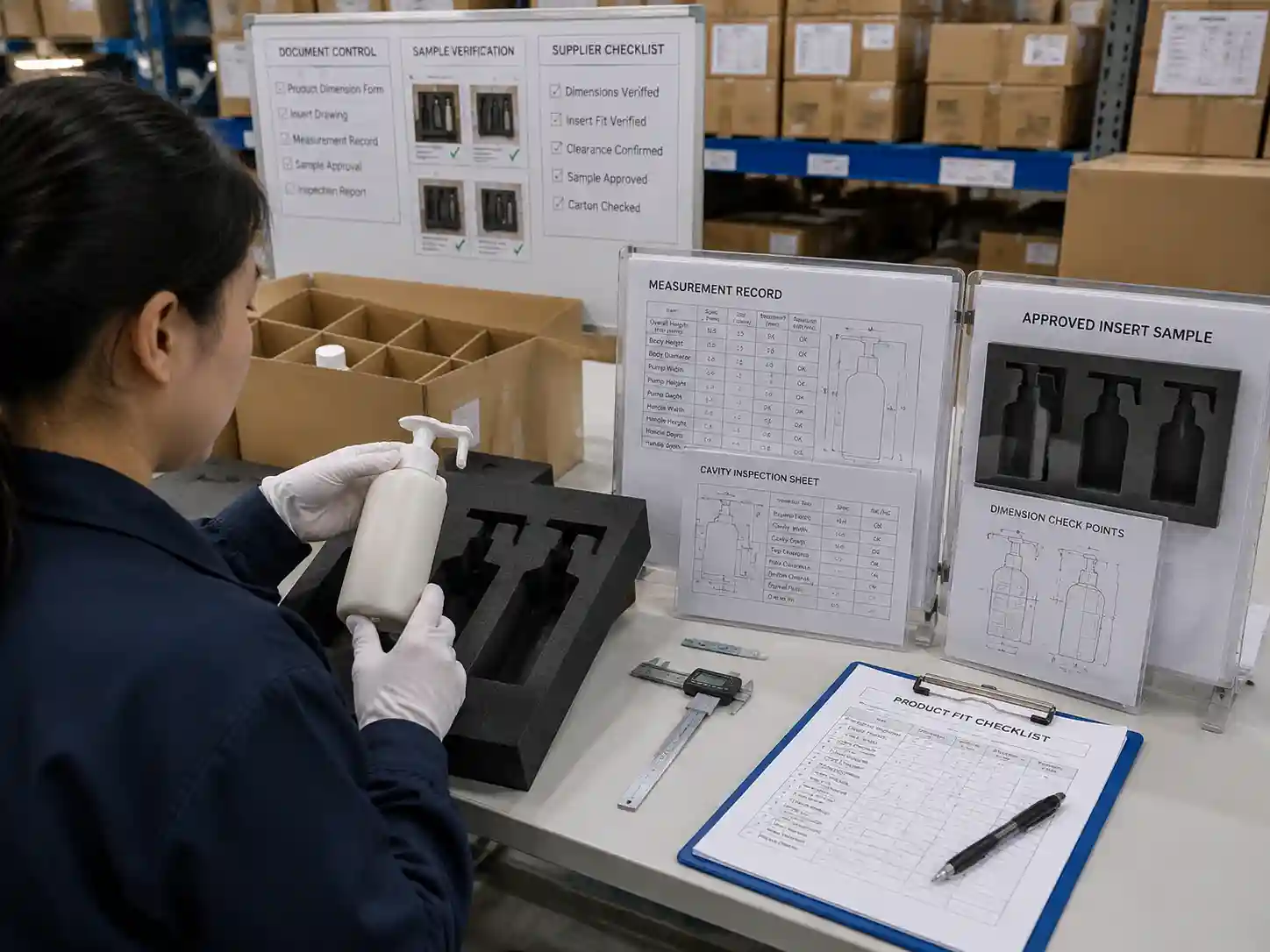
What evidence should support final dimension approval?
Dimension approval should be supported by traceable records rather than verbal confirmation. Useful evidence includes product measurement sheets, marked-up cavity drawings, prototype photos, sample review notes, and QC inspection records.
For commercial packaging projects, these documents help ensure that the approved insert matches the actual product configuration. They also reduce misunderstandings when product samples, engineering drawings, and production specifications are reviewed by different teams.
Can protruding components require a different insert design?
Yes. Products with pumps, handles, or extended caps often require modified cavity geometry, deeper sections, protective supports, or different orientation planning. The required solution depends on the product shape, weight distribution, and packaging structure.
Do measurements need to be repeated after product changes?
Yes. Any change to a cap, pump, handle, bottle size, accessory, or product assembly can affect cavity fit. Updated measurements should be reviewed before insert approval if the product configuration changes.
Giftpackpro supports custom advent calendar box development with product measurement review, insert coordination, and packaging engineering support. For projects involving unusual product shapes or protruding components, request a custom quote with product dimensions and sample details for evaluation.