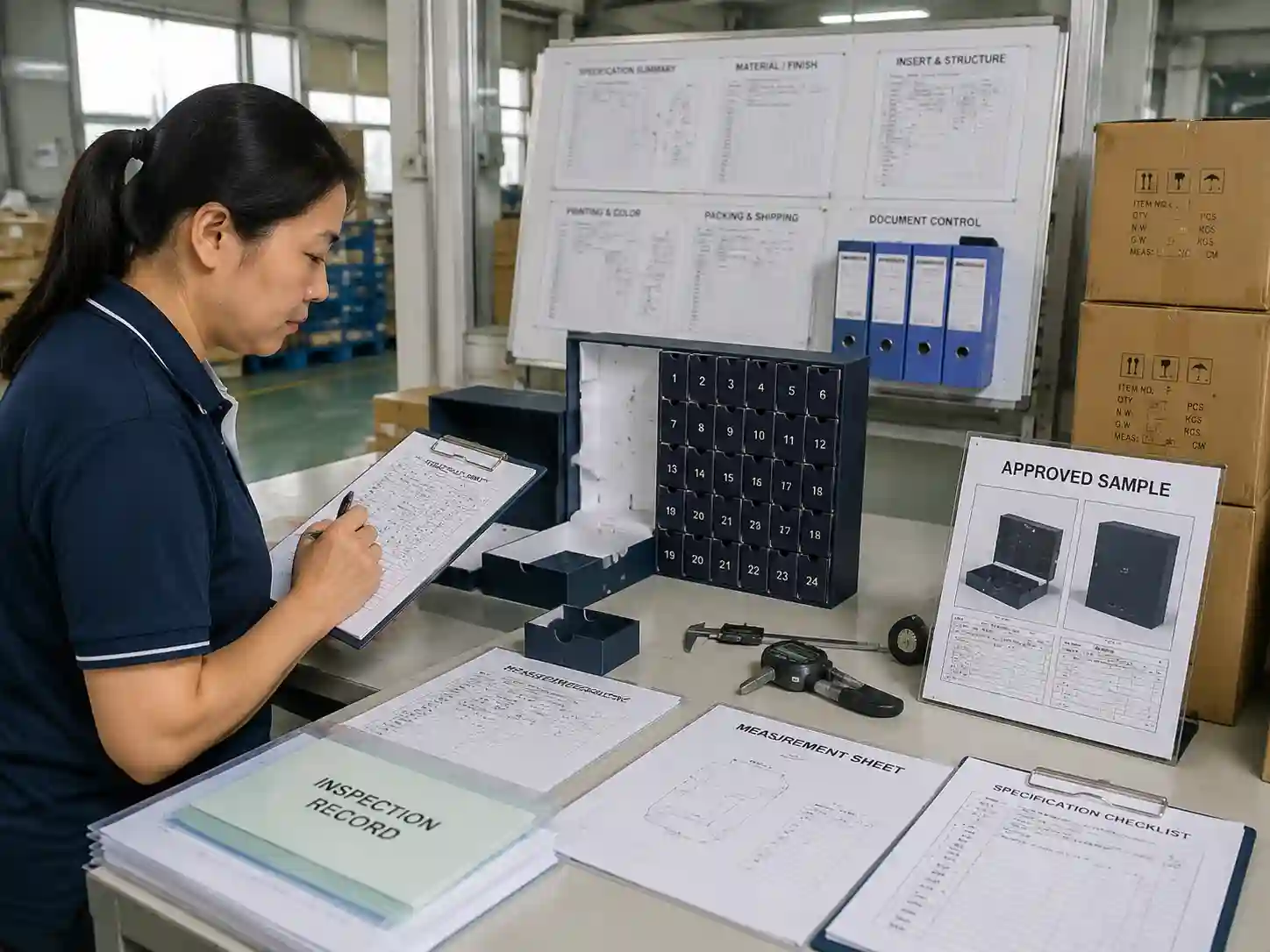
Quick answer: Before issuing a purchase order, buyers should freeze the specifications that directly affect production cost, manufacturing method, quality expectations, and supplier comparison. For an advent calendar box, this normally includes box structure, finished dimensions, materials, insert design, artwork version, finishing details, assembly requirements, and approved reference samples. A clear advent calendar po specification freeze helps prevent quotation changes, production disputes, and inconsistent supplier interpretation after ordering.
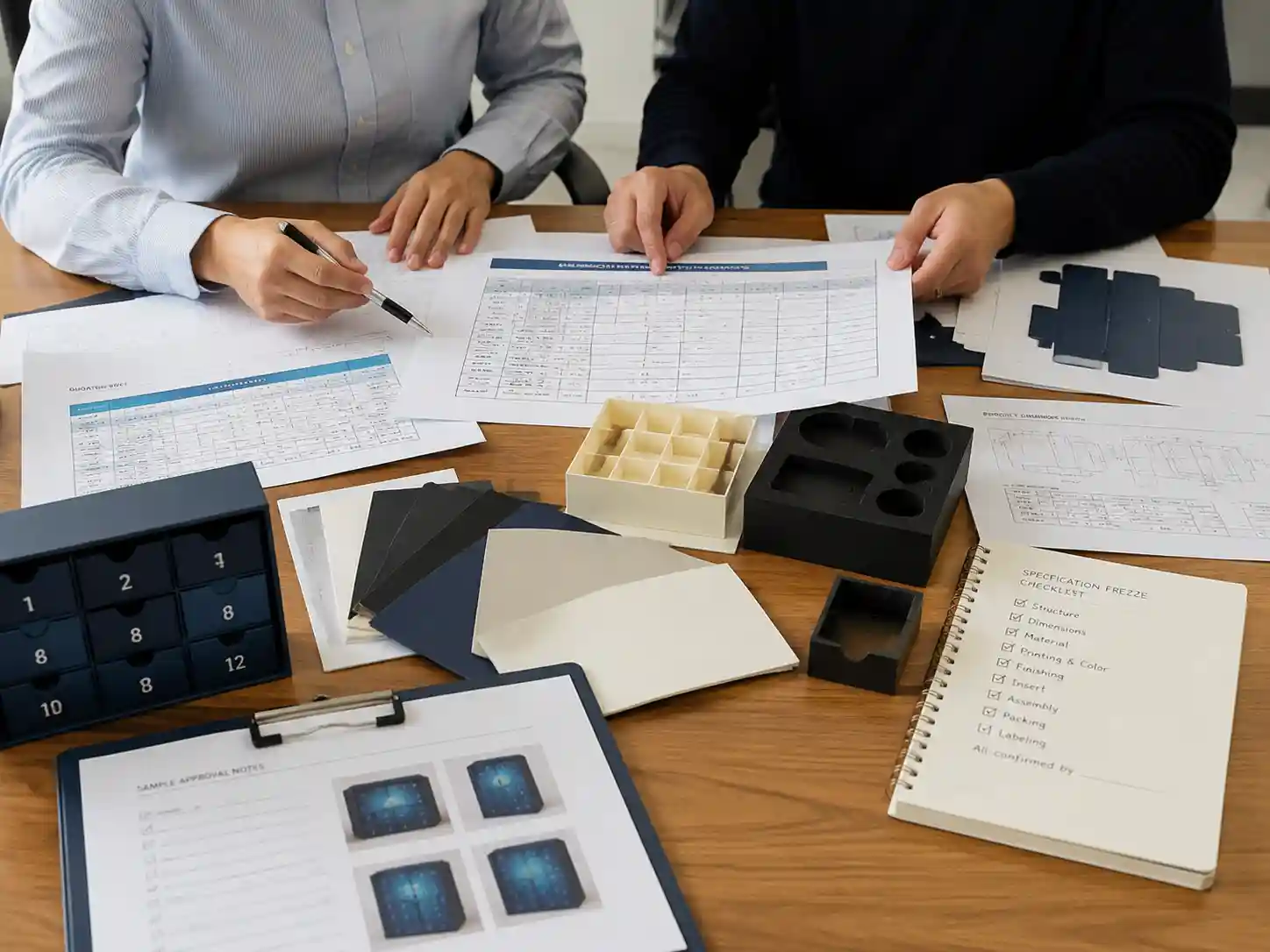
Why should advent calendar box specifications be frozen before the purchase order?
Specifications should be frozen before the purchase order because the supplier needs a confirmed production target before materials are purchased, tooling is prepared, and manufacturing schedules are arranged. If important details remain open, the quoted price and final product may not represent the same scope.
A specification freeze does not mean every minor production detail must be decided immediately. It means the buyer and supplier have agreed on the information that affects the commercial agreement, manufacturing feasibility, and quality acceptance.
For packaging procurement, the most important purpose is creating a common reference between the RFQ, quotation, purchase order, approved sample, and production inspection process.
Which advent calendar box specifications must be frozen before ordering?
The specifications that must be frozen are the items that can change material usage, production processes, appearance, or acceptance standards. Buyers should confirm these areas before releasing the purchase order.
Should box structure and dimensions be frozen before the PO?
Yes. Box structure and finished dimensions should be frozen because they determine the manufacturing method, material consumption, assembly process, and packing arrangement.
- Box style, such as drawer, door-opening, book-style, or folding structure.
- Overall finished size and tolerance requirements.
- Number and arrangement of compartments.
- Opening method and functional requirements.
- Flat-packed or assembled delivery format when applicable.
Verification should come from approved structural drawings, dimension sheets, prototypes, or supplier engineering documents rather than only verbal descriptions.
Should material specifications be frozen before production?
Yes. Material selection should be confirmed before the purchase order because different boards, papers, laminations, and reinforcement methods can affect appearance, strength, and cost.
| Specification Area | What Should Be Confirmed | How Buyers Can Verify |
|---|---|---|
| Main box material | Paperboard type, thickness, and construction method | Material samples, supplier specification sheets, approved samples |
| Surface finish | Lamination, coating, texture, or special finishing requirements | Finish samples or approved reference sample |
| Insert material | Insert structure and material selection | Insert sample, fit check, dimension confirmation |
| Color reference | Artwork version and approved color standard | Artwork approval records and print proofs |
Material substitutions should not be accepted automatically after ordering. Any alternative material should be reviewed against the original requirement for appearance, function, and production impact.

Which artwork and finishing details need approval before the purchase order?
Artwork and finishing details that affect production should be frozen before the PO. This prevents suppliers from producing against outdated files or unclear visual expectations.
- Final artwork version and file approval status.
- Printing method and color requirements.
- Special finishing areas such as foil, embossing, or spot effects.
- Position of graphics, labels, and important design elements.
- Reference images or approved physical samples when needed.
The buyer should maintain an approval record showing which artwork file or sample version is the production reference. A quotation based on one artwork version should not automatically cover later design changes.
How should buyers define insert and product-fit specifications before ordering?
Insert specifications should be frozen when the insert affects product protection, presentation, or assembly accuracy.
Important information includes:
- Insert layout and compartment positions.
- Product dimensions used for fit evaluation.
- Required clearance around products.
- Insert material and appearance expectations.
- Assembly method and installation requirements.
Because product sizes and insert designs can vary by project, buyers should confirm the actual product samples, dimensions, or technical drawings used for fit approval.
What approval records should exist before releasing a purchase order?
A controlled approval record helps prove that the supplier and buyer agreed on the same specification set before production begins.
| Approval Record | Purpose |
|---|---|
| Final quotation | Confirms the commercial scope and assumptions. |
| Approved specification sheet | Defines production requirements. |
| Approved drawing or dieline | Controls structure and dimensions. |
| Approved sample or reference sample | Defines appearance and functional expectations. |
| Artwork approval record | Controls printing version. |
These records allow purchasing teams, suppliers, and QC teams to evaluate the same standard during production and inspection.
Which specifications can remain flexible after the purchase order?
Only non-critical details should remain flexible after the PO, and they should be clearly identified as adjustable items rather than unresolved specifications.
Examples may include production scheduling details, minor manufacturing adjustments recommended by engineering, or supplier process improvements that do not change the approved product requirement.
Any change affecting cost, appearance, dimensions, material performance, or customer acceptance should normally require buyer approval before implementation.
What risks occur when specifications are not frozen before ordering?
Unfrozen specifications create uncertainty between the quotation stage and production stage. Common risks include:
- Different suppliers quoting different interpretations of the same RFQ.
- Unexpected cost adjustments after order confirmation.
- Artwork or material changes during production preparation.
- Quality disagreements because acceptance standards were unclear.
- Production delays caused by missing approvals.
A structured specification freeze improves quotation comparison and makes supplier performance easier to evaluate.
How can buyers prepare a practical specification freeze checklist?
Before issuing the purchase order, buyers can use a short internal checklist to confirm that the key decisions are complete.
- Confirm box structure and final dimensions.
- Confirm materials and finishing requirements.
- Confirm insert design and product-fit information.
- Confirm artwork version and approval status.
- Confirm reference samples, drawings, and inspection criteria.
- Confirm that quotation assumptions match the final specification.
For teams preparing a new project, reviewing a complete advent calendar box buying guides resource can help organize RFQ preparation and supplier communication.
How does specification freeze improve supplier comparison?
A specification freeze allows buyers to compare suppliers on the same technical basis instead of comparing different interpretations of the product.
When each supplier receives identical requirements, differences in quotation, production approach, and quality capability become easier to evaluate. This supports more reliable purchasing decisions and reduces avoidable changes after ordering.
Giftpackpro works with buyers who need structured communication around custom packaging requirements, including custom advent calendar box services and project-specific specification confirmation.
Frequently Asked Questions
Can buyers change specifications after issuing a purchase order?
Changes may be possible, but they should be reviewed because they can affect cost, production timing, materials, and approval requirements. The impact depends on the project stage and supplier preparation status.
Is an approved sample enough for specification freeze?
An approved sample is important, but it is usually stronger when supported by drawings, material information, artwork approval, and written specifications.
Who should approve the final advent calendar box specifications?
The approval process depends on the organization, but purchasing, product, design, and quality teams often need alignment before the purchase order is released.
For a structured quotation discussion, buyers can request a custom quote with confirmed specifications and approval references.