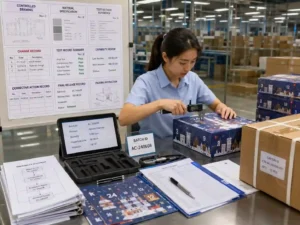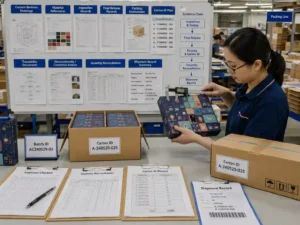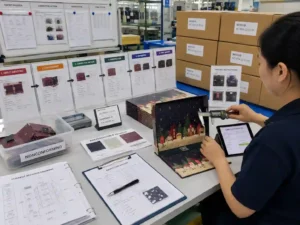
After a packaging sample is approved, brands need a clear change-control process to prevent unexpected differences during production. A practical system records what was approved, evaluates every requested change, confirms cost and specification impact, and requires documented approval before suppliers proceed. For custom advent calendar boxes, this process helps purchasing teams maintain quotation accuracy, production consistency, and supplier accountability.
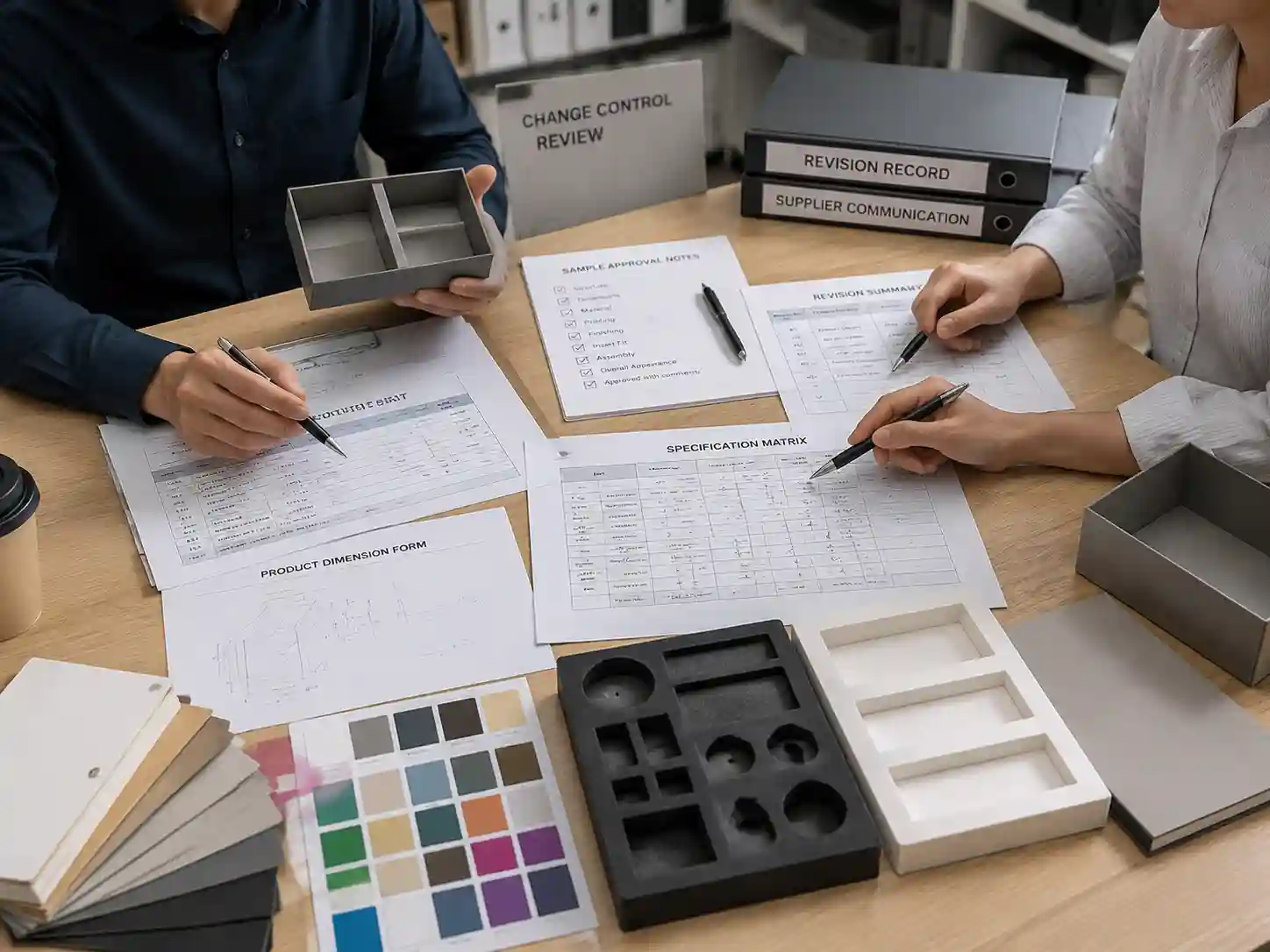
Why do brands need packaging change control after sample approval?
Brands need change control because an approved sample becomes the reference point for production decisions. Any later modification to materials, structure, artwork, inserts, finishing, or packing requirements can affect cost, quality, and delivery expectations.
Without a documented process, suppliers and buyers may work from different assumptions. A small change, such as adjusting a compartment size or replacing a material grade, can create differences between the approved sample and the final production batch.
What should a buyer treat as the approved reference?
The approved reference should include more than a physical sample. Buyers should maintain a complete approval package containing the sample status, specification documents, drawings, measurements, and supplier confirmation records.
- Approved physical sample or reference sample photos
- Final structural drawings or dieline files
- Confirmed dimensions and tolerance requirements
- Material and finishing specifications
- Approved artwork version or revision number
- Supplier acknowledgement of the approved specifications
How should brands define a packaging change request?
A packaging change request should clearly describe what is changing, why it is changing, and what impact it may have. The request should be reviewed before any production adjustment is made.
| Change Area | Items to Review | Evidence Required |
|---|---|---|
| Structure | Box dimensions, folding method, opening function, assembly details | Updated drawings, measurement records, revised sample if needed |
| Materials | Paperboard, wrapping paper, insert material, thickness | Material comparison sheets and supplier confirmation |
| Printing and finishing | Color, coating, foil, embossing, surface treatment | Artwork revision and approved production reference |
| Packaging requirements | Internal protection, packing method, carton configuration | Packing specification updates |
The level of review depends on the type of change. A cosmetic adjustment may require artwork approval, while a structural change may require engineering review and a new sample evaluation.

What steps are included in a packaging change-control process?
A reliable process normally follows a sequence of identification, evaluation, approval, and implementation. The goal is to ensure every production decision can be traced back to an approved requirement.
Step 1: Record the requested change
The buyer or supplier should create a change record describing the original specification, requested modification, reason for the change, and affected documents.
Typical information includes:
- Current approved version
- Requested new version
- Reason for the modification
- Responsible person requesting the change
- Date of request
Step 2: Evaluate quotation and production impact
Before approval, purchasing teams should confirm whether the change affects the original quotation assumptions. Changes in materials, dimensions, production processes, or packing methods may influence the final cost structure.
| Review Point | Buyer Question |
|---|---|
| Cost impact | Does the modification change material usage, labor steps, or production requirements? |
| Specification impact | Does the approved specification need to be updated? |
| Supplier impact | Can the supplier implement the change without affecting quality control? |
| Approval impact | Is a revised sample or additional confirmation required? |
Step 3: Update documents before production
Production should only follow the latest approved information. Buyers should confirm that updated drawings, specifications, and approval records are shared with the relevant supplier teams.
Document version control is especially important when multiple departments are involved, such as purchasing, product management, packaging engineering, and quality inspection.
How can buyers prevent unauthorized packaging changes?
Buyers can reduce unauthorized changes by defining approval responsibilities before production begins. The supplier should know which changes require written confirmation and which minor adjustments can follow normal production controls.
A practical RFQ and approval checklist may include:
- Approved sample identification method
- Specification document version number
- Required approval contact or department
- Change notification process
- Updated quotation requirement when cost changes
- Production release conditions
For commercial packaging projects, the exact approval workflow varies depending on the product, supply chain structure, and internal purchasing process.
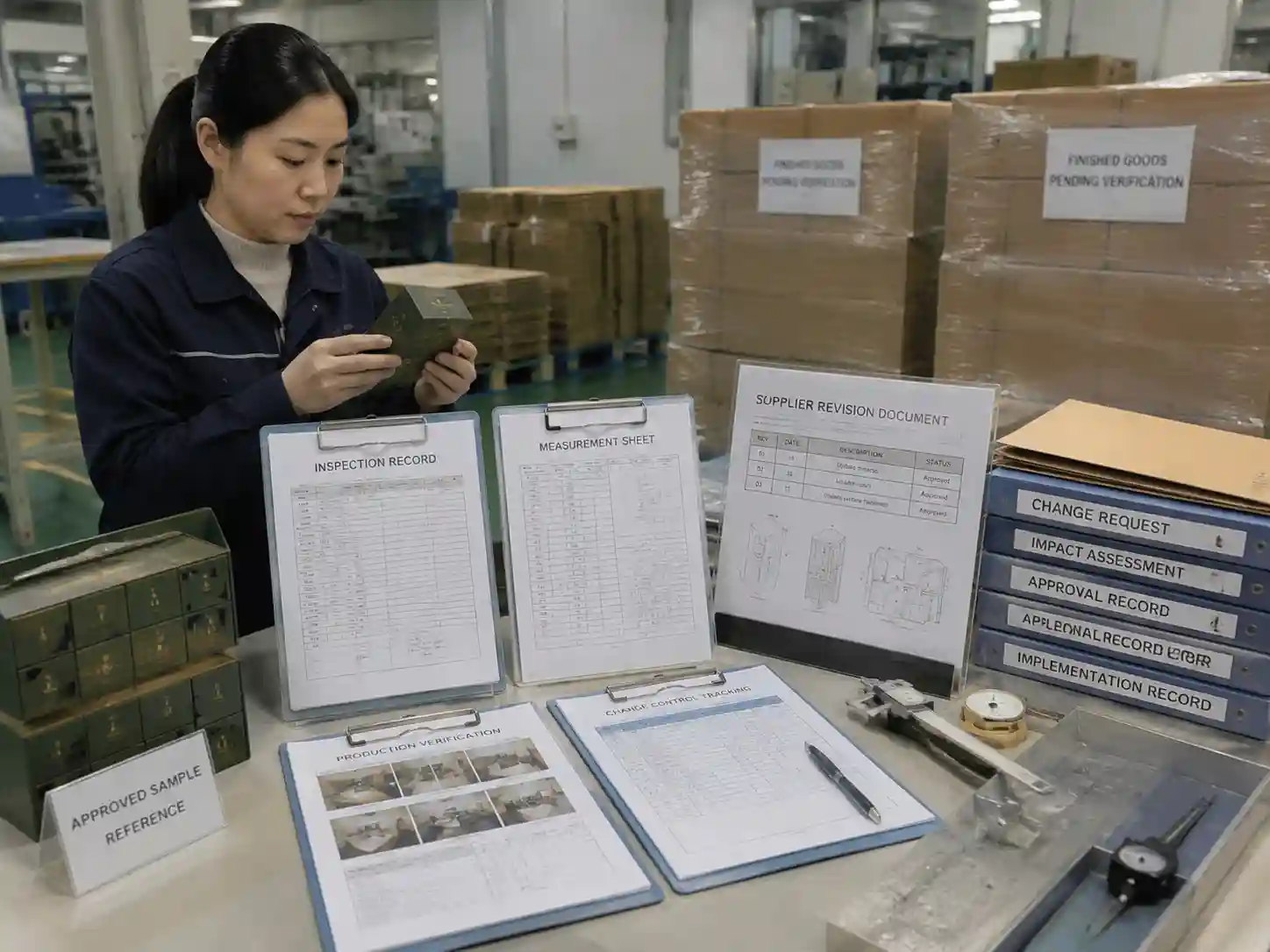
How should suppliers verify changes before mass production?
Suppliers should verify approved changes through documented checks rather than relying only on verbal confirmation. This creates evidence that production requirements match the latest buyer approval.
Useful verification records may include:
- Updated specification sheets
- Sample comparison photos
- Dimension measurement records
- Material confirmation documents
- Production inspection checklists
Quality checks should focus on the characteristics affected by the change. For example, a structural modification should be checked through dimensions and function testing, while a printing change should be verified through approved artwork and color references.
What information should buyers keep after approving changes?
Buyers should retain a complete change history so future production runs can be compared against approved decisions. This is useful when reviewing supplier performance or repeating seasonal packaging projects.
- Original approved sample information
- Change request records
- Approval communications
- Updated quotation references
- Final production specifications
Giftpackpro supports commercial buyers with structured custom packaging development through custom advent calendar box services, helping teams manage specifications, samples, and production communication during packaging projects.
Frequently Asked Questions
Can a supplier change packaging details after sample approval?
Changes should not be implemented without buyer approval when they affect agreed specifications, appearance, function, or quotation assumptions. Minor production adjustments should still follow the agreed quality-control process.
Does every packaging change require a new sample?
Not always. The requirement depends on the type and risk of the change. Structural, functional, or appearance-related changes may require a revised sample, while document-only updates may not.
Who should approve packaging changes?
The approval owner depends on the company structure. Purchasing, product management, packaging engineering, or quality teams may participate depending on the affected area.
How can brands start a controlled packaging approval workflow?
Brands can begin by defining the approved sample baseline, creating a simple change request record, and requiring documented confirmation before production updates. This approach keeps supplier quotations, specifications, and production expectations aligned.
For custom seasonal packaging projects, buyers can request a custom quote with clear specifications and approval requirements before moving into production.