
Quick answer: Buyers should quote one advent calendar design at multiple order quantities by keeping the product specification unchanged and comparing how costs change at different volumes. The quotation should separate fixed costs, variable production costs, packing assumptions, and quantity-related adjustments. A clear quantity break structure helps purchasing teams compare suppliers fairly and understand whether lower unit pricing comes from real production efficiency or hidden specification changes.
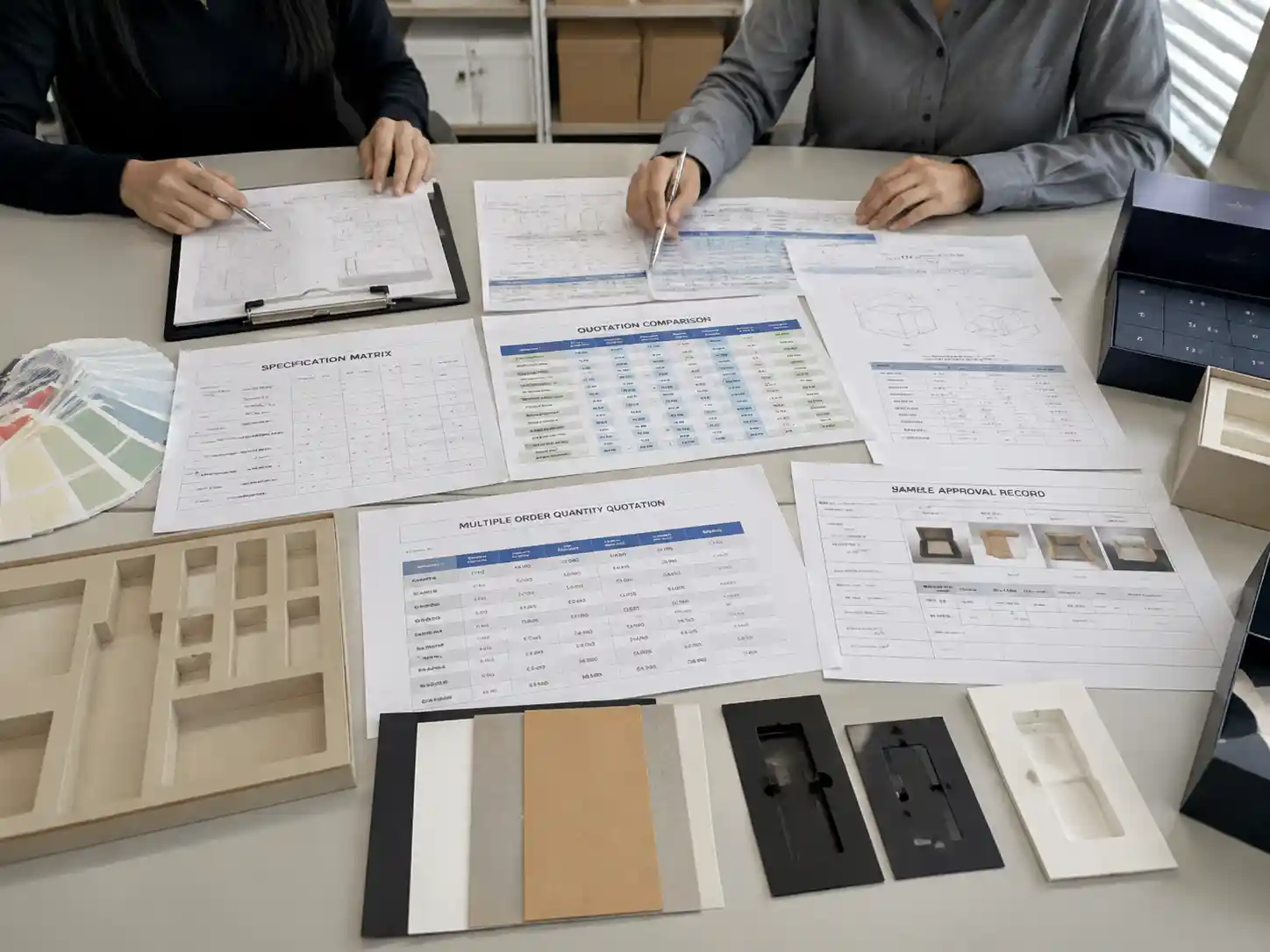
Why should buyers quote one advent calendar design at multiple quantities?
Buyers should quote the same design at multiple quantities because quantity affects manufacturing efficiency, material purchasing, production setup allocation, and unit cost. The purpose is to understand the cost curve of one approved design, not compare different products under different specifications.
For an accurate comparison, the RFQ should keep key variables consistent, including box structure, dimensions, board material, insert type, printing requirements, finishing options, assembly method, and packing method. If these change between quantities, the quotation comparison may not show the real impact of order volume.
What information should be fixed before requesting quantity break pricing?
Before requesting quantity-based pricing, buyers should define the product baseline. A supplier can only provide meaningful quantity breaks when every quotation tier refers to the same technical requirement.
| Specification Area | Buyer Should Confirm | Verification Evidence |
|---|---|---|
| Box structure | Same drawer, door, book-style, or folding structure across quantities | Approved drawing, dieline, or sample reference |
| Material | Same board grade, paper wrap, and reinforcement requirements | Material specification sheet or approved sample |
| Artwork and finishing | Same printing colors, lamination, foil, embossing, or special effects | Artwork file, color reference, finishing approval record |
| Insert design | Same compartment layout and product fit requirements | Insert drawing and measurement records |
| Packing method | Same individual packing and carton requirements | Packing specification and carton details |
Keeping these points unchanged prevents suppliers from lowering the quoted unit price by removing features or changing specifications between quantity levels.
How does advent calendar quantity break pricing work?
Advent calendar quantity break pricing normally separates costs that remain fixed from costs that decrease as production volume increases. The quotation should show how each quantity level affects the final unit price.
| Cost Element | Impact at Higher Quantity | Buyer Check |
|---|---|---|
| Engineering and setup costs | Often spread across more units, reducing cost per piece | Confirm whether included once or allocated per quantity tier |
| Material purchasing | Larger orders may improve purchasing efficiency | Check that material specification remains unchanged |
| Production labor | Efficiency may improve with repeated production | Compare whether process assumptions are identical |
| Packing and handling | May change depending on shipment preparation requirements | Confirm carton quantity and packing method |
The purpose of multiple quantity quotations is not only finding the lowest unit price. Buyers should understand where savings come from and whether the quantity level matches their purchasing plan.

How should buyers structure a quantity break RFQ?
A practical RFQ should ask suppliers to quote the same design at several planned quantities. Commonly, buyers select quantity levels that represent realistic purchasing scenarios rather than random numbers.
- Define one approved product specification.
- Select several quantity levels for comparison.
- Request unit pricing and any separate fixed charges.
- Ask suppliers to identify assumptions behind each quotation.
- Compare quotations using the same specification checklist.
A quantity comparison may include a format such as:
| Quantity Tier | Quotation Information Required |
|---|---|
| Lower volume scenario | Unit price, setup allocation, production assumptions |
| Medium volume scenario | Unit price change and reason for adjustment |
| Higher volume scenario | Volume efficiency explanation and updated cost breakdown |
This structure allows purchasing teams to evaluate whether the supplier understands production economics instead of only comparing headline prices.
What should buyers check when comparing quantity quotations?
Buyers should compare quotations line by line and confirm that lower prices do not come from reduced specifications. The quotation review should focus on evidence, not assumptions.
- Check whether all quantity tiers use the same drawings and specifications.
- Confirm whether tooling, sampling, or setup-related charges are handled consistently.
- Review whether material grades and insert structures remain unchanged.
- Confirm whether packing assumptions are identical.
- Request clarification for unusually large price differences.
Supplier quotation comparison is more reliable when supported by documents such as technical drawings, approved samples, measurement records, quotation revisions, and supplier confirmation notes.
What risks occur when buyers do not request multiple quantity levels?
Without quantity break quotations, buyers may not understand the real relationship between order size and unit cost. This can create inaccurate budgeting and make supplier comparisons difficult.
- A low initial quantity may appear expensive because fixed costs are not spread across enough units.
- A large quantity quotation may appear cheaper because assumptions are incomplete.
- Different suppliers may include different cost items, making comparison misleading.
- Future quantity changes may require unexpected quotation adjustments.
Clear quantity tiers help buyers identify whether pricing changes are caused by volume efficiency, specification differences, or quotation scope differences.

How can buyers create a reliable quotation comparison record?
Buyers should keep a quotation comparison file that connects each price tier with the approved product information. This creates a reference when suppliers revise pricing or when order quantities change.
- Approved product drawings
- Final specification checklist
- Supplier quotations by quantity tier
- Sample approval records
- Quotation revision history
- Buyer approval notes
For custom advent calendar packaging projects, Giftpackpro helps buyers organize product specifications and quotation requirements through custom advent calendar box services, allowing different quantity scenarios to be reviewed using consistent project information.
FAQ: Should the design change between quantity quotations?
No. For a meaningful quantity comparison, the design and specifications should remain the same. If the structure, materials, inserts, or finishing change, the buyer is comparing different products rather than different production volumes.
FAQ: Should buyers ask for fixed costs separately?
Yes. Separating fixed costs from unit costs helps buyers understand which expenses decrease with volume and which costs remain related to project setup or development.
FAQ: How many quantity levels should buyers request?
The number of quantity levels depends on the purchasing plan. Buyers should include enough scenarios to understand expected volume changes while keeping the quotation review practical.
When preparing an RFQ for a custom advent calendar box, buyers can use advent calendar box buying guides or request a custom quote to define the right quotation structure before supplier comparison.