Hidden costs in advent calendar packaging projects often come from unclear RFQ requirements rather than unexpected production issues. The most common mistakes include incomplete specifications, unclear cost boundaries, missing approval requirements, and supplier quotations that are not comparable. A controlled RFQ should define structure, materials, finishes, packing expectations, and approval points so buyers can compare suppliers on the same basis.

What RFQ mistakes create hidden costs in advent calendar packaging?
The main RFQ mistakes are missing technical details, unclear quotation categories, and incomplete project requirements. When suppliers interpret the same request differently, the final cost can change after sampling, engineering review, or production preparation.
Common hidden-cost triggers include:
- Providing only product photos without dimensions or internal requirements.
- Requesting a quotation before confirming box structure and opening style.
- Leaving insert requirements undefined when product fit affects the design.
- Not separating tooling, sampling, unit cost, packing, and freight-related items.
- Comparing supplier quotations with different assumptions.
How does an incomplete packaging specification increase RFQ costs?
An incomplete specification creates cost uncertainty because suppliers must make assumptions. Each assumption can introduce additional engineering changes, sample revisions, or production adjustments later.
Before sending an RFQ, buyers should prepare key information such as:
| RFQ Area | Information to Define | Evidence to Confirm |
|---|---|---|
| Box structure | Drawer, door, book-style, folding, or other construction requirements | Structure drawings, reference samples, approved prototypes |
| Dimensions | Outer size, compartment size, product clearance | Measurement sheets and technical drawings |
| Materials | Board type, wrapping paper, insert material expectations | Material samples and specification records |
| Finishing | Lamination, foil, embossing, coating, printing requirements | Approved finish samples or artwork specifications |
| Cost boundaries | Which items should appear separately in the quotation | Supplier quotation format and cost breakdown |
Buyers can reduce uncertainty by attaching drawings, sample references, measurement information, and approval requirements together instead of relying on email descriptions alone.

Why do unclear quotation requirements create hidden packaging costs?
Unclear quotation requirements make supplier comparison unreliable because each supplier may include different items or exclude different preparation costs. A lower initial quotation may not represent a lower total project cost.
A controlled quotation comparison should review whether each supplier has clearly separated:
- Tooling or development-related costs where applicable.
- Sampling and prototype preparation requirements.
- Production unit pricing assumptions.
- Packing method and shipment preparation requirements.
- Additional engineering or revision costs caused by specification changes.
How can buyers compare advent calendar supplier quotations fairly?
Buyers should normalize quotations by checking whether suppliers are pricing the same structure, materials, finishes, quantities, and service scope. A comparison table helps identify whether a price difference comes from efficiency or missing quotation details.
| Comparison Item | Supplier A | Supplier B | Buyer Check |
|---|---|---|---|
| Board and material specification | Defined / unclear | Defined / unclear | Are materials equivalent? |
| Insert specification | Included / excluded | Included / excluded | Is product protection comparable? |
| Finishing details | Listed / assumed | Listed / assumed | Are visual requirements identical? |
| Quotation scope | Complete / partial | Complete / partial | Are hidden items separated? |
What RFQ details should buyers verify before approving a supplier quotation?
Before quotation approval, buyers should verify that the supplier has understood the project requirements and that the quotation matches the intended production standard.
A practical RFQ verification checklist includes:
- Confirming the packaging structure with drawings or approved references.
- Checking all external and internal dimensions.
- Confirming material and finishing descriptions.
- Reviewing sample approval requirements.
- Confirming what changes would trigger quotation updates.
- Keeping quotation versions and revision records.
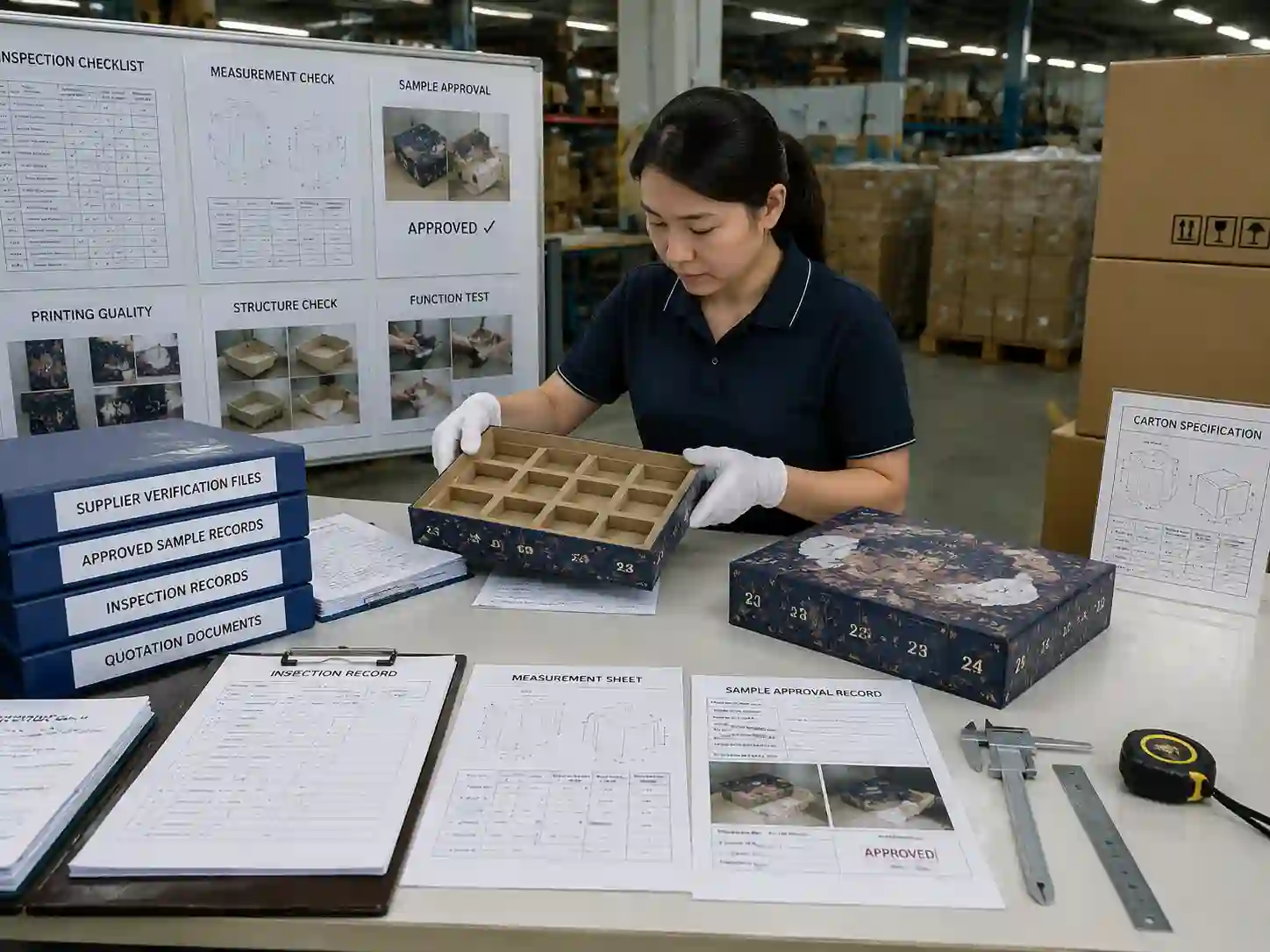
Important decisions should be supported by documents such as engineering drawings, sample approval records, measurement reports, and quotation revisions. These records help buyers identify whether a later cost change comes from supplier error or a project requirement change.
How do buyer approvals prevent unexpected RFQ cost changes?
Buyer approvals create clear decision points between design, sampling, and production stages. Without approval records, suppliers and buyers may have different interpretations of the final packaging requirements.
Recommended approval records include:
- Approved structural drawings.
- Confirmed material and finishing samples.
- Prototype evaluation notes.
- Final quotation revision records.
- Production specification sheets.
The exact approval process varies by project complexity, packaging structure, and customization level. Buyers should define which changes require confirmation before moving to the next stage.
What is the best way to reduce hidden costs before sending an advent calendar RFQ?
The most effective approach is to prepare the RFQ as a complete specification package instead of a simple price request. Clear requirements allow suppliers to quote against the same conditions and reduce later adjustments.
- Prepare technical information before contacting suppliers.
- Separate fixed requirements from optional features.
- Request itemized quotations instead of a single total price.
- Compare supplier assumptions line by line.
- Record approvals and revisions throughout development.
For buyers developing custom seasonal packaging, Giftpackpro provides support through custom advent calendar box services, helping commercial teams define packaging requirements before production decisions are made.
FAQs About Advent Calendar RFQ Hidden Costs
Can missing dimensions increase advent calendar packaging costs?
Yes. Missing dimensions can require additional engineering adjustments because suppliers may need to revise structures, inserts, or material usage after the initial quotation.
Why should RFQs separate different packaging cost items?
Separating cost items helps buyers understand what they are paying for and makes supplier quotations easier to compare on a like-for-like basis.
Do sample changes always mean the supplier made a mistake?
No. Sample changes can result from updated buyer requirements, confirmed measurements, product fit adjustments, or design decisions discovered during development.
What documents help verify an RFQ quotation?
Useful records include drawings, material specifications, sample approval notes, quotation revisions, measurement sheets, and supplier confirmation documents.
To prepare a clearer packaging requirement and receive a more comparable quotation, buyers can request a custom quote from Giftpackpro.