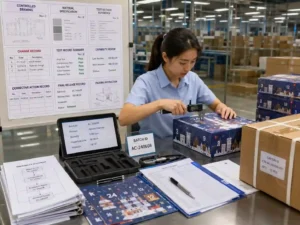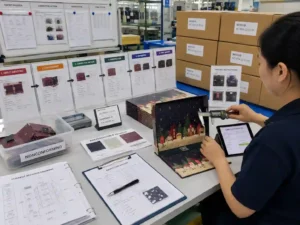
Quick answer: Buyers should separate advent calendar packaging costs into five clear quotation sections: tooling, sampling, unit production, packing, and freight. Each cost should connect to specific specifications, drawings, approval records, production quantities, or logistics requirements. A structured cost breakdown helps purchasing teams compare supplier quotations fairly and identify whether price differences come from materials, engineering work, production scope, or shipping assumptions.

What are the main advent calendar packaging cost components buyers should separate?
The main cost components are tooling, sampling, unit production, packing, and freight. Separating these categories allows buyers to understand which charges are one-time development costs and which are repeated costs applied to each production order.
| Cost Category | What It Usually Covers | How Buyers Verify It |
|---|---|---|
| Tooling | Production preparation items such as cutting forms, structural development tools, or special setup requirements. | Check against approved drawings, dielines, and supplier tooling descriptions. |
| Sampling | Prototype production, material confirmation, structure checking, and approval samples. | Review sample records, revisions, and approval documents. |
| Unit Cost | Manufacturing cost per finished advent calendar box based on agreed specifications. | Compare material, size, structure, printing, finishing, and quantity assumptions. |
| Packing | Individual packing, inner cartons, master cartons, protection methods, and packing labor. | Confirm packing drawings, carton specifications, and shipping preparation details. |
| Freight | Transportation cost based on shipment method, destination, volume, weight, and trade terms. | Check shipping assumptions, carton data, and logistics quotation details. |
How should buyers separate tooling costs from production costs?
Tooling costs should be treated as development or setup costs, not mixed into the unit production price. Buyers should confirm whether tooling is project-specific, reusable, or related to a special structure requirement.
During RFQ preparation, buyers should request:
- Tooling description and purpose.
- Related drawings or structural files.
- Whether the tooling applies to the current project only.
- Whether tooling changes may create additional charges after approval.
The key evidence is technical documentation. A supplier quotation should connect tooling charges to actual engineering requirements rather than showing an unexplained additional fee.
How should sampling costs be reviewed before approval?
Sampling costs should reflect the work required to create and verify a production-ready sample. Buyers should separate sample development from mass production because samples often involve additional setup, material preparation, and adjustment work.
Useful approval records include:
- Sample request details.
- Product dimensions and structure drawings.
- Material and finishing specifications.
- Sample revision notes.
- Buyer approval records.
Project requirements determine whether sampling costs vary. A simple structure may require fewer development steps, while a complex advent calendar design with multiple compartments, special inserts, or detailed finishing may require more sample verification.

How can buyers compare unit production costs fairly?
Unit cost comparisons are only meaningful when suppliers quote the same specifications. A lower unit price may represent a different material grade, simplified structure, reduced finishing, different insert design, or different packing assumptions.
Before comparing quotations, buyers should normalize:
- Box dimensions and structural style.
- Board material and thickness requirements.
- Printing method and color requirements.
- Surface finishing details.
- Insert material and fit requirements.
- Packing configuration.
| Quotation Check | Buyer Question |
|---|---|
| Material | Are all suppliers using the same board and paper specifications? |
| Structure | Are suppliers quoting the same opening method and construction? |
| Finishing | Are coatings, foil, embossing, or special effects included consistently? |
| Packing | Does the quoted unit price include the same packing level? |
Supplier drawings, specification sheets, approved samples, and quotation revisions are the most reliable references for confirming unit cost differences.
What packing costs should be listed separately in a quotation?
Packing costs should describe how finished advent calendar boxes are protected and prepared for shipment. They should not be hidden inside unrelated production costs because packing requirements can change depending on shipping conditions and product structure.
Buyers should check:
- Individual box protection method.
- Inner carton arrangement.
- Master carton size and strength.
- Corner protection or additional protection materials when required.
- Packing quantity per carton.
These details can be verified through packing specifications, carton drawings, and pre-shipment inspection records.
How should freight costs be separated from packaging manufacturing costs?
Freight should be listed separately because logistics costs depend on shipment conditions rather than only packaging production. Mixing freight into product cost makes supplier comparison more difficult.
Freight comparison should consider:
- Shipment destination.
- Transportation method.
- Carton dimensions and shipment volume.
- Total shipment weight.
- Agreed trade terms.
Freight assumptions should be confirmed before final quotation approval because changes in carton size, packing method, or shipment planning can affect logistics calculations.
What quotation checklist helps buyers review cost components?
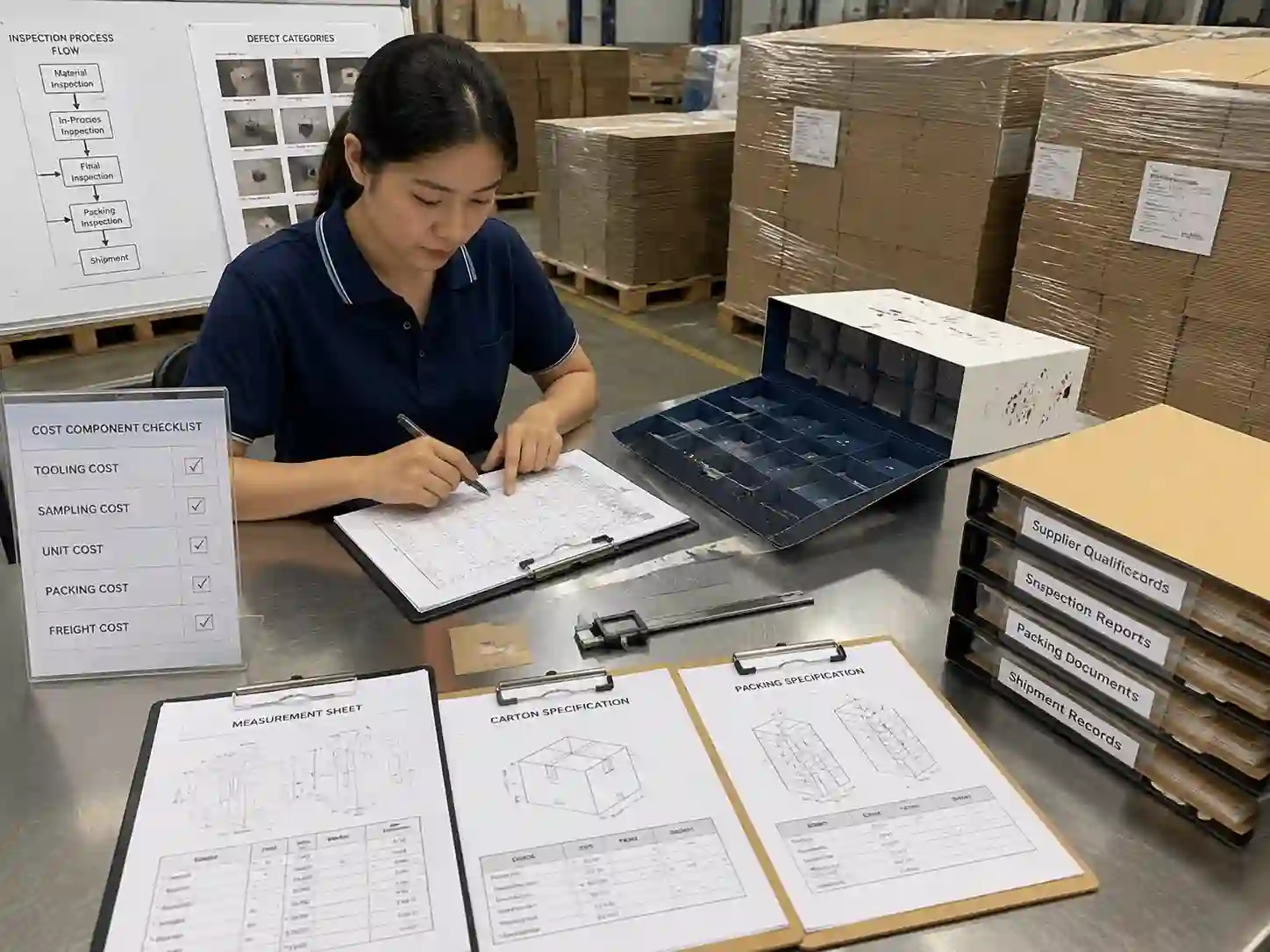
A quotation checklist helps purchasing teams confirm that every cost line has a clear source and approval basis.
- Confirm tooling scope and supporting documents.
- Confirm sample requirements and revision history.
- Confirm unit cost specifications match approved drawings.
- Confirm packing method and carton details.
- Confirm freight assumptions and shipment information.
- Keep approved samples and quotation versions for future comparison.
How can buyers use cost separation to improve supplier comparison?
Cost separation creates a like-for-like comparison method. Instead of choosing only the lowest quotation, buyers can identify whether a supplier difference comes from engineering scope, manufacturing specifications, quality controls, or logistics assumptions.
For custom seasonal packaging projects, Giftpackpro recommends preparing a clear specification package before requesting quotations. Buyers can review custom advent calendar box services, explore custom advent calendar box products, or request a custom quote with defined project requirements.
FAQs
Should tooling always be charged separately?
Tooling treatment depends on the project structure and supplier quotation method. Buyers should confirm whether tooling is a separate development cost or included within another quoted item.
Why do sample costs differ between suppliers?
Sample costs can vary because suppliers may include different levels of engineering preparation, material setup, revisions, and approval support.
Can freight be compared using unit price only?
No. Freight depends on shipment conditions, carton information, destination, and logistics arrangements, so it should be reviewed separately from manufacturing cost.
For a more complete RFQ process, buyers can also review additional advent calendar box buying guides to improve quotation preparation and supplier communication.