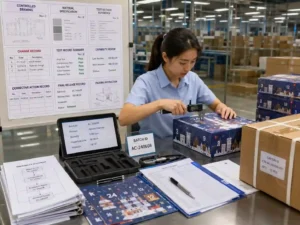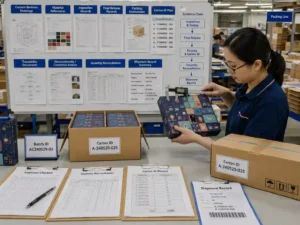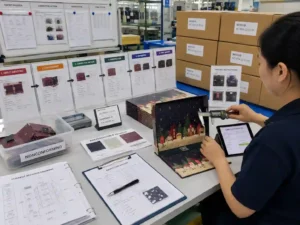
Quick answer: To confirm color before printing advent calendar boxes, buyers should approve a clear color standard before mass production. The safest process is to review artwork files, confirm CMYK or Pantone references, check printing proofs, approve a physical prototype or pre-production sample, and verify finishing effects such as matte lamination, gloss lamination, foil stamping, embossing, and spot UV. A reliable packaging factory should connect color approval with material selection, structure, inserts, sampling, QC inspection, and export packing so the final boxes match the approved reference.
For overseas buyers sourcing custom advent calendar boxes manufacturer solutions from China, color confirmation is not only a printing issue. It is a supplier communication and production-control step that affects appearance, brand consistency, quotation accuracy, lead time, and final customer acceptance.
Why do buyers need to confirm color before printing advent calendar boxes?
Buyers need to confirm color before printing because the same artwork can look different depending on printing method, paper material, coating, lighting conditions, and production settings. A digital file on a computer screen is not a reliable reference for bulk packaging production.
Custom advent calendar boxes often combine multiple materials and processes. A rigid box wrapped with printed paper, a folding carton made from paperboard, and a drawer box with premium finishing can all reproduce colors differently.
- Paper surface affects ink absorption and color brightness.
- Greyboard wrapping paper can change the final appearance of printed areas.
- Matte lamination usually reduces reflection and slightly changes color perception.
- Gloss lamination can increase color contrast and saturation.
- Foil stamping and embossing change how buyers perceive the final design under different lighting.
Buyer tip: Never approve only a screen image for a seasonal packaging project. A physical color reference or approved sample reduces the risk of expensive bulk production corrections.

What should buyers check before approving packaging colors?
Before approving colors, buyers should confirm the artwork file, printing method, material combination, finishing requirements, and sample approval process. These decisions should be completed before production scheduling.
1. Confirm the artwork file and color reference
The factory should receive production-ready artwork with clear specifications. Buyers should confirm whether the design uses CMYK, Pantone, or a combination of both.
| Color decision | Best use case | Buyer consideration |
|---|---|---|
| CMYK printing | Full-color images, gradients, illustrations | Color variation can happen between batches, materials, and machines |
| Pantone color | Brand-specific solid colors and premium packaging | Provides a stronger color target for repeat production |
| Digital proof | Early artwork review | Useful for layout checking but not always accurate for final color |
| Physical printed sample | Final approval before bulk production | Best reference because it includes actual material and finishing |
2. Confirm the packaging material before color approval
Color cannot be evaluated separately from the packaging material. The same artwork printed on coated paper, textured paper, kraft paper, or laminated paper can produce different results.
For advent calendar packaging, buyers should confirm whether the project uses:
- Rigid box: Usually made with greyboard and wrapped paper, suitable for premium seasonal packaging.
- Folding carton: Made from paperboard and often selected for lighter products and higher-volume orders.
- Drawer box: Requires accurate color matching across outer sleeves and sliding components.
- Door-opening box: Needs consistent printing across front panels, doors, and internal compartments.
Material selection should be included in the quotation stage because changing paper or board after approval may affect the final color result.
How does the factory confirm colors during sampling?
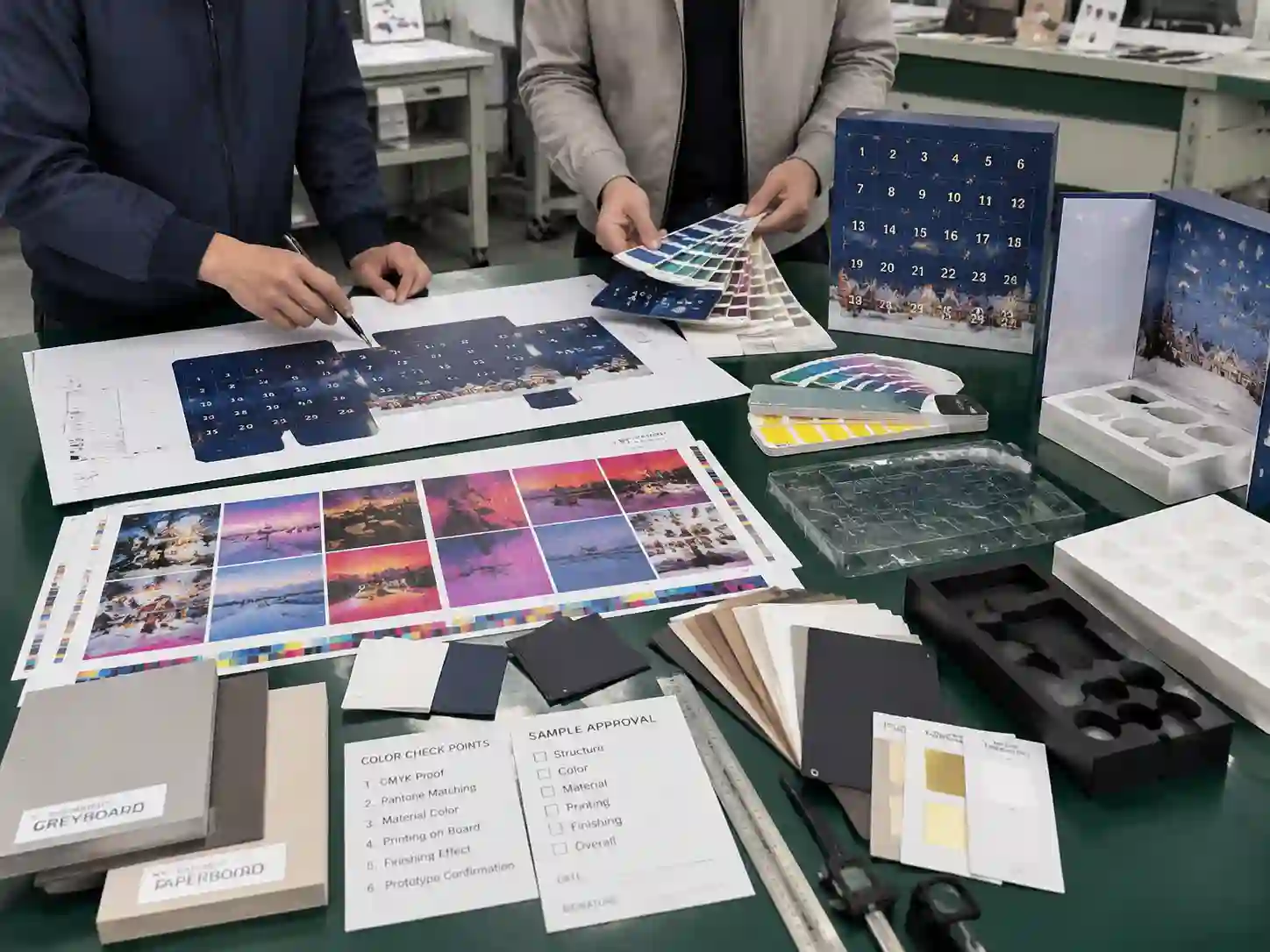
The factory confirms colors through a controlled sampling process that connects artwork review, printing proof, prototype production, and pre-production approval.
- Artwork checking: The factory reviews dielines, bleed areas, color codes, and finishing positions.
- Printing proof review: Buyers check the expected appearance before full sample production.
- Prototype sample production: The factory produces a physical sample using the planned material and printing method.
- Buyer approval: The approved sample becomes the production reference.
- Bulk production inspection: QC teams compare mass-produced boxes with the approved sample.
Factory tip: A good supplier does not only ask “which color do you want?” The supplier should ask for Pantone references, previous samples, target materials, lighting expectations, and finishing requirements.
How do inserts and structure affect color confirmation?
Insert design and box structure can influence the overall color experience because buyers see the complete package, not only the printed surface.
For example, a luxury rigid advent calendar box may combine:
- Printed outer wrapping paper
- Paper insert trays
- PET trays for product visibility
- EVA inserts for protection
- Foam or molded pulp solutions for special product fitting
If the insert color, outer box color, and product presentation are not coordinated, the final packaging may look different from the approved artwork concept.
Buyers should request a complete prototype when packaging includes multiple components. A flat printed sheet cannot show the final result of a finished advent calendar box.
How should buyers compare factories for color control?
When comparing China packaging suppliers, buyers should evaluate the supplier’s communication process rather than only comparing unit prices.
| Supplier comparison point | Questions buyers should ask |
|---|---|
| Color management | Do you provide proofs, samples, and approval records before mass production? |
| Artwork communication | Can your team check dielines, bleed areas, and finishing positions? |
| Sampling process | Will the prototype use the same material and printing method as production? |
| QC process | How do you compare bulk production colors with approved samples? |
| Export experience | Can you provide export carton packing and shipping protection details? |
A supplier with strong production communication can help prevent problems caused by unclear artwork, incorrect assumptions, and late color changes.
Buyers looking for structured supplier evaluation can review more advent calendar box buying guides covering sourcing, sampling, production, and quality decisions.
What mistakes should buyers avoid when confirming colors?
The most common color problems happen when buyers approve incomplete information or skip physical confirmation.
- Approving colors from a monitor only: Screen brightness and settings are different from printed production.
- Changing materials after approval: Different paper surfaces can change the final appearance.
- Ignoring finishing effects: Lamination, foil, embossing, and UV coatings influence color perception.
- Not keeping an approved sample: Without a reference sample, QC teams cannot judge production consistency.
- Requesting quotation without artwork details: Printing complexity affects cost, lead time, and sampling requirements.
What should buyers prepare before requesting a quotation?
A complete RFQ helps the factory provide a more accurate quotation and production timeline. Before contacting a supplier, buyers should prepare:
- Box structure: rigid box, folding carton, drawer box, or door-opening box
- Box dimensions and product fitting requirements
- Material preference: paperboard, greyboard, wrapping paper, or special materials
- Artwork files and color references
- Printing method requirements: CMYK, Pantone, or mixed printing
- Finishing requirements: matte lamination, gloss lamination, foil stamping, embossing, spot UV
- Insert requirements: paper insert, PET tray, EVA, foam, or molded pulp
- Target quantity and expected MOQ
- Sample requirements and approval schedule
- Shipping destination and export packing requirements
Preparing these details allows suppliers to estimate tooling, materials, labor, sampling time, and production capacity more accurately.
How do QC teams check color during mass production?
QC teams normally compare bulk production against the approved reference sample and production standards before shipment.
- Check printing consistency across random cartons.
- Compare finished boxes under consistent inspection lighting.
- Verify color areas, logos, patterns, and artwork alignment.
- Check finishing effects such as foil position and emboss depth.
- Confirm assembly quality and surface protection.
- Inspect export cartons, pallet arrangement, and shipping marks before delivery.
QC tip: Color approval should be connected with final packaging inspection. A correct print color is not enough if the box structure, insert fit, or export packing cannot protect the product.
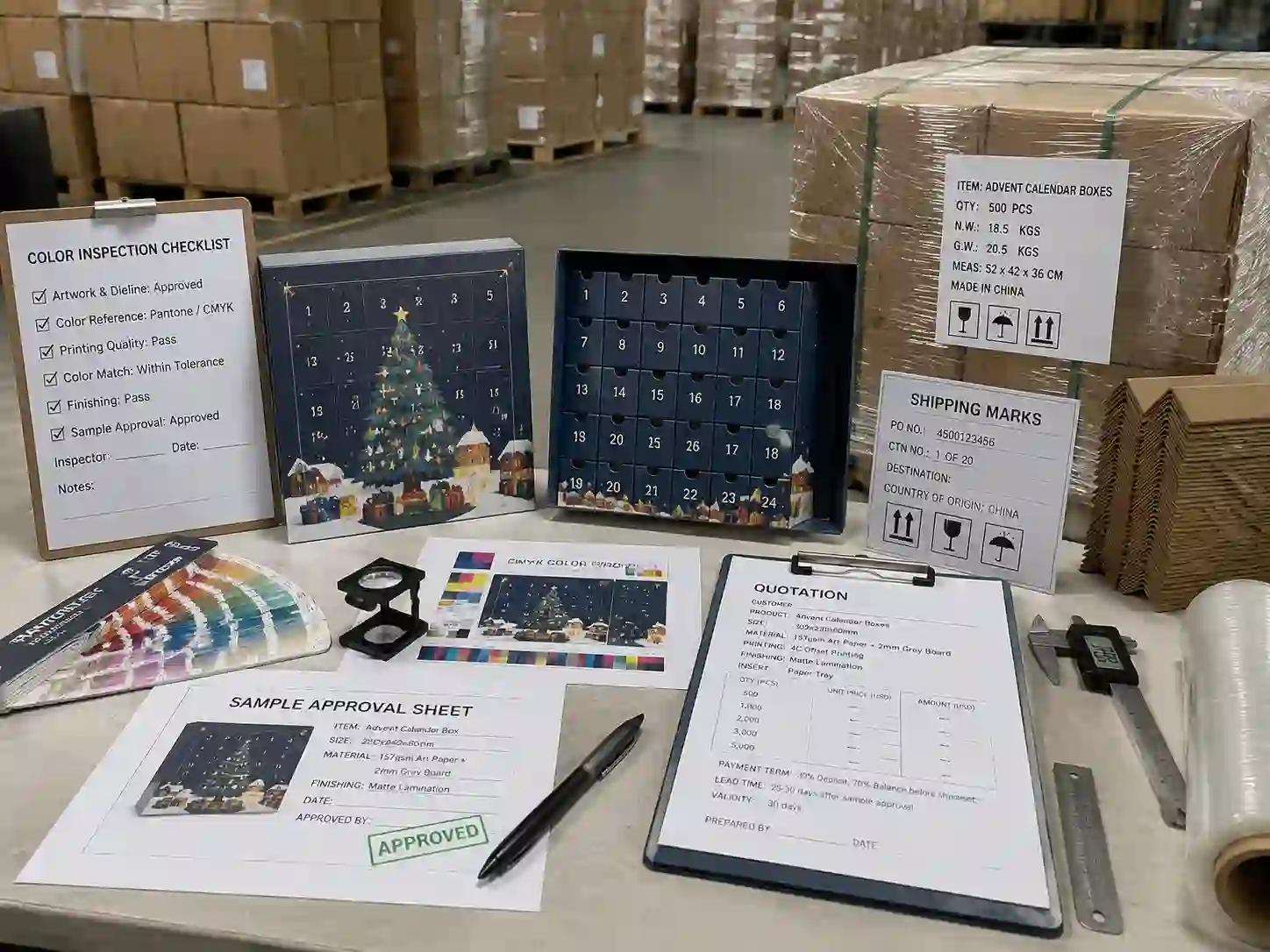
How do export packing and shipping affect color expectations?
Export packing protects approved packaging during international transportation. Buyers should confirm that cartons, pallet loading, and protective materials prevent damage that could affect the finished appearance.
Common export packing considerations include:
- Suitable export cartons based on box size and weight.
- Corner protection for rigid packaging.
- Proper pallet stacking to avoid compression damage.
- Shipping marks for warehouse handling.
- Moisture protection when required.
International buyers can also review packaging transport practices through official logistics and testing organizations such as ISTA packaging standards resources when developing shipping requirements.
How does Giftpackpro help buyers confirm colors before printing?
Giftpackpro supports buyers through artwork review, structure confirmation, sampling, printing communication, QC preparation, and export packing planning. The goal is to help overseas buyers reduce uncertainty before bulk production.
Whether the project requires a premium rigid advent calendar box, a cost-efficient folding carton, a drawer structure, or a door-opening design, buyers should confirm color together with materials, inserts, production methods, and delivery requirements.
Before requesting a sample or quotation, prepare your artwork files, dimensions, target quantity, material preference, color references, insert requirements, and delivery expectations. You can learn more about custom advent calendar box services or contact the request a custom quote team with your project details.
FAQ: Confirming Color Before Printing Advent Calendar Boxes
Can buyers confirm advent calendar box colors using artwork files only?
No. Artwork files are important, but a physical sample or approved printing reference is recommended because materials and finishing processes can change the final appearance.
Should buyers use CMYK or Pantone for custom advent calendar boxes?
CMYK works well for full-color artwork, while Pantone is often preferred when buyers need stronger control of specific solid colors.
When should color approval happen before bulk production?
Color approval should happen after artwork review and prototype sampling but before mass production begins.
Does MOQ affect color confirmation?
Yes. Different order quantities may influence printing methods, sampling options, and production planning. Buyers should confirm MOQ requirements during quotation discussions.
Why is a pre-production sample important?
A pre-production sample allows buyers to check the actual combination of printing, material, structure, inserts, and finishing before committing to bulk production.