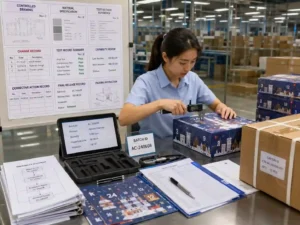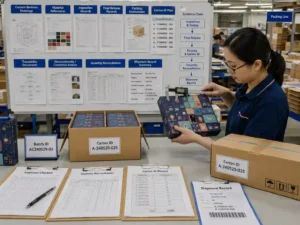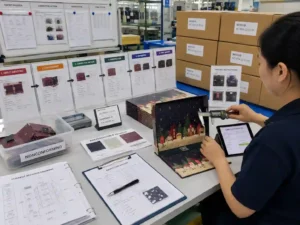
Quick answer: Matte and gloss lamination are protective finishing options applied after printing, but they create different visual effects and buyer considerations. Matte lamination gives custom advent calendar boxes, rigid boxes, and premium gift packaging a soft, non-reflective appearance with a luxury feel, while gloss lamination creates a brighter surface with stronger color contrast and easier cleaning. The right choice depends on packaging structure, target market, artwork style, printing method, handling requirements, and budget. For B2B buyers comparing matte vs gloss lamination packaging, the decision should be confirmed during sampling because surface finish affects color appearance, material feel, production cost, and final QC standards.
What is the difference between matte and gloss lamination packaging?
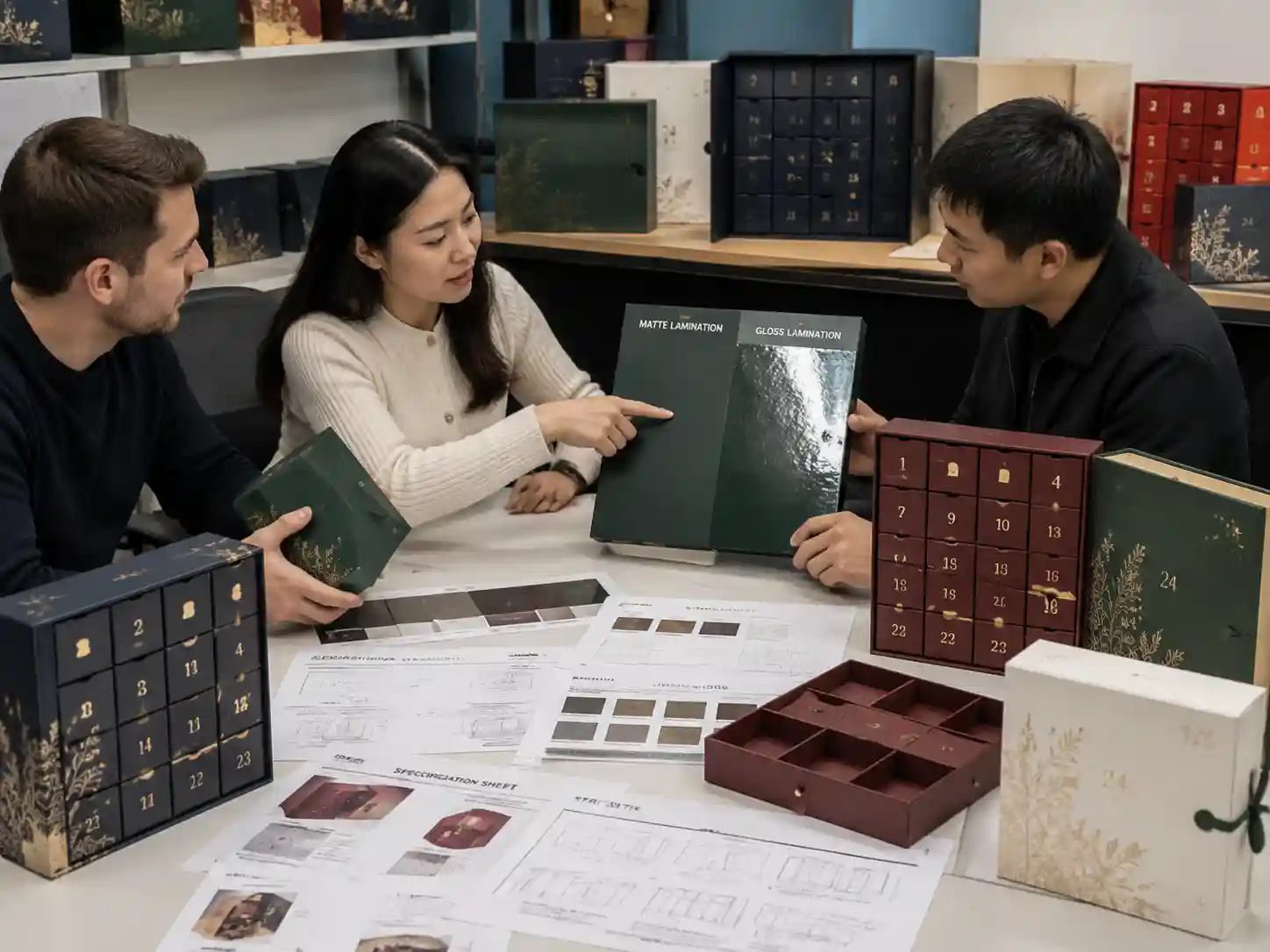
The main difference is the surface appearance and functional performance after printing. Matte lamination reduces reflection and creates a smooth premium texture, while gloss lamination increases shine and makes printed colors appear more vivid.
| Comparison Point | Matte Lamination | Gloss Lamination |
|---|---|---|
| Surface appearance | Soft, elegant, low-reflection finish | Bright, shiny, high-reflection finish |
| Color effect | More natural and muted color presentation | Higher contrast and stronger color saturation |
| Premium feeling | Common choice for luxury gift packaging and high-end brands | Common choice for colorful retail packaging and promotional boxes |
| Fingerprint visibility | Usually hides fingerprints better | May show fingerprints or reflections more easily |
| Light reflection | Low glare under retail lighting | High shine that attracts attention on shelves |
| Typical applications | Rigid boxes, premium folding cartons, cosmetic gift boxes | Retail cartons, promotional packaging, colorful seasonal boxes |
Buyer tip: Do not select lamination only from a digital artwork file. The same CMYK artwork can look noticeably different after matte or gloss finishing. A physical sample or pre-production sample is the most reliable way to approve the final appearance.
Which packaging structures work better with matte or gloss lamination?
The best lamination choice depends on the box structure, opening experience, and product positioning. Matte and gloss finishes can both be used on custom advent calendar boxes, but they create different customer perceptions.
Is matte lamination better for rigid boxes?
Matte lamination is frequently selected for premium rigid boxes because the soft surface supports a luxury appearance. Rigid structures made from greyboard wrapped with printed paper often use matte finishes when buyers want a refined texture combined with foil stamping, embossing, or spot UV details.
For example, a drawer box or door-opening box with matte lamination can create a premium unboxing experience because the surface feels softer while maintaining a clean appearance. This combination is often used for seasonal gift sets, beauty packaging, jewelry-style packaging, and corporate gift projects.
When should buyers choose gloss lamination?
Gloss lamination is suitable when packaging needs stronger visual impact. It works well for folding cartons and paperboard boxes where bright graphics, colorful illustrations, or high-contrast printing are important.
For retail campaigns, promotional packaging, or products displayed under strong lighting, gloss lamination can make printed artwork stand out more clearly. It also provides a smooth surface that is easier to wipe during handling and transportation.
How does lamination affect different box types?
- Drawer boxes: Matte lamination can enhance the premium sliding experience, while gloss lamination emphasizes colorful printed artwork.
- Door-opening boxes: Matte finishes often pair well with luxury layouts and decorative finishing.
- Rigid boxes: Both finishes are possible, but matte is commonly selected for premium positioning.
- Folding cartons: Gloss is often chosen for bright retail graphics, while matte supports a more upscale presentation.
- Fold-out calendar boxes: The finish should be tested with the opening structure because large surface areas can show reflections differently.
Giftpackpro helps buyers evaluate structure, finishing, and production requirements through custom advent calendar box services before moving into bulk manufacturing.
How does lamination choice affect printing, artwork, and finishing?
Matte and gloss lamination influence how printed colors, special effects, and surface details appear. Buyers should confirm finishing decisions together with artwork preparation, not after printing.
Does matte or gloss lamination change CMYK and Pantone colors?
Yes. Matte lamination can slightly soften color intensity because the surface absorbs more light, while gloss lamination can make colors appear brighter due to reflection. Buyers preparing CMYK artwork or Pantone color references should approve samples under normal viewing conditions.
For important brand colors, suppliers normally recommend reviewing:
- CMYK printing proof before mass production.
- Pantone references when color consistency is critical.
- Finished samples with the selected lamination.
- Special effects such as foil stamping, embossing, and spot UV.
Can matte and gloss lamination be combined with other finishes?
Yes. Many premium packaging projects combine matte lamination with selective gloss spot UV, foil stamping, or embossing. This creates contrast between soft background areas and highlighted design elements.
Factory tip: When requesting a quotation, specify the complete finishing combination. “Printed box with lamination” is not enough information because matte, gloss, soft-touch, spot UV, and foil details can change material usage and production steps.
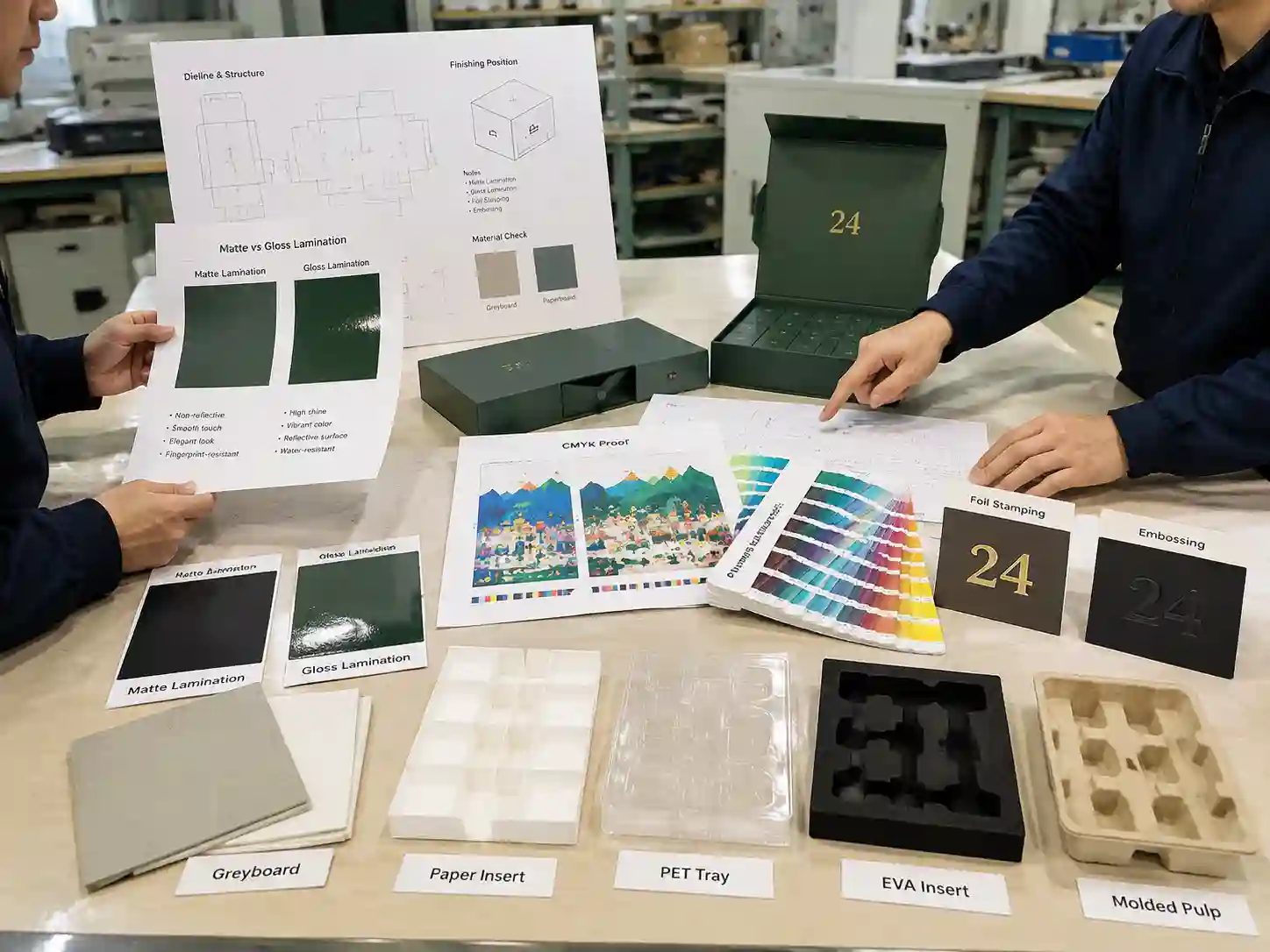
What should buyers check before ordering matte or gloss laminated boxes?
Before requesting samples or quotations, buyers should prepare packaging information that allows suppliers to calculate materials, production time, and quality requirements accurately.
Buyer checklist for lamination selection
- Box structure: rigid box, drawer box, door-opening box, folding carton, or fold-out structure.
- Finished box size and dieline requirements.
- Outer paper material and greyboard thickness if using rigid construction.
- Printing method: CMYK, Pantone, or special color requirements.
- Preferred finish: matte lamination, gloss lamination, or combined finishing.
- Insert requirement: paper insert, PET tray, EVA insert, foam, or molded pulp.
- Product weight and protection requirements.
- Expected order quantity and MOQ requirements.
- Target delivery date and export packing requirements.
These details help suppliers prepare a more accurate quotation because lamination is only one part of the complete packaging cost. Materials, structure complexity, inserts, printing, labor, sampling, and shipping preparation all influence the final price.
How do matte and gloss lamination affect cost, MOQ, and lead time?
Lamination itself is usually a finishing step, but the selected finish can influence the overall production process. Cost differences depend on box structure, material choice, order quantity, and additional finishing requirements.
| Cost Factor | Buyer Consideration |
|---|---|
| Material selection | Rigid boxes with wrapped paper require different calculations from folding cartons. |
| Surface finishing | Matte, gloss, soft-touch, foil, embossing, and spot UV require different processes. |
| Sample approval | Physical samples help confirm appearance before bulk production. |
| MOQ | Lower quantities may have higher unit costs because setup costs are spread over fewer pieces. |
| Lead time | Additional finishing and inspection steps may extend production schedules. |
Buyer tip: A supplier quotation should separate major cost drivers such as box structure, material, printing, finishing, inserts, sampling, packaging, and shipping preparation. This makes supplier comparison more accurate.
How should buyers compare suppliers for matte vs gloss lamination packaging?
The best supplier is not simply the one offering the lowest price. Buyers should compare whether the supplier can control artwork, samples, production consistency, and export quality.
What should be reviewed during supplier comparison?
- Sample capability: Can the supplier produce a realistic prototype showing the selected lamination?
- Material knowledge: Can they recommend suitable paper, greyboard, inserts, and finishing combinations?
- Artwork checking: Do they review dielines, printing files, and color requirements before production?
- QC process: Do they inspect printing quality, lamination consistency, structure strength, and assembly tolerance?
- Export preparation: Can they arrange export cartons, pallet protection, shipping marks, and safe packing?
Buyers can review custom advent calendar box products and compare different structures before preparing a final specification. Understanding the complete packaging solution helps avoid choosing a finish that does not match the product position.
What quality control checks are important for laminated packaging?
QC for laminated boxes should verify both appearance and function. A visually attractive finish is not enough if the structure, printing alignment, or protection performance fails during shipping.
QC checklist for matte and gloss laminated boxes
- Check lamination coverage and surface consistency.
- Inspect scratches, bubbles, peeling, or uneven finishing.
- Compare printed colors with approved samples.
- Verify foil stamping, embossing, and spot UV alignment if included.
- Test drawer movement, door opening performance, and structural fit.
- Check insert fitting and product protection.
- Inspect export cartons, corner protection, and pallet stability.
QC tip: Approve a pre-production sample before mass production whenever the packaging includes complex structures or premium finishing. This reduces the risk of large quantity corrections later.
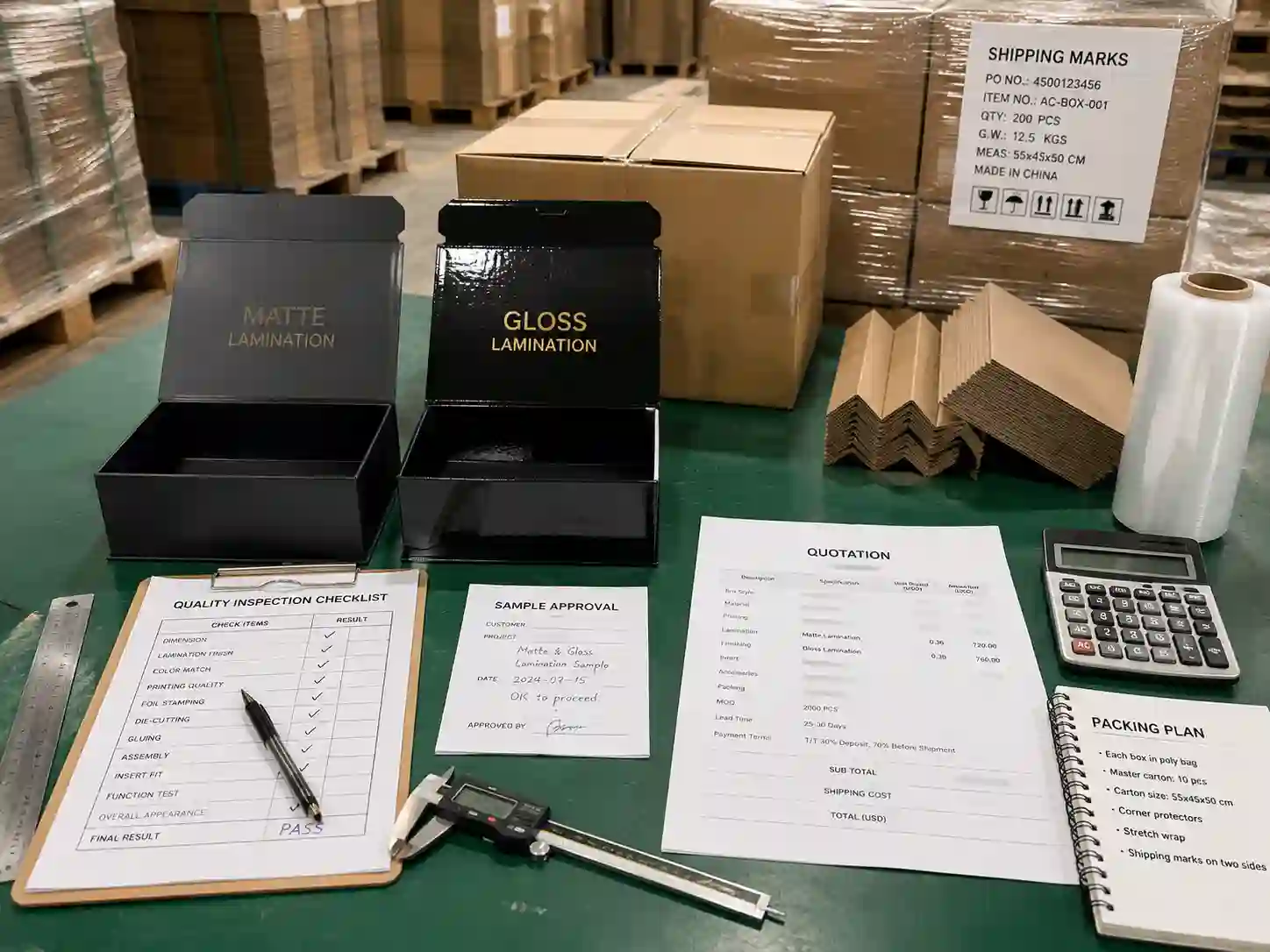
What information should buyers prepare before requesting a quotation?
A professional RFQ helps packaging factories provide faster and more accurate pricing. Before contacting Giftpackpro, prepare:
- Product type and intended market.
- Box structure and opening style.
- Dimensions or dieline information.
- Material preference.
- Insert requirements.
- Artwork status and printing requirements.
- Matte or gloss lamination preference.
- Additional finishing requirements.
- Estimated quantity and target timeline.
- Shipping destination and export packing requirements.
Giftpackpro works with overseas brands, wholesalers, retailers, and packaging distributors that need structured support from design review through production. Buyers can learn more about our Giftpackpro packaging factory approach or use our request a custom quote page to prepare project details.
FAQ: Matte vs gloss lamination packaging
Is matte lamination more expensive than gloss lamination?
Pricing depends on the complete packaging specification rather than lamination alone. Material, structure, quantity, finishing details, and production requirements usually have a larger impact on total cost.
Which lamination is better for luxury gift packaging?
Matte lamination is often selected for luxury packaging because of its soft appearance and premium feel, especially when combined with foil stamping, embossing, or special inserts.
Which lamination is better for retail packaging?
Gloss lamination can work well for retail packaging because it creates stronger visual impact and bright color presentation. The best choice depends on artwork style and product positioning.
Should buyers approve samples before mass production?
Yes. Sampling confirms the actual surface finish, color appearance, structure performance, and insert fit before production quantities are manufactured.
Where can buyers learn more about custom packaging decisions?
Giftpackpro provides additional advent calendar box buying guides covering structure selection, supplier comparison, production planning, and quality control.
Final decision: How should buyers choose between matte and gloss lamination packaging?
For buyers comparing matte vs gloss lamination packaging, the correct choice depends on the product position, box structure, artwork style, and customer experience goals. Matte lamination is usually preferred for premium rigid boxes and luxury presentations, while gloss lamination is often suitable for bright retail-focused packaging.
The safest purchasing approach is to confirm finishing through samples, review printing and dielines carefully, test inserts and assembly, and define QC requirements before mass production. A clear specification helps suppliers provide accurate quotations and reliable production results.
To discuss your packaging structure, finishing options, sample requirements, and production plan, contact Giftpackpro through our custom advent calendar boxes manufacturer page or request support for your next project.