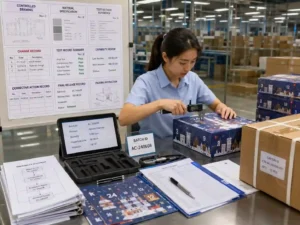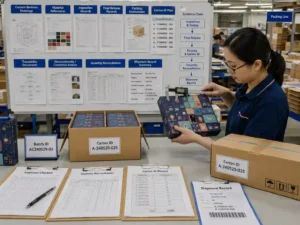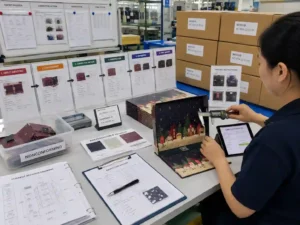
Quick answer: Buyers should confirm samples before mass production boxes because a pre-production sample verifies the final structure, artwork, materials, inserts, printing effects, and assembly performance before large quantities are produced. For custom advent calendar boxes, a sample approval step helps prevent costly issues such as incorrect dielines, loose inserts, color differences, misaligned printing, finishing defects, and shipping risks. A properly reviewed sample gives purchasing teams and suppliers a shared production reference for bulk manufacturing, quality control, lead time planning, and export preparation.
For overseas buyers ordering custom packaging, sampling is not only a visual check. It is a production decision point that connects design, engineering, printing, finishing, assembly, and logistics. Giftpackpro supports brands and purchasing teams with custom advent calendar box services that help verify packaging details before moving into mass production.
Why should buyers confirm samples before mass production boxes?
Buyers should confirm samples before mass production boxes because digital artwork and specifications cannot fully show how the final packaging will perform in real production conditions. A physical sample allows buyers to check structure, fit, appearance, and usability before committing to bulk quantities.
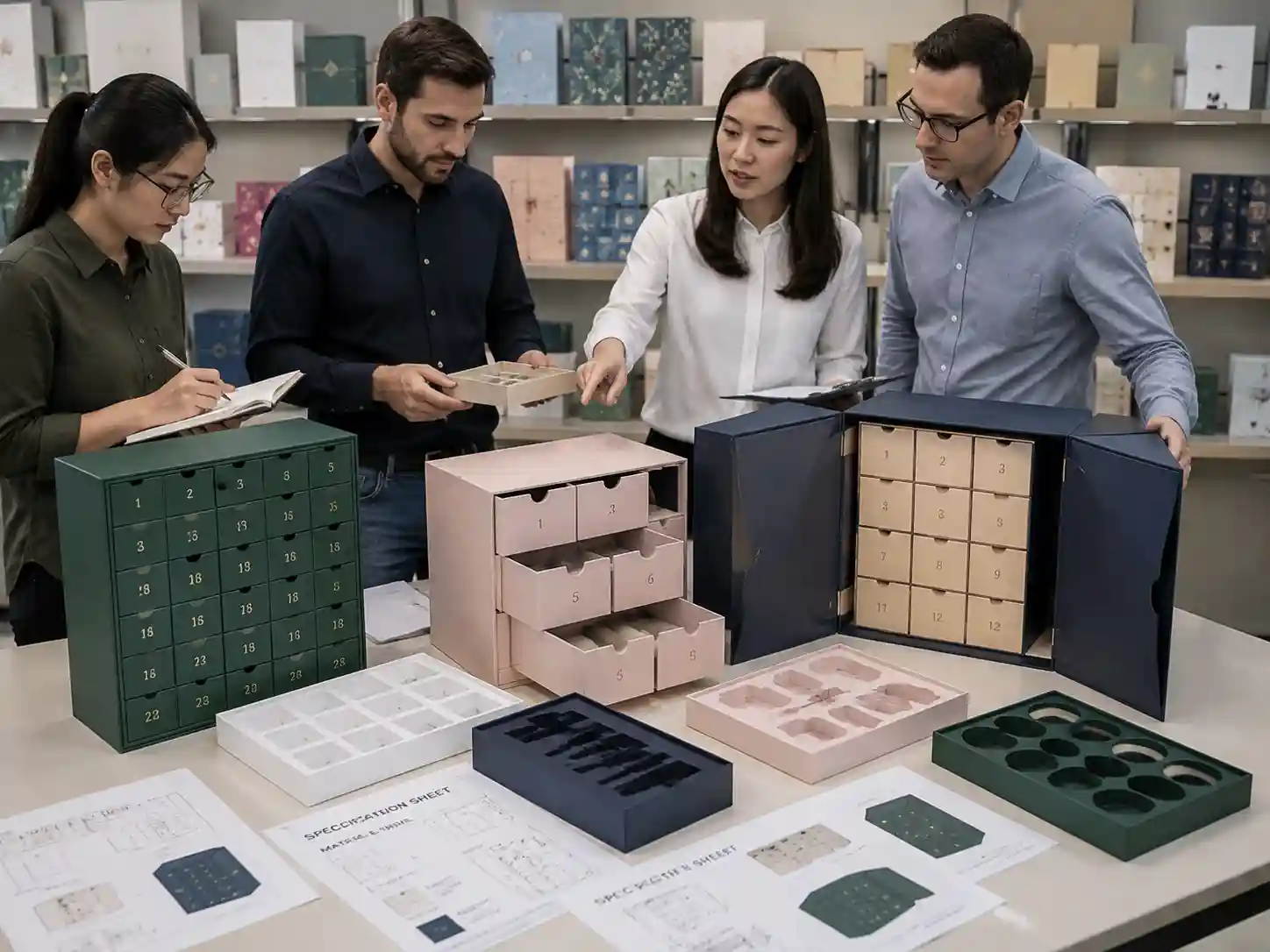
For custom advent calendar boxes, the approved sample becomes the production reference for the factory. It confirms important details such as:
- Box structure, including rigid box, drawer box, door-opening box, or folding carton construction.
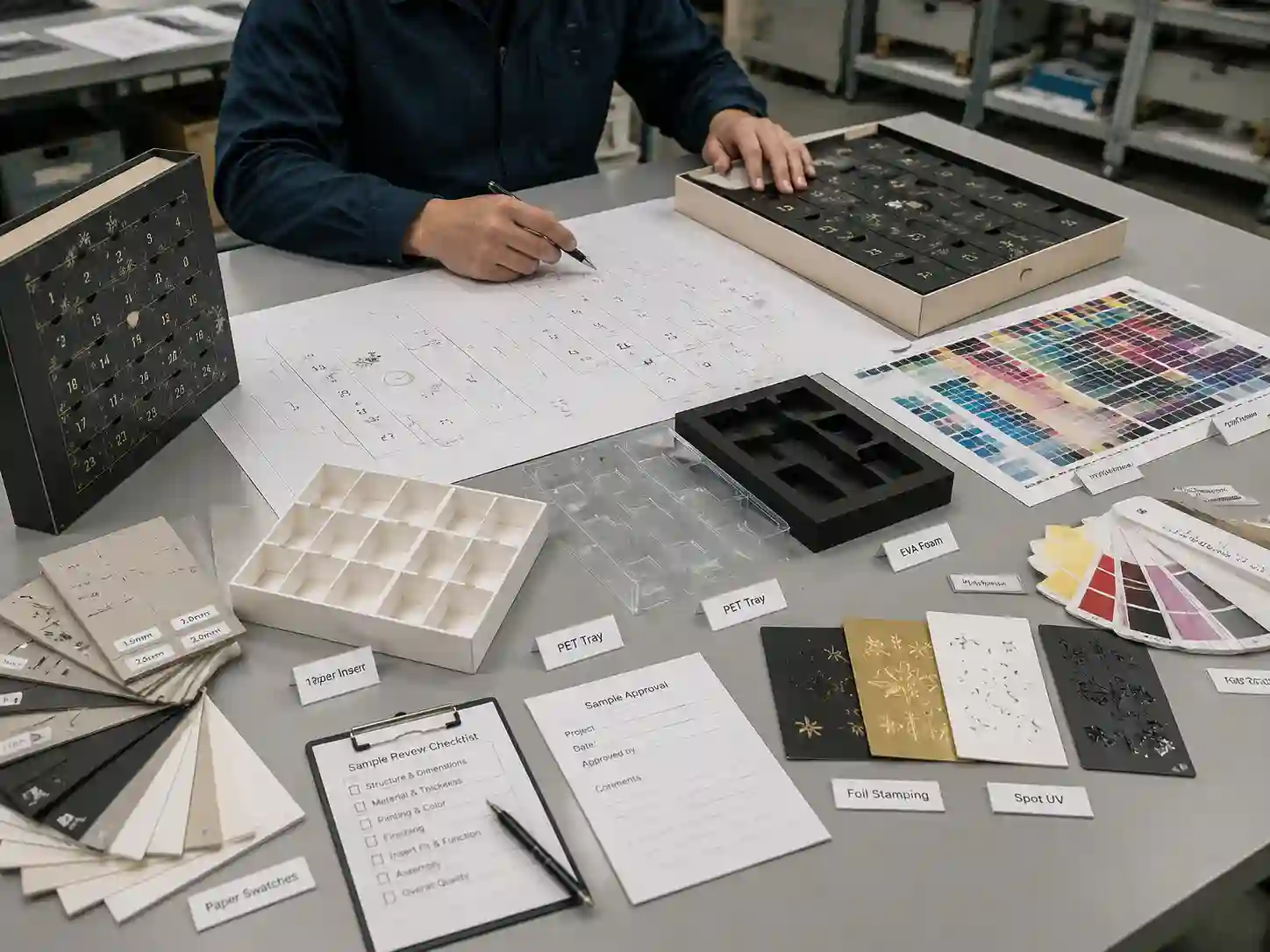
- Insert performance, including paper insert, PET tray, EVA insert, foam, or molded pulp solutions.
- Artwork positioning across panels, doors, drawers, lids, and compartments.
- Printing quality, including CMYK color accuracy and Pantone matching requirements.
- Finishing effects such as foil stamping, embossing, spot UV, matte lamination, and gloss lamination.
- Assembly tolerance and product accessibility after production.
Buyer tip: A supplier quotation may look attractive before sampling, but the real production risk appears when structure, color, finishing, and product fit are tested together. Sample approval reduces uncertainty before the bulk order begins.
What packaging details should buyers check during sample approval?
During sample approval, buyers should check every element that affects product presentation, manufacturing stability, and customer experience. The most important checks are structure, insert fit, artwork accuracy, printing results, and finishing quality.
| Sample Check Area | What Buyers Should Verify | Common Production Risk |
|---|---|---|
| Structure | Box dimensions, opening method, drawer movement, door alignment, lid fitting, and panel strength. | Incorrect size, weak corners, difficult opening, or poor assembly. |
| Insert | Product cavity size, retention strength, finger access, and compatibility with product shape. | Loose products, damaged items, or blocked compartments. |
| Artwork | Dieline placement, folding direction, panel alignment, numbers, patterns, and text positioning. | Misaligned graphics or incorrect artwork placement. |
| Printing | CMYK color output, Pantone reference, ink coverage, and consistency between components. | Color difference between approved artwork and finished boxes. |
| Finishing | Foil stamping registration, emboss depth, spot UV position, and lamination effect. | Missing details or inconsistent premium effects. |
For buyers comparing custom advent calendar box products, sampling helps identify whether a packaging structure is suitable for the actual product before ordering a production run.
How does a sample help compare different box structures?
A sample allows buyers to compare packaging structures based on real performance instead of drawings alone. Different structures create different experiences and production requirements.
| Box Type | Best For | Buyer Sample Check |
|---|---|---|
| Rigid Box | Luxury products, premium gift sets, heavy items. | Check corner strength, wrapping quality, surface flatness, and opening feel. |
| Drawer Box | Multi-compartment products and collectible-style packaging. | Check drawer clearance, sliding movement, handle strength, and insert position. |
| Door-Opening Box | Advent calendar layouts requiring multiple visible compartments. | Check hinge direction, door alignment, magnetic or tab closure, and accessibility. |
| Folding Carton | Cost-sensitive projects requiring efficient shipping. | Check paperboard thickness, folding accuracy, and structural support. |
Factory tip: The best packaging structure is not always the most expensive option. Buyers should select the structure based on product weight, protection requirements, retail presentation, shipping conditions, and target cost.
How should buyers check artwork and printing before bulk production?
Buyers should review artwork and printing during sampling because small differences in color, alignment, or finishing can become large issues after thousands of units are produced.
The artwork approval process should include:
- Confirming the final dieline before printing.
- Checking CMYK artwork conversion and color expectations.
- Comparing Pantone references when specific brand colors are required.
- Reviewing text, graphics, and panel alignment after folding.
- Testing foil stamping, embossing, spot UV, and lamination effects on the actual material.
A printed proof or sample should be reviewed under consistent lighting conditions because paper surface, coating, and finishing can influence the final appearance. Matte lamination may create a softer color effect, while gloss lamination can increase contrast and brightness.
QC tip: Buyers should approve the actual physical sample whenever possible instead of relying only on computer screens, because monitors display colors differently from printed packaging.
What materials and inserts should be confirmed before mass production?
Material confirmation is important because the same artwork can look different depending on paper, board, coating, and insert materials. Buyers should confirm the final combination before production begins.
- Greyboard: Check thickness, rigidity, and suitability for rigid box structures.
- Paperboard: Confirm weight, folding performance, and print surface quality.
- Paper inserts: Verify compartment strength and product protection.
- PET trays: Check transparency, cavity size, and product positioning.
- EVA and foam inserts: Confirm softness, density, and product protection requirements.
- Molded pulp: Review sustainability goals, shape accuracy, and protective performance.
For products with multiple sizes or fragile components, insert testing should happen before mass production. A correct insert must hold products securely while allowing easy removal during customer use.
What information should buyers prepare before requesting a packaging quotation?
Buyers can receive more accurate quotations when they provide complete packaging requirements before contacting a supplier. Clear specifications reduce repeated revisions and improve production planning.
Quotation preparation checklist
- Product dimensions, weight, and quantity per compartment.
- Preferred box structure: rigid, drawer, door-opening, or folding carton.
- Insert requirement and product protection expectations.
- Artwork files or design concepts.
- Printing requirements including CMYK or Pantone colors.
- Finishing requirements such as foil stamping, embossing, spot UV, and lamination.
- Estimated order quantity and target MOQ.
- Destination country and export packing requirements.
- Required delivery date and production lead time.
Buyers preparing these details can work more efficiently with suppliers through the request a custom quote process.
How does sampling affect MOQ, cost, and lead time?
Sampling affects MOQ, cost, and lead time because it adds an engineering and approval stage before bulk production. However, this step often reduces larger costs caused by incorrect production decisions.
| Decision Stage | Buyer Action | Production Benefit |
|---|---|---|
| Initial Design | Confirm structure, size, and product requirements. | Reduces unnecessary prototype changes. |
| Sample Review | Check physical box, insert, printing, and finishing. | Creates a clear production reference. |
| Approval | Confirm final sample before bulk order. | Improves QC consistency during manufacturing. |
| Mass Production | Follow approved specifications. | Reduces production variation and delays. |
MOQ and sampling costs vary depending on structure complexity, materials, finishing requirements, and supplier process. Buyers should compare suppliers based on total production reliability rather than only initial pricing.
How should buyers select a reliable packaging supplier?
A reliable packaging supplier should demonstrate clear communication, technical understanding, and a structured approval process. Buyers should evaluate how a supplier manages design review, samples, QC, and export preparation.
Important supplier evaluation points include:
- Ability to review dielines and packaging engineering requirements.
- Experience with custom advent calendar boxes and seasonal packaging projects.
- Clear sample approval procedures before mass production.
- Quality inspection methods during printing, assembly, and packing.
- Ability to prepare export cartons, pallets, and shipping marks correctly.
Buyers can learn more about supplier background and production capability through the Giftpackpro packaging factory information page and review additional advent calendar box buying guides before making purchasing decisions.
What QC and export packing checks should happen after sample approval?
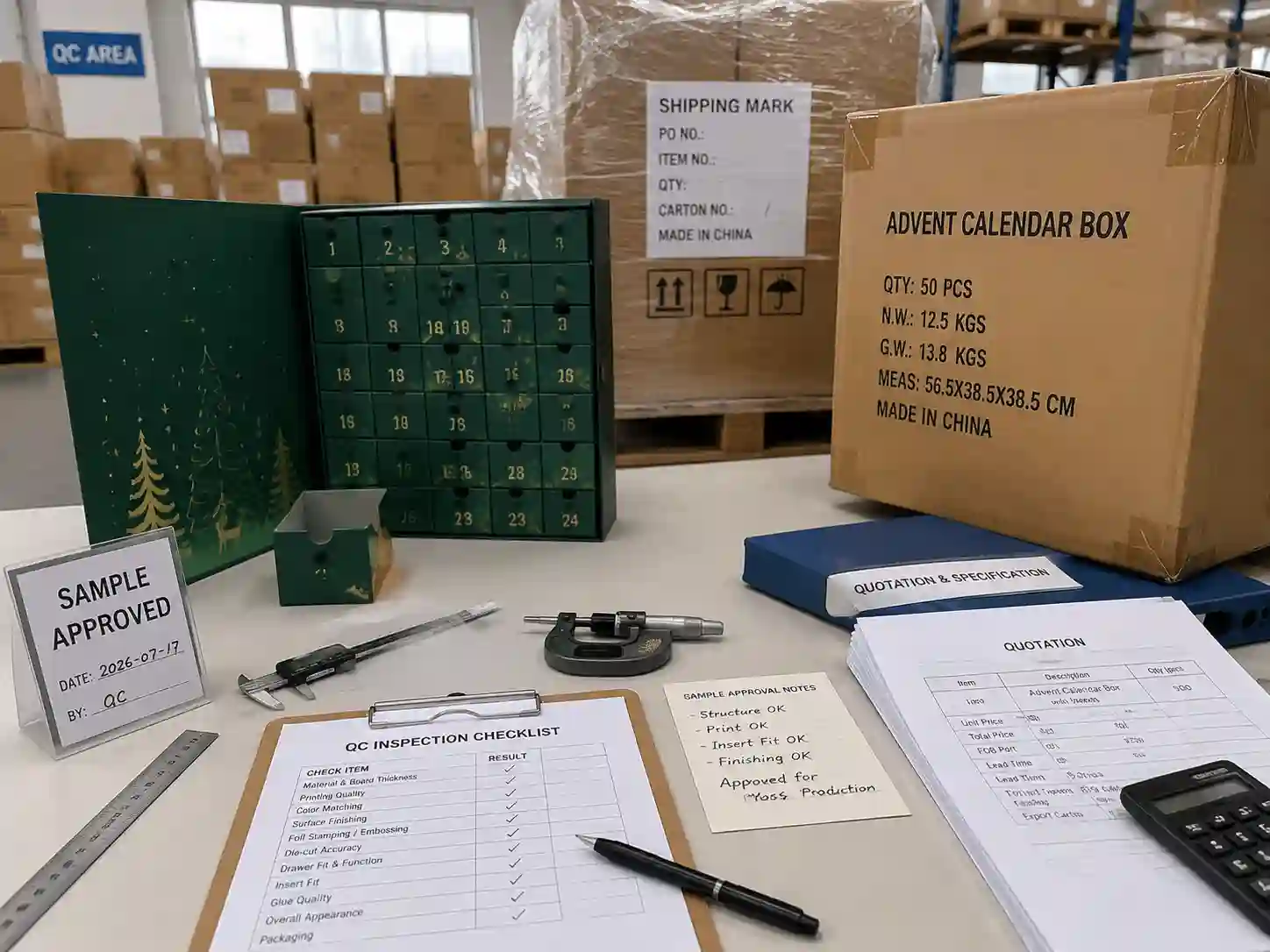
After sample approval, production quality control should continue with the approved sample as the reference standard. QC checks should cover printing, assembly, product fitting, packaging protection, and shipping preparation.
- Verify finished boxes match the approved sample.
- Inspect color consistency across production batches.
- Check drawer movement, door opening, and insert positioning.
- Inspect corners, surfaces, and finishing details.
- Confirm export cartons, corner protection, pallet arrangement, and shipping marks.
For international shipments, buyers may also review logistics guidance from organizations such as ISTA packaging testing resources when discussing transport protection requirements.
Common mistakes buyers should avoid before mass production
Most packaging problems happen when buyers skip verification steps or approve production without a clear physical reference.
- Approving artwork without checking the final dieline.
- Choosing inserts without testing actual product fit.
- Comparing suppliers only by unit price.
- Ignoring finishing effects until after bulk printing.
- Failing to confirm export packing requirements early.
- Starting production before sample approval.
FAQ: Confirm samples before mass production boxes
Is a sample necessary for custom advent calendar boxes?
Yes. A sample is strongly recommended because custom structures, inserts, printing, and finishing details cannot be fully verified through drawings or digital files alone.
What should buyers approve before mass production?
Buyers should approve the box structure, materials, insert solution, artwork placement, printing results, finishing effects, and assembly performance before production starts.
Can suppliers change materials after sample approval?
Material changes should be discussed and approved before production because different boards, papers, and inserts can affect appearance, strength, and product fit.
How does sample approval reduce production risk?
Sample approval creates a shared reference between buyer and supplier, helping prevent misunderstandings during manufacturing and quality inspection.
Final checklist: What should buyers confirm before mass production?
Before placing a bulk order, buyers should confirm:
- Final structure and dimensions.
- Approved insert design and product fit.
- Confirmed artwork and dieline.
- Approved CMYK or Pantone printing results.
- Finished effects including foil, embossing, spot UV, and lamination.
- Mass production expectations, MOQ, lead time, and QC requirements.
- Export carton and shipping preparation details.
Choosing to confirm samples before mass production boxes gives buyers better control over quality, cost, and delivery planning. For brands, wholesalers, and retail purchasing teams developing custom advent calendar packaging, Giftpackpro can help review packaging requirements, prepare samples, and support the transition from prototype to reliable bulk production.