Quick answer: An advent calendar box quotation is often higher than expected because the final cost depends on more than the outer box size. Structure complexity, compartment design, insert materials, printing requirements, finishing processes, sampling revisions, production quantity, quality control, and export packing all influence the quotation. For B2B buyers, the most accurate comparison is not based only on unit price but on the complete packaging solution, including engineering risk, production stability, inspection requirements, and delivery reliability.
For brands, wholesalers, and purchasing teams sourcing custom advent calendar boxes manufacturer solutions, understanding these cost drivers helps avoid unrealistic budgets and allows suppliers to prepare accurate quotations faster.
Why is my advent calendar box quotation higher than expected?
The main reason an advent calendar box quotation is higher than expected is that seasonal packaging usually involves more engineering, assembly work, and quality control than a standard gift box. A multi-compartment calendar requires precise structure, product protection, and reliable opening performance.
Unlike a simple folding carton, a custom advent calendar box may include multiple doors, drawers, trays, hidden compartments, inserts, and decorative finishing. Each additional feature adds material usage, tooling requirements, production time, and inspection points.
Factory tip: A low initial quotation may exclude important items such as sample revisions, complex inserts, manual assembly, protective export packing, or additional QC checks. Buyers should always confirm what is included before comparing suppliers.

Which packaging structure choices increase the quotation?
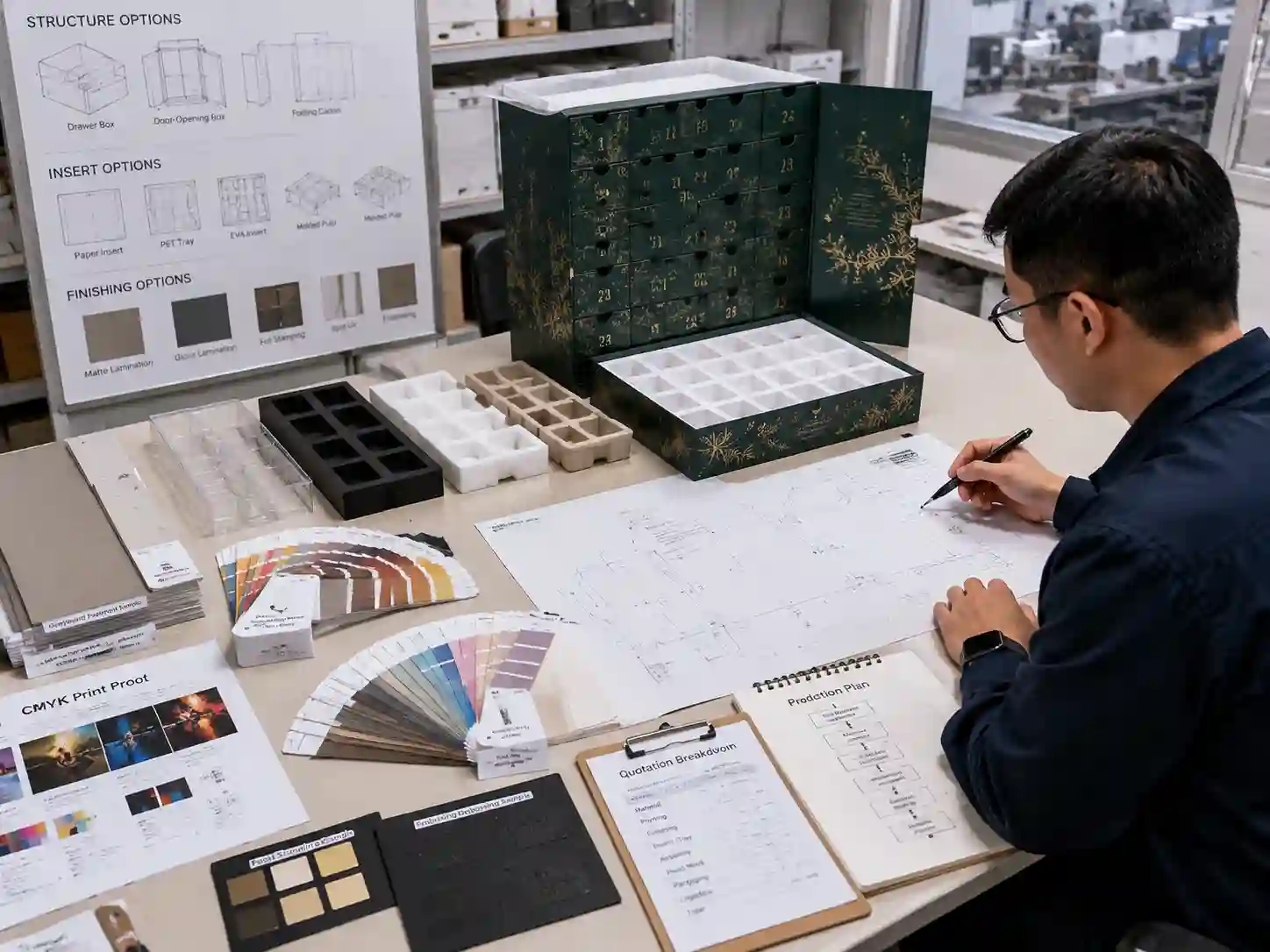
The box structure is one of the biggest cost factors because it determines material consumption, assembly difficulty, and production efficiency. Buyers should select a structure based on product requirements rather than appearance alone.
| Structure Type | Cost Impact | Suitable Applications | Main Cost Drivers |
|---|---|---|---|
| Rigid Box | Higher | Luxury gifts, cosmetics, premium seasonal products | Greyboard, wrapping paper, manual assembly, stronger construction |
| Folding Carton | Lower to Medium | Retail promotions, lightweight products, large quantities | Paperboard thickness, die cutting, printing volume |
| Drawer Box | Medium to Higher | Premium gift sets, products needing repeated access | Drawer fitting, sliding tolerance, inner support structure |
| Door-Opening Box | Medium to Higher | Interactive seasonal campaigns | Hinge design, door alignment, opening durability |
For example, a rigid advent calendar box with 24 individual compartments requires more greyboard, wrapping operations, and assembly labor compared with a simple printed folding carton. The difference is not only material cost but also production complexity.
When comparing custom advent calendar box products, buyers should review structure drawings, compartment layouts, and product-fit samples instead of comparing quotations based only on photos.
How do inserts affect the final quotation?
Insert design can significantly change the quotation because every cavity must match the product dimensions and protect the contents during handling and shipping.
Common insert options include:
- Paper inserts: Cost-effective and suitable for lightweight products with simple shapes.
- PET trays: Provide accurate positioning for cosmetics, bottles, and small retail items.
- EVA inserts: Offer premium protection for fragile or high-value products.
- Foam inserts: Improve cushioning but may increase material and cutting costs.
- Molded pulp inserts: Support sustainable packaging goals with custom-shaped protection.
A common reason quotations increase is that buyers request a visually attractive calendar but later add requirements such as tighter product fitting, individual compartments, finger access, or stronger protection. These changes require insert redesign and additional prototype testing.
Buyer tip: Prepare product dimensions, weight, packaging requirements, and loading direction before requesting a quotation. Accurate product information helps suppliers recommend the right insert solution.
Do printing and finishing choices change the quotation?
Yes. Printing and finishing options directly affect material cost, production steps, and quality inspection requirements. A quotation should include the complete artwork and finishing specification.
Common cost factors include:
- CMYK or Pantone color printing requirements
- Matte lamination or gloss lamination
- Foil stamping areas and foil colors
- Embossing or debossing complexity
- Spot UV coverage
- Special papers or textured materials
For example, a calendar with large foil stamping areas requires additional setup and inspection compared with standard printed packaging. Color consistency between different components also requires careful proofing before bulk production.
QC tip: Buyers should approve a printing proof or pre-production sample before mass production. This helps prevent expensive corrections after thousands of units have been manufactured.
How do MOQ and production quantity influence the quotation?
The order quantity has a major impact because packaging production includes fixed costs such as setup, tooling, sampling, printing preparation, and production planning.
| Order Situation | Quotation Effect | Buyer Consideration |
|---|---|---|
| Small MOQ | Higher unit cost | Fixed setup costs are distributed across fewer units |
| Medium Quantity | Balanced pricing | Suitable for testing markets or seasonal launches |
| Large Production Run | Lower unit cost potential | Requires accurate forecasting and quality planning |
Some buyers focus only on reducing MOQ to lower risk, but smaller orders may create a higher per-unit cost. A supplier evaluation should consider total project cost, not only the quoted unit price.
What sampling and prototype steps add cost before bulk production?
Sampling is an important part of custom packaging development because it verifies structure, materials, artwork, and product fit before mass production.
A professional sampling process may include:
- Reviewing the dieline and packaging specifications.
- Selecting paperboard, greyboard, and surface materials.
- Producing a blank sample for structure testing.
- Creating a printed prototype with approved artwork.
- Testing inserts and product loading.
- Confirming the pre-production sample before bulk manufacturing.
Skipping sample approval may appear cheaper initially but can create higher risks during production. Problems such as incorrect compartment size, loose inserts, poor drawer movement, or color differences can cause delays and additional costs.
Buyers looking for structured support can review custom advent calendar box services to understand how design confirmation, sampling, and production preparation are managed.
How does quality control affect advent calendar box pricing?
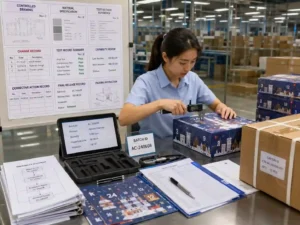
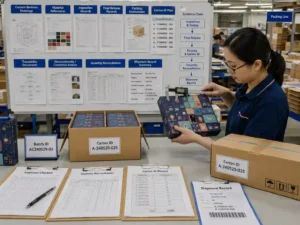
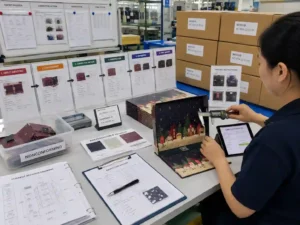
Quality control increases quotation value because seasonal calendar packaging requires more inspection points than standard boxes. Every opening section, compartment, insert position, and printed surface must meet agreed specifications.
Important QC checkpoints include:
- Box dimensions and structural tolerance
- Door or drawer opening performance
- Insert positioning and product fit
- Printing registration and color consistency
- Foil stamping, embossing, and surface finishing quality
- Assembly accuracy and appearance inspection
- Export carton protection before shipment
Factory tip: A reliable quotation should consider inspection requirements from the beginning. Adding QC after production problems occur is usually more expensive than planning quality checks during development.
What export packing factors can increase the quotation?
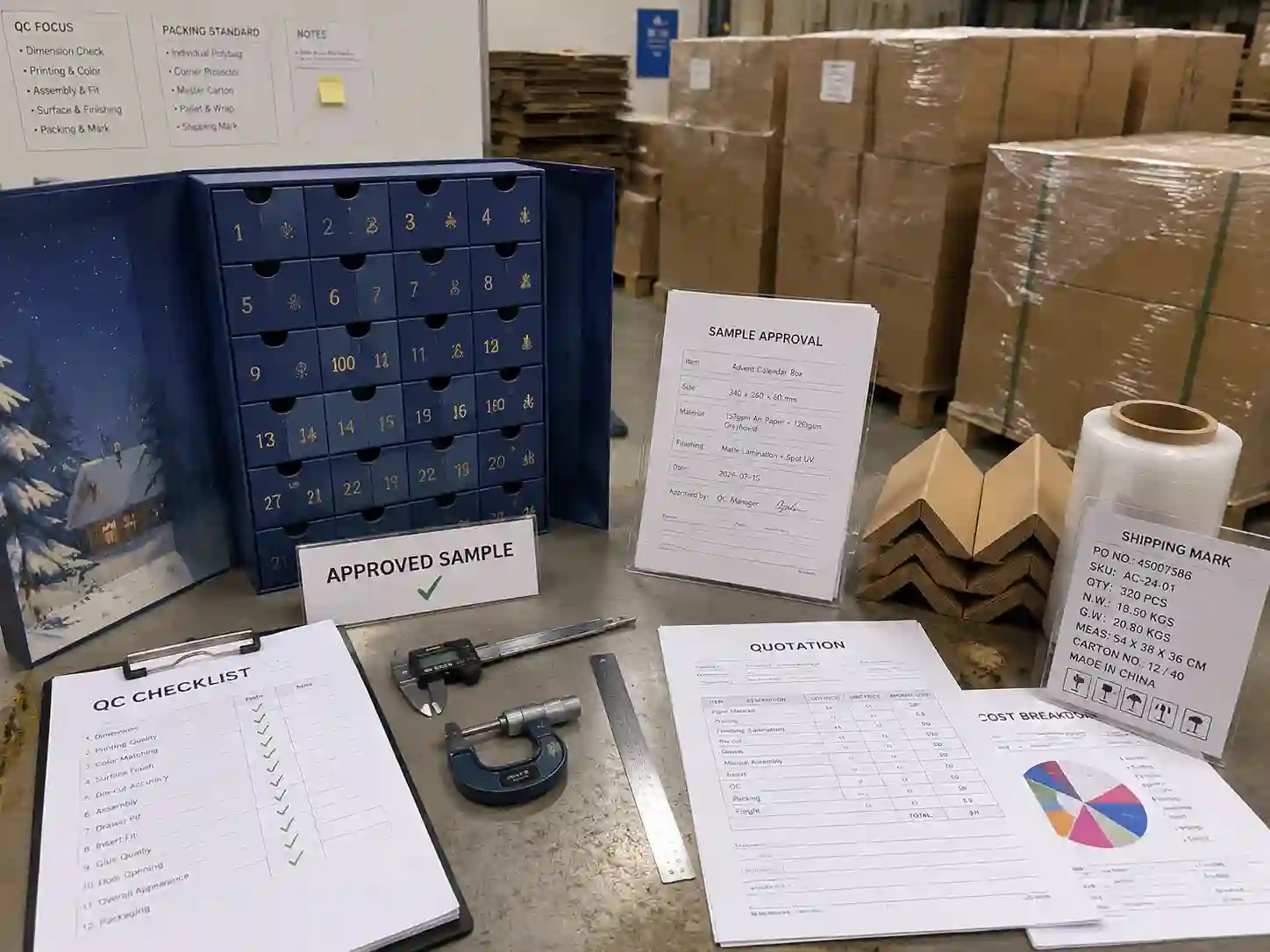
Export packing affects the quotation because custom advent calendar boxes often contain delicate structures that need protection during international transportation.
Export packing considerations include:
- Individual protective wrapping
- Corner protectors for rigid structures
- Suitable export cartons
- Divider systems to prevent movement
- Pallet loading requirements
- Shipping marks and carton identification
For international shipments, buyers should confirm carton dimensions, stacking method, gross weight, and protection requirements before final approval. Proper packing planning reduces the risk of damaged corners, crushed boxes, or displaced inserts.
For sustainability and supply chain verification, buyers may also review official guidance from organizations such as FSC for responsible forest-based materials and GS1 for barcode and identification standards where applicable.
How should buyers compare higher quotations from different suppliers?
Buyers should compare quotations by checking the included specifications, not only the final price. Two suppliers may quote different prices because they are offering different materials, structures, production controls, or packing standards.
Supplier quotation comparison checklist
- Is the structure type clearly defined?
- Are paperboard and greyboard thickness specifications included?
- Are insert materials and fitting requirements confirmed?
- Are printing and finishing details listed?
- Is sample production included?
- Are QC inspections included before shipment?
- Are export cartons and packing methods explained?
- Is lead time realistic for seasonal production?
What information should buyers prepare before requesting a quotation?
A complete RFQ allows suppliers to provide a more accurate quotation and reduces repeated revisions.
Quotation preparation checklist
- Product type and quantity
- Box structure preference or reference images
- Finished box dimensions
- Product dimensions and weight
- Insert requirements
- Artwork files or design direction
- Printing and finishing requirements
- Target delivery date
- Shipping destination
- Required inspection standards
Buyers can also explore more sourcing information through advent calendar box buying guides before preparing an RFQ.
Decision guide: Should you reduce features or accept a higher quotation?
The right decision depends on product positioning, sales channel, and customer expectations.
| Buyer Priority | Recommended Approach |
|---|---|
| Premium brand image | Keep stronger structures, better inserts, and refined finishing |
| Large retail volume | Optimize structure and material usage for efficiency |
| Market testing | Control complexity while maintaining essential protection |
| Fragile products | Invest in insert engineering and protection testing |
FAQ: Advent calendar box quotation questions buyers often ask
Why is my custom advent calendar box quotation higher than a normal gift box?
Because advent calendar boxes usually require multiple compartments, more assembly steps, stronger structures, and additional quality checks compared with standard packaging.
Can changing the box structure reduce the quotation?
Yes. Moving from complex rigid or interactive structures to more efficient folding cartons or simplified designs can reduce material and labor costs.
Does a larger MOQ always reduce the total cost?
A larger MOQ can reduce unit cost, but buyers should balance inventory risk, seasonal demand, and storage requirements.
Should buyers approve a sample before bulk production?
Yes. A prototype or pre-production sample helps confirm dimensions, inserts, artwork, finishing, and assembly performance before mass production.
How can I request a more accurate quotation?
Prepare product details, structure requirements, artwork information, quantity, delivery schedule, and packing expectations. Buyers can request a custom quote with these details for more accurate planning.
Conclusion: How to understand a higher advent calendar box quotation
A higher quotation does not always mean a more expensive supplier. It often reflects additional engineering, better materials, stronger quality control, safer export packing, and lower production risk. Buyers should evaluate the complete packaging solution, including structure, inserts, sampling, QC, and delivery reliability.
For brands and purchasing teams planning seasonal packaging projects, working with an experienced supplier such as Giftpackpro packaging factory can help clarify cost drivers and prepare a realistic production plan.