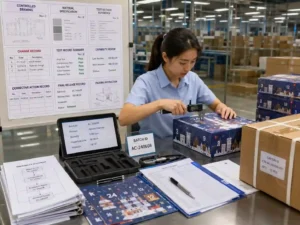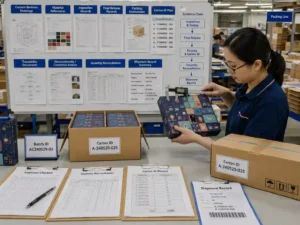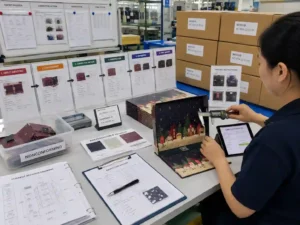
Quick answer: Custom inserts are needed in advent calendar boxes because they control product positioning, protect items during handling and export shipping, improve customer opening experience, and reduce production problems caused by loose or incorrect fitting products. For B2B buyers, inserts are not just decorative components; they are part of the packaging engineering process. The right insert depends on product size, weight, fragility, box structure, assembly method, shipping requirements, and production tolerance. When developing custom advent calendar boxes, buyers should confirm insert material, cavity dimensions, sample testing, QC standards, and export packing requirements before mass production.
For brands, wholesalers, and retail buyers, understanding why advent calendar boxes need inserts helps prevent common problems such as damaged products, uneven presentation, difficult assembly, and higher logistics costs. Giftpackpro works with overseas buyers who need practical solutions for custom advent calendar boxes manufacturer support, including structure development, insert design, sampling, and bulk production planning.
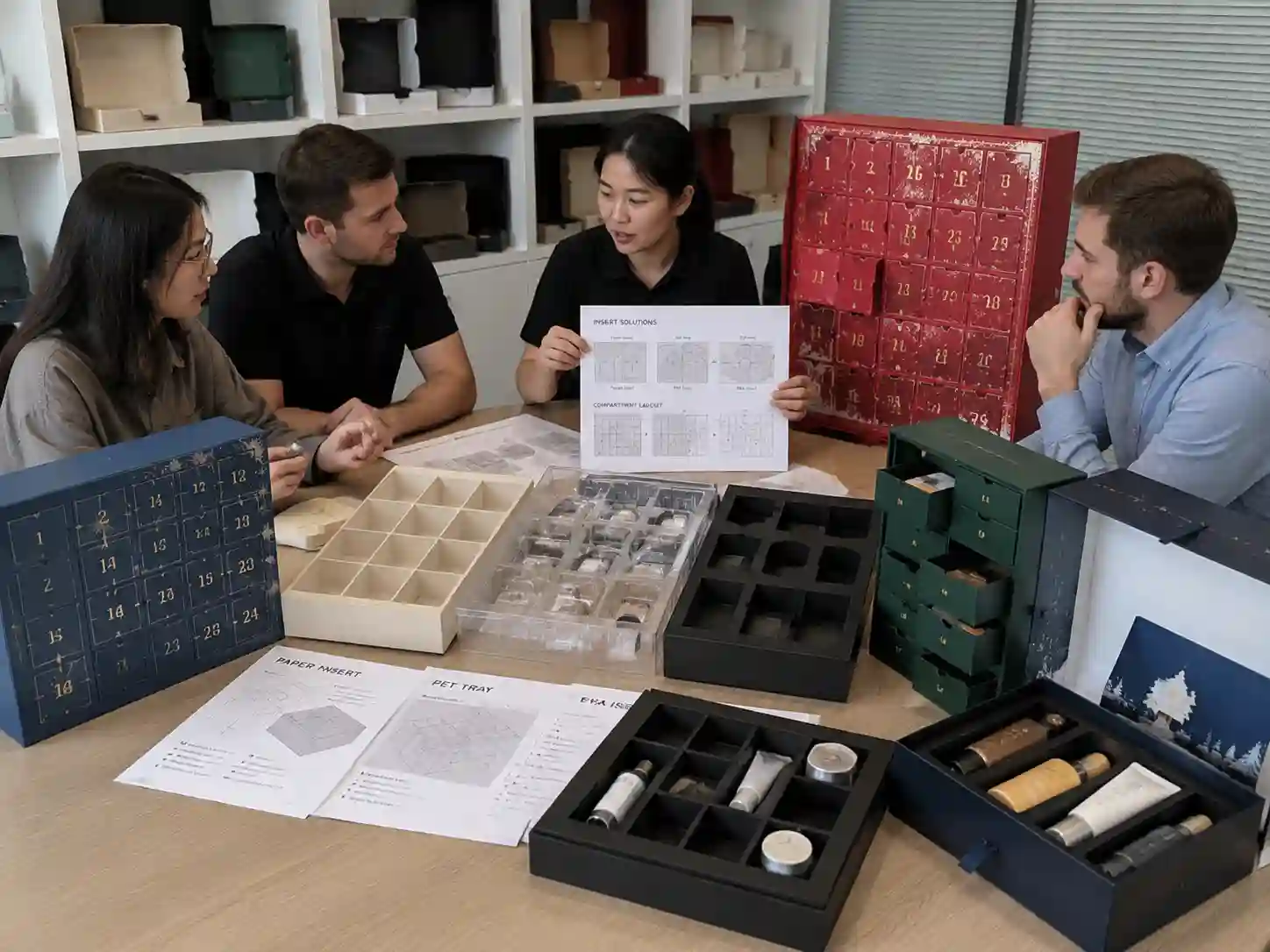
Why do advent calendar boxes need custom inserts?
Advent calendar boxes need custom inserts because each product requires controlled positioning inside the package. A well-designed insert keeps every compartment aligned, prevents movement during transportation, and ensures that products are presented correctly when the box is opened.
Unlike standard gift boxes, advent calendar packaging contains multiple compartments that must work together. Whether the structure is a rigid box, folding carton, drawer box, or door-opening box, the insert must match the internal layout and product dimensions.
Factory tip: A successful insert design starts from the actual product sample or accurate product measurements. Guessing cavity sizes from artwork alone often causes loose fitting, excessive pressure, or assembly problems during bulk production.
What packaging problems do inserts solve for B2B buyers?
Custom inserts solve several production and logistics challenges before products reach the market. The insert is responsible for product stability, compartment organization, and efficient packing.
| Buyer concern | Without a suitable insert | With a custom insert |
|---|---|---|
| Product protection | Products may move, scratch, break, or become misaligned during shipping. | Products remain fixed and protected inside each compartment. |
| Opening presentation | Items may look uneven or incorrectly positioned. | Each product has a consistent retail presentation. |
| Assembly efficiency | Workers may spend extra time adjusting products manually. | Products can be placed faster with repeatable positioning. |
| Export shipping | Movement inside cartons can increase damage risk. | Stable internal packing supports safer transport. |
| Quality control | Different packing methods create inconsistent results. | QC teams can check cavity fit and placement more easily. |
Which insert materials are suitable for custom advent calendar boxes?
The best insert material depends on the product category, protection requirements, appearance expectations, and target cost. Buyers should compare material performance before approving a sample.
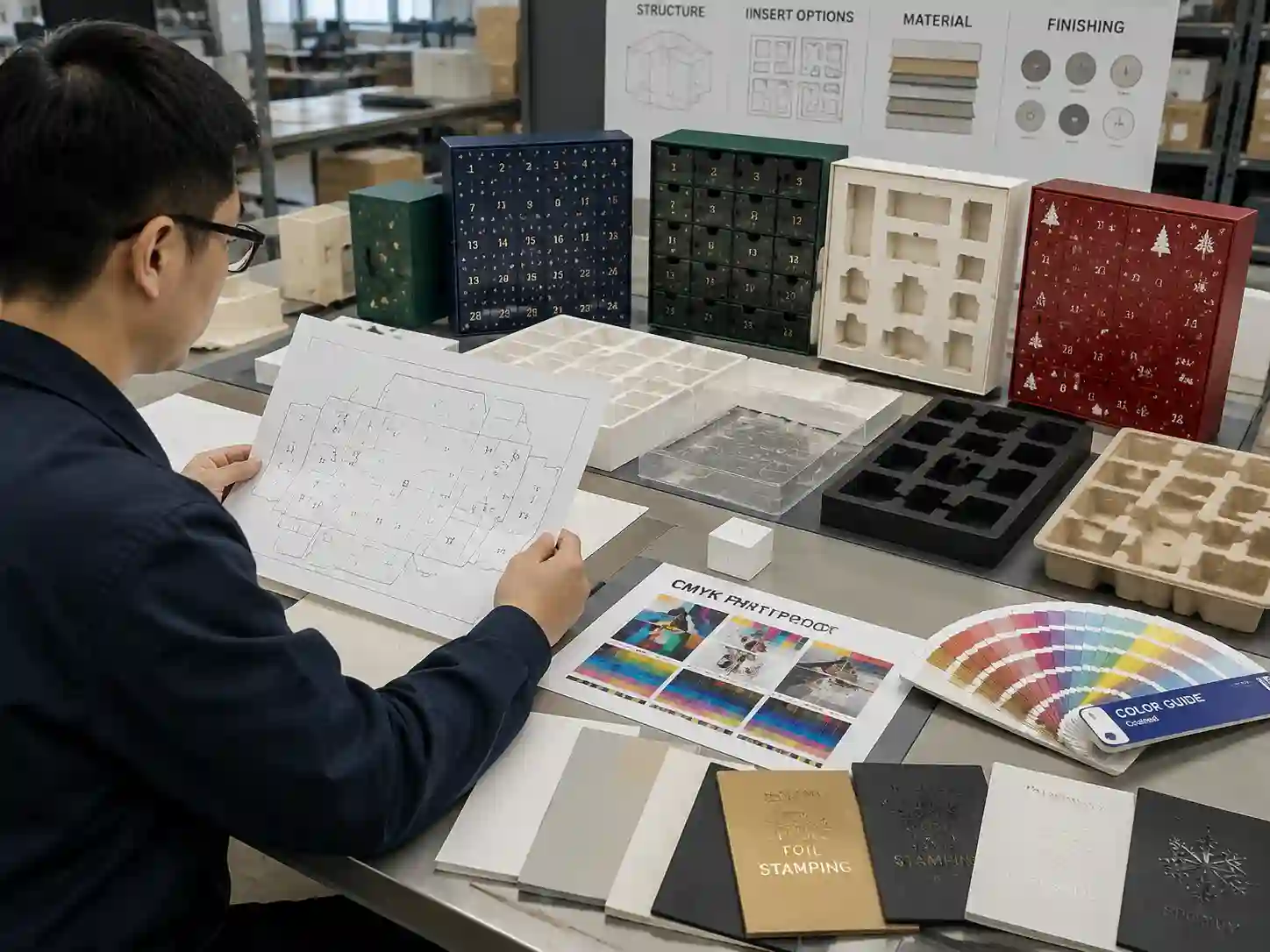
- Paper insert: Suitable for lightweight products such as tea sachets, stationery, small gifts, and promotional items. Paper inserts are cost-effective and can be designed with folding structures.
- PET tray: Common for products requiring clear visibility and precise cavity shapes. PET trays are often used for cosmetics, small accessories, and retail products.
- EVA insert: Provides cushioning and a premium feel for delicate products such as jewelry, electronics accessories, or luxury gift items.
- Foam insert: Useful when additional shock protection or soft positioning is required.
- Molded pulp insert: A more structure-focused option for buyers looking for fiber-based protection solutions.
Insert selection should also consider the outer box structure. A heavy rigid box with a thin paper insert may not provide enough protection, while a lightweight folding carton may not require a high-cost EVA solution.
How should buyers compare insert options for different advent calendar box structures?
The insert design should be evaluated together with the complete packaging structure. Buyers should not select an insert separately from the box because the two components affect each other’s performance.
| Box structure | Common insert approach | Important buyer checks |
|---|---|---|
| Rigid box | Paper insert, EVA, PET tray, foam, molded pulp | Internal height, product weight support, premium appearance |
| Folding carton | Folded paper insert or lightweight tray | Paperboard strength, locking structure, assembly speed |
| Drawer box | Tray insert or fitted compartment structure | Drawer clearance, product movement, opening function |
| Door-opening box | Multiple cavity insert with access space | Door clearance, compartment alignment, user access |
What should buyers confirm during insert design and sampling?
Buyers should confirm insert details during the prototype and sampling stage because most fitting problems are easier and cheaper to solve before mass production.
The sampling process usually includes reviewing the dieline, selecting materials, checking cavity dimensions, producing a prototype, testing product placement, and approving the final sample before production begins.
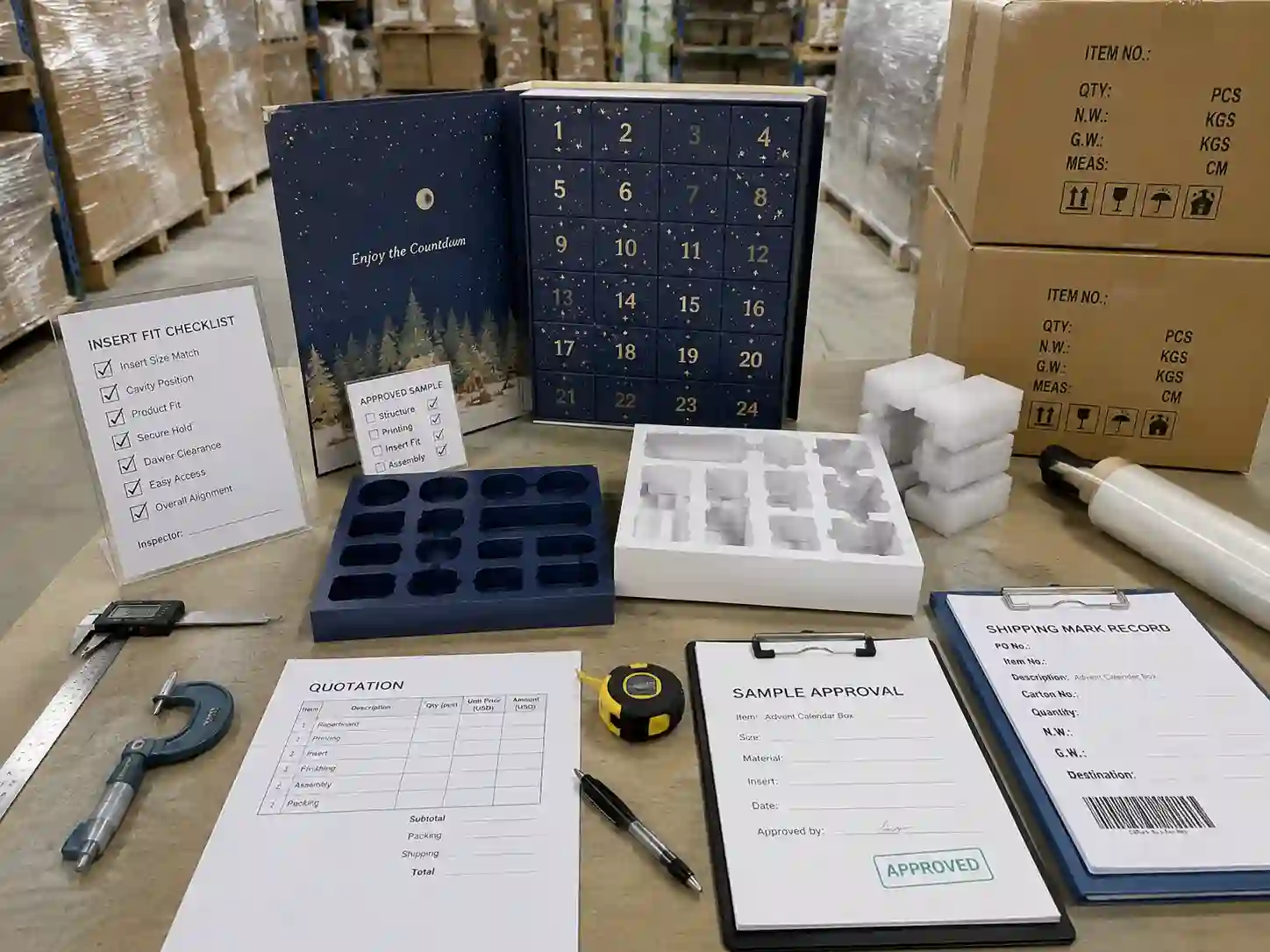
What insert checks should be included in a sample review?
- Product fits correctly without excessive pressure.
- Products do not move excessively when the box is turned or transported.
- Finger access is practical for removing products.
- All compartments match the approved layout.
- Insert edges do not damage products or printed surfaces.
- Insert color and surface quality match the approved sample.
- The insert works correctly with the box opening method.
QC tip: Always test the insert with the real product or a production-equivalent dummy sample. A paper measurement check alone cannot confirm real-world fit performance.
How do inserts affect advent calendar box cost and quotation?
Inserts directly influence quotation because they add material cost, tooling requirements, production time, assembly labor, and packing complexity. However, the lowest-cost insert is not always the lowest-cost solution if it increases damage rates or creates assembly problems.
When requesting a quotation, buyers should provide:
- Product dimensions and weight for each compartment.
- Required number of doors, drawers, or compartments.
- Preferred insert material or functional requirements.
- Box structure preference such as rigid box or folding carton.
- Artwork files, printing requirements, and finishing details.
- Target quantity, MOQ expectations, and delivery schedule.
Printing details such as CMYK, Pantone color matching, foil stamping, embossing, spot UV, matte lamination, and gloss lamination can also affect the final quotation because finishing processes change production steps and inspection requirements.
How do inserts influence MOQ, lead time, and mass production planning?
Insert complexity affects MOQ and production planning because different insert types require different manufacturing processes. A simple paper insert may have shorter preparation time, while molded pulp, EVA, or custom trays may require additional tooling or supplier coordination.
During planning, buyers should consider:
- MOQ: Higher complexity inserts may require efficient production quantities to control unit cost.
- Lead time: Prototype approval and insert testing should be completed before bulk production scheduling.
- Mass production: The approved insert sample should become the reference standard for factory QC.
- Packing method: Insert design affects flat packing, assembled packing, master carton size, and pallet planning.
How should inserts be checked during QC and export packing?
Insert inspection should continue after sampling because production variation can affect fit and appearance. A reliable supplier should check both the insert itself and how it performs inside the finished advent calendar box.
QC inspections commonly include:
- Checking insert dimensions against approved specifications.
- Testing product placement in sample cartons.
- Confirming box closing and opening functions.
- Inspecting assembly tolerance and compartment alignment.
- Checking master cartons for safe stacking.
- Reviewing pallet protection and shipping marks.
For export orders, packaging teams should also confirm whether boxes will ship flat-packed or assembled. Flat packing can reduce container volume, while assembled packing may provide better protection for complex structures. The final decision depends on product value, destination, shipping method, and damage risk.
Useful export references such as GS1 identification and barcode standards can help buyers prepare accurate product and carton information. For companies evaluating transport testing methods, buyers can also review ISTA packaging testing resources.
What mistakes should buyers avoid when ordering advent calendar boxes with inserts?
Many insert-related problems happen because buyers approve packaging before testing the complete product-package system.
- Choosing an insert before confirming product dimensions: This often causes loose or tight cavities.
- Skipping physical samples: Digital drawings cannot replace real fit testing.
- Changing products after insert approval: Even small product size changes may require insert adjustments.
- Ignoring export packing: A good insert design must also survive transportation conditions.
- Comparing quotations only by unit price: Lower prices may exclude important sampling, QC, or packing requirements.
Buyer decision guide: when should you choose a custom insert?
Buyers should choose a custom insert when product positioning, protection, or presentation quality matters. The following guide helps determine the right approach.
| Project situation | Recommended approach |
|---|---|
| Multiple small products in one calendar | Use a compartment insert designed from exact product measurements. |
| Fragile or premium products | Consider EVA, foam, PET tray, or stronger protective structures. |
| High-volume retail launch | Prioritize repeatable insert production and QC standards. |
| International export shipment | Test insert stability with master cartons and pallet packing. |
| New product packaging concept | Request a prototype before confirming bulk production. |
What information should you prepare before requesting a custom advent calendar box quotation?
A complete RFQ helps suppliers provide more accurate recommendations and reduces unnecessary revisions.
- Product category and product photos.
- Product size, weight, and quantity per box.
- Preferred box structure.
- Insert requirements or protection concerns.
- Artwork files or design references.
- Printing and finishing requirements.
- Target order quantity and delivery location.
- Preferred packing method and shipping requirements.
Giftpackpro provides custom advent calendar box services covering structure development, insert solutions, sampling support, production coordination, and quality checks. Buyers can also review more advent calendar box buying guides before preparing a packaging project.
FAQ: Why do advent calendar boxes need custom inserts?
Are inserts necessary for every advent calendar box?
Not every project requires the same insert type, but most multi-compartment advent calendar boxes benefit from a fitted insert because it improves product positioning, protection, and production consistency.
Can I use a standard insert instead of a custom insert?
Standard inserts may work for simple applications, but custom inserts are usually preferred when products have different sizes, premium presentation requirements, or international shipping needs.
Do inserts increase advent calendar box production time?
Insert development can add sampling steps, but early approval usually reduces delays during mass production by preventing fitting and assembly corrections later.
Should the insert be approved before the final box sample?
The insert and box should be tested together because the final performance depends on the complete packaging structure.
How can I request a sample or quotation from Giftpackpro?
Prepare your product details, dimensions, artwork requirements, quantity, and packaging expectations, then use the request a custom quote page to discuss your project.
Conclusion: Why advent calendar boxes need inserts for successful B2B packaging projects
The reason why advent calendar boxes need inserts is simple: inserts transform a decorative box into a controlled packaging system. They protect products, improve presentation, support efficient assembly, and reduce export shipping risks.
For buyers sourcing custom advent calendar boxes, the best results come from early planning: confirm product dimensions, select suitable materials, approve samples, define QC standards, and prepare export packing requirements before mass production. Giftpackpro supports brands and purchasing teams with custom advent calendar box products and practical packaging development from concept to delivery.
If you are comparing suppliers, reviewing insert options, or preparing a seasonal packaging project, contact the Giftpackpro packaging factory team with your product information and production requirements.