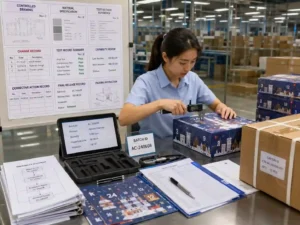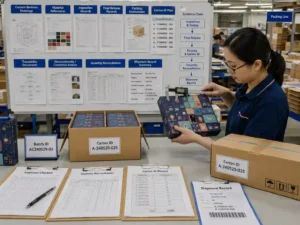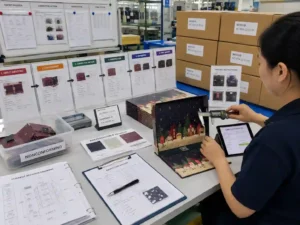
Quick answer: Retail advent calendar boxes are custom paper packaging systems designed for brands that sell, promote, or distribute multiple small products in a seasonal countdown format. For B2B buyers, the most important decisions are not only graphic design, but also box structure, product fit, insert material, shelf strength, barcode position, sample approval, MOQ, QC standards, and export packing. A reliable supplier should help you check the dieline, test every compartment, confirm CMYK or Pantone color, review finishing options, prepare pre-production samples, and pack the final cartons safely for retail, e-commerce, wholesale, or campaign delivery.
Retail buyers choose advent calendar packaging when they need a product set that feels organized, premium, giftable, and easy to merchandise. Unlike a single gift box, retail advent calendar boxes must hold many SKUs, protect different item shapes, open smoothly, display well on shelf, and survive handling from factory to warehouse to retail floor.
Giftpackpro works as a custom advent calendar boxes manufacturer for overseas brands, wholesalers, retail buyers, gift companies, and packaging purchasing teams that need structure development, inserts, artwork support, sampling, bulk production, QC, and export packing. This guide explains what buyers should prepare before requesting a quotation and how to compare suppliers for retail-ready packaging projects.
What should buyers understand before ordering retail advent calendar boxes?
Buyers should understand that retail advent calendar boxes are engineered packaging projects, not only printed boxes. The final cost, lead time, and quality depend on the number of compartments, product weight, opening style, material thickness, insert type, artwork complexity, finishing process, and packing method.
A retail advent calendar may contain cosmetics, skincare tubes, fragrance samples, chocolates, tea sachets, coffee capsules, stationery, jewelry cards, small toys, candles, snacks, or promotional gift items. Each product has different requirements for cavity size, compression resistance, food-contact separation, moisture protection, shelf display, and shipping safety.
Buyer tip: Do not start the quotation only with the outside box size. For retail advent calendar boxes, the supplier also needs the product list, item dimensions, item weights, compartment sequence, retail display direction, barcode location, and whether the box will be sold through stores, Amazon, e-commerce, wholesale, or promotional channels.
Which retail advent calendar box structure fits your sales channel?
The best structure depends on how the calendar will be displayed, opened, packed, and shipped. Rigid boxes create a premium retail impression, folding cartons are more cost-efficient for larger runs, drawer boxes improve reuse and unboxing control, and door-opening boxes support classic countdown access.
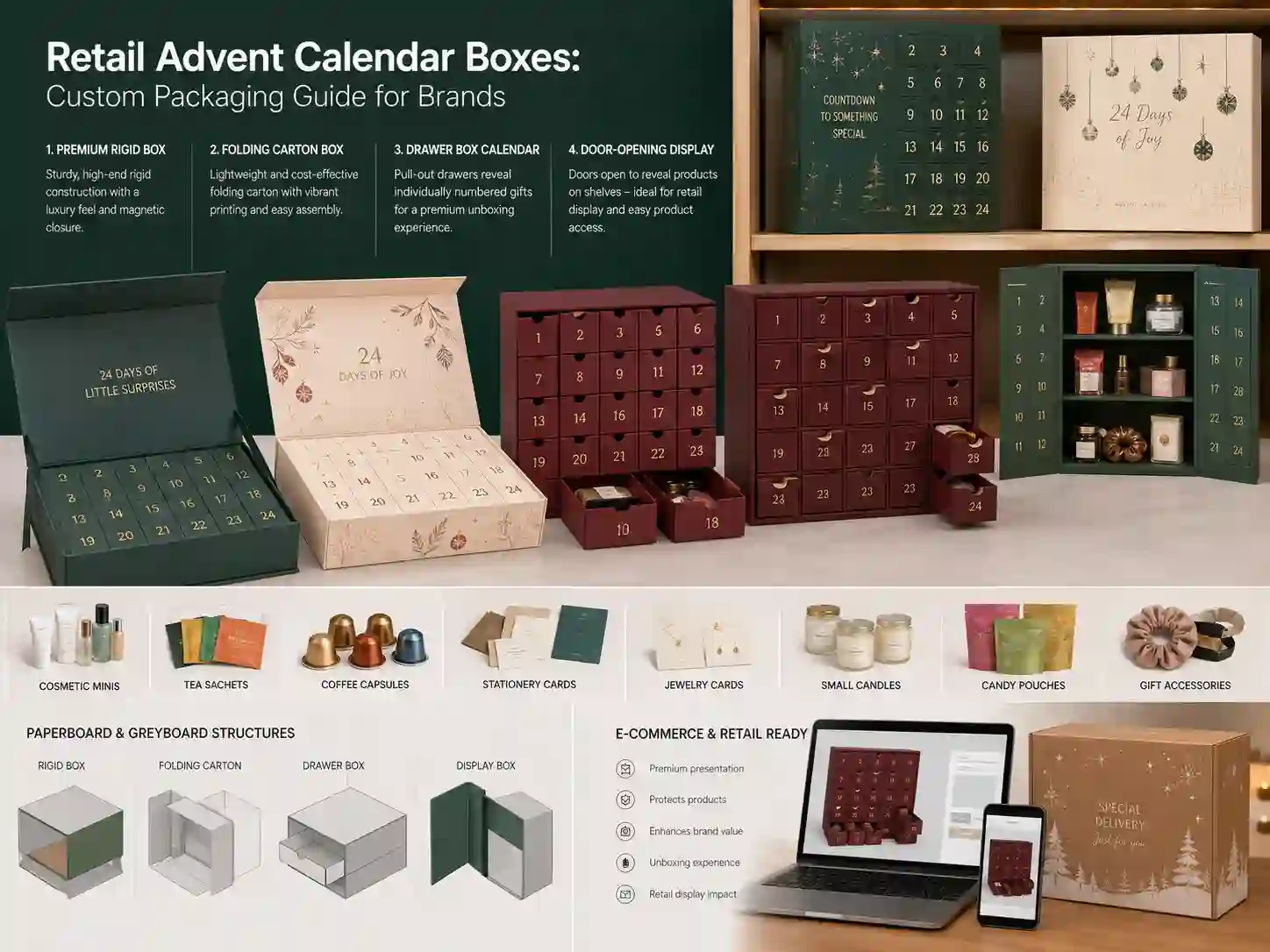
| Structure option | Best use case | Buyer advantages | Key engineering checks |
|---|---|---|---|
| Rigid box with doors | Premium retail gift sets, beauty, fragrance, jewelry, candle, and corporate gift calendars | Strong shelf presence, good perceived value, supports foil stamping, embossing, and specialty paper | Greyboard thickness, door alignment, magnet or ribbon position, hinge strength, insert stability |
| Folding carton advent calendar | High-volume retail, supermarket, snack, candy, tea, stationery, and promotional campaigns | Lower unit cost, efficient flat packing, lighter shipping weight, suitable for offset printing | Paperboard strength, tear-door function, glue area, assembly tolerance, carton compression |
| Drawer box calendar | Premium gift sets, influencer kits, jewelry, cosmetics, and reusable packaging programs | Controlled opening experience, better product separation, strong display value | Drawer sliding tolerance, pull-tab strength, product weight distribution, outer sleeve rigidity |
| Book-style box | Retail sets that need a premium reveal and clear product storytelling | Good for printed story panels, inside graphics, and multiple insert layers | Spine width, magnetic closure, hinge folding test, insert clearance after decoration |
| Two-piece setup box | Simple premium gift sets with removable lid and tray layout | Clean appearance, strong protection, easy photography for e-commerce pages | Lid fit, tray depth, insert height, tolerance after wrapped paper and lamination |
For retail shelves, the front face must communicate product value quickly. For e-commerce, the structure must also resist parcel handling and protect the product arrangement after vibration. For wholesale distribution, carton quantity, pallet efficiency, and shipping marks may matter as much as the packaging appearance.
Factory tip: A beautiful dieline can still fail if the compartment layout ignores real product tolerance. For rigid retail advent calendar boxes, allow space for wrapped paper thickness, insert material thickness, lamination, glue buildup, and hand-assembly variation.
How should buyers choose inserts for product fit and retail protection?
Insert selection should start from product shape, weight, fragility, and presentation angle. Paper inserts are suitable for lightweight products, PET trays provide formed cavities, EVA inserts offer premium hold, foam improves cushioning, and molded pulp can support a more paper-based packaging direction.
Retail advent calendar boxes often contain many different items, so one universal insert solution may not fit every compartment. A small skincare tube, glass mini bottle, folded sachet, candy pouch, and jewelry card all behave differently during assembly and shipping. The buyer should provide physical products or accurate 3D measurements before finalizing the insert.
When is a paper insert the right choice?
A paper insert works well when the items are lightweight, flat, or easy to hold with folded paperboard. It is often used for tea sachets, stationery cards, small paper envelopes, chocolate pieces with inner wrapping, and promotional cards.
Paper inserts can reduce plastic usage and support efficient production, but they must be tested for tearing, bending, and cavity collapse. If the retail calendar will stand vertically on shelf, the paper insert must also keep items from sliding forward when the consumer opens each door.
When should buyers use PET tray, EVA, foam, or molded pulp?
PET trays are useful for precise product cavities, especially when visual alignment matters. EVA and foam are suitable for heavier or fragile premium items, while molded pulp may be considered when the brand wants a formed paper-based insert with cushioning and structure.
For retail packaging, the insert should pass a loaded product fit check before mass production. The supplier should test whether every item can be inserted quickly, removed cleanly, and held securely after shaking, tilting, and carton packing.
QC tip: Insert testing should include loaded weight, vertical display, drawer sliding or door-opening function, product removal, cavity tolerance, and whether the item damages the print surface during transport.
Which materials and finishes affect retail appearance and cost?
Material and finishing choices affect box strength, retail shelf impact, production cost, and lead time. Rigid boxes usually use greyboard wrapped with printed paper, while folding carton calendars use paperboard that is printed, laminated, die-cut, folded, and glued.
Common paper options include coated paper, kraft paper, specialty paper, SBS paperboard, CCNB, and corrugated support layers for heavier projects. The right choice depends on retail price point, product weight, display environment, and export packing method.
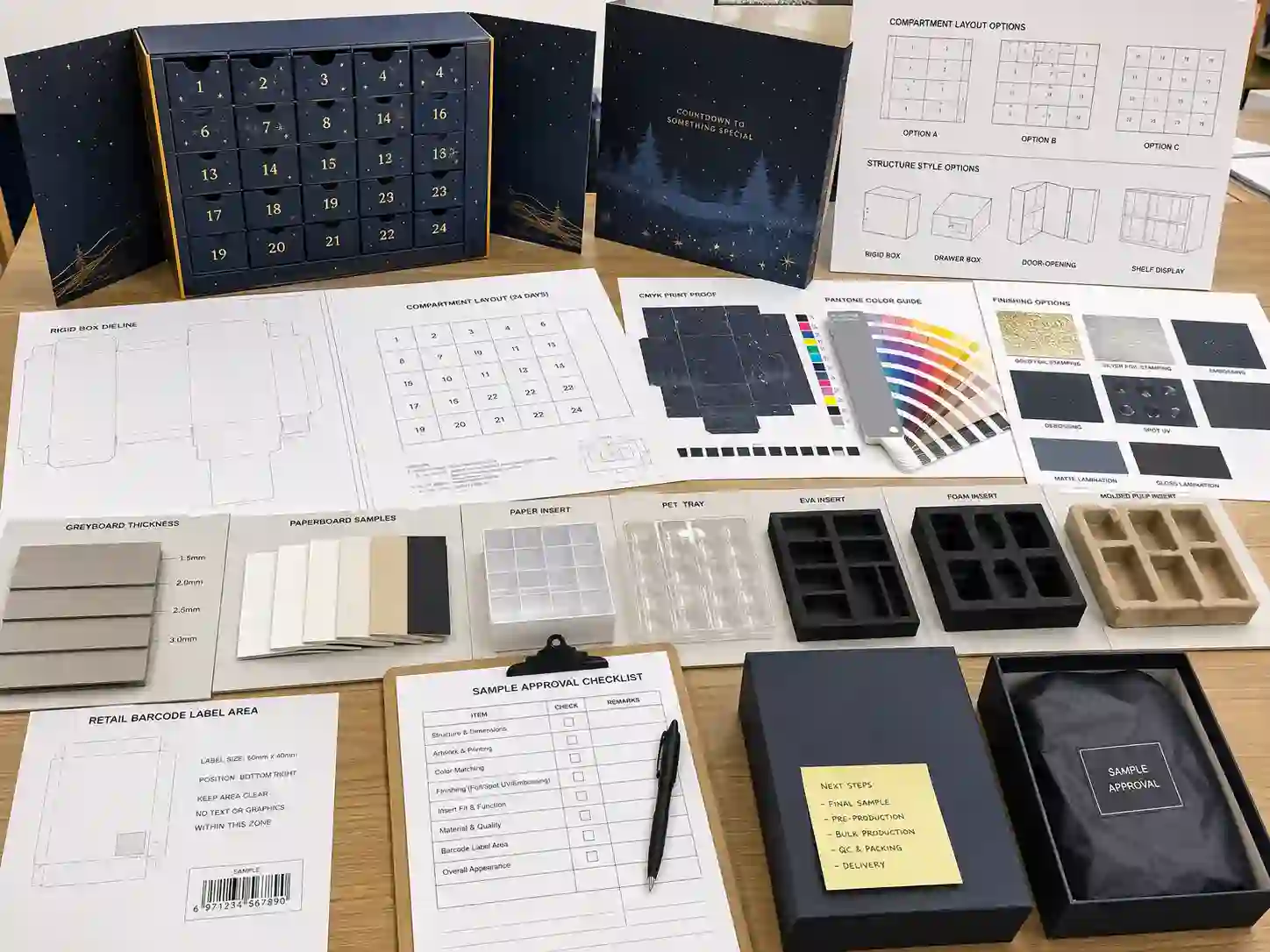
| Decision area | Common options | What buyers should check |
|---|---|---|
| Board structure | Greyboard, paperboard, corrugated support, folded carton board | Thickness, stiffness, compression strength, shelf display direction, assembled weight |
| Printing | CMYK, Pantone spot color, inside and outside printing | Color proof, brand color tolerance, barcode readability, small text clarity |
| Surface finish | Matte lamination, gloss lamination, soft-touch style finish | Scratch resistance, fingerprint visibility, color shift after lamination |
| Decorative process | Foil stamping, embossing, debossing, spot UV | Registration tolerance, position on fold lines, cost impact, sample confirmation |
| Retail information | Barcode area, product description, legal copy, recycling symbols, batch area | Panel size, scan direction, label space, market-specific compliance review |
For sustainability-related material claims, buyers should verify documentation instead of relying on a general statement. If FSC-certified paper is required, ask the supplier to confirm available paper sources and documentation through official chain-of-custody requirements. Buyers can learn more from the Forest Stewardship Council.
For barcode planning, brands should leave a clear barcode label area or printed barcode panel and confirm scan readability after lamination or varnish. Retailers may require GS1-compliant barcodes, and buyers can review the official GS1 barcode standards before final artwork approval.
What artwork and dieline details should be checked before sampling?
Before sampling, buyers should check the dieline, bleed, safe area, opening direction, door numbering, insert layout, barcode panel, finishing layers, and color references. Artwork problems are easier and cheaper to correct before the first printed sample than after plates, molds, or mass production setup.
A retail calendar often includes front artwork, back information, side panels, inner panels, door numbers, drawer fronts, insert labels, and sometimes retail shelf messaging. The dieline must show crease lines, cut lines, glue areas, magnet positions, ribbon holes, windows, hanging tabs, barcode locations, and any foil, embossing, or spot UV layer.
Artwork checklist before prototype or printed sample
- Confirm the final outside size and whether the calendar stands vertically, lies flat, or ships in an e-commerce mailer.
- Check product dimensions against each compartment, not only the total box size.
- Prepare artwork with bleed, safe margins, and correct dieline orientation.
- Separate CMYK, Pantone, foil stamping, embossing, debossing, and spot UV layers clearly.
- Keep small text away from folds, drawer edges, tear doors, and glue flaps.
- Reserve barcode and carton label areas before final design approval.
- Review whether matte lamination or gloss lamination changes the perceived color.
- Confirm legal copy, recycling marks, age warnings, product claims, or importer details with your own compliance team.
Buyer tip: If the project includes 12, 24, or 25 compartments, provide a numbered product map. This helps the factory match each item to its cavity, printed door number, insert depth, and loading sequence during sample review and mass production.
How does sampling work for custom retail advent calendar boxes?
Sampling should move from structure confirmation to printed sample approval and then pre-production sample confirmation. A physical sample is essential because retail advent calendar boxes combine printed graphics, insert fit, door function, assembly tolerance, and loaded product testing.
A common development process includes a blank sample, printed sample, and pre-production sample. The blank sample checks size, structure, material thickness, drawer sliding, door-opening function, and product fit. The printed sample checks artwork, color, lamination, foil stamping, embossing, spot UV, and barcode position. The pre-production sample confirms that the approved specification can be repeated before mass production.
For complex retail projects, buyers may need more than one sample round. This is normal when the product mix includes different heights, glass containers, soft pouches, mini bottles, or fragile items. The cost of one extra sample round is usually lower than the cost of correcting a bulk production issue after thousands of boxes are assembled.
What MOQ, cost, and lead-time factors should buyers compare?
MOQ, unit cost, and lead time are driven by structure complexity, material order quantity, printing setup, finishing processes, insert tooling, assembly labor, and export packing. Buyers should compare quotations by specification, not only by the lowest unit price.
Retail advent calendar boxes often require custom dies, insert molds, printing plates, hand assembly, and careful packing. A folding carton calendar may have a lower MOQ and faster assembly than a rigid drawer calendar with EVA inserts and foil stamping. However, the premium structure may support a higher retail price or stronger gift positioning.
Decision guide: which option is practical for your project?
| Buyer priority | Recommended direction | Trade-off to understand |
|---|---|---|
| Lowest unit cost for large retail volume | Folding carton structure with paper insert and standard CMYK printing | Less premium feel than rigid packaging; structure testing is important for shelf strength |
| Premium brand presentation | Rigid box, book-style box, drawer box, specialty paper, foil stamping, embossing | Higher material and assembly cost; longer sampling and production timeline |
| Heavy or fragile products | Rigid structure with PET tray, EVA insert, foam, or molded pulp support | Insert tooling and fit testing may increase development time |
| E-commerce and Amazon shipping | Stronger outer structure, protective master carton, corner protection, clear label area | Packaging may need extra drop, vibration, or compression review |
| Fast campaign launch | Simple dieline, fewer special finishes, standard paperboard, early artwork approval | Less decorative complexity; buyer must provide complete RFQ details quickly |
Factory tip: Lead time is not only printing time. It includes dieline confirmation, sample making, artwork proofing, material purchasing, tooling, mass production, assembly, QC inspection, export carton packing, and booking shipment.
How should buyers compare retail advent calendar box suppliers?
Buyers should compare suppliers by engineering support, sample accuracy, communication quality, QC process, export experience, and quotation transparency. A supplier that only quotes a low price without checking product fit, insert material, artwork layers, and packing method may create hidden risks later.
When comparing suppliers, ask whether they can review your dieline, recommend structure options, make a blank sample, produce a printed sample, check loaded product fit, confirm color proof, inspect bulk production, and prepare export cartons with shipping marks. For overseas buyers, communication speed and technical clarity are also important because packaging mistakes are often caused by incomplete assumptions.
Supplier comparison checklist
- Can the supplier explain the difference between rigid box, folding carton, drawer box, and door-opening box options for your product mix?
- Can they recommend paperboard, greyboard, insert material, and surface finish based on product weight and retail channel?
- Do they request product dimensions, weights, artwork files, dieline requirements, and packing needs before quoting?
- Can they provide a blank sample, printed sample, and pre-production sample when needed?
- Do they check CMYK, Pantone, foil stamping, embossing, spot UV, matte lamination, and gloss lamination details before production?
- Do they inspect opening function, drawer sliding, insert fit, glue strength, color consistency, barcode area, and carton packing?
- Do they explain MOQ, tooling cost, sample cost, bulk lead time, packing quantity, carton size, and pallet options clearly?
- Do they have export packing experience for retail buyers, wholesalers, distributors, and e-commerce sellers?
Buyers can review Giftpackpro’s custom advent calendar box services to understand available support for structure development, material selection, sample production, printing, finishing, QC, and export packing. Product buyers can also browse custom advent calendar box products for structure references before preparing an RFQ.
What quality-control checks matter before mass shipment?
QC for retail advent calendar boxes should cover appearance, structure, function, product fit, color, finishing, assembly, packing, and labeling. A retail-ready calendar must look consistent on shelf and perform correctly when each compartment is opened.
Common inspection points include box size, board thickness, color difference, print registration, lamination quality, foil stamping position, embossing depth, spot UV alignment, glue strength, door perforation, drawer sliding, magnetic closure, ribbon attachment, insert placement, product loading, barcode label area, carton label, and shipping marks.
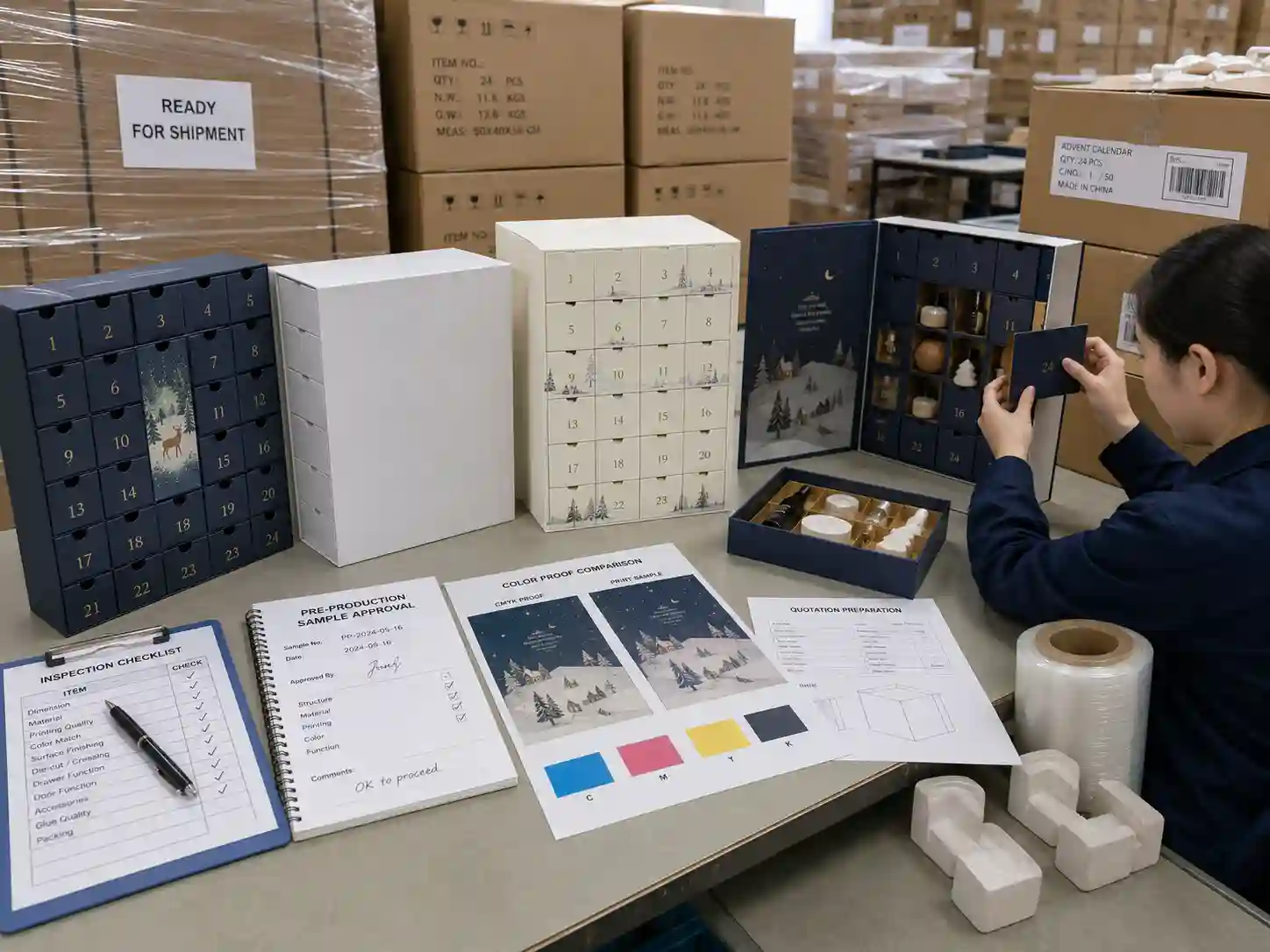
Practical QC checklist for retail advent calendar boxes
- Compare bulk production with the approved pre-production sample.
- Check outside dimensions, compartment sizes, and insert cavity tolerance.
- Open sample doors or drawers repeatedly to test function and tearing behavior.
- Load representative products and confirm that items stay in position after tilting and light shaking.
- Review CMYK or Pantone color against the approved color proof under consistent lighting.
- Inspect foil stamping, embossing, spot UV, matte lamination, and gloss lamination for defects.
- Check glue areas, edges, corners, seams, magnets, ribbons, and drawer pulls.
- Confirm barcode area, label position, carton quantity, shipping marks, and export carton strength.
- Review master carton packing, corner protectors, inner bags, dividers, pallet stacking, and moisture protection if required.
QC tip: For retail shipments, do not inspect only empty boxes. A loaded product fit check is necessary because the real product weight can change drawer movement, door tearing, insert deformation, carton compression, and shelf display stability.
How should export packing be planned for retail distribution?
Export packing should protect finished calendars from compression, abrasion, moisture, incorrect labeling, and rough handling. The packing method should match whether boxes are shipped assembled, flat packed, product-loaded, or separately supplied to a co-packer.
Retail advent calendar boxes are often larger than regular gift boxes and may have decorated surfaces that scratch easily. Master cartons should be sized to avoid over-compression, and inner protection may include poly bags, tissue, corner protectors, dividers, edge guards, or additional corrugated support. For pallet shipments, buyers should confirm carton stacking direction, pallet height, stretch wrap, shipping marks, and destination warehouse requirements.
If the calendars are shipped empty to another facility for product filling, carton quantity and flat-packing method may help reduce freight cost. If the calendars are shipped fully loaded, the supplier and buyer must confirm loaded weight, carton strength, product security, and whether extra transit testing is needed.
What information should buyers prepare before requesting a quotation?
A complete RFQ helps the supplier quote faster and more accurately. Buyers should prepare the product list, target structure, size, quantity, artwork status, insert preference, retail channel, sample requirement, packing method, delivery destination, and any compliance or labeling requirements.
Before contacting Giftpackpro to request a custom quote, prepare the following details:
- Target packaging type: rigid box, folding carton, drawer box, door-opening box, book-style box, or other reference.
- Quantity and expected order plan: sample quantity, first bulk order, and possible repeat order volume.
- Product information: number of items, dimensions, weights, photos, fragility, and compartment sequence.
- Box size target: outside size, display direction, shelf space, and e-commerce packing needs.
- Insert preference: paper insert, PET tray, EVA insert, foam, molded pulp, or supplier recommendation.
- Material preference: paperboard, greyboard, specialty paper, kraft paper, or sustainability-related requirements to verify.
- Printing requirements: CMYK, Pantone, inside printing, matte lamination, gloss lamination, foil stamping, embossing, debossing, or spot UV.
- Artwork status: final artwork, draft artwork, dieline needed, barcode panel, legal copy, and label area.
- Sampling needs: blank sample, printed sample, pre-production sample, and approval timeline.
- Packing and shipment: flat packed or assembled, product-loaded or empty, export carton quantity, pallet requirement, shipping marks, and destination country.
For buyers who are still planning the project, the advent calendar box buying guides section can help compare packaging structures, production steps, and purchasing decisions before sending a formal RFQ. Buyers who need to know more about factory background can also visit the Giftpackpro packaging factory page.
What common mistakes should retail buyers avoid?
The most common mistakes are quoting too early with incomplete product details, choosing structure only by appearance, skipping insert testing, approving artwork without dieline review, and ignoring export packing until the end. These mistakes can cause sample delays, poor product fit, color issues, carton damage, or retail labeling problems.
- Mistake 1: Using only a reference photo. A reference photo helps style discussion, but it does not replace dimensions, material, insert, and product-weight information.
- Mistake 2: Ignoring product loading direction. Items may fit on a table but fall out when the box stands vertically on a retail shelf.
- Mistake 3: Adding too many finishes late. Foil stamping, embossing, spot UV, and special lamination can affect cost, lead time, and sample approval.
- Mistake 4: Approving color only on screen. Retail packaging should use printed proof or sample review because screen color does not represent CMYK, Pantone, or lamination effects accurately.
- Mistake 5: Forgetting carton labels and shipping marks. Retail and warehouse teams often need carton labels, barcode areas, item numbers, PO numbers, and destination marks planned before packing.
- Mistake 6: Comparing suppliers only by unit price. A lower quote may exclude sample cost, insert tooling, special finishing, export cartons, pallet packing, or inspection steps.
FAQ: Retail advent calendar boxes for B2B buyers
What are retail advent calendar boxes used for?
Retail advent calendar boxes are used to package multiple products in a countdown-style retail gift set. They are common for beauty, food, tea, coffee, stationery, jewelry, toys, candles, and promotional gift campaigns where the buyer needs shelf impact, product separation, and organized unboxing.
Are rigid boxes or folding cartons better for retail calendars?
Rigid boxes are better for premium positioning, heavier products, and giftable retail display. Folding cartons are better for high-volume, cost-sensitive, lightweight, or flat-packed projects. The best option depends on product weight, target price, retail channel, MOQ, and freight plan.
Which insert is best for mixed products?
Mixed products often need a customized insert layout rather than one standard tray. Paper inserts, PET trays, EVA inserts, foam, and molded pulp can be combined or adjusted depending on product size, weight, fragility, and display direction.
How many sample rounds are usually needed?
Many projects require at least a blank sample and a printed sample. A pre-production sample is recommended before mass production when the structure is complex, the artwork uses special finishing, or the product fit has tight tolerances.
What affects MOQ for custom retail advent calendar boxes?
MOQ is affected by paper sourcing, printing setup, die-cut tooling, insert tooling, finishing process, assembly complexity, and the supplier’s production schedule. Buyers should ask what is included in the MOQ and whether sample, tooling, and bulk production costs are separated.
Can retail advent calendar boxes be packed flat?
Some folding carton structures can be flat packed, while many rigid boxes, drawer boxes, and product-loaded calendars require assembled packing. The best method depends on structure, insert type, labor plan, warehouse needs, and freight cost.
What should be approved before mass production?
Buyers should approve the dieline, material, insert fit, artwork, printed color, finishing process, sample function, carton packing method, shipping marks, and any retail label requirements before mass production begins.
How can Giftpackpro help with retail advent calendar boxes?
Giftpackpro helps B2B buyers develop retail advent calendar boxes from structure planning to sample approval and export packing. The process can include dieline support, material recommendations, insert testing, CMYK or Pantone printing, foil stamping, embossing, spot UV, matte or gloss lamination, blank samples, printed samples, pre-production samples, mass production, QC inspection, export cartons, pallet packing, and quotation preparation.
To start efficiently, prepare your product list, target quantity, box style, product dimensions, insert preference, artwork files, retail channel, packing method, and destination country. Then contact Giftpackpro through the request a custom quote page so the team can review the structure, sample needs, MOQ, lead time, and export packing plan for your retail advent calendar boxes.