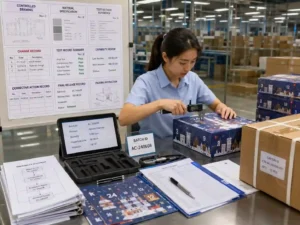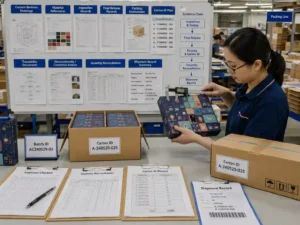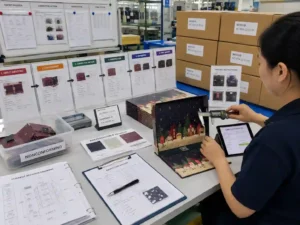
Quick answer: Pet product advent calendar boxes are custom paper packaging systems designed to hold pet treats, toys, grooming items, waste bag rolls, accessories, sample pouches, or mixed pet gift products in numbered compartments. For brands and purchasing teams, the most important decisions are structure, insert material, product-fit tolerance, artwork proofing, sample approval, MOQ, export packing, and supplier reliability. Before bulk production, buyers should test a blank sample for structure and a printed pre-production sample for color, finishing, insert fit, door opening, drawer sliding, barcode area, carton packing, and final assembly quality.
What Should Buyers Understand Before Ordering Pet Product Advent Calendar Boxes?
Buyers should understand that pet product advent calendar boxes are not only printed gift boxes; they are multi-compartment packaging projects that must match the size, weight, shape, scent sensitivity, and retail display needs of pet products. A good project starts with product measurements, insert planning, dieline confirmation, sample testing, and export packing review.
Pet calendars often contain mixed SKUs: sealed pet treat pouches, chew sticks, small plush toys, grooming wipes, collapsible bowls, collar charms, sample sachets, or waste bag rolls. These products have different weights and shapes, so the box cannot be designed only from an outside size. The internal layout, insert depth, compartment clearance, and door-opening strength are just as important as the artwork.
For overseas brands, wholesalers, retail buyers, and e-commerce sellers, the goal is usually to create a seasonal campaign pack that looks retail-ready while still being practical for mass production, carton loading, and international shipping. A professional custom advent calendar boxes manufacturer should help buyers convert a product list into a workable structure, not just print artwork on a generic template.
Which Box Structure Is Best for Pet Treats, Toys, and Accessories?
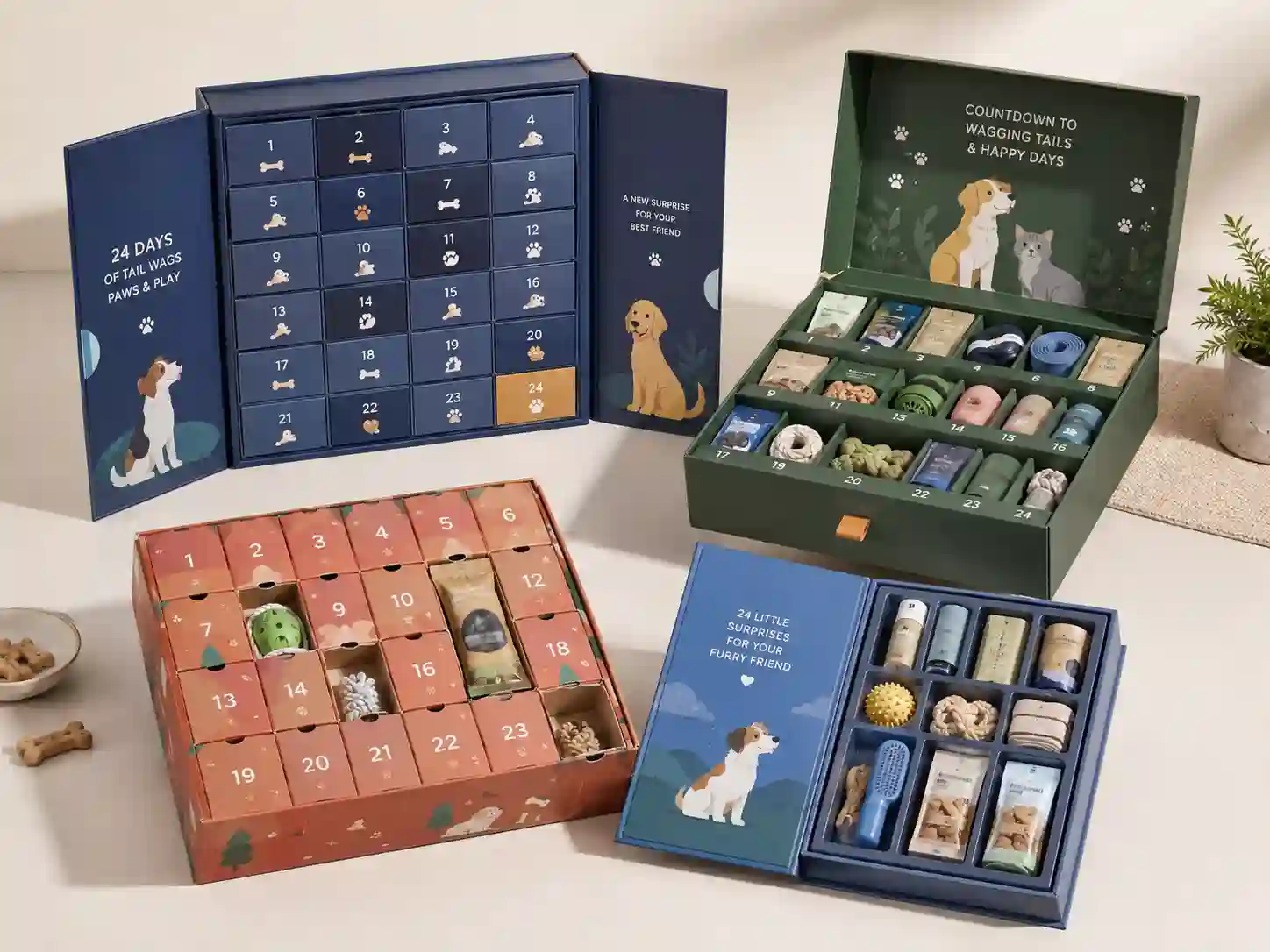
The best structure depends on product weight, retail price point, display method, and how many items need separate compartments. For lightweight pet treats or sample pouches, a folding carton or paperboard door-opening box may be enough; for mixed pet gifts, toys, or premium subscription-style campaigns, a rigid box or drawer box gives better strength and perceived value.
| Structure Option | Best For | Buyer Considerations |
|---|---|---|
| Door-opening advent calendar box | Pet treat pouches, small toys, sachets, sample packs | Needs accurate perforation or door-cutting control so doors open cleanly without tearing adjacent compartments. |
| Drawer box | Premium pet gift sets, grooming accessories, reusable toy calendars | Higher material and assembly cost, but better unboxing control and stronger support for heavier items. |
| Rigid box with greyboard | Luxury pet brand campaigns, retail gift sets, influencer kits | Good stiffness and presentation, but buyers must confirm carton weight, pallet efficiency, and MOQ impact. |
| Folding carton calendar | Cost-sensitive promotions, lightweight pet samples, mass retail programs | Lower unit cost and easier shipping, but insert strength and panel bowing must be tested carefully. |
| Book-style box | Premium storytelling layout, mixed pet wellness or grooming sets | Good shelf presentation, but magnetic closure, hinge strength, and product balance need sample verification. |
Buyer tip: Do not choose a rigid box only because it looks premium. If the product list is light and the sales channel is price-sensitive, a well-engineered folding carton with a stable paper insert may be more suitable. If the set contains heavy chew toys, dense grooming tools, or multiple rolls, a rigid box or reinforced drawer structure is usually safer.
How Should Inserts Be Designed for Pet Product Fit?
Inserts should be designed around real product dimensions, product movement, loading direction, and the opening experience. Pet product advent calendar boxes often need different insert zones because a treat pouch, chew toy, grooming brush, and waste bag roll do not behave the same inside a compartment.
Common insert options include paperboard inserts, PET trays, EVA inserts, foam inserts, and molded pulp. Paperboard is cost-effective and recyclable in many programs, but it may need reinforcement for heavier items. PET trays provide cleaner molded cavities for shaped products. EVA and foam offer strong cushioning and a premium look, but buyers should review sustainability expectations, market regulations, and customer preferences. Molded pulp can be useful for natural or eco-positioned pet brands, but tooling, texture, and tolerance should be discussed early.
For pet treats, the primary food-contact or product-contact responsibility is usually handled by the inner pouch or sealed pack. The calendar box and insert still need to avoid crushing, puncturing, odor transfer, and contamination risk during storage and shipping. If the product includes consumable pet treats, buyers should confirm that inner packaging and labeling meet the target market’s requirements before the outer calendar box is finalized.
What Product Measurements Should Buyers Send for Insert Engineering?
Buyers should send the length, width, height, weight, material, flexibility, and packed form of every item going into the calendar. For soft pouches, also send filled thickness, seal area width, and whether the pouch inflates or bends. For toys, send the widest point instead of only the nominal product size.
- Final product dimensions, not early product estimates
- Weight per item and total loaded calendar weight
- Product photos from front, side, and top views
- Information about fragile, sharp, oily, scented, or flexible items
- Required compartment count, such as 12, 24, 25, or a custom layout
- Preferred loading method: hand loading, semi-automatic packing, or buyer-side assembly
Factory tip: For soft pet treat pouches, insert clearance should be tested with actual filled samples. Empty pouches are thinner and can create a false fit result during prototype review.
How Do Materials Affect Strength, Cost, and Retail Presentation?
Material choice affects box stiffness, print appearance, shipping strength, and unit cost. For pet product calendars, buyers should balance paperboard thickness, greyboard grade, insert material, lamination, and final carton packing instead of selecting materials only by surface appearance.
Common structures use art paper mounted on greyboard for rigid boxes, or printed paperboard for folding carton calendars. A rigid pet gift calendar may use greyboard for the main shell and paperboard for dividers. A cost-controlled calendar may use a printed folding carton outer structure with paperboard inserts. Heavier gift sets may need reinforced side walls, thicker drawer sleeves, or double-layer insert support.
Buyers who need sustainability claims should verify documentation instead of assuming a material is certified. For example, if FSC-related claims are required, buyers can review official information from FSC and request valid chain-of-custody documents from the supplier before printing any claim on the box.
Which Printing and Finishing Choices Matter for Pet Brand Packaging?
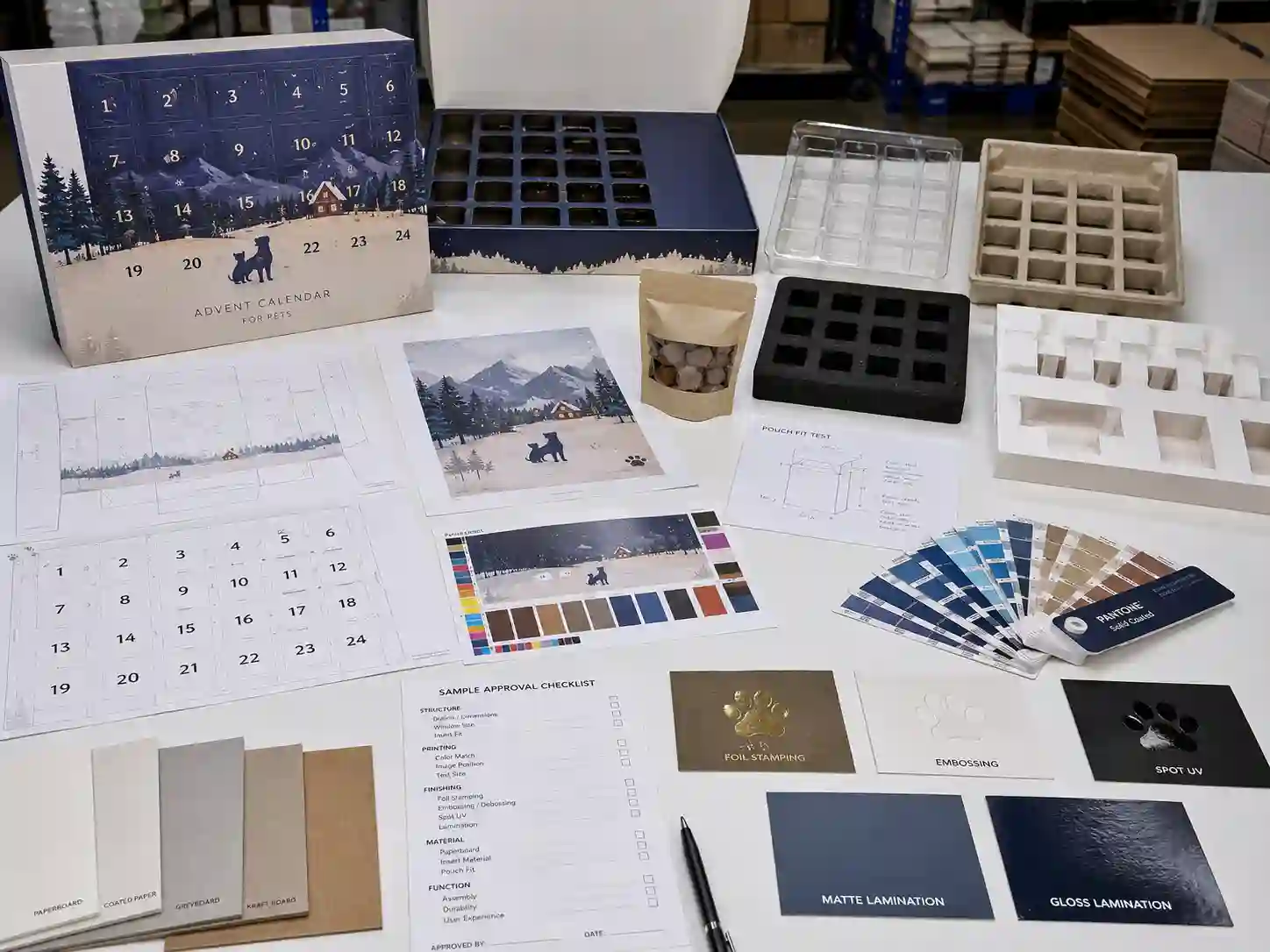
Printing and finishing should support brand recognition, retail visibility, and production stability. CMYK is suitable for full-color artwork, Pantone colors help control important brand colors, and finishes such as matte lamination, gloss lamination, foil stamping, embossing, and spot UV should be tested on the chosen material before bulk production.
Pet product packaging often uses friendly colors, product icons, numbered doors, ingredient callout areas, usage symbols, and retail barcode zones. These design elements need to remain readable after die-cutting, folding, lamination, and assembly. If the design includes small numbers on doors, the buyer should check that cutting lines do not pass through key text.
What Should Be Checked on the Artwork Dieline?
The dieline is the technical bridge between creative design and factory production. Buyers should check the dieline before sample production because changes after printing can delay the project and increase cost.
- Bleed area, safe zone, cutting line, creasing line, and perforation line
- Door numbers and opening direction
- Barcode area and retailer label area
- Panel alignment across folds, drawers, or book-style hinges
- Pantone color callouts and CMYK image resolution
- Foil stamping, embossing, spot UV, matte lamination, and gloss lamination layers
- Warnings, recycling icons, product age suitability notes, and country-specific labeling areas
Buyer tip: Do not approve artwork from a flat PDF only. For advent calendar boxes, buyers should also review how artwork wraps around doors, drawers, hinges, side panels, and insert openings.
Why Are Blank Samples and Printed Samples Both Important?
Blank samples check structure, insert fit, product loading, and user opening experience before paying for full printed proofing. Printed samples check color, finishing, artwork alignment, lamination, foil stamping, embossing, and final presentation before mass production.
For pet product advent calendar boxes, a blank sample is often the most valuable early step because it confirms whether the real products fit. Buyers can test whether treat pouches slide into the cavity, whether chew toys push against doors, whether drawers move smoothly, and whether the loaded box can stand upright on a retail shelf. This stage is where structure problems should be fixed.
A printed sample or pre-production sample is used after structure approval. It should represent the final material, printing, surface finishing, and assembly method as closely as possible. It is the sample buyers should use for final internal approval, retail buyer review, e-commerce photography planning, and factory production reference.
| Sample Type | Main Purpose | What Buyers Should Approve |
|---|---|---|
| Digital dieline review | Confirm layout before sampling | Box size, compartments, bleed, safe zones, door numbering, insert layout |
| Blank sample | Test physical structure and product fit | Insert tolerance, loading direction, door opening, drawer sliding, box strength |
| Printed sample | Review artwork, color, and finishing | CMYK color, Pantone matching, foil, embossing, spot UV, lamination, alignment |
| Pre-production sample | Serve as the approved mass production standard | Final material, print, insert, assembly, packing method, carton label position |
What Should Be Included in a Sample Approval Checklist?
A sample approval checklist should cover structure, insert fit, artwork, finishing, loading, QC tolerance, and export packing assumptions. Written approval is important because the approved sample becomes the reference for mass production.
- Outer size matches the approved specification
- Each compartment matches the product list and opening sequence
- Real pet products fit without crushing, rattling, bending, or pushing doors open
- Insert material and thickness match the quotation
- Door cuts, perforations, drawers, hinges, or magnetic closures work smoothly
- CMYK and Pantone colors are reviewed under proper lighting
- Foil stamping, embossing, spot UV, matte lamination, or gloss lamination is correctly positioned
- Barcode area, shipping mark area, and retailer label area are reserved
- Loaded sample survives reasonable handling and carton packing tests
- Approved sample photos, videos, and written comments are shared with the supplier
QC tip: If the calendar will be filled in the buyer’s country, approve one empty box sample and one loaded box sample. Empty-box approval alone may miss problems caused by product weight and product movement.
How Do MOQ, Cost, and Lead Time Change During Sampling?
MOQ, cost, and lead time depend on structure complexity, material availability, printing method, finishing, insert tooling, assembly labor, and packing requirements. Sampling is where buyers should confirm whether the chosen design is suitable for the target budget and production schedule.
A simple folding carton pet treat calendar usually has a lower production cost than a rigid drawer calendar with EVA inserts and foil stamping. However, the cheapest structure may create higher risk if it cannot protect the products or pass retailer handling. The correct decision is not only about unit price; it is about total project cost, including sample revisions, production yield, inner packing, export carton strength, and shipping volume.
Buyers should ask suppliers to separate tooling cost, sample cost, unit price, insert cost, finishing cost, carton packing, and estimated lead time. This makes supplier comparison easier and prevents misunderstandings when the design changes after the first prototype.
What Are the Main Cost Drivers?
- Box size and total paperboard or greyboard consumption
- Number of compartments and complexity of the dieline
- Insert material: paper insert, PET tray, EVA insert, foam, or molded pulp
- Printing requirements: CMYK only or CMYK plus Pantone colors
- Surface finishing: foil stamping, embossing, spot UV, matte lamination, or gloss lamination
- Assembly time for drawers, rigid boxes, book-style structures, and multi-layer inserts
- Packing method: flat packed, semi-assembled, fully assembled, or filled before shipping
- Export carton size, pallet loading efficiency, and damage-prevention materials
Quotable B2B statement: The lowest unit price is not always the lowest landed cost; a weak structure can increase damage, returns, repacking labor, and campaign delay risk.
How Should Buyers Compare Pet Product Advent Calendar Box Suppliers?
Buyers should compare suppliers by engineering support, sample accuracy, communication quality, production control, export experience, and quotation transparency. A supplier that only asks for artwork may not be enough for a project involving mixed pet products and custom inserts.
A capable supplier should be able to discuss structure, dieline, insert tolerance, product loading, material options, printing proof, MOQ, lead time, QC checkpoints, and carton packing. They should also provide clear revision notes after sampling and explain which changes affect price or production time.
Giftpackpro provides custom advent calendar box services for buyers who need help turning product lists into sample-ready packaging specifications. Buyers can also review custom advent calendar box products to compare structure directions before requesting a quotation.
Supplier Comparison Decision Guide
| Buyer Question | Better Supplier Response | Risky Supplier Response |
|---|---|---|
| Can you help check product fit? | Requests product dimensions, weights, photos, and proposes insert options. | Quotes only from outer box size without asking about products. |
| Can you make a blank sample first? | Explains blank sample purpose, revision process, and timeline. | Pushes directly to bulk production without structure testing. |
| How do you control color? | Discusses CMYK, Pantone, proofing, material effect, and finishing samples. | Promises perfect color without proof or tolerance discussion. |
| How do you pack for export? | Reviews carton size, corner protection, pallet loading, and shipping marks. | Only says “standard export carton” with no detail. |
| What affects MOQ? | Explains material purchase, printing setup, tooling, insert type, and assembly. | Gives one number without explaining what changes it. |
What QC Checks Matter Before Mass Production?
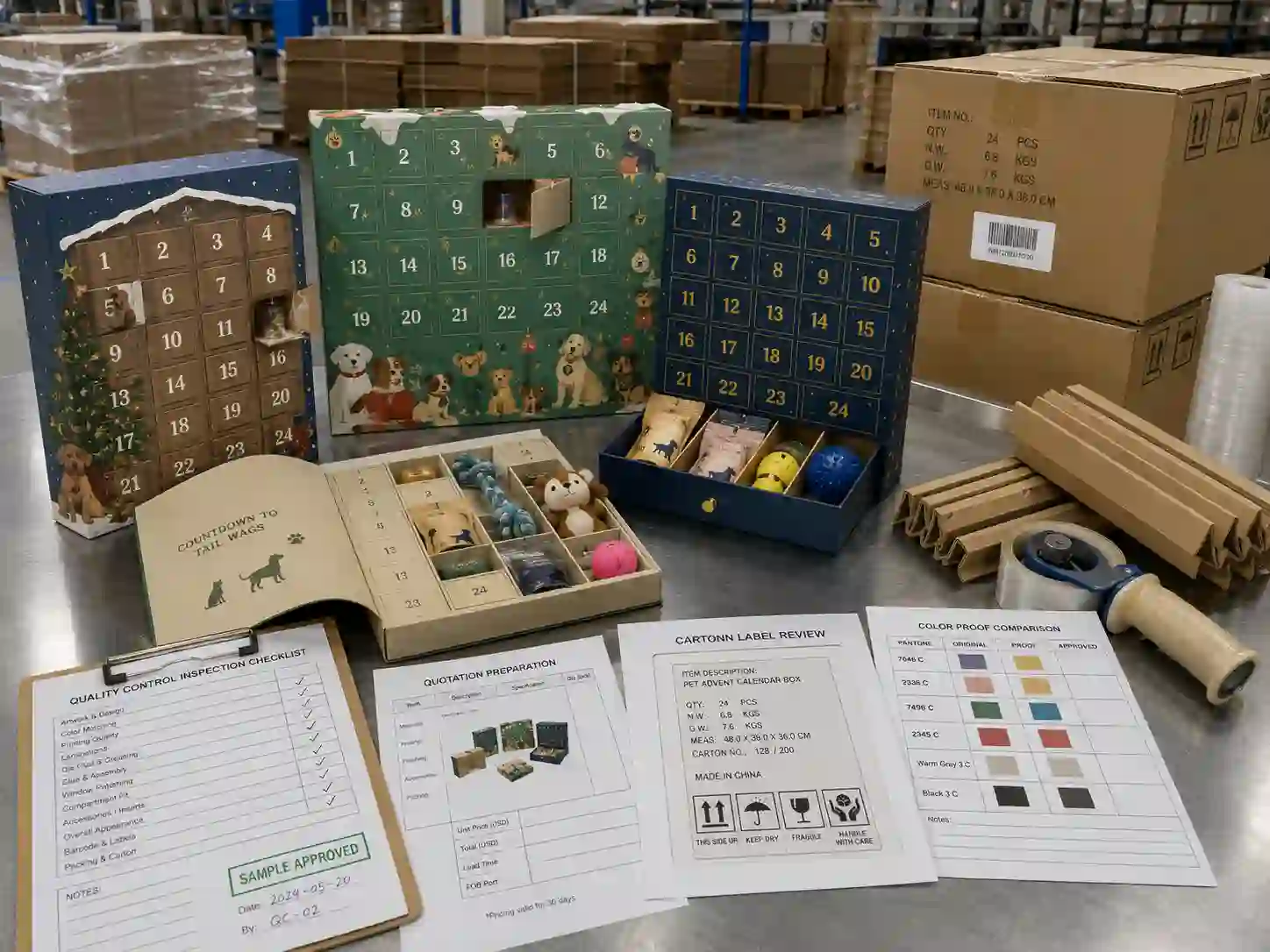
Pre-production QC should confirm that the approved sample can be repeated consistently in mass production. For pet product advent calendar boxes, QC must cover structure, insert fit, print alignment, finishing position, door function, assembly tolerance, and carton packing.
Important inspection points include paperboard thickness, greyboard stiffness, glue strength, drawer movement, door perforation, insert height, compartment matching, surface scratches, foil position, embossing depth, barcode readability, and final carton labeling. If products are loaded at the factory, the QC team should also check product placement sequence and count accuracy.
For barcode planning, buyers can refer to official GS1 barcode standards when preparing retail barcode requirements. The supplier can reserve the print area, but the buyer should confirm the barcode data, size, and retailer requirements.
Pre-Production Checks Before Giving Final Approval
- Confirm the final product list and compartment sequence.
- Approve the final dieline and printed artwork file.
- Approve the material, insert, surface finishing, and carton packing method.
- Review one loaded pre-production sample if products are available.
- Confirm acceptable tolerances for color, cutting, folding, gluing, and assembly.
- Confirm master carton size, quantity per carton, gross weight, and shipping marks.
- Confirm whether the supplier or buyer will load the pet products into the calendar.
QC tip: For door-opening calendars, inspect not only the front view but also the back structure. Poor back support can make doors collapse inward after loading.
How Should Export Packing Be Planned for Overseas Shipping?
Export packing should protect the calendar structure during handling, stacking, palletizing, and long-distance shipping. Buyers should confirm whether boxes will ship flat, semi-assembled, fully assembled, or filled with pet products because each method changes carton size, labor, and damage risk.
Fully assembled rigid calendars look premium but consume more shipping space. Flat-packed folding carton calendars save freight volume but require assembly at destination. Filled calendars need stronger master cartons, careful orientation, and sometimes inner dividers or corner protectors. If the calendars are sold through e-commerce, drop-test expectations may be different from retail pallet shipment.
For export packing, buyers should review master carton strength, inner polybag use, corner protectors, carton labeling, pallet pattern, pallet wrap, shipping marks, and moisture-control needs. If formal transport testing is required by a retailer or distributor, buyers can reference official test procedure information from ISTA and confirm the required test level with their logistics or retail partner.
What Information Should Buyers Prepare Before Requesting a Quotation?
Buyers should prepare product details, target structure, quantity, artwork status, sample requirements, packing method, and delivery schedule before requesting a quotation. Clear RFQ information allows the factory to quote more accurately and suggest practical alternatives.
- Project name and target sales channel: retail, e-commerce, wholesale, subscription, or promotional campaign
- Calendar count: 12-day, 24-day, 25-day, or custom compartment count
- Product list with dimensions, weights, and photos
- Preferred box type: rigid box, folding carton, drawer box, door-opening box, or book-style box
- Insert preference: paper insert, PET tray, EVA insert, foam, molded pulp, or factory recommendation
- Artwork file status: final artwork, rough concept, or need for dieline first
- Printing and finishing requirements: CMYK, Pantone, foil stamping, embossing, spot UV, matte lamination, gloss lamination
- Estimated order quantity and target MOQ flexibility
- Sample needs: blank sample, printed sample, pre-production sample, or all stages
- Packing method: flat, assembled, or filled
- Export destination, carton marking requirements, and target delivery date
Buyers who need factory-side support can contact the Giftpackpro packaging factory team or request a custom quote with product dimensions and project requirements. For more planning references, see the advent calendar box buying guides.
What Common Mistakes Should Buyers Avoid?
The most common mistakes are approving artwork before confirming product fit, skipping blank samples, underestimating insert tolerance, choosing finishing that does not match the budget, and ignoring export packing until the end. These mistakes can delay sampling and create avoidable cost changes.
- Using estimated product sizes: Final filled sizes are necessary, especially for soft pouches and irregular toys.
- Choosing a structure too early: The product list should guide the structure, not the other way around.
- Skipping insert testing: A good-looking box can still fail if products move, rattle, or push doors open.
- Approving color from screen only: Printed proofing is important because paper, lamination, and lighting affect color.
- Adding too many finishes: Foil, embossing, spot UV, and specialty lamination can increase cost and lead time.
- Ignoring carton loading: Oversized calendars may look impressive but increase freight cost and pallet inefficiency.
- Comparing quotes without specifications: Different materials, insert types, and packing methods can make prices look misleading.
FAQ: Pet Product Advent Calendar Boxes for B2B Buyers
Can pet product advent calendar boxes hold both treats and toys?
Yes, but the insert must be designed for mixed product sizes and weights. Treat pouches, chew toys, grooming accessories, and waste bag rolls may need different compartment depths, holding methods, and loading directions.
Should buyers order a blank sample or printed sample first?
Most buyers should start with a blank sample when the product mix is new. After structure, insert fit, and loading are approved, a printed sample or pre-production sample can be used to confirm artwork, color, finishing, and final appearance.
What is the best insert for pet treat calendars?
Paperboard inserts are often practical for lightweight pet treat pouches, while PET trays, EVA, foam, or molded pulp may be better for shaped, fragile, premium, or heavier items. The best insert should be selected after checking real product dimensions and the target budget.
Can the same box design be used for different pet product SKUs?
Sometimes, but only if the products have similar dimensions and weights. If the SKU mix changes significantly, the insert layout and compartment tolerance may need revision even when the outer box remains the same.
What affects MOQ for custom pet advent calendar packaging?
MOQ can be affected by printing setup, paper material purchase, greyboard use, insert tooling, finishing process, assembly labor, and carton packing method. Buyers should ask which parts of the specification control the MOQ.
How early should buyers start sampling?
Buyers should start sampling before final seasonal launch pressure begins, especially if the project needs custom inserts, printed samples, retailer approval, or export shipping. Extra time should be reserved for revisions after the first sample review.
Conclusion: How to Move From Idea to Approved Sample
Pet product advent calendar boxes work best when buyers treat them as engineered seasonal packaging, not only decorative printed boxes. The strongest projects begin with accurate product information, structure comparison, insert testing, dieline review, blank sample approval, printed sample approval, pre-production checks, QC planning, and export packing confirmation.
To request a practical quotation, prepare your product list, dimensions, target quantity, structure preference, insert expectations, artwork status, sample needs, and packing method. Giftpackpro can help overseas brands, wholesalers, retail buyers, and packaging purchasing teams develop custom advent calendar packaging from early prototype to mass production and export packing.