Quick answer: Craft kit advent calendar boxes should be designed around the campaign channel, product mix, compartment layout, insert protection, opening experience, artwork control, and export packing method. For B2B seasonal campaigns, buyers should confirm the craft items first, then build the box structure, insert material, dieline, printing, sample approval process, MOQ, lead time, QC checklist, carton packing, and quotation scope around those items. A good packaging plan helps retail buyers, e-commerce sellers, wholesalers, and gift companies reduce sample revisions, avoid product-fit problems, and launch seasonal craft kits with more predictable production timing.
What should buyers decide before designing craft kit advent calendar boxes?
Buyers should decide the sales channel, target price level, number of compartments, craft item dimensions, retail display needs, and shipping method before choosing the box style. These decisions affect structure, material thickness, insert selection, artwork layout, assembly labor, MOQ, lead time, and export carton design.
Unlike a simple gift box, craft kit advent calendar boxes must hold many small items in a controlled sequence. Beads, yarn, stickers, washi tape, buttons, charms, paper shapes, clay packs, thread cards, mini brushes, and small tools all behave differently inside compartments. Some items are light but bulky, some can scratch printed surfaces, and some need a sealed pouch before being placed into the box.
For a retail campaign, the front panel, numbering, shelf stability, and outer packaging appearance are important. For an e-commerce campaign, buyers should pay more attention to compression strength, corner protection, inner movement, and master carton packing. For a promotional gift campaign, buyers may prioritize brand storytelling, mixed product presentation, and cost control across multiple SKUs.
Giftpackpro works as a custom advent calendar boxes manufacturer for B2B buyers who need packaging that connects product fit, seasonal display, and export production planning instead of treating the calendar as only a decorative printed box.
Which craft kit products affect the packaging design most?
The most important product factors are size variation, weight distribution, fragility, surface sensitivity, and whether the craft items are loose, bundled, bagged, or pre-packed. A calendar filled with flat stickers and paper shapes needs a different insert and compartment depth from one filled with yarn balls, clay packs, beads, charms, and mini tools.
Buyers should prepare a product list before requesting a dieline. The list should include the quantity of each item, product size, packed size, weight, material, fragility level, and whether the item needs a plastic bag, paper sleeve, blister, or separate protective wrap. This information helps the factory calculate compartment size, paperboard thickness, insert tolerance, and box volume.
Buyer tip: Do not design all compartments at the same size unless the product mix is very consistent. Craft kits often include both flat and dimensional items. Using a mixed compartment layout can improve product fit and reduce empty space without making the box look messy.
Which box structure works best for seasonal retail and e-commerce campaigns?
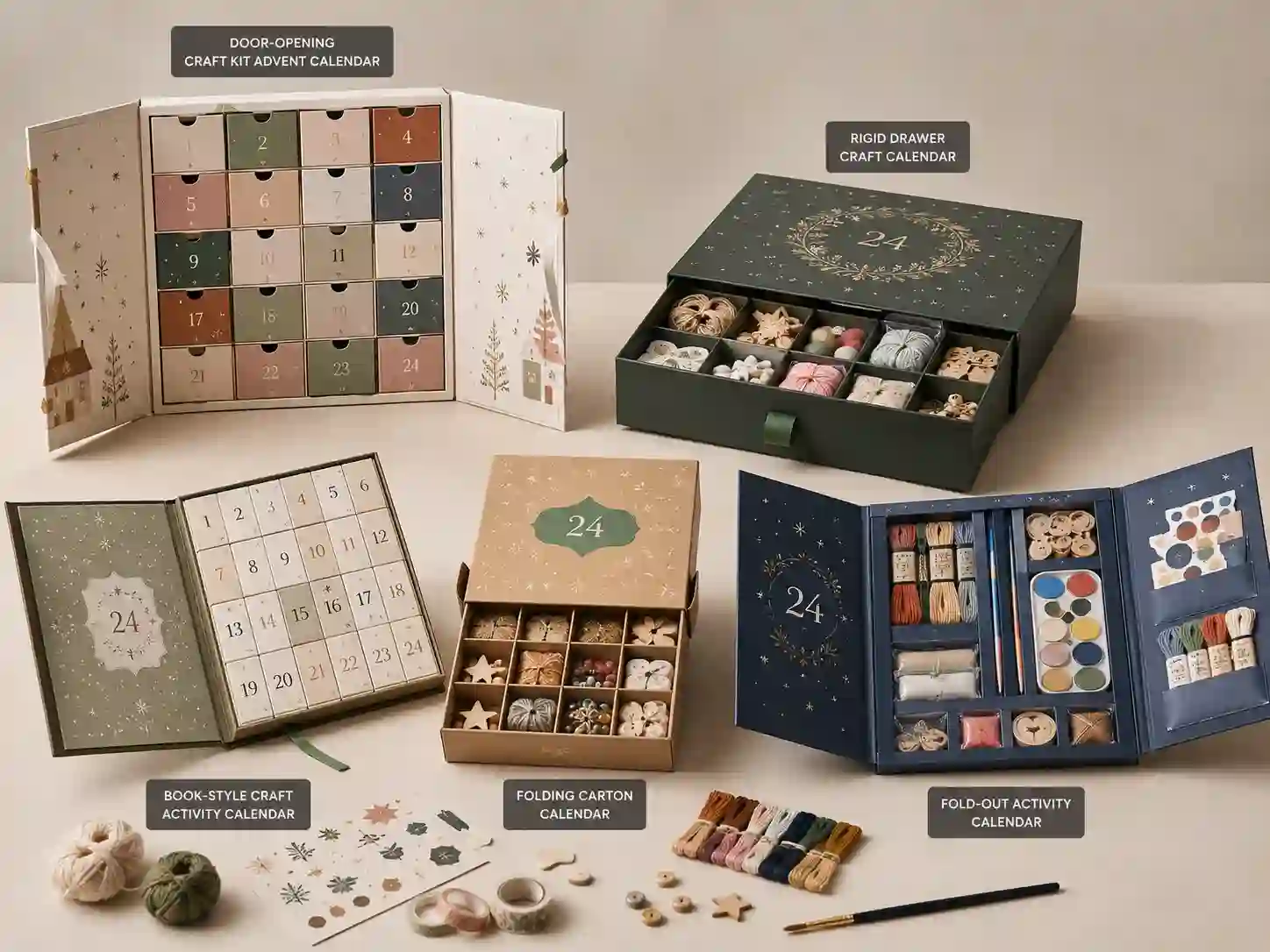
The best structure depends on the campaign channel, product weight, retail price level, and fulfillment method. Door-opening boxes are popular for classic reveal calendars, drawer boxes feel more premium and reusable, folding carton calendars are cost-efficient for lighter craft items, and book-style rigid boxes support a stronger gift presentation.
| Structure option | Best use case | Advantages | Buyer watch-outs |
|---|---|---|---|
| Door-opening box | Retail shelf campaigns, daily reveal kits, lightweight craft items | Clear numbered panels, familiar opening experience, good display surface | Door strength, perforation control, finger notch position, product pressure behind doors |
| Rigid drawer box | Premium craft kits, higher-value gift sets, reusable packaging | Strong structure, premium feel, good protection for mixed accessories | Higher material and assembly cost, drawer tolerance, heavier export weight |
| Book-style rigid box | Brand campaigns, influencer kits, presentation-focused seasonal launches | Large artwork area, strong unboxing impact, suitable for guided activity layouts | Magnet or ribbon cost, hinge durability, assembled packing volume |
| Folding carton calendar | Mass retail, lighter items, price-sensitive campaigns | Lower unit cost, efficient production, better flat-packing potential | Limited load capacity, less premium feel, needs careful compression testing |
| Fold-out activity calendar | Educational craft kits, activity sets, promotional campaigns | Good for step-by-step projects, wide visual layout, strong campaign storytelling | Requires accurate folding tolerance and clear artwork sequencing |
A rigid box made with greyboard can support heavier craft kits and premium finishing, while a paperboard folding carton can be more suitable for lightweight sticker, paper, and stationery-based craft items. Buyers should not compare these structures only by unit price. A lower-cost structure may create higher damage risk if the items are heavy, sharp, or irregularly shaped.
Factory tip: For craft kit advent calendar boxes, structure approval should happen together with insert testing. A box can look correct as an empty prototype but fail when beads, yarn, brushes, clay packs, or charms are loaded and shaken during transport.
How should buyers choose inserts for craft kit advent calendar boxes?
Buyers should choose inserts based on product shape, weight, protection level, sustainability goals, and the required opening experience. The insert is the engineering part of the calendar because it controls whether every item stays in the right compartment from factory packing to final delivery.
Paper inserts are common for flat or lightweight craft accessories and can match paper-based packaging goals. PET trays can provide clear product positioning and tighter cavities for small objects. EVA insert and foam can protect delicate tools, charms, or mixed accessories, but buyers should confirm appearance, smell, compression behavior, and market expectations. Molded pulp can support a paper-based direction for selected shapes, but tooling and cavity precision should be discussed early.
Which insert material should be used for different craft items?
The insert should match the product, not just the box style. Loose beads may need small bagging before placement. Yarn and thread can expand slightly and require compartment depth. Mini brushes and tools need a cavity that prevents rolling. Stickers and paper shapes need flatness protection. Clay packs need enough space to avoid pressure marks.
- Paper insert: Suitable for stickers, paper shapes, washi tape, thread cards, flat accessories, and lightweight mixed items.
- PET tray: Useful for beads, charms, buttons, mini tools, small bottles, or items needing visible molded cavities.
- EVA insert: Suitable for premium kits with small tools or delicate accessories requiring a clean fitted look.
- Foam insert: Useful for cushioning, but buyers should confirm density, surface finish, and whether it fits the brand’s sustainability requirements.
- Molded pulp insert: Useful for selected paper-based packaging projects where shape tolerance and tooling cost are acceptable.
QC tip: Insert fit should be checked with actual packed products, not only product dimensions in a spreadsheet. Small differences in pouch thickness, yarn softness, or bead bag sealing can change the real fit.
How do retail shelf, e-commerce, and promotional campaigns change design decisions?
Retail campaigns need strong shelf presentation, e-commerce campaigns need stronger transit protection, and promotional campaigns need clear brand communication within a controlled budget. The same craft kit can require different packaging if it is sold through a chain store, shipped as an online gift set, or used in a seasonal marketing campaign.
Retail shelf design decisions
For retail, the front panel must communicate the craft kit theme quickly while leaving enough space for numbering, product claims, barcode area, safety marks, and retailer label requirements. Buyers should consider standing stability, display tray compatibility, hanging options if needed, and how the box looks from a distance on a crowded shelf.
A matte lamination can reduce glare under store lighting, while spot UV, foil stamping, or embossing can highlight the product name, number panel, or seasonal graphic. However, each finishing process should be included in the quotation because it affects cost, sampling time, and production scheduling.
E-commerce design decisions
For e-commerce, the calendar must survive parcel handling, compression, and vibration. Buyers should discuss whether the unit will ship in a mailer, individual shipper carton, master carton, or palletized export carton. If the calendar is sold through marketplace fulfillment, barcode label area, carton size, weight, and packing method should be confirmed early.
Buyers may also need to decide whether the advent calendar box will be shipped empty for local packing or fully assembled and filled at the factory. Empty flat packing can reduce freight volume, but assembled packing may be needed when inserts, compartments, and craft items require factory-controlled loading.
Promotional campaign decisions
For brand promotions, the packaging should support the campaign message without making the structure too complicated for mass production. Custom printing, numbered reveals, guided activity cards, and QR code areas can be useful, but buyers should leave enough production tolerance for folding, gluing, door opening, and insert placement.
What artwork and dieline details should buyers control?
Buyers should control the dieline, numbering sequence, bleed, safe zones, barcode area, opening direction, color references, finishing layers, and insert layout before approving artwork. Many calendar problems come from artwork that looks good on screen but does not match cutting, creasing, assembly, or compartment positions.
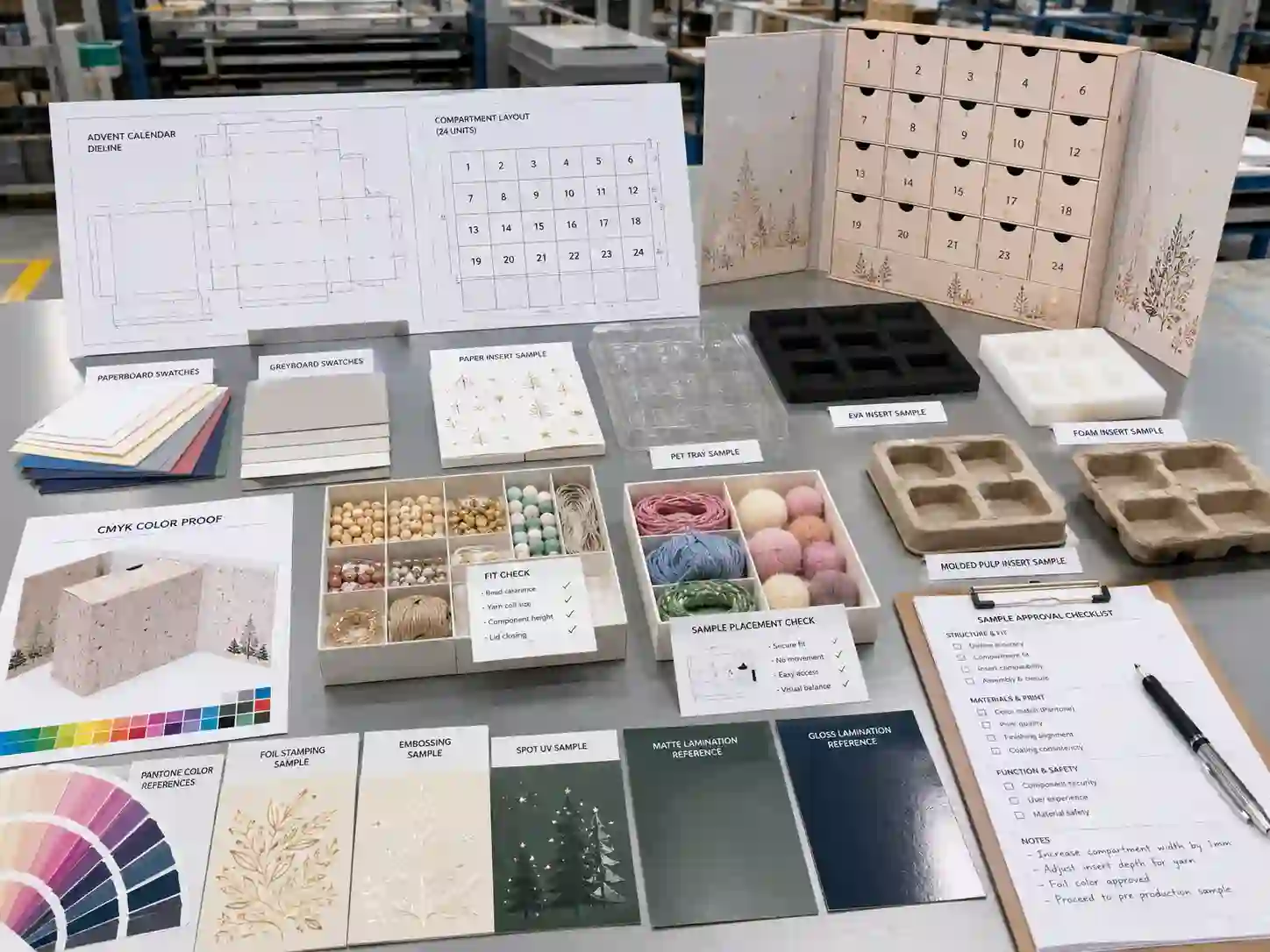
The dieline should show the outer box structure, door or drawer positions, inner insert location, glue areas, fold lines, cut lines, and any windows or perforations. For craft kit advent calendar boxes, each numbered opening should match the product sequence and cavity behind it. If day 1 is a large yarn item and day 2 is a small charm, the structure must reflect that difference.
For printing, CMYK is commonly used for full-color artwork, while Pantone references help control brand colors more precisely. Buyers should request a color proof or printed sample when color accuracy matters. Foil stamping, embossing, spot UV, matte lamination, and gloss lamination should be shown as separate artwork layers so the factory can confirm plate, film, or process requirements.
Factory tip: Numbering errors are expensive in advent calendar production. Buyers should check the dieline, printed proof, and physical sample against the product loading plan before mass production starts.
What sampling process reduces risk before mass production?
A proper sampling process should move from structure confirmation to printed sample approval and then pre-production sample approval before mass production. For seasonal campaigns, skipping sample stages can cause delays that are more expensive than the sample cost.
Buyers can usually review a blank sample first to confirm size, structure, opening function, insert concept, and product fit. A printed sample then confirms artwork, color direction, surface finishing, lamination, foil stamping, embossing, spot UV, and general presentation. A pre-production sample should represent the approved production method as closely as possible before bulk manufacturing.
- Product data review: Confirm item list, packed dimensions, weight, and loading order.
- Dieline development: Build the structure around compartments, inserts, and artwork areas.
- Blank prototype: Check size, door opening, drawer sliding, folding, insert fit, and product loading.
- Printed sample: Review color, finishing, numbering, text, barcode area, and retail appearance.
- Pre-production sample: Confirm final material, printing, finishing, insert, assembly, and packing method.
- Mass production approval: Release production only after written sample approval and documented changes.
When using custom advent calendar box services, buyers should provide clear feedback after each sample stage. Comments such as “make it stronger” or “improve the fit” are less useful than notes like “increase tray cavity depth by 3 mm” or “adjust drawer clearance because yarn pouch catches during opening.”
What drives MOQ, cost, and lead time for craft kit advent calendar boxes?
MOQ, cost, and lead time are driven by structure complexity, material usage, printing process, finishing, insert type, assembly labor, sample revisions, order quantity, and export packing method. Buyers should compare quotations by specification, not only by the final unit price.
Rigid boxes usually require more greyboard, wrapping paper, manual assembly, and longer production time than folding cartons. Drawer boxes require precise sliding tolerance. Door-opening calendars require accurate die-cutting, creasing, and perforation control. PET tray, EVA insert, foam, and molded pulp options may involve tooling, mold cost, or special material preparation.
Finishing also affects cost. Foil stamping requires plates. Embossing needs tooling. Spot UV needs accurate registration. Matte lamination and gloss lamination change both appearance and surface protection. If a buyer requests several finishes on a low MOQ order, the unit cost may increase sharply because setup costs are spread across fewer pieces.
Quotable B2B statement: “For craft kit advent calendar boxes, the lowest quotation is not always the lowest campaign cost; poor insert fit, weak export cartons, or late sample approval can create higher losses than a small unit-price difference.”
How should buyers compare suppliers for seasonal campaign packaging?
Buyers should compare suppliers by engineering ability, sample accuracy, communication speed, quotation clarity, production capacity, QC process, export packing experience, and willingness to document specifications. A reliable supplier should help identify packaging risks before mass production, not only accept the artwork and quote a price.
When comparing China factories or packaging partners, buyers should ask how the supplier checks dielines, controls color proofing, tests inserts, manages sample revisions, records approval notes, and packs export cartons. Buyers can also review whether the supplier understands retail shelf requirements, e-commerce shipping, pallet loading, and shipping marks.
Supplier comparison decision guide
| Decision point | What to ask | Why it matters |
|---|---|---|
| Structure engineering | Can the supplier recommend rigid box, drawer box, door-opening box, or folding carton based on item weight and channel? | Prevents choosing a structure that looks good but fails in loading or shipping. |
| Insert development | Can they test paper insert, PET tray, EVA insert, foam, or molded pulp with actual samples? | Protects mixed craft items and reduces movement inside compartments. |
| Artwork control | Do they check dieline, bleed, numbering, CMYK, Pantone, and finishing layers before printing? | Reduces color, sequence, and registration errors. |
| Sampling process | Do they provide blank sample, printed sample, or pre-production sample options? | Allows buyers to approve the correct risk level before mass production. |
| QC and packing | Do they inspect opening function, insert fit, carton strength, labels, and shipping marks? | Reduces retail complaints and export damage risk. |
| Quotation detail | Is the quotation based on full specifications, packing method, MOQ, and lead time? | Makes supplier comparison fair and prevents hidden costs. |
Buyers can review custom advent calendar box products to understand common structure directions before preparing an RFQ. For more purchasing topics, the advent calendar box buying guides section can also support internal sourcing discussions.
What QC checks are important before shipment?
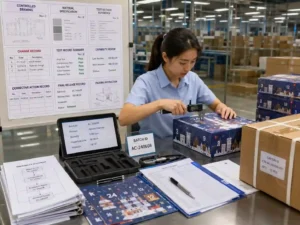
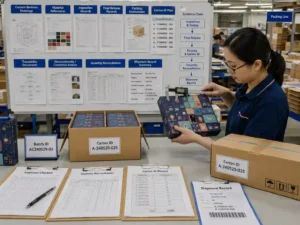
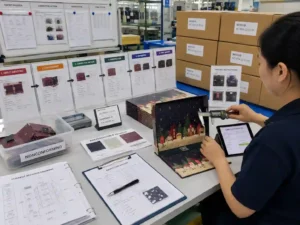
QC checks should cover material, printing, structure, insert fit, opening function, assembly, product loading, carton packing, labels, shipping marks, and pallet condition. For craft kit calendars, QC should focus not only on appearance but also on whether every compartment opens correctly and holds the correct item.
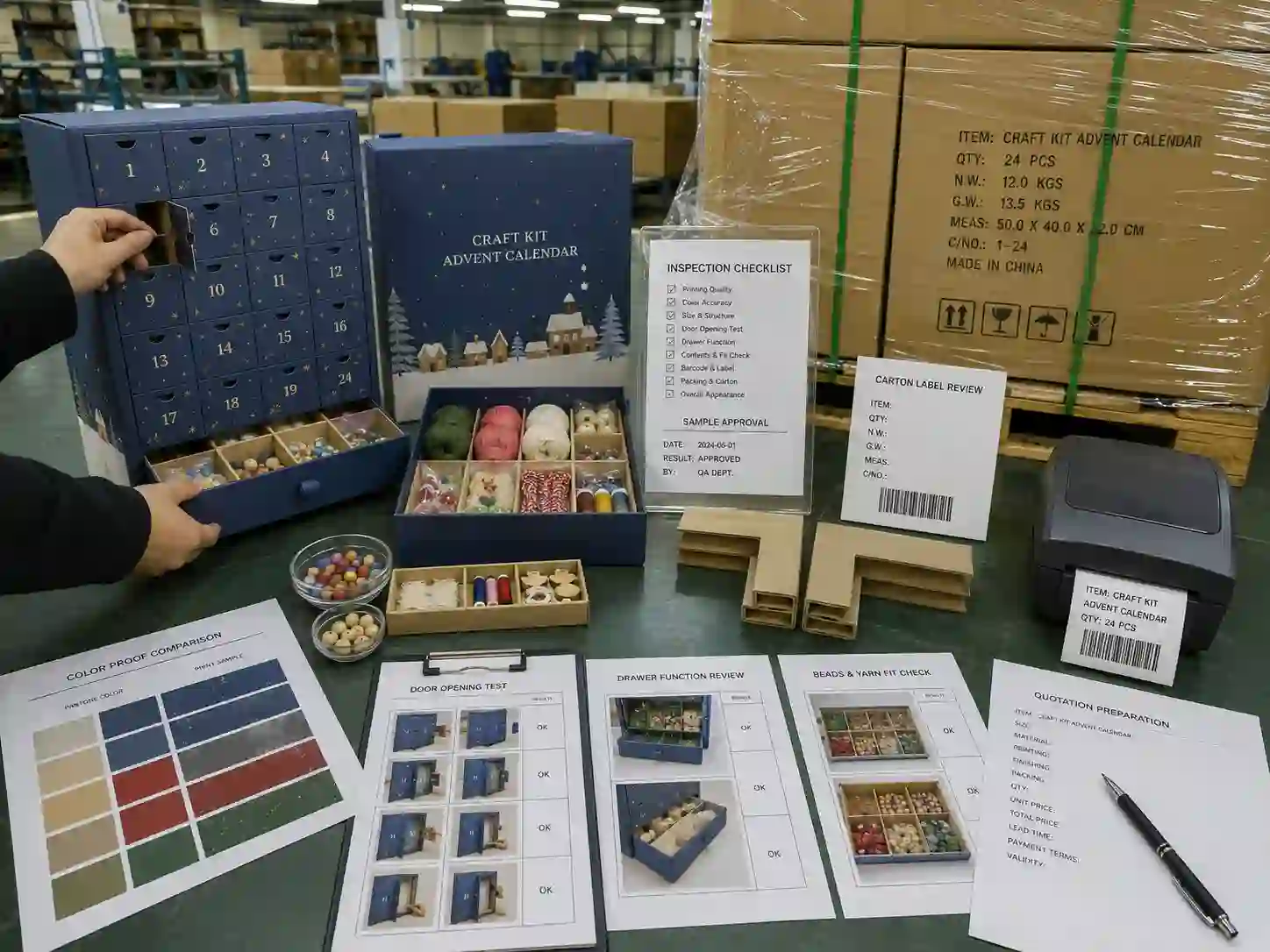
- Check paperboard or greyboard thickness against the approved sample.
- Confirm CMYK or Pantone color consistency against the approved proof.
- Inspect foil stamping, embossing, spot UV, matte lamination, or gloss lamination for alignment and defects.
- Test door-opening panels, drawer movement, book-style hinge, or fold-out function.
- Confirm insert position, cavity size, and product-fit tolerance.
- Check numbering sequence against the product loading plan.
- Inspect glue strength, edge wrapping, creasing, and corner quality.
- Review barcode label area, carton label content, and generic shipping marks.
- Check export carton strength, corner protectors, pallet wrapping, and carton quantity.
- Record defects with photos and compare results with the approved pre-production sample.
For e-commerce gift sets, buyers may also consider packaging performance tests based on their distribution channel. The International Safe Transit Association provides packaging test resources that buyers can discuss with their logistics or retail partners. For barcode planning, buyers can refer to GS1 barcode standards when preparing retail or marketplace labeling requirements.
How should export packing be planned for retail and e-commerce calendars?
Export packing should be planned according to whether the calendars are shipped flat, semi-assembled, fully assembled, or filled with craft items. The packing method affects freight cost, damage risk, warehouse handling, and delivery timing.
Flat packing can reduce volume for some folding carton designs, but it may shift assembly work to the buyer or local packer. Fully assembled packing can protect the final presentation and simplify retail distribution, but it increases carton volume. Rigid craft kit calendars often require assembled packing because insert positioning and product loading are part of the final quality result.
Export cartons should be sized to limit movement without crushing the calendars. For premium rigid boxes, corner protectors, dividers, or additional inner packing may be needed. Pallet loading should consider carton compression, container space, moisture protection, and warehouse handling. Shipping marks should be generic, accurate, and consistent with the purchase order and packing list.
QC tip: A carton label review is part of packaging quality control. Incorrect item codes, quantities, barcodes, or shipping marks can delay receiving even when the box quality is acceptable.
What information should buyers prepare before requesting a quotation?
Buyers should prepare product details, target structure, quantity, artwork status, insert preference, material direction, finishing requirements, sample needs, packing method, delivery destination, and timeline before requesting a quotation. Complete RFQ information helps the factory quote faster and reduces assumptions.
Before contacting the Giftpackpro packaging factory, buyers can use the checklist below to organize project details. This helps both sides discuss a realistic specification for craft kit advent calendar boxes rather than quoting an incomplete idea.
Practical RFQ checklist for buyers
- Target box type: door-opening box, rigid drawer box, book-style box, folding carton, or fold-out calendar.
- Calendar size, number of compartments, and preferred opening direction.
- Product list with packed dimensions, weight, quantity, and loading sequence.
- Insert preference: paper insert, PET tray, EVA insert, foam, molded pulp, or open to recommendation.
- Material preference: paperboard, greyboard, specialty paper, kraft paper, or coated paper.
- Printing requirement: CMYK, Pantone color, inside printing, outside printing, or both.
- Finishing requirement: matte lamination, gloss lamination, foil stamping, embossing, spot UV, window, ribbon, magnet, or handle.
- Artwork status: final artwork, draft artwork, dieline needed, or factory layout support needed.
- Sample requirement: blank prototype, printed sample, pre-production sample, or urgent concept sample.
- Order quantity, target MOQ, and expected repeat order plan if available.
- Packing method: flat packed, assembled empty, filled, individual carton, master carton, or pallet.
- Shipping destination, delivery deadline, retail launch date, and warehouse receiving requirements.
- Barcode, warning text, recycling mark, retailer label, or marketplace label requirements.
Buyers who are ready to start a project can request a custom quote with the above information. If some details are not final, it is still useful to share estimated product sizes and target campaign channel so the packaging team can suggest a practical starting structure.
What common mistakes should buyers avoid?
Buyers should avoid designing artwork before confirming product fit, comparing quotations with different specifications, approving samples without loaded product testing, and treating export packing as an afterthought. These mistakes can delay seasonal campaigns and increase total cost.
- Choosing structure by appearance only: A drawer box may look premium, but a folding carton may be better for a lightweight mass retail program.
- Ignoring packed product size: The size of a bagged bead pack or wrapped yarn item may be larger than the product itself.
- Using one compartment size for all items: Mixed craft kits often need varied cavity sizes to avoid empty space and movement.
- Approving artwork without checking numbering: The printed calendar sequence must match the loading plan and compartment layout.
- Skipping pre-production sample approval: A printed sample that does not use final material or finishing may not reveal mass production risks.
- Comparing vague quotations: A quote without material thickness, insert type, packing method, sample scope, and lead time is not a reliable basis for supplier selection.
- Underestimating export cartons: Weak cartons, poor pallet wrapping, or unclear shipping marks can damage good products before they reach the buyer.
FAQ: What do buyers ask about craft kit advent calendar boxes?
What is the best structure for craft kit advent calendar boxes?
The best structure depends on item weight, retail price level, and sales channel. Door-opening boxes are suitable for classic reveal campaigns, rigid drawer boxes are useful for premium kits, folding cartons can work for lightweight mass retail, and book-style boxes are strong for gift presentation.
Can one calendar hold many different craft items?
Yes, but the layout should be engineered around the actual packed items. Beads, yarn, stickers, washi tape, paper shapes, buttons, charms, and mini tools may need different cavity sizes, pouching methods, and insert materials.
Should buyers choose paper insert or PET tray?
Paper inserts are often suitable for lightweight or flat items, while PET trays can give tighter positioning for small dimensional accessories. Buyers should compare product fit, appearance, cost, sustainability expectations, and tooling needs before deciding.
How early should seasonal campaign packaging be developed?
Buyers should start early enough to allow product measurement, dieline development, blank sample review, printed sample approval, pre-production sample confirmation, mass production, QC, export packing, and shipping. Seasonal packaging becomes risky when artwork, samples, and product lists are not ready before the production window.
What should be included in a supplier quotation?
A useful quotation should include structure, size, material, insert type, printing, finishing, MOQ, sample cost, tooling cost if any, mass production lead time, packing method, carton information, payment terms, and validity period. It should also state whether the quote includes assembled packing or flat packing.
Can craft kit advent calendar boxes be designed for both retail and e-commerce?
Yes, but buyers should design for the stricter requirement. If the same calendar will be sold on retail shelves and shipped through e-commerce, it needs strong shelf presentation plus enough structural and carton protection for parcel or warehouse handling.
How can buyers move from design idea to production-ready specification?
To make craft kit advent calendar boxes production-ready, buyers should turn the campaign idea into a clear specification: product list, structure, insert, material, artwork, sample plan, MOQ, lead time, QC criteria, and export packing method. This gives the factory enough information to engineer the dieline, prepare a realistic quotation, and reduce avoidable revisions.
For seasonal retail, e-commerce gift sets, and promotional campaigns, packaging decisions should be made with product fit and launch timing in mind. Giftpackpro can support buyers from concept discussion and sample development to bulk production and export packing when project details are prepared clearly.
CTA: Before asking for a sample or quotation, prepare your craft item list, target structure, compartment count, artwork status, insert preference, quantity, packing method, and delivery deadline. With these details, the packaging team can recommend a practical custom solution and quote the project more accurately.