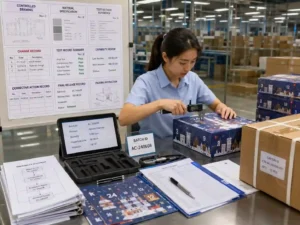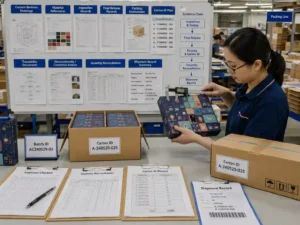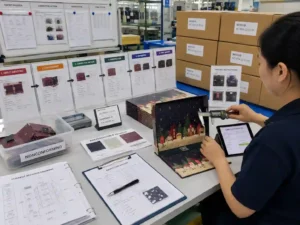
Quick answer: To design toy advent calendar boxes for seasonal campaigns, buyers should start with the toy assortment, safety and fit requirements, sales channel, target retail price, and packing method. The best structure depends on whether the campaign needs premium shelf display, e-commerce durability, compact shipping, or easy product loading. For B2B projects, the most important decisions are box style, compartment layout, insert material, dieline accuracy, artwork proofing, sample approval, MOQ, QC standards, and export carton protection. A reliable supplier should help convert toy sizes, weight, display needs, and campaign timing into a practical custom packaging plan.
What should buyers confirm before designing toy advent calendar boxes?
Buyers should confirm the toy list, product dimensions, campaign channel, order quantity, destination market, and launch deadline before choosing a structure. Toy advent calendar boxes often contain mixed product sizes, so the packaging cannot be designed from an appearance idea alone.
For purchasing teams, the first design question is not “Which box looks best?” but “Which structure can hold every toy safely, assemble efficiently, display well, and ship without avoidable damage?” A small toy car, puzzle piece, mini block bag, sticker sheet, activity accessory, and figurine-shaped item may all need different compartment depths. If these details are not clear early, the dieline may need repeated revisions during sampling.
Before contacting a custom advent calendar boxes manufacturer, prepare the product assortment and campaign purpose. A toy advent calendar designed for retail shelf display may need a stronger front panel and clear labeling area. A calendar sold through e-commerce may need better carton durability, tighter inserts, and extra protection for corners. A wholesale gift campaign may prioritize efficient assembly and cost control.
Key information to collect before structure selection
- Number of calendar days or compartments, such as 12, 24, 25, or a custom count.
- Maximum and minimum toy size, including length, width, height, and weight.
- Product type mix, such as small toys, mini blocks, stickers, cards, puzzle parts, or accessories.
- Retail display method, including hanging, standing, shelf-ready display, or e-commerce shipping.
- Brand artwork requirements, including CMYK, Pantone colors, warning labels, barcode label areas, and multilingual text.
- Insert preference, such as paper insert, PET tray, EVA insert, foam, or molded pulp.
- Expected MOQ, sample deadline, mass production deadline, and shipment destination.
Buyer tip: For mixed toy sizes, group products by height and weight before requesting a quotation. A clean product size chart helps the factory estimate box thickness, insert depth, assembly method, and export packing more accurately.
Which structure is best for toy advent calendar boxes?
The best structure depends on the sales channel, toy weight, display requirement, and budget. Rigid drawer boxes feel premium and protect heavier assortments, while folding carton and paperboard structures are usually better for lightweight toys and larger promotional volumes.
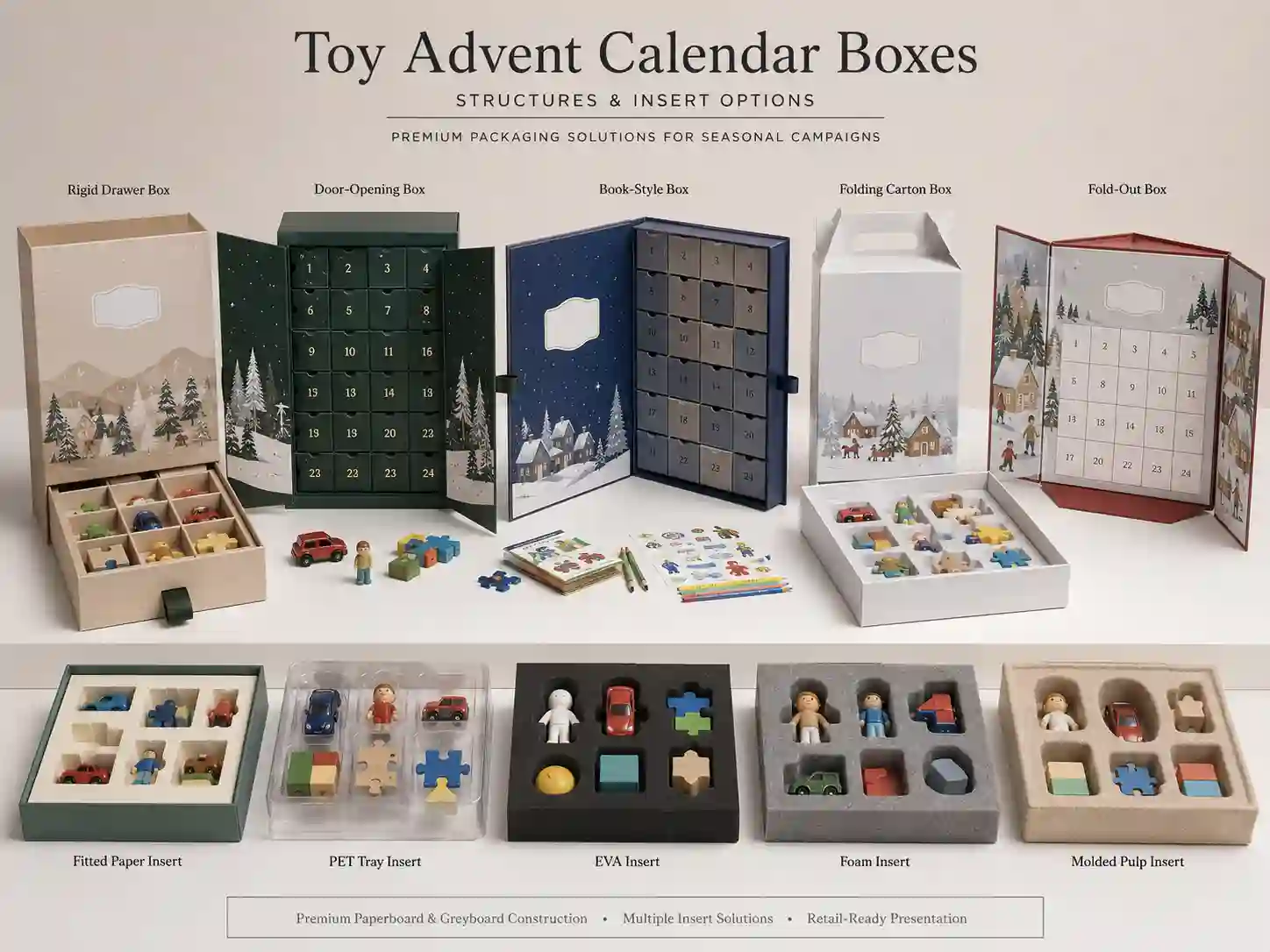
Most custom toy calendars use one of four common structures: drawer box, door-opening box, rigid book-style box, or folding carton calendar. Each option has different effects on cost, assembly time, product access, shipping volume, and shelf presentation. A buyer should compare these options before approving a dieline.
| Structure option | Best for | Buyer advantages | Watch points |
|---|---|---|---|
| Rigid drawer box | Premium toy sets, heavier assortments, gift campaigns | Strong greyboard structure, good protection, premium unboxing, reusable feel | Higher material cost, more assembly labor, larger export carton volume |
| Door-opening box | Classic daily reveal calendars and retail campaigns | Clear numbered doors, strong visual display, flexible compartment layout | Door perforation and opening strength must be tested during sampling |
| Book-style rigid box | Brand campaigns, gift sets, higher-value toy collections | Good presentation area, magnetic or ribbon closure options, premium artwork effect | Needs careful hinge, closure, and insert fit testing |
| Folding carton calendar | Lightweight toys, high-volume seasonal promotions | Lower unit weight, efficient shipping, flexible printing, easier carton packing | Less rigid than greyboard, needs correct paperboard thickness and reinforcement |
| Fold-out calendar | Interactive toy campaigns and large visual layouts | Large artwork surface, strong retail impact, flexible storytelling without licensed characters | More complex dieline and more space required for shelf or photography display |
A rigid box is often suitable when the toys are heavier, the brand wants a giftable appearance, or the calendar must survive long-distance export shipping with fewer structural risks. A folding carton can be practical for lightweight plastic-free toy sets, sticker collections, or lower-weight promotional assortments where cost and freight efficiency matter.
Factory tip: Do not choose a drawer box only because it looks premium. If the campaign requires fast retail access, visible numbering, and lower shipping weight, a door-opening or folding carton structure may be more efficient.
How should buyers plan the compartment layout and dieline?
The dieline should be planned from the toy assortment, not only from the outer box size. Each compartment must match the toy dimensions, insert tolerance, door position, loading direction, and expected assembly process.
For toy advent calendar boxes, layout planning is often more complicated than for single-product gift packaging. One calendar may include different shapes: small block bags, flat stickers, round accessories, mini vehicles, cards, and loose novelty items. If compartments are too loose, products may move during shipping. If they are too tight, workers may struggle during loading and consumers may damage the box when opening the door.
Buyers should ask the factory to check both the outer dieline and the insert dieline. Door-opening calendars also need accurate cutting, perforation, and numbering positions. Drawer styles need smooth sliding tolerance. Book-style boxes need hinge strength and closure alignment. Folding carton calendars need folding sequence checks and glue-area confirmation.
Practical dieline decisions for seasonal toy campaigns
- Outer size: Balance retail shelf impact with export carton efficiency.
- Compartment count: Confirm whether all compartments are the same size or mixed sizes.
- Depth control: Taller toys need deeper cavities, but too much depth increases carton volume.
- Door shape: Square, rectangle, arch, or custom shapes can work, but unusual shapes need stronger testing.
- Labeling areas: Reserve space for barcode labels, product warnings, age guidance, recycling marks, and importer information where required.
- Assembly sequence: Check whether toys are loaded from the back, side, drawer cavity, or tray before final sealing.
Quotable B2B statement: A toy calendar dieline is not complete until the factory has checked product fit, door opening, insert tolerance, assembly sequence, and export carton loading.
Which insert materials work best for mixed toy sizes?
The insert should hold each toy in position during assembly, retail handling, and shipping. Paper inserts and molded pulp are useful for plastic-free goals, while PET trays, EVA inserts, and foam can provide stronger shape control for certain toy assortments.
Insert selection affects cost, sustainability claims, product protection, and loading speed. For lightweight toys, a paperboard insert may be enough. For irregular shapes or heavier pieces, a PET tray or EVA insert may improve stability. Foam can protect fragile accessories but may not match plastic-free campaign goals. Molded pulp can support a more paper-based packaging direction, although tooling and shape limitations should be discussed early.
| Insert type | Useful when | Advantages | Limitations |
|---|---|---|---|
| Paper insert | Lightweight toys, stickers, activity cards, small bags | Paper-based, printable, cost-conscious, easier to recycle in many markets | Less shape control for irregular or heavy toys |
| PET tray | Many different toy shapes need precise cavities | Clear fit, strong cavity control, efficient product loading | Plastic material may not fit plastic-free campaign requirements |
| EVA insert | Premium gift sets or items needing firm holding | Clean appearance, strong support, good for selected heavier items | Higher cost and less suitable for plastic-free positioning |
| Foam insert | Fragile or easily scratched toy accessories | Good cushioning and flexible cutting | May increase cost and sustainability concerns |
| Molded pulp | Paper-based campaigns and larger cavities | Plastic-free direction, strong molded support, natural look | Tooling, minimum quantity, surface texture, and tolerance need review |
For buyers comparing custom advent calendar box products, insert testing should happen before printed sample approval. A printed calendar that looks perfect can still fail if the toy pieces shift, rattle, press against the door panel, or slow down packing line workers.
How do materials and printing choices affect campaign results?
Material and printing choices affect structure strength, perceived value, color consistency, and production cost. Buyers should match paperboard, greyboard, finishing, and artwork proofing to the toy weight, brand position, and retail display environment.
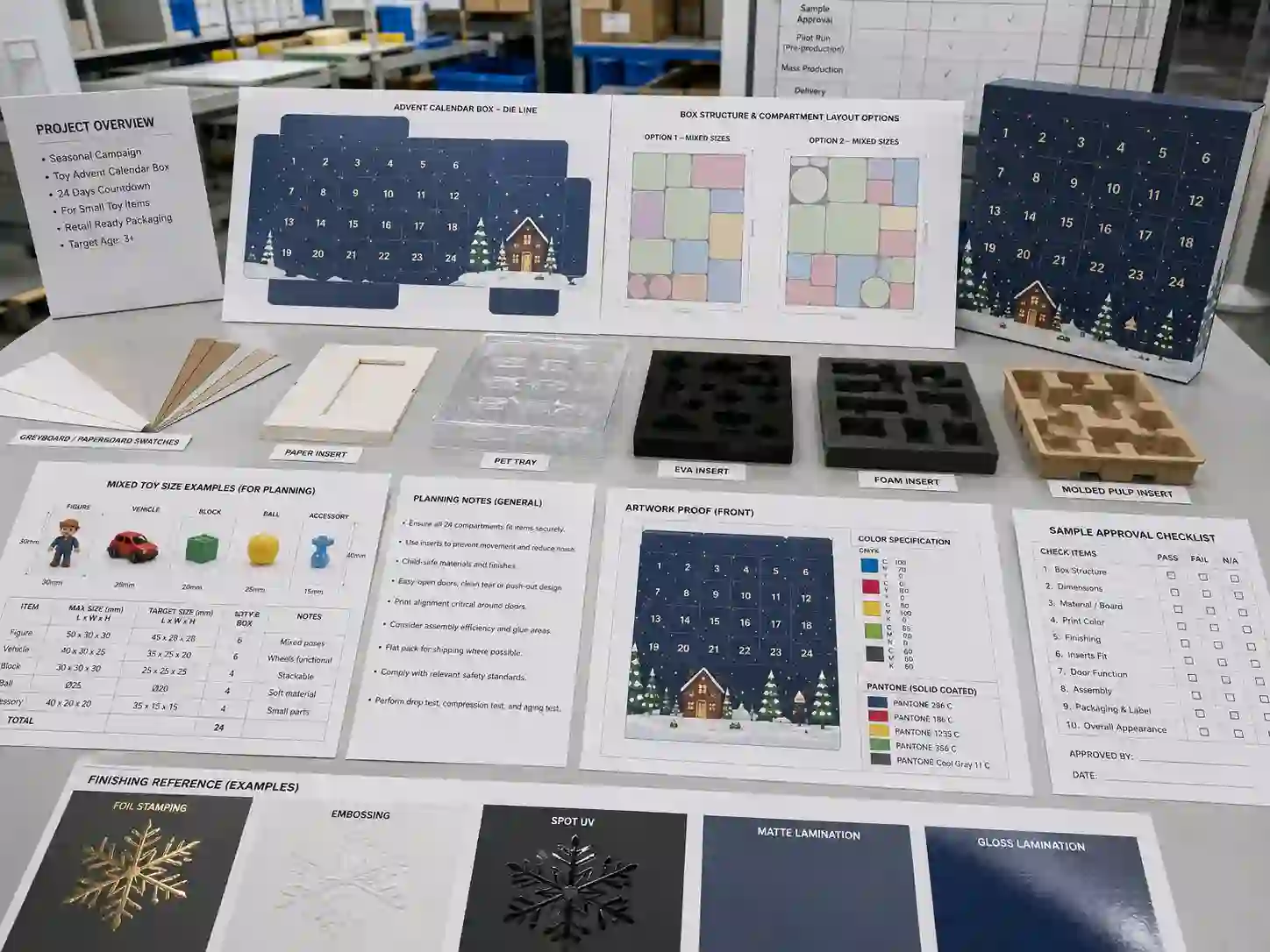
Common material options include paperboard for folding carton calendars and greyboard wrapped with printed paper for rigid boxes. Paperboard is useful for lightweight, high-volume seasonal campaigns. Greyboard can support premium rigid drawer boxes and book-style calendars. The correct thickness depends on box size, toy weight, insert type, and export packing plan.
Artwork preparation should include CMYK files, Pantone references where color accuracy matters, dieline layers, bleed, safe zones, barcode areas, and any required legal or safety text. Finishing options such as foil stamping, embossing, spot UV, matte lamination, and gloss lamination can improve shelf impact, but each process adds cost, lead time, and proofing requirements.
For toy packaging, avoid placing critical text too close to perforated doors, folds, glue areas, or drawer edges. If the design includes numbered windows, the factory should check alignment during sample making. Misaligned numbering can create a poor retail impression even if the structure is technically usable.
Printing and finishing decision guide
| Campaign goal | Recommended direction | Reason |
|---|---|---|
| Premium retail gift set | Rigid box, greyboard, matte lamination, selected foil stamping or embossing | Supports higher perceived value and stronger shelf presentation |
| Cost-controlled seasonal promotion | Folding carton, efficient paperboard thickness, CMYK printing, limited finishing | Helps reduce material, labor, and freight pressure |
| Plastic-free packaging direction | Paperboard structure, paper insert, molded pulp where suitable, minimal plastic lamination | Aligns structure and insert choice with sustainability messaging |
| E-commerce gift campaign | Stronger outer structure, tight insert, protective export carton, scuff-resistant finish | Improves survival during parcel and bulk handling |
| Color-sensitive brand campaign | Pantone reference, printed sample, pre-production sample, controlled proof approval | Reduces color variation risk before mass production |
Buyer tip: Special finishes should be used where they support a real campaign goal. A simple structure with accurate color, clean door cutting, and strong insert fit is often more valuable than too many decorative effects.
How should buyers manage sampling before mass production?
Buyers should use sampling to verify structure, product fit, artwork, insert performance, and packing method before mass production. A prototype is not only a visual sample; it is a manufacturing test that reduces purchasing risk.
A practical sampling process may include a blank sample, printed sample, and pre-production sample. A blank sample checks size, structure, compartment layout, drawer function, door opening, and insert fit. A printed sample checks artwork alignment, color, finishing, lamination, barcode area, and label placement. A pre-production sample confirms the approved production method before bulk manufacturing starts.
Giftpackpro’s custom advent calendar box services can support buyers who need dieline review, material comparison, insert options, sample planning, and quotation preparation before confirming a bulk order.
Sample approval checklist for toy calendars
- Confirm all toy samples fit into their assigned compartments.
- Check whether doors open cleanly without tearing nearby artwork.
- Test drawer sliding, book-style hinge movement, or folding carton closing strength.
- Review CMYK and Pantone color results under normal lighting.
- Check foil stamping, embossing, spot UV, matte lamination, or gloss lamination alignment.
- Verify barcode label area, product warning area, recycling marks, and shipping label needs.
- Confirm insert loading speed and whether products remain stable after shaking or handling.
- Approve export carton quantity, carton size, carton label format, and shipping marks before production packing.
QC tip: Keep one signed or clearly approved sample as the production reference. During mass production, QC inspectors should compare structure, color, finishing, insert fit, and assembly quality against this approved sample.
What cost drivers and MOQ factors should buyers expect?
The main cost drivers are structure type, box size, material thickness, insert material, printing coverage, finishing process, assembly labor, sample complexity, and export packing method. MOQ depends on material sourcing, printing setup, tooling, labor efficiency, and the supplier’s production arrangement.
Toy advent calendar boxes usually cost more than simple gift boxes because they include multiple compartments, insert fitting, door cutting or drawer assembly, manual loading considerations, and more detailed QC. Rigid drawer boxes and book-style greyboard boxes usually require more hand assembly. Folding carton calendars can be more efficient, but large sizes or complicated windows can still increase cost.
Buyers should not compare quotations only by unit price. A lower quotation may use thinner material, weaker inserts, simpler cartons, unclear sample terms, or less detailed QC. A professional quote should explain structure, material, printing, finishing, insert, sample cost, MOQ, lead time, packing method, and shipping assumptions.
What to ask when comparing supplier quotations
- Is the quoted structure rigid, folding carton, drawer box, door-opening box, or another construction?
- What paperboard or greyboard thickness is included?
- Which insert material is quoted: paper insert, PET tray, EVA insert, foam, or molded pulp?
- Does the price include CMYK printing, Pantone matching, foil stamping, embossing, spot UV, lamination, or only basic printing?
- Is sample cost separate from mass production cost?
- What is the estimated lead time for dieline, sample, pre-production approval, mass production, and export packing?
- How many pieces are packed per export carton, and what carton strength is planned?
- Are shipping marks, barcode label areas, and pallet requirements included in the packing discussion?
How should buyers evaluate suppliers for seasonal toy packaging?
Buyers should evaluate suppliers by packaging engineering ability, sampling quality, communication accuracy, QC process, export packing experience, and quote transparency. A supplier must be able to discuss dieline, insert tolerance, assembly details, carton durability, and shipment timing, not only print artwork.
Seasonal campaigns have fixed launch dates, so delayed sampling or unclear specifications can create serious purchasing problems. A reliable supplier should ask for toy dimensions, target structure, order quantity, destination market, packing requirements, artwork files, and sample expectations. The supplier should also explain where cost and lead time may change.
When reviewing the Giftpackpro packaging factory or any potential supplier, buyers should look for factory-side thinking: sample approval control, material checking, printing proof review, assembly tolerance management, insert testing, final inspection, and export carton planning. These details matter more than attractive product photos alone.
Supplier comparison checklist
- Can the supplier recommend structure options based on toy sizes and campaign channel?
- Can they create and revise a dieline for mixed compartment sizes?
- Do they discuss insert options beyond one default material?
- Can they provide blank samples, printed samples, or pre-production samples?
- Do they check door opening, drawer sliding, glue strength, and insert fit?
- Do they confirm artwork files, bleed, safe zones, CMYK, Pantone, and finishing layers?
- Do they provide clear packing details for export cartons, pallets, and shipping marks?
- Do they explain realistic lead time instead of giving only a fast promise?
What QC and export packing details matter for toy advent calendar boxes?
QC should verify structure strength, printing accuracy, insert fit, door or drawer function, assembly cleanliness, and export carton protection. Export packing must protect the calendar from compression, corner damage, moisture exposure, and label confusion during international shipping.
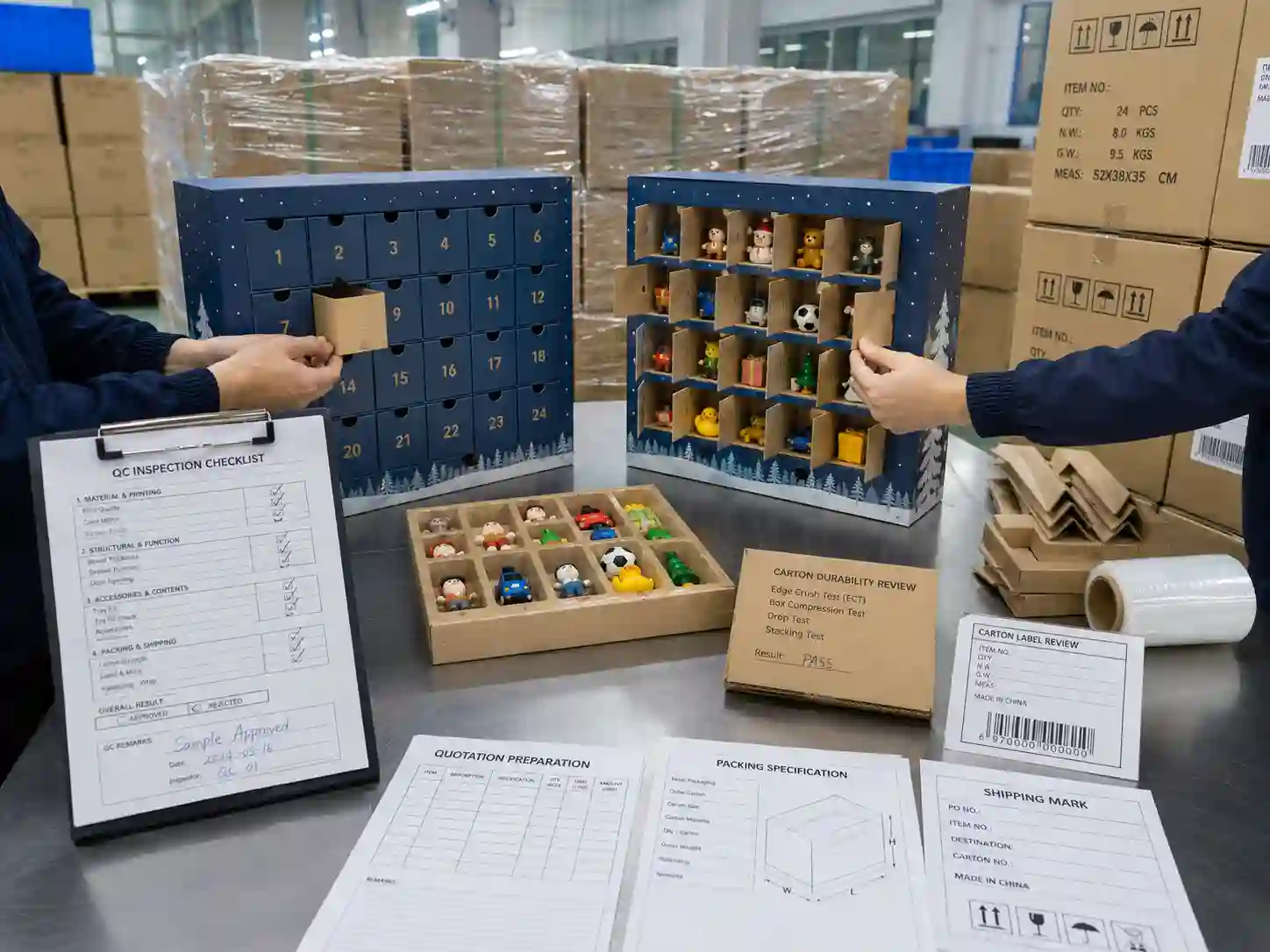
Toy calendars can be damaged if the outer box is too weak, the insert allows movement, or the export carton is under-specified. For door-opening calendars, inspectors should check perforation strength and whether the doors open correctly. For drawer calendars, inspectors should test sliding smoothness and drawer alignment. For folding carton calendars, glue strength and panel flatness are important.
Export packing decisions should include master carton size, carton board strength, inner protection, corner protectors if needed, pallet pattern, pallet wrap, shipping marks, and carton label review. For e-commerce or long-distance ocean freight, buyers should discuss whether additional drop or compression testing is appropriate. The International Safe Transit Association provides widely referenced packaged-product testing resources that buyers can review when planning shipment durability requirements.
For barcodes and product identification, buyers should reserve clear label areas and verify number placement before printing. The GS1 system is a common global reference for barcode standards and product identification planning.
QC points for final inspection
- Outer box size, structure, and material match approved specifications.
- Printed colors, text, numbers, and barcode label areas match approved artwork.
- Doors, drawers, folds, closures, and hinges function correctly.
- Insert cavities hold toys securely without crushing or excessive looseness.
- Foil stamping, embossing, spot UV, matte lamination, or gloss lamination are clean and aligned.
- Glue areas are secure and free from visible overflow.
- Finished boxes are packed in the approved quantity per export carton.
- Shipping marks, carton labels, pallet requirements, and destination details are checked before loading.
Quotable B2B statement: Export packing for toy advent calendar boxes should be approved before mass production ends, not after finished goods are waiting in cartons.
What common mistakes should buyers avoid?
The most common mistakes are choosing a structure before checking toy sizes, approving artwork before confirming the dieline, ignoring insert tolerance, and comparing suppliers only by unit price. These mistakes can cause sample delays, assembly problems, damaged cartons, or extra freight cost.
- Using one compartment size for all toys: This can waste space, increase box size, and make lightweight items move during shipping.
- Ignoring product loading direction: Some designs look good on screen but are slow or difficult to assemble in production.
- Placing labels in weak positions: Barcode areas, warning text, and recycling marks should not sit across folds, doors, or glue areas.
- Overusing finishing effects: Too many finishes can increase cost and lead time without improving retail performance.
- Skipping pre-production approval: A printed sample does not replace a final check against production materials and methods.
- Under-specifying export cartons: Weak cartons can reduce the value of a well-made calendar if goods arrive crushed.
What should buyers prepare before requesting a quotation?
Buyers should prepare a complete RFQ package with product sizes, target structure, artwork requirements, insert preferences, order quantity, delivery deadline, and packing expectations. The clearer the quotation request, the easier it is to compare suppliers accurately.
Before you request a custom quote, prepare as many of the following details as possible:
- Calendar size or target retail shelf size.
- Number of compartments and product list for each compartment.
- Toy dimensions, weights, and photos or samples if available.
- Preferred structure, such as rigid drawer box, door-opening box, book-style box, fold-out box, or folding carton.
- Insert preference, including paper insert, PET tray, EVA insert, foam, molded pulp, or plastic-free direction.
- Artwork files, dieline if already available, CMYK or Pantone requirements, and finishing expectations.
- MOQ target, annual forecast if relevant, and sample quantity.
- Required lead time for sample approval, mass production, and shipment.
- Export carton, pallet, shipping marks, carton label, and destination market requirements.
Buyers who are still comparing options can also review advent calendar box buying guides to clarify structure, insert, printing, sampling, and export packing decisions before finalizing an RFQ.
FAQ: Toy advent calendar boxes for seasonal campaigns
Are rigid toy advent calendar boxes always better than folding carton calendars?
No. Rigid boxes are stronger and more premium, but folding carton calendars can be more cost-effective for lightweight toys, high-volume campaigns, and freight-sensitive orders. The better choice depends on toy weight, display needs, budget, MOQ, and shipping method.
Can toy advent calendar boxes use plastic-free inserts?
Yes, many projects can use paper inserts or molded pulp inserts, especially for lightweight toys, stickers, cards, and simple accessories. However, buyers should test product movement, cavity tolerance, and assembly speed before approving a plastic-free insert.
When should the dieline be finalized?
The dieline should be finalized after product size review, compartment planning, insert testing, and structure confirmation. For door-opening boxes, perforation and artwork alignment should also be checked before printed sample approval.
What affects MOQ for custom toy advent calendar packaging?
MOQ is affected by material purchasing, printing setup, insert tooling, structure complexity, finishing processes, and factory production scheduling. A simple paperboard calendar may have different MOQ requirements from a rigid drawer box with molded insert and multiple finishes.
How long does sampling take?
Sampling time depends on dieline complexity, material availability, printing and finishing requirements, and how quickly buyers provide toy samples and artwork files. Buyers should plan extra time for revisions, especially when the toy assortment includes many different shapes.
What is the best way to reduce damage during export shipping?
Use a structure matched to toy weight, test insert fit, approve strong export cartons, confirm carton quantity, add corner protection where needed, and review pallet wrapping and shipping marks. For heavier calendars, carton compression and handling risks should be discussed before mass production.
How should buyers move from design idea to production-ready packaging?
To move from concept to production, start with the toy assortment, choose a practical structure, confirm insert direction, develop the dieline, approve a sample, and define QC and export packing requirements before mass production. This sequence helps buyers avoid late design changes and unclear supplier comparisons.
For overseas brands, wholesalers, gift companies, retail buyers, Amazon/e-commerce sellers, and purchasing teams, toy advent calendar boxes should be treated as engineered seasonal packaging, not only decorated gift boxes. The right supplier will help connect product fit, structure, artwork, MOQ, sample approval, lead time, QC, and export packing into one workable plan.
Giftpackpro can support custom toy calendar projects from structure discussion and dieline planning to sample review, mass production, and export packing. Prepare your toy list, size chart, artwork direction, target quantity, and delivery schedule before requesting a quotation so the factory can recommend a realistic custom packaging solution.