Magnetic closure advent calendar boxes are not the right choice for every seasonal packaging project. They usually work best when the buyer needs a stronger gift-box feel, better opening experience, and a structure that can support higher-value products.
For B2B buyers, the real question is not “Does the box look premium?” The better question is: will the structure fit the product weight, target price, retail channel, artwork plan, shipping method, and production schedule?
This guide explains when brands, wholesalers, gift companies, and retail purchasing teams should choose magnetic closure advent calendar boxes, and when a simpler structure may be more practical.
What Are Magnetic Closure Advent Calendar Boxes?
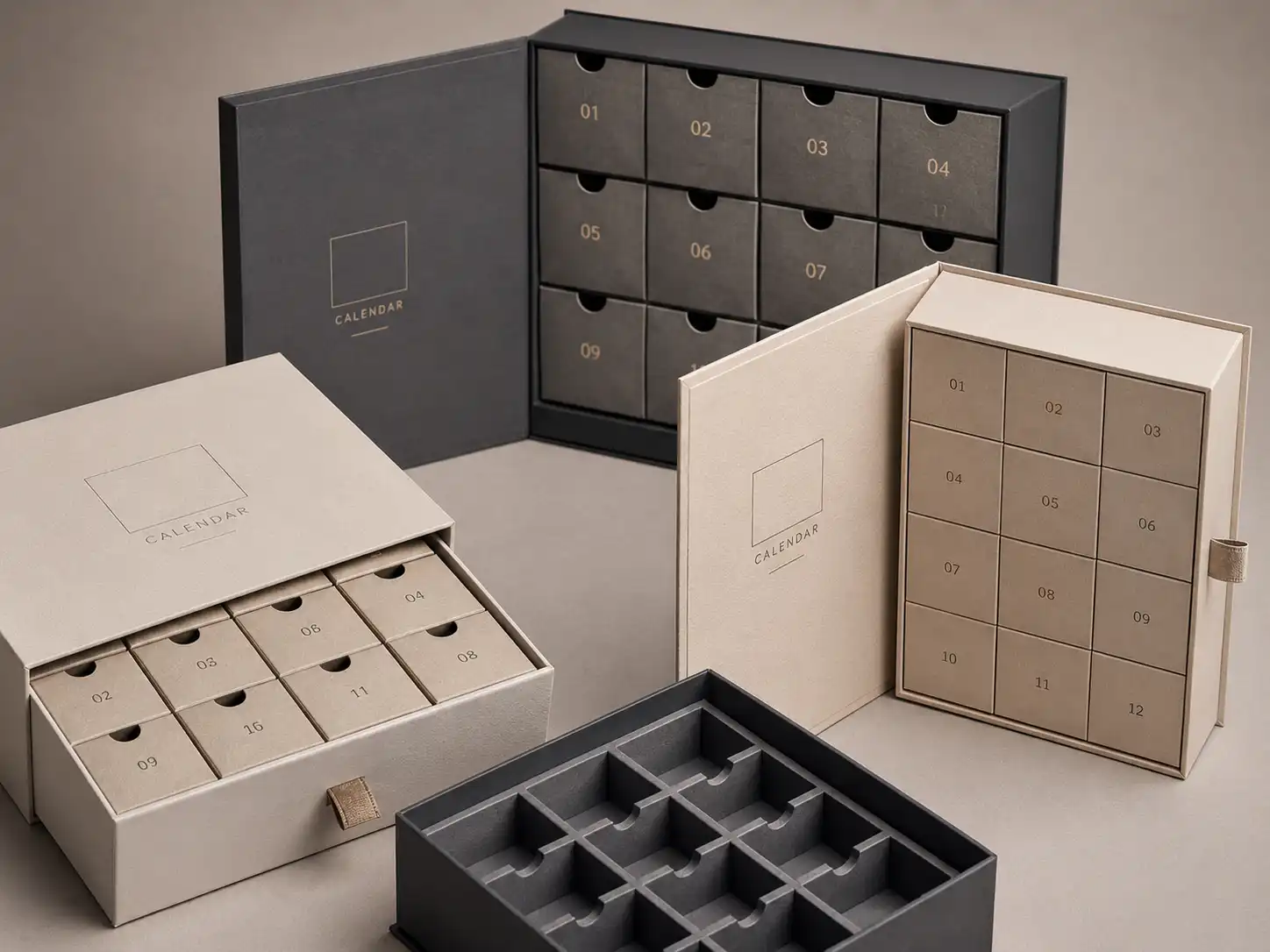
Magnetic closure advent calendar boxes are rigid paper boxes that use hidden magnets to close the cover, flap, or book-style opening panel. The calendar section may include drawers, numbered doors, inner trays, paperboard dividers, EVA inserts, molded pulp trays, or custom compartments.
Compared with folding paperboard calendars, this structure usually feels heavier and more stable. It is often selected for cosmetics, skincare, fragrance samples, jewelry, tea, coffee, candles, premium confectionery, small accessories, and promotional gift sets.
For buyers comparing different structures, it helps to review several custom advent calendar box products before confirming whether magnetic closure is necessary. A book-style magnetic box, drawer-style calendar, and standard door-opening calendar can look similar in photos but behave very differently in production and shipping.
When Should Brands Choose Magnetic Closure Advent Calendar Boxes?
Choose Them When the Product Value Is High Enough
Magnetic closure advent calendar boxes make more sense when the products inside need stronger presentation value. If the calendar contains low-cost samples only, the buyer may not want to spend too much budget on a rigid structure. But if the set includes premium skincare, fragrance minis, jewelry pieces, specialty tea, candles, or branded gift items, magnetic closure can help the packaging match the product value.
This matters in retail and e-commerce because buyers often compare the total gift set, not only the unit product. A weak box around a higher-value gift set can make the whole offer feel less convincing.
Choose Them When the Opening Experience Matters
A magnetic flap gives the buyer, retailer, or final user a cleaner opening motion. It is useful for box styles that need a “presentation moment,” especially book-style advent calendars and two-door opening designs.
For example, a cosmetics brand may want the front cover to open like a premium gift book, with 24 small drawers or compartments inside. A magnetic closure keeps the cover neat when the product is displayed, photographed, packed, or handled in-store.
Choose Them When the Box Needs Better Shelf Presence
Some advent calendar projects are sold through retail stores, pop-up campaigns, holiday displays, subscription boxes, and gift bundle programs. In these cases, the packaging often works as part of the sales display.
A magnetic rigid box can stand better, photograph better, and feel more stable than a light folding carton. For brands planning holiday campaigns, it may also be easier to connect the box design with a larger seasonal display plan from a custom advent calendar boxes manufacturer.
Choose Them When the Buyer Needs More Structural Protection
Magnetic closure does not automatically make a box safe for every product, but rigid board construction can improve support when planned correctly. This is helpful for fragile bottles, small jars, candle tins, glass samples, or mixed product sets with different heights and weights.
The key is not only the outer box. The insert must control product movement. For B2B projects, the insert design, compartment tolerance, and export carton packing plan are often more important than the magnetic flap itself.
When Magnetic Closure May Not Be the Best Choice
Magnetic closure advent calendar boxes are useful, but they are not always the most efficient option. Buyers should avoid choosing the structure only because it looks premium in a reference photo.
Not Ideal for Very Low Budget Campaigns
Rigid board, magnets, hand assembly, and custom inserts usually increase unit cost. If the project is a short-term giveaway with a strict low budget, a folding carton advent calendar may be better.
Not Ideal When Lead Time Is Too Tight
Magnetic closure boxes often need more sample checking. The supplier must confirm board thickness, magnet strength, closing position, wrapping accuracy, insert fit, artwork alignment, and final assembly. If the buyer is already close to the launch date, a simpler structure may reduce risk.
Not Ideal for Oversized Heavy Product Sets Without Testing
For large or heavy products, the structure must be tested carefully. A magnetic flap may not hold well if the lid is too heavy, the magnet area is too small, or the box is frequently opened during handling. In this case, the supplier may suggest stronger magnets, double magnets, ribbon support, sleeve protection, or a different box style.
Structure Comparison for B2B Buyers
| Box Structure | Best For | Main Advantage | Planning Risk |
|---|---|---|---|
| Magnetic closure advent calendar box | Premium cosmetics, candles, tea, jewelry, gift sets | Strong presentation and stable opening experience | Needs careful magnet, insert, and packing testing |
| Drawer advent calendar box | Products with different sizes or daily gift items | Good product separation and reusable feel | Drawer tolerance must be controlled |
| Door-opening paperboard calendar | Lightweight samples and large seasonal campaigns | Cost-efficient and easy for bulk programs | Less premium and less protective |
| Foldable rigid advent calendar box | Projects needing premium look with better shipping efficiency | Can reduce storage and freight volume | Assembly method must be clear |
Customization Details Buyers Should Confirm Early
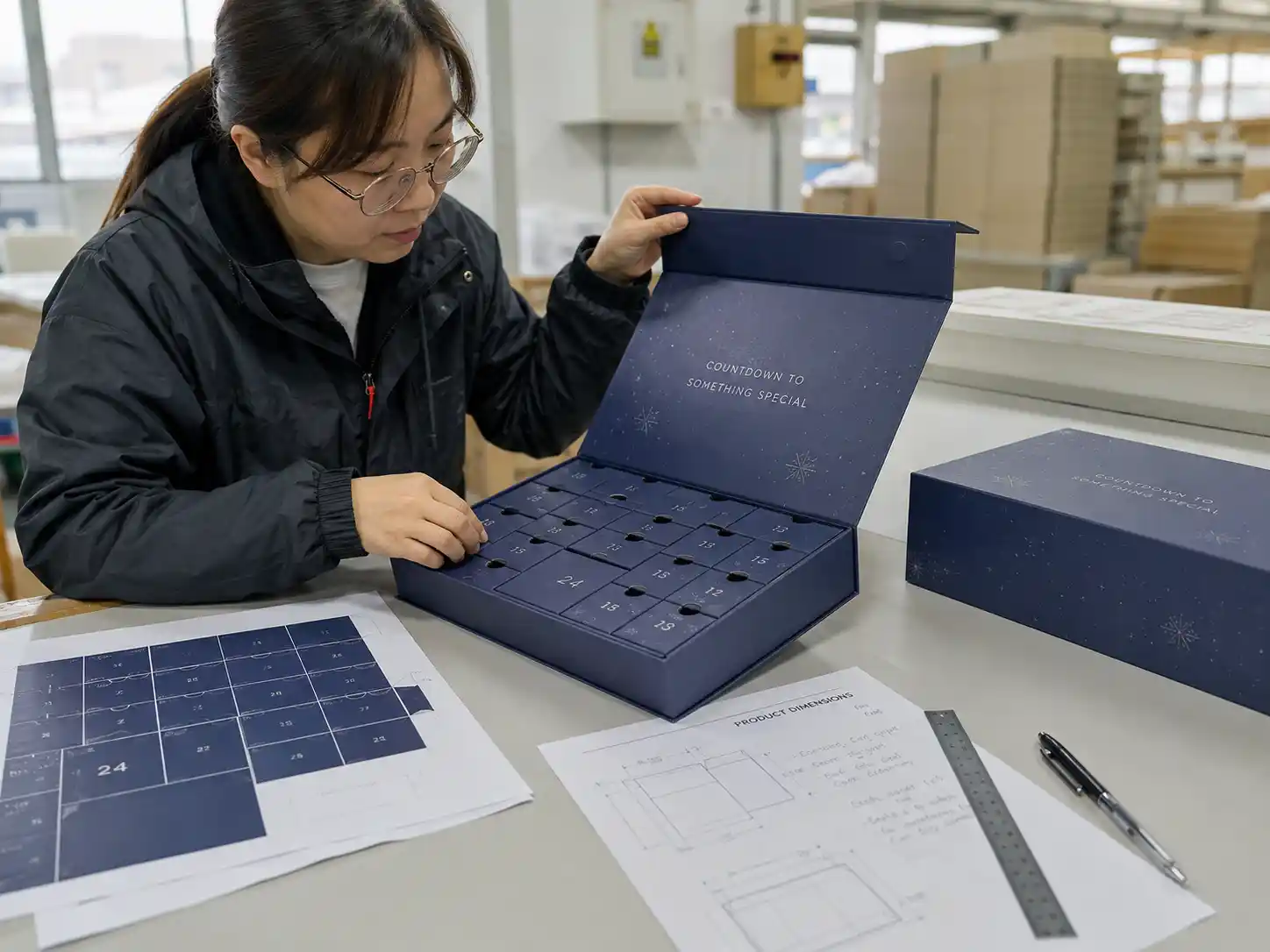
For magnetic closure advent calendar boxes, the quotation should not start from artwork alone. The supplier needs product size, product weight, quantity, box style, compartment layout, material preference, and packing requirements.
Buyers can use custom advent calendar box services to plan structure, sampling, artwork, insert design, and bulk production before finalizing the order.
Magnet Position and Closing Strength
The magnet position should match the cover size and opening direction. If the magnet is too weak, the flap may open during handling. If it is too strong, the user experience may feel rough or the wrapped paper may be stressed around the magnet area.
For book-style boxes, the supplier may test single magnets, double magnets, or wider closing areas. For larger boxes, the magnetic system should be checked with real product weight inside.
Board Thickness and Paper Wrapping
Common rigid board thickness may vary depending on box size and weight requirements. Thicker board can improve strength, but it also increases cost and shipping weight. For large advent calendars, the supplier should balance stiffness, appearance, and freight efficiency.
Wrapping paper also matters. Matte lamination, soft-touch film, textured paper, foil stamping, embossing, spot UV, and metallic paper can change the final look. Buyers should confirm whether the finish is suitable for the target market, retail channel, and handling conditions.
Insert Type and Product Fit
The insert is one of the most important parts of the project. A beautiful magnetic box can still fail if the products move, tilt, scratch, or fall out during transportation.
Common insert options include paperboard dividers, corrugated inserts, EVA foam, molded pulp, and custom trays. For eco-focused projects, buyers may also review FSC-certified paper options through official sources such as FSC.
Artwork and Numbering Layout
Advent calendar artwork usually includes numbered doors, drawer fronts, product names, campaign messages, barcode areas, compliance icons, and shipping marks. The buyer should confirm whether the artwork is printed on the outer cover, inner panel, drawers, sleeves, or compartment doors.
For magnetic closure designs, artwork alignment can be more sensitive because the opening panel, spine, and inner calendar section must match cleanly. A digital mockup is useful, but a physical sample is still important before mass production.
Production Problems Magnetic Closure Can Solve
Problem 1: The Box Looks Too Cheap for the Product Set
If the product set has a premium price point, a thin paperboard calendar may not support the brand position. Magnetic closure can help improve the perceived structure and gift value.
Problem 2: The Calendar Needs a Cleaner Opening Design
Some brands want the cover to close neatly after product checking, photography, or retail handling. Magnetic closure helps keep the box aligned without visible tabs or tuck flaps.
Problem 3: The Products Have Different Sizes
Mixed product sets often need custom inserts and stronger support. A rigid magnetic structure gives the supplier more room to design internal protection, especially when small bottles, tubes, jars, sachets, and accessories are packed together.
Problem 4: The Brand Needs a Better Sample for Buyer Approval
Retail buyers often need a sample that clearly shows structure, opening method, product fit, and finishing quality. A magnetic sample can help the purchasing team review the final gift set more easily before bulk order confirmation.
QC and Export Packing Points Buyers Should Not Skip
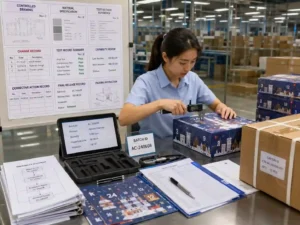
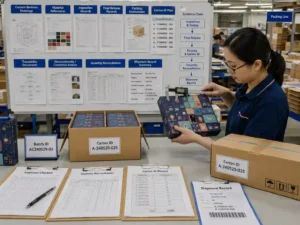
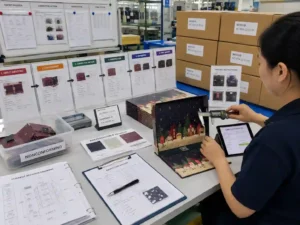
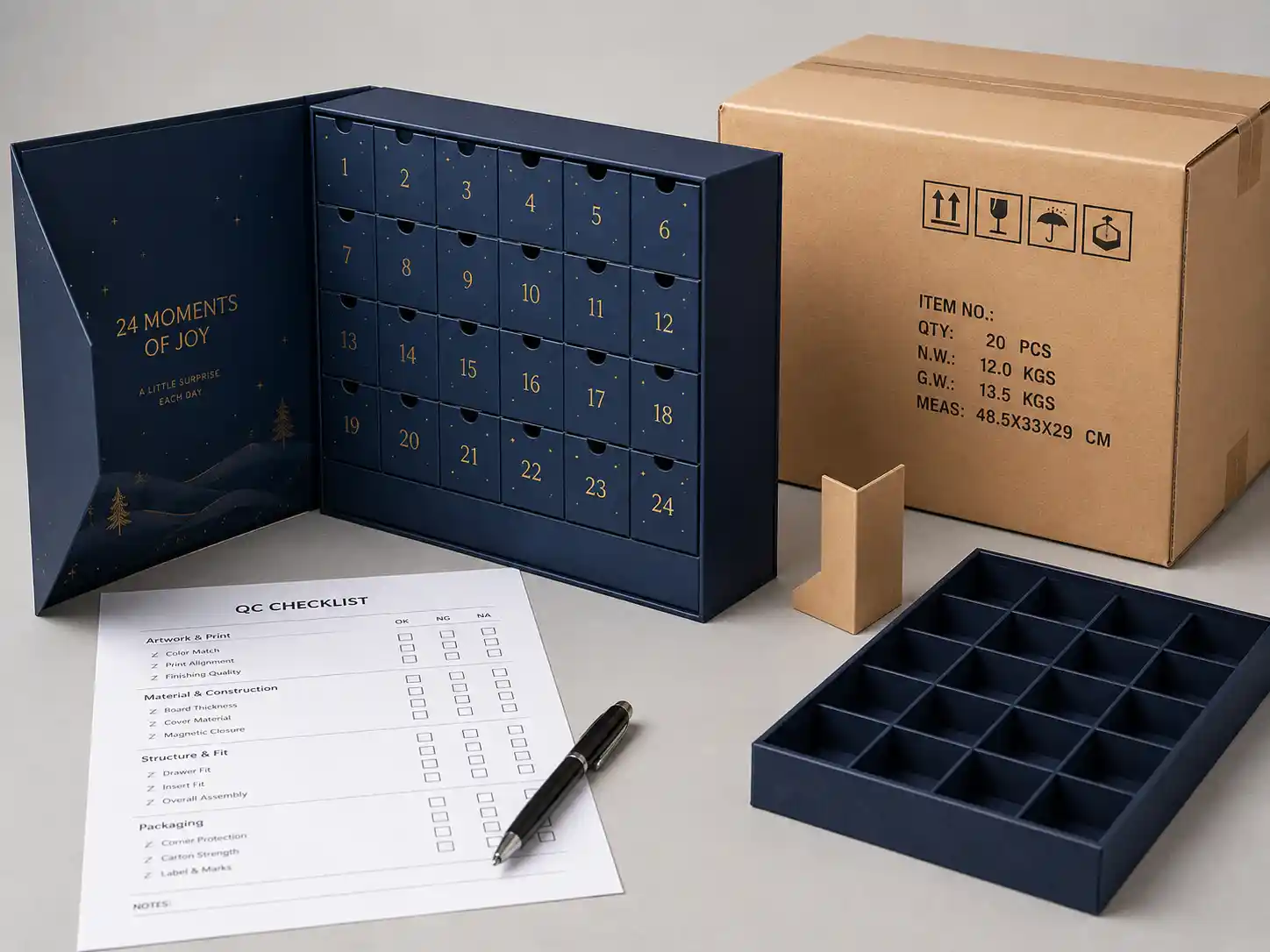
Quality control for magnetic closure advent calendar boxes should include structure, appearance, function, and packing checks. A box can look fine in photos but still have issues in real handling.
For buyers working with the Giftpackpro packaging factory, it is useful to confirm the inspection points before mass production starts, not after the goods are finished.
Check the Magnetic Closure Function
The magnet should close smoothly and stay aligned. The supplier should check whether the flap closes evenly, whether the magnet position is consistent, and whether the closing strength remains stable after repeated opening.
Check Insert Fit With Real Products
Real product samples are better than estimated sizes. Bottles, jars, tubes, and irregular items may need extra tolerance. If the buyer cannot provide real samples, accurate product drawings and weight details should be supplied.
Check Carton Packing and Drop Risk
Export packing should protect corners, covers, drawers, and printed surfaces. For heavy rigid calendars, the supplier may suggest stronger outer cartons, corner protection, divider packing, or palletized shipping.
Buyers shipping to Europe may also need to review packaging and recycling rules. The European Commission provides official information about packaging and packaging waste through its packaging waste guidance.
Quote Preparation: What Buyers Should Send the Supplier
A clear request saves time and reduces wrong quotations. Before asking for a price, buyers should prepare the following details:
- Target quantity or estimated MOQ range
- Box style reference, such as book-style magnetic, double-door, drawer, or foldable rigid
- Product dimensions, weight, and product photos
- Number of compartments, such as 12 days, 24 days, or custom layout
- Insert preference, such as paperboard, corrugated, EVA, molded pulp, or mixed insert
- Artwork requirements, including printing, foil stamping, embossing, spot UV, or matte lamination
- Retail packing requirement, shipping carton requirement, and delivery destination
- Expected sample deadline and bulk delivery schedule
If buyers are not sure which structure fits the project, they can start with advent calendar box buying guides and then request a custom quote with product details. This is usually faster than asking only for a general unit price.
MOQ, Lead Time, and Sampling Considerations
MOQ for magnetic closure advent calendar boxes depends on size, material, printing, insert type, and finishing process. For many custom rigid box projects, buyers should expect a practical MOQ discussion rather than a single fixed number for every design.
Lead time also depends on sample approval. A custom magnetic structure usually requires sampling, adjustment, artwork confirmation, material preparation, printing, surface finishing, assembly, inspection, and export packing.
Buyers should leave enough time for sample correction. Small changes to insert fit, drawer tolerance, magnet position, or artwork alignment can affect the final production schedule.
Practical B2B Examples
Cosmetics Brand Launching a 24-Day Set
A cosmetics brand plans a 24-day gift set with small tubes, jars, and fragrance samples. The products have different sizes and need a premium retail look. In this case, magnetic closure advent calendar boxes are a strong option because the outer box can support a high-value presentation while the insert controls product movement.
Tea Wholesaler Preparing a Seasonal Gift Program
A tea wholesaler wants a seasonal calendar with sachets, small tins, and tasting cards. If the project is positioned as a premium gift, magnetic closure can work well. If the order is mainly for low-cost supermarket promotions, a lighter paperboard calendar may be more suitable.
Corporate Gift Company Building a Custom Client Set
A corporate gift company needs a branded calendar for client gifting. The box may include stationery, candles, accessories, and small promotional items. Magnetic closure can help create a stronger presentation, but the supplier should check every item size before confirming the insert.
Final Decision: Choose Magnetic Closure When Structure Supports the Business Goal
Brands should choose magnetic closure advent calendar boxes when the project needs premium presentation, stronger structure, better opening experience, and more controlled product placement. The structure is especially useful for higher-value gift sets, retail campaigns, and seasonal packaging programs that need a strong first impression.
However, magnetic closure is not always the best answer. If the budget is very tight, the timeline is too short, or the products are extremely light and simple, another advent calendar structure may be more efficient.
The best approach is to compare product value, structure, insert requirements, artwork plan, MOQ, lead time, and export packing before confirming the box style. Giftpackpro can help buyers review these details and choose a practical structure for custom seasonal packaging projects.