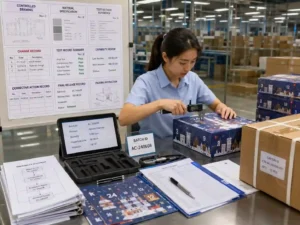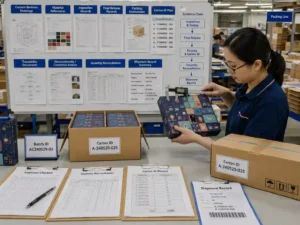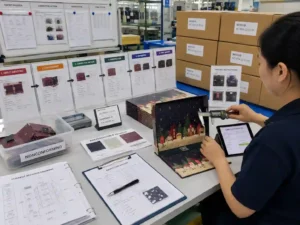
Custom advent calendar boxes are no longer only seasonal gift packaging. For beauty, food, beverage, jewelry, promotional, and retail brands, they are structured packaging projects that combine product planning, dieline design, insert engineering, artwork control, sampling, bulk production, quality inspection, and export packing.
For overseas B2B buyers, the main question is not simply whether a box looks festive. The more practical question is whether the structure can hold the products safely, whether the artwork can be produced consistently, whether the insert fits each item, and whether the final cartons can survive international shipping and seasonal retail schedules.
This guide explains how to plan custom advent calendar boxes from a sourcing and production point of view. It is written for brands, importers, purchasing teams, promotional buyers, and packaging managers who need a clear path before asking a custom advent calendar boxes manufacturer for a quotation.
What Are Custom Advent Calendar Boxes?
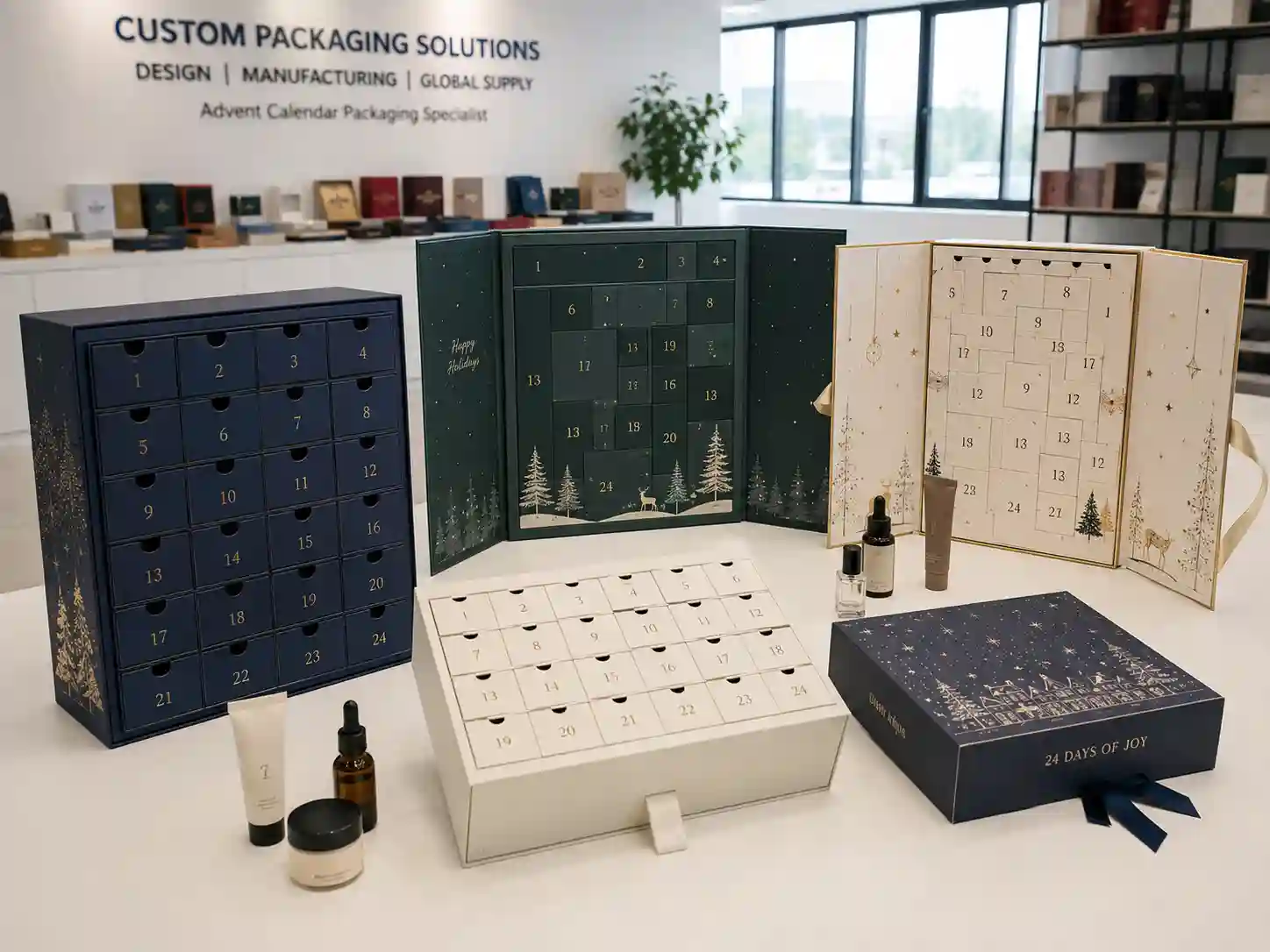
Custom advent calendar boxes are paperboard or rigid packaging structures designed with multiple compartments, doors, drawers, windows, or trays for a countdown-style product presentation. A brand can customize the structure, size, insert, printing, finish, product layout, number sequence, and outer packing according to the campaign or retail plan.
In B2B sourcing, the word “custom” should be understood carefully. It may include a custom printed surface only, or it may involve a fully customized structure with new dielines, special inserts, and multiple rounds of sampling. A simple printed sleeve around an existing box structure is very different from a new rigid drawer calendar with 24 separate product spaces.
Before you contact suppliers, decide whether your project needs a new structure, a modified existing structure, or a standard structure with custom artwork. This one decision affects sample cost, MOQ, production time, tooling, packing method, and final unit cost.
Common Structures for Custom Advent Calendar Boxes
Structure is the foundation of the project. It controls the buyer experience, product protection, carton size, assembly labor, and display effect. Many design problems happen because the artwork is confirmed before the structure is fully tested.
Drawer Style Advent Calendar Boxes
Drawer style boxes use multiple small drawers inside an outer frame. They create a premium opening experience and are often used for cosmetics, jewelry, candles, small accessories, confectionery, and gift sets. The key points are drawer fit, pull-tab strength, alignment, and insert support inside each drawer.
Door-Opening Advent Calendar Boxes
Door-opening structures use numbered paper doors or windows. They are common for lighter items and promotional products. Buyers should check whether the doors open cleanly, whether perforation lines are suitable, and whether the product can be removed without damaging the package.
Book-Style and Fold-Out Calendar Boxes
Book-style or fold-out boxes create a strong retail display effect. They can show a full seasonal artwork panel when opened. However, they may require more careful hinge design, magnet testing, inner support, and export packing protection.
Rigid Box Advent Calendars
Rigid paperboard structures are used when the brand wants a more premium feel. They can look stronger and more giftable, but they usually need more material, more handwork, and more detailed production control. For heavier products, buyers should ask the supplier to test loading, tray support, and carton stacking.
How to Choose the Right Structure
The right structure depends on product size, weight, quantity, retail channel, budget level, and campaign timing. A beautiful box can fail if the insert is weak, the drawers are too tight, or the export carton is too large for efficient shipping.
| Buyer Requirement | Recommended Focus | What to Confirm With Supplier |
|---|---|---|
| Small cosmetics or beauty samples | Drawer box, door-opening box, or rigid calendar | Insert fit, drawer movement, product orientation, surface finish |
| Chocolate, snacks, or food gifts | Door-opening box or compartment tray | Food-contact requirements, inner tray material, packing hygiene, shelf presentation |
| Beverage mini bottles or heavier items | Rigid box with reinforced insert | Load testing, divider strength, carton stacking, shipping protection |
| Retail promotional campaign | Fold-out, book-style, or display-friendly structure | Barcode area, retail labeling, outer carton marks, store display angle |
| Lower-risk first order | Existing structure with custom artwork | Available size range, MOQ factors, sample adjustment limits |
If you are still comparing options, collect product dimensions first. Then ask for custom advent calendar box services that include structure review, insert planning, and pre-production sample checking. This is safer than choosing a box style only from a reference image.
Plan the Product Layout Before Artwork
A common mistake is starting the artwork before confirming the product map. For advent calendar packaging, the product layout controls the box thickness, drawer count, door size, opening direction, insert design, and final dieline.
Prepare a simple product list with dimensions, weight, quantity, and order number for each item. Mark fragile, liquid, sharp-edged, or irregular products clearly. If the products are still under development, provide estimated sizes and confirm that the box structure may need adjustment after final samples arrive.
Numbering also matters. Some buyers want the countdown sequence to follow a visual path. Others want premium items placed on key dates. Your supplier can only build a reliable dieline when the number sequence, product position, and insert method are clear.
Insert Options for Advent Calendar Packaging
The insert is not just a tray. It controls product stability, presentation, user experience, and damage risk. The best insert choice depends on product weight, shape, and budget.
- Paperboard dividers: suitable for many lightweight items and recyclable packaging concepts.
- Cardboard trays: useful for stronger compartment support and custom product shapes.
- Molded pulp: often considered for paper-based packaging projects where a molded shape is needed.
- EVA or foam inserts: may offer a tighter fit for fragile or premium items, but buyers should confirm material preferences and market requirements.
- Plastic trays: can provide precise shaping, but may not fit every brand’s sustainability direction.
When comparing suppliers, do not ask only for the outer box price. Ask whether the quotation includes the insert, assembly, product loading support if needed, and export carton packing. These details can change the real project cost.
Artwork, Dieline, and Print Preparation
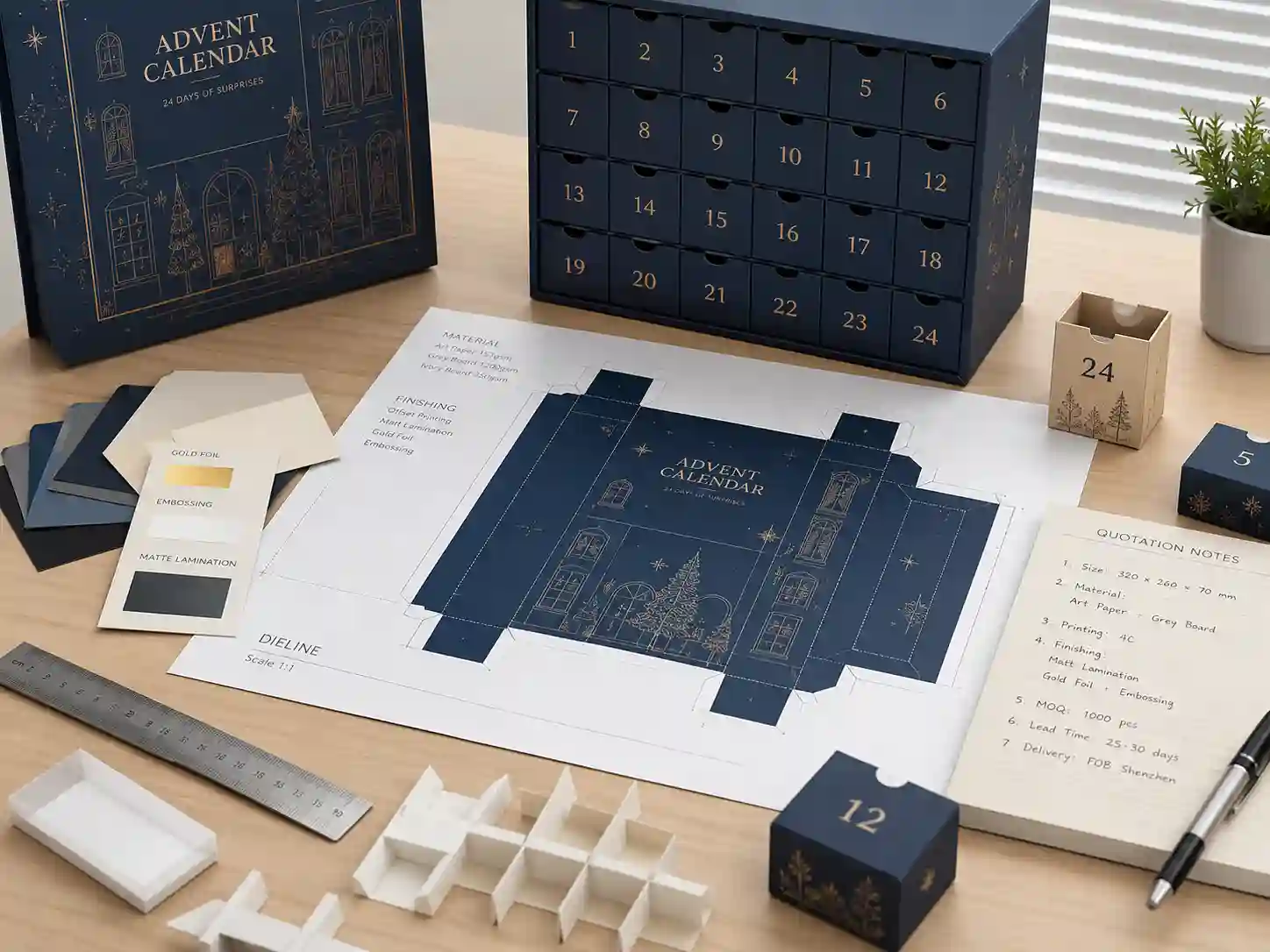
Artwork should be prepared after the structure and insert direction are confirmed. A dieline shows cutting lines, folding lines, glue areas, safety zones, bleed, door positions, drawer fronts, and numbering locations. For custom advent calendar boxes, the dieline is more complex than a normal folding carton because each compartment must align with the final structure.
Buyers should provide logos, brand colors, seasonal graphics, product names, legal text if needed, barcode areas, and retail labeling requirements. For supply-chain labeling, buyers can refer to general GS1 standards when barcode or product identification rules are relevant to their market.
Before bulk printing, check whether all numbers are correct, whether the artwork direction matches the opening direction, and whether text is readable after folding and assembly. One small dieline error can affect every printed sheet.
Material and Finishing Choices
Material choice affects cost, durability, print result, and perceived quality. Common choices may include greyboard for rigid structures, coated paper for printed surfaces, kraft paper for natural packaging styles, and corrugated board for stronger shipping or display support.
Finishing can include matte lamination, gloss lamination, spot UV, hot stamping, embossing, debossing, texture paper, ribbon, magnetic closure, or special handles. These options can improve shelf appeal, but they also add production steps. For seasonal projects, avoid adding unnecessary finishing if the schedule is already tight.
If responsible paper sourcing is part of the brand requirement, buyers can discuss material options with suppliers and learn more about organizations such as FSC. Do not assume a supplier has a specific certification unless they provide valid documents for the exact company, material, and order scope.
MOQ, Sample, and Quotation Factors
MOQ depends on structure, material, printing method, finishing, insert type, and production setup. For many custom paper packaging projects, MOQ may be usually around 300-500 pcs depending on structure, but buyers should always confirm with the supplier because complex structures, special paper, or custom inserts may change the requirement.
A complete quotation should not be based on box size alone. To receive a practical quote, prepare the structure type, outside dimensions, product list, quantity, printing requirement, finishing, insert material, packing method, destination country, and expected order quantity.
- Box structure: drawer, door-opening, book-style, rigid, fold-out, or other format.
- Box size: outside dimensions and compartment dimensions if available.
- Product details: size, weight, quantity, and placement sequence.
- Printing: CMYK, Pantone color, full printing, logo only, or seasonal artwork.
- Finishing: lamination, foil, embossing, spot UV, ribbon, magnet, or other details.
- Insert: paperboard, molded pulp, EVA, foam, plastic tray, or custom divider.
- Packing: individual polybag, sleeve, master carton, export carton marks, pallet request if needed.
If you need more sourcing articles, the advent calendar box buying guides section can help you compare structure, supplier questions, and production planning topics before contacting factories.
Sample Development Process
Sampling is where a concept becomes a real packaging structure. For custom advent calendar boxes, a supplier may create a white sample to test structure first, then a printed sample to test artwork, color, finishing, and overall presentation.
Buyers should review the sample like a production tool, not only like a presentation item. Open each drawer or door. Check whether the insert holds the product. Test whether the calendar stands properly. Confirm whether the surface scratches easily. Check whether cartons can be packed efficiently.
If the sample needs revision, mark comments clearly with photos, measurements, and position notes. Avoid vague feedback such as “make it better.” Clear comments reduce misunderstanding and help the factory update the dieline or production method faster.
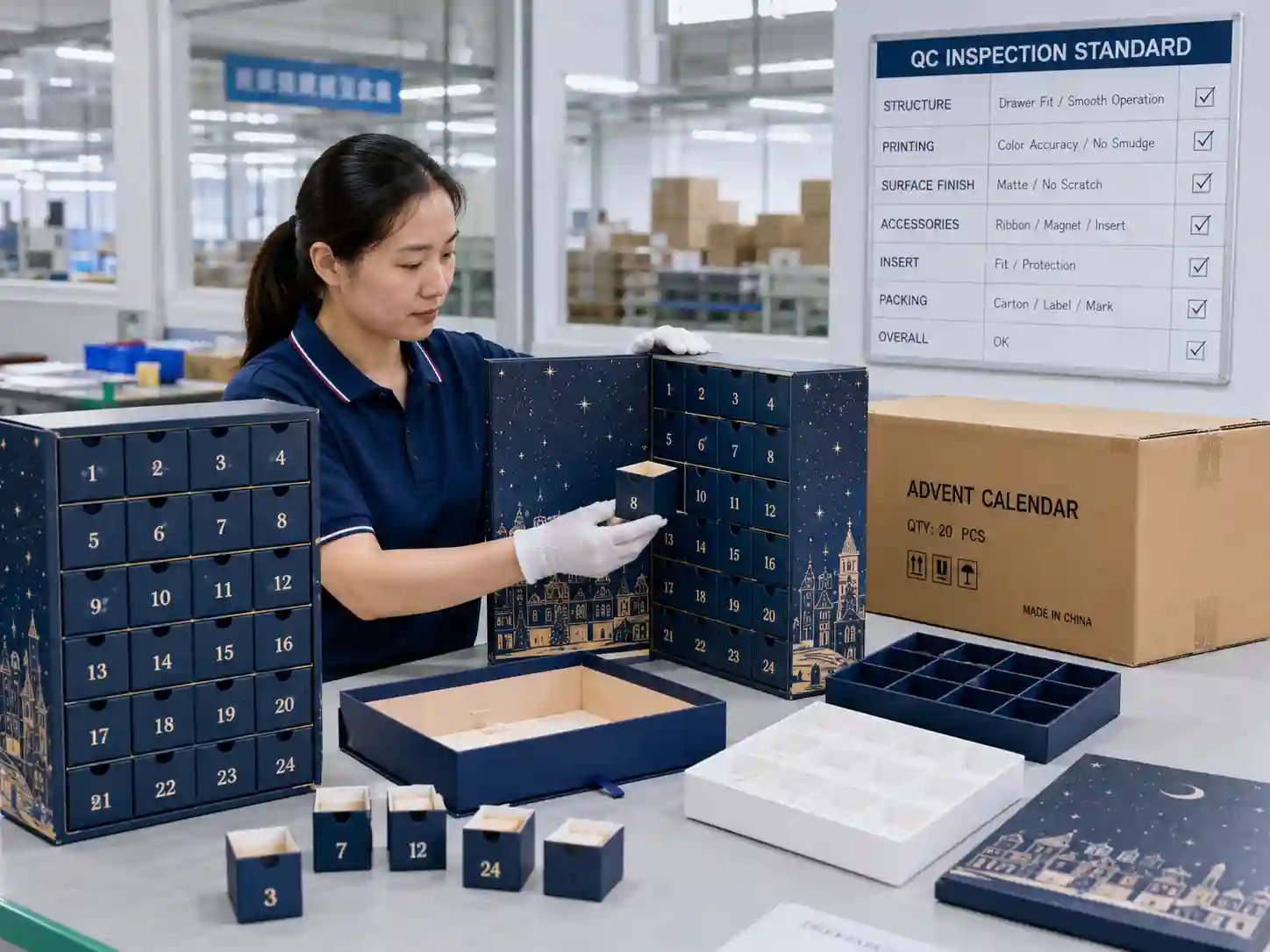
Quality Control Points Before Bulk Production
Quality control should begin before mass production, not after finished cartons are packed. For custom advent calendar packaging, small errors can multiply across many compartments and printed panels.
| QC Stage | What to Check | Why It Matters |
|---|---|---|
| Pre-production sample | Structure, size, insert, opening method, artwork position | Confirms the final standard before bulk production |
| Printing | Color consistency, number sequence, logo clarity, text direction | Prevents large-scale artwork or numbering mistakes |
| Finishing | Lamination, foil, embossing, spot UV, scratches, glue marks | Protects retail appearance and brand presentation |
| Assembly | Drawer fit, door opening, insert placement, magnet or ribbon function | Ensures the customer can use the box smoothly |
| Final packing | Carton strength, carton marks, quantity per carton, protection method | Reduces export damage and warehouse confusion |
Ask whether the supplier can share production photos, packing photos, or inspection checkpoints during the order. A practical factory process is especially important for seasonal packaging, where late corrections can affect launch timing.
Export Packing and Seasonal Planning
Export packing is often underestimated. Advent calendar boxes may have many edges, compartments, drawers, or fragile decorative surfaces. If the master carton is weak or too tightly packed, the outer box can arrive with crushed corners or surface marks.
Discuss individual packing, protective paper, inner carton arrangement, master carton strength, carton labels, and pallet requirements if needed. For retail or warehouse handling, confirm whether carton marks, SKU labels, and barcode areas are required before production.
Seasonal planning should start early. Advent calendar projects often involve design approval, sample revision, artwork confirmation, material preparation, bulk production, inspection, export packing, international shipping, and retail distribution. Even when the factory production is smooth, delays in artwork, product samples, or buyer approvals can affect the final schedule.
How to Compare Advent Calendar Box Suppliers
Supplier comparison should go beyond the lowest unit price. A reliable supplier should understand structure, insert fit, print limitations, sampling, bulk production, and export packing. For overseas buyers, communication speed and practical problem-solving are also important.
When reviewing a supplier, ask for similar structure experience, sample process, material options, insert recommendations, production photos, packing suggestions, and quotation details. You can also review the Giftpackpro packaging factory page to understand the factory background before sending a new project inquiry.
A good supplier should ask questions before quoting. If a factory gives a final price without checking product size, insert type, artwork, quantity, and packing method, the quotation may not reflect the real project.
FAQ About Custom Advent Calendar Boxes
What information should I prepare before requesting a quote?
Prepare the box structure, outside size, product list, product dimensions, quantity, artwork direction, insert preference, order quantity, finishing requirements, and shipping or packing needs. The more complete the information, the more accurate the quotation will be.
Can I use my own artwork and dieline?
Yes, buyers can provide their own artwork and dieline. However, the supplier should still check whether the dieline matches the intended material, structure, insert, and production process. For complex custom advent calendar boxes, a dieline review is strongly recommended before printing.
What MOQ should I expect?
MOQ varies by structure, material, insert, printing, finishing, and supplier setup. For some custom paper packaging projects, MOQ is usually around 300-500 pcs depending on structure, but complex rigid boxes or special materials may require different quantities.
Should I order a sample before bulk production?
Yes. A sample helps confirm structure, size, insert fit, opening method, artwork position, and finishing effect. For seasonal retail packaging, sample approval is one of the most important steps before mass production.
Can one supplier handle structure, insert, printing, and export packing?
Some factories can support the full process, while others may focus on only part of the packaging. When choosing a supplier, ask whether the quotation includes structural development, insert design, printed sample, assembly, and export carton packing.
Need Custom Advent Calendar Boxes?
If you are planning custom advent calendar boxes for a retail campaign, promotional gift set, beauty launch, food project, or seasonal brand program, start with the product list, structure direction, and target quantity. Then share your requirements with a packaging team that can review the structure, insert, artwork, sampling, and packing details together.
Giftpackpro can help buyers discuss practical packaging options based on product size, structure needs, artwork requirements, and bulk production planning. Visit our custom advent calendar box services page to review available support, or request a custom quote for your project.