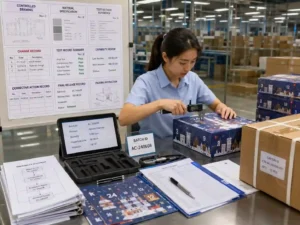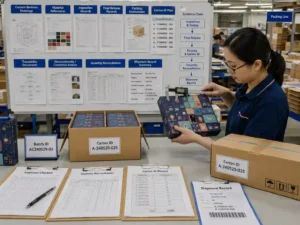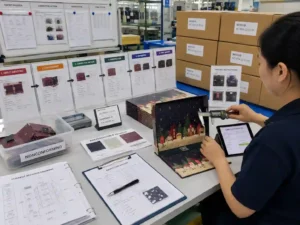
Quick answer: Buyers source custom advent calendar boxes from China because experienced packaging factories can combine structural customization, printing options, insert engineering, sampling support, and export production capabilities in one supply chain. For overseas brands, wholesalers, and retailers, the key is not only finding a low-cost supplier but choosing a factory that can manage dielines, materials, artwork checks, prototype approval, bulk production, QC inspection, and shipping preparation. The right supplier helps reduce production risks while creating packaging that matches product fit, brand requirements, and retail expectations.
Giftpackpro provides custom advent calendar boxes manufacturer solutions for international buyers who need seasonal packaging with reliable development and production support. This guide explains what buyers should evaluate before selecting a supplier.
Why do international buyers source custom advent calendar boxes from China?
China remains a major sourcing destination for custom advent calendar packaging because buyers can access a wide range of packaging structures, finishing technologies, material options, and production experience. However, supplier selection should focus on manufacturing capability rather than price alone.
For B2B buyers, the main advantages include:
- Complete customization: Factories can develop rigid boxes, folding cartons, drawer boxes, and door-opening structures based on product requirements.
- Integrated production: Packaging development, printing, lamination, assembly, inspection, and export packing can be coordinated through one supplier.
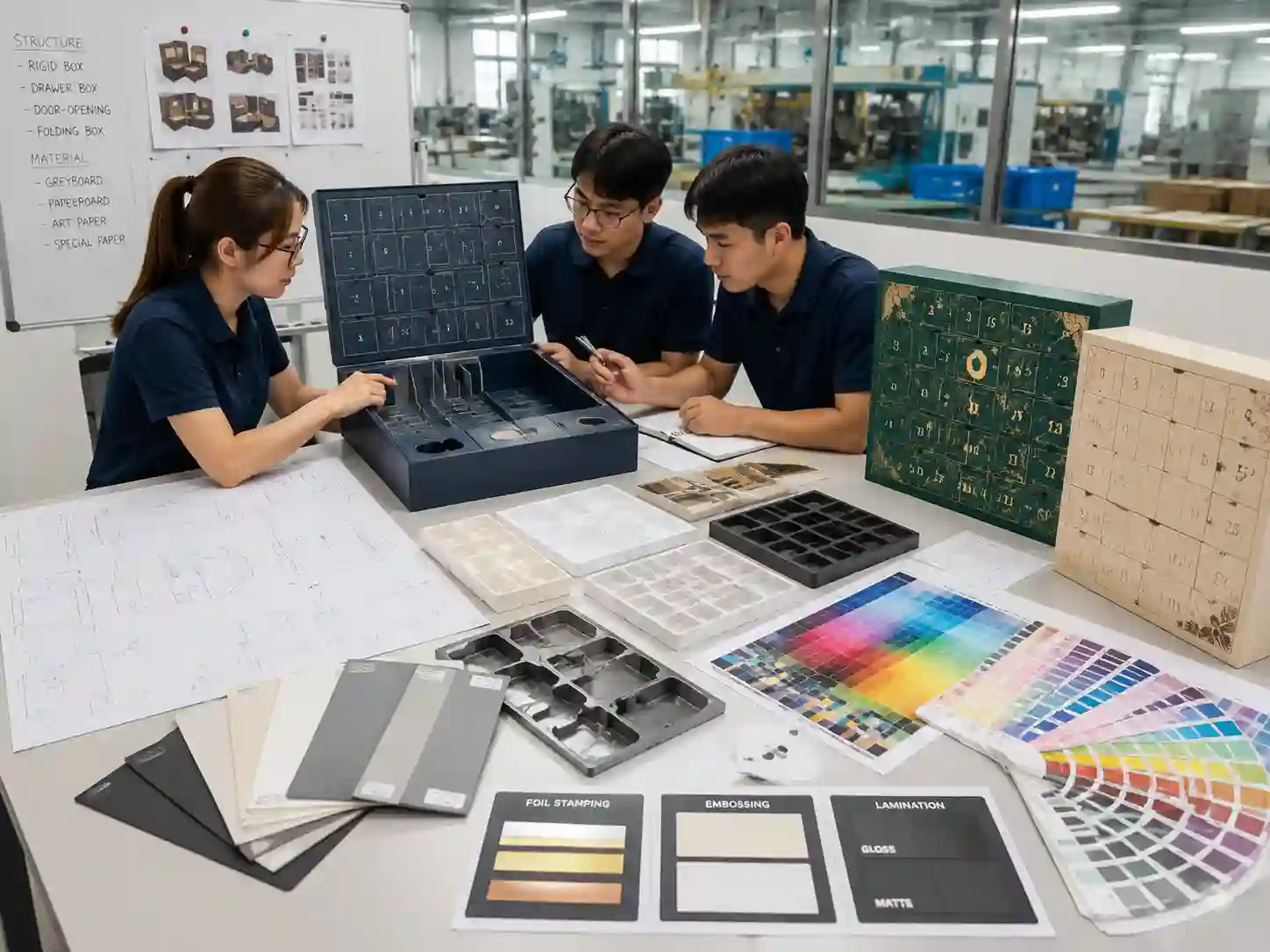
- Flexible material selection: Buyers can choose greyboard, paperboard, PET trays, EVA inserts, foam, molded pulp, or paper inserts depending on product protection needs.
- Advanced finishing options: CMYK printing, Pantone matching, foil stamping, embossing, spot UV, matte lamination, and gloss lamination can support different market positions.
- Factory-based problem solving: Experienced suppliers can identify structural issues during sampling before mass production begins.
Buyer tip: A packaging supplier should be evaluated by its ability to control the entire process from artwork checking to export shipment, not only by the initial quotation.
Which custom advent calendar box structures should buyers compare?
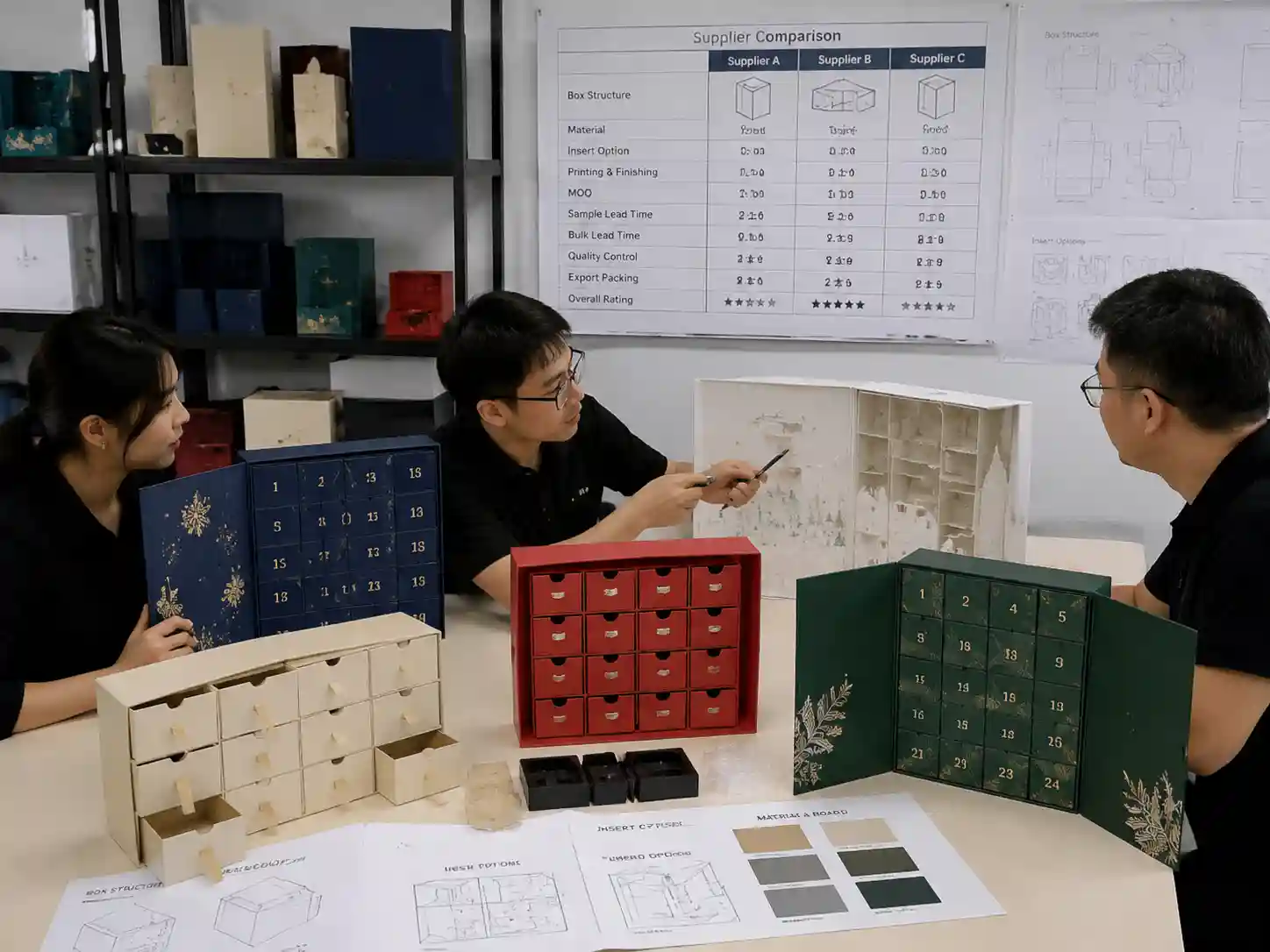
The best structure depends on the product size, opening experience, shipping requirements, and budget. Before requesting a quotation, buyers should understand the main structural choices available.
| Structure | Best For | Main Considerations |
|---|---|---|
| Rigid box advent calendar | Luxury products, premium gifts, retail displays | Higher perceived value, stronger panels, more assembly and material planning |
| Drawer box advent calendar | Cosmetics, accessories, samples, subscription products | Requires accurate drawer clearance, smooth movement, and strong internal support |
| Door-opening box | Products needing visual reveal and compartment access | Requires hinge strength, door alignment, and opening tolerance checks |
| Folding carton advent calendar | Cost-sensitive retail campaigns and larger quantities | Lower shipping volume, lighter material, requires careful paperboard design |
For example, a luxury skincare brand may choose a rigid greyboard structure with EVA inserts, while a retail promotion may require a folding paperboard calendar with paper inserts to control cost and shipping weight.
How should buyers choose between rigid, drawer, and door-opening structures?
Start with the product inside the box. The structure should be designed around product dimensions, weight, opening frequency, and customer handling expectations.
- Small bottles or cosmetic samples often require individual cavities and protective inserts.
- Fragile items may require PET trays, EVA, foam, or molded pulp supports.
- Heavy products require stronger greyboard thickness and reinforced internal construction.
- Retail products requiring frequent handling need better drawer movement and panel durability.
Factory tip: A good packaging supplier should review the product size and recommend a structure before production instead of simply copying an existing box style.
What materials and inserts should buyers confirm before production?
Material selection directly affects durability, appearance, cost, and shipping performance. Buyers should confirm the board type, surface paper, insert material, and assembly method during the development stage.
- Greyboard: Commonly used for rigid boxes because it provides thickness and structural strength.
- Paperboard: Suitable for folding cartons where weight reduction and efficiency are important.
- Paper insert: A cost-effective option for lightweight products and organized compartments.
- PET tray: Useful when products require transparent visibility and accurate positioning.
- EVA insert: Suitable for premium products requiring soft protection and precise fitting.
- Foam: Used when cushioning and impact protection are important.
- Molded pulp: Considered by buyers looking for fiber-based protective solutions.
Before mass production, suppliers should complete insert fit testing. A correct insert should prevent movement while allowing products to be removed easily by the end user.
How important are printing and finishing choices for custom advent calendar boxes?
Printing and finishing decisions strongly influence how the final packaging looks on retail shelves and in product photography. Buyers should confirm artwork specifications before approving production.
Which printing options should buyers discuss with suppliers?
Common printing requirements include:
- CMYK printing: Suitable for full-color artwork, product images, and complex graphics.
- Pantone color matching: Important when brands need consistent signature colors across production batches.
- Matte lamination: Creates a soft, premium surface appearance.
- Gloss lamination: Provides a brighter surface with additional protection.
- Foil stamping: Adds metallic effects for premium details such as logos or decorative elements.
- Embossing: Creates raised textures and improves tactile quality.
- Spot UV: Highlights specific areas with contrast between glossy and matte surfaces.
What artwork checks should buyers complete before bulk production?
Artwork approval should include more than checking the design file. Buyers should confirm:
- Dieline size and folding direction.
- Panel artwork alignment after assembly.
- Color proof results compared with approved references.
- Number placement and compartment labeling.
- Finishing positions for foil, embossing, and spot UV.
- Bleed areas and printing safety margins.
QC tip: Always approve a physical pre-production sample when color accuracy and structural appearance are important. Digital artwork previews cannot fully represent paper texture, coating effects, or final assembly results.
How should buyers compare Chinese packaging suppliers?
The right supplier comparison should include production capability, communication quality, sampling process, and quality control methods.
| Evaluation Area | Questions Buyers Should Ask |
|---|---|
| Structure development | Can the supplier create custom dielines and recommend improvements? |
| Sampling | Does the supplier provide prototypes and pre-production samples before bulk orders? |
| Printing control | Can the factory manage CMYK, Pantone, and finishing approval? |
| QC process | Are materials, printing, assembly, and final cartons inspected? |
| Export experience | Can the supplier prepare export cartons, pallets, and shipping marks? |
Buyers looking for a complete development process can review Giftpackpro’s custom advent calendar box services to understand how structure, samples, production, and delivery are managed.
What should buyers know about MOQ, samples, and lead time?
MOQ, sampling, and lead time depend on structure complexity, materials, finishing requirements, and production volume. Buyers should discuss these factors early because custom advent calendar boxes often require more preparation than standard packaging.
What affects MOQ?
- Special materials or custom inserts.
- Printing requirements and finishing processes.
- Production setup time.
- Box structure complexity.
- Seasonal production schedules.
Why is sampling important before mass production?
A prototype or pre-production sample allows buyers to verify:
- Box dimensions and product fit.
- Drawer movement or door opening performance.
- Insert positioning.
- Color and finishing results.
- Assembly quality.
Buyer tip: Approving a sample early can prevent expensive corrections during bulk production.
How do QC and export packing affect sourcing decisions?
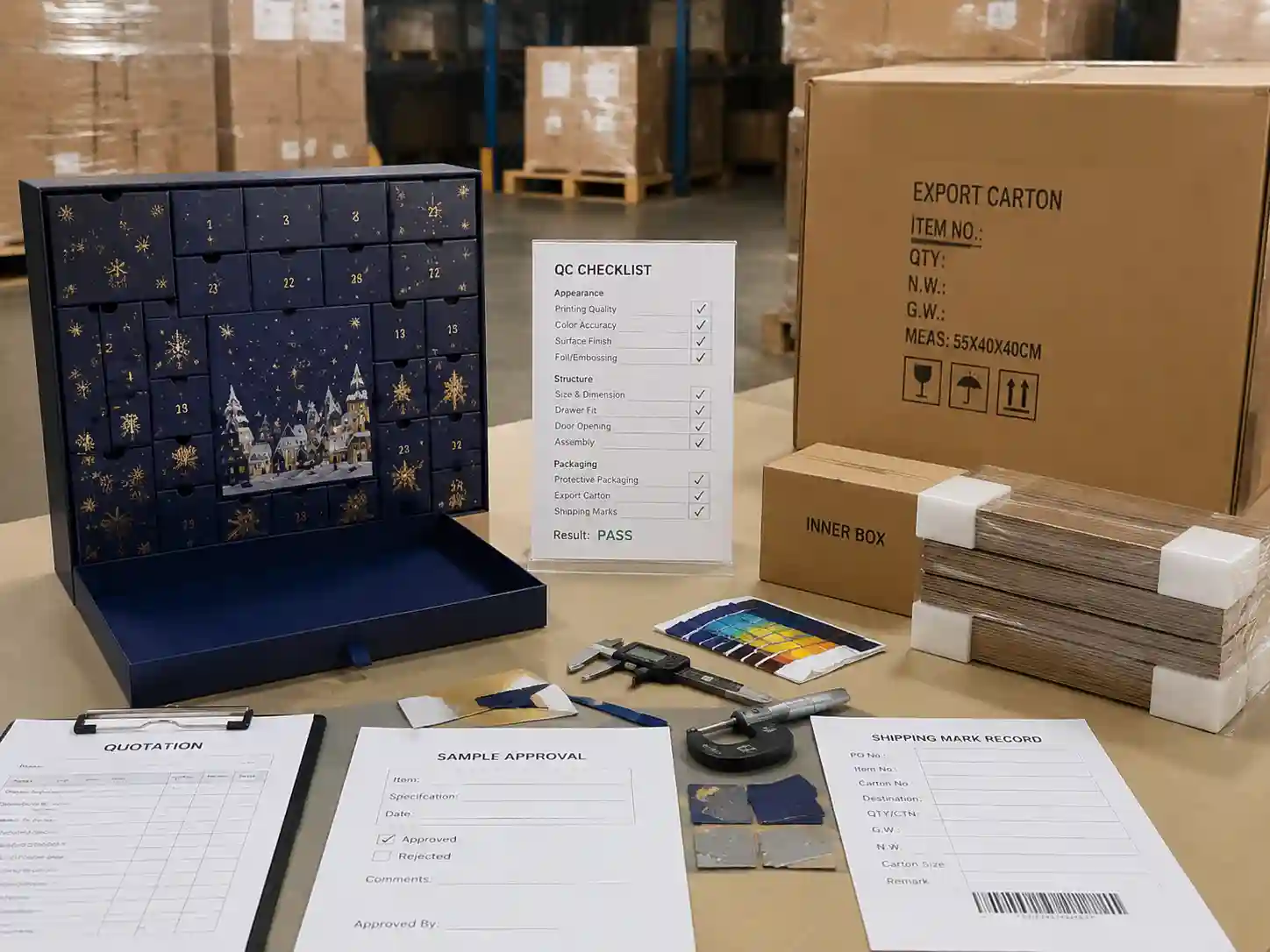
Quality control is especially important for advent calendar packaging because the product contains multiple compartments, moving parts, and decorative surfaces. A supplier should inspect both appearance and function.
- Check board thickness and material consistency.
- Verify printing color against approved samples.
- Inspect drawer clearance and door alignment.
- Confirm insert fitting and product protection.
- Review carton strength and packing method.
For international shipments, buyers should also confirm export packing details including export cartons, protective sleeves, corner protection, pallet wrapping, and shipping marks.
Companies shipping internationally may also review official packaging and logistics guidance from organizations such as GS1 identification standards and ISTA transport testing resources when preparing supply chain requirements.
What information should buyers prepare before requesting a quotation?
A detailed quotation request helps suppliers provide more accurate pricing and production recommendations. Before contacting a factory, prepare the following information:
- Box structure preference or reference images.
- Finished box size and internal product dimensions.
- Product type, quantity, and weight.
- Required insert material.
- Printing method and artwork requirements.
- Finishing options such as foil stamping, embossing, or lamination.
- Target MOQ and delivery schedule.
- Shipping destination and export requirements.
Buyers can also review more advent calendar box buying guides to understand design, production, and purchasing decisions before starting a project.
What common mistakes should buyers avoid when sourcing advent calendar boxes?
- Choosing a supplier only based on price.
- Skipping physical sample approval.
- Providing incomplete product dimensions.
- Ignoring insert testing until production starts.
- Not confirming printing and finishing details.
- Underestimating export packing requirements.
FAQ: Source custom advent calendar boxes from China
Are Chinese suppliers suitable for small and large advent calendar box orders?
Yes, but buyers should confirm whether the supplier can support their required MOQ, sampling process, and production capacity before placing an order.
Can suppliers customize inserts for different products?
Yes. Custom inserts such as paper inserts, PET trays, EVA, foam, and molded pulp can be developed according to product size, protection requirements, and presentation goals.
Should buyers request a sample before mass production?
Yes. A pre-production sample helps confirm structure, printing, finishing, insert fit, and assembly quality before committing to bulk manufacturing.
How can buyers reduce production risks?
Work with suppliers that provide clear communication, artwork checks, sample approval, QC inspection, and export packing planning.
Prepare your custom advent calendar box project with Giftpackpro
To request a sample or quotation, prepare your box size, product details, preferred structure, insert requirements, artwork files, finishing requirements, quantity, and shipping information. Giftpackpro supports overseas buyers with packaging development from concept review and sampling through mass production and export preparation.
If you are ready to discuss your seasonal packaging project, you can request a custom quote and share your packaging requirements with our team.
Choosing the right partner to source custom advent calendar boxes from China means evaluating structure, materials, printing control, sampling accuracy, QC systems, and export capability together—not only the unit price.