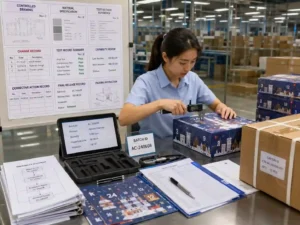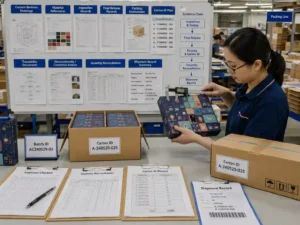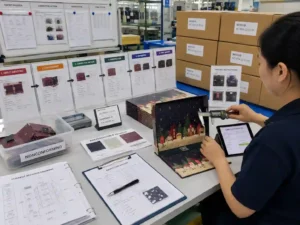
Quick answer: The skincare advent calendar boxes sampling process helps buyers verify packaging structure, product fit, materials, printing, finishing, and production risks before mass manufacturing. A professional sampling process usually includes structure review, blank sample testing, printed prototype approval, insert fitting, artwork confirmation, pre-production checks, and final sample sign-off. For skincare packaging, buyers should pay special attention to bottle stability, glass protection, leakage risks, label orientation, surface protection, and export durability before approving bulk production.
For brands, wholesalers, and retail buyers sourcing custom advent calendar boxes, the sample stage is not only a visual review. It is the point where packaging engineering decisions become physical proof before committing to MOQ, production schedules, and international shipping.
What should buyers understand before starting the skincare advent calendar boxes sampling process?
Buyers should understand that a packaging sample is a production verification tool, not simply a finished-looking box. The sample confirms whether the selected structure, inserts, materials, printing methods, and product dimensions work together.
Before requesting a sample, purchasing teams should prepare accurate product information, including:
- Skincare product dimensions and weight
- Bottle, jar, tube, dropper, pump, and cap measurements
- Number of compartments required
- Preferred box structure, such as rigid box, drawer box, door-opening box, or folding carton
- Artwork files, brand colors, and finishing requirements
- Target market requirements and expected delivery timeline
For buyers evaluating suppliers, the sample process reveals factory capability. A reliable supplier should be able to explain material choices, recommend suitable inserts, check tolerances, and identify possible production risks before bulk manufacturing.
Giftpackpro works with overseas brands and purchasing teams as a custom advent calendar boxes manufacturer, helping buyers move from packaging concepts to production-ready solutions.
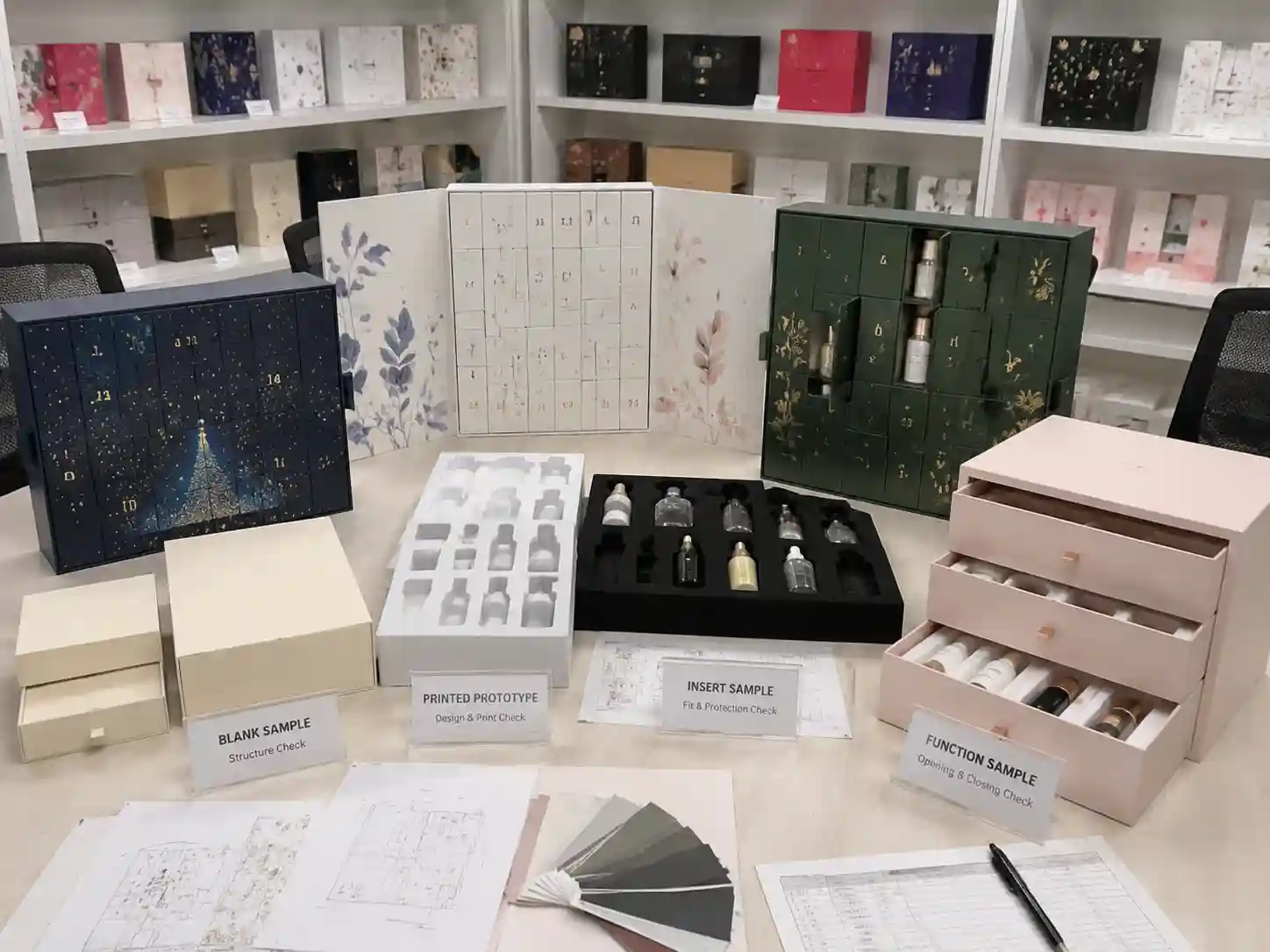
Which skincare advent calendar box structures should buyers test during sampling?
The best structure depends on product weight, retail positioning, customer experience requirements, and shipping conditions. Sampling allows buyers to compare different structures before selecting the final production option.
| Structure Option | Best For | Sampling Focus |
|---|---|---|
| Rigid box | Premium skincare sets, glass bottles, luxury campaigns | Corner strength, surface finishing, insert stability, opening experience |
| Drawer box | Multi-day product collections and premium gift sets | Drawer movement, alignment, compartment access, pull strength |
| Door-opening box | Retail displays and storytelling-style packaging | Hinge performance, door alignment, magnetic or locking functions |
| Folding carton | Lightweight programs and larger quantities | Paperboard strength, folding accuracy, printing consistency |
Buyer tip: Do not approve a structure based only on appearance. A skincare advent calendar box must also protect products during handling, warehouse storage, and export transportation.
How does a factory create a blank sample before printing?
A blank sample is the first physical prototype without final artwork. It allows buyers and factories to confirm the packaging structure before investing in printing plates, finishing processes, and bulk materials.
The blank sample stage usually checks:
- Dieline accuracy and folding positions
- Box dimensions and assembly tolerance
- Insert positioning and product fit
- Opening and closing performance
- Protection for fragile skincare components
For skincare products, blank sampling is especially important because different products create different packaging challenges. Glass serum bottles may require stronger protection than plastic tubes. Pump bottles may need deeper compartments, while jars require wider openings and stable support.
Common insert options tested during this stage include:
- Paper insert for lightweight skincare products
- PET tray for precise positioning and premium presentation
- EVA insert for cushioning and luxury appearance
- Foam insert for additional protection
- Molded pulp insert for sustainable packaging projects
What happens during the printed sample and prototype approval stage?
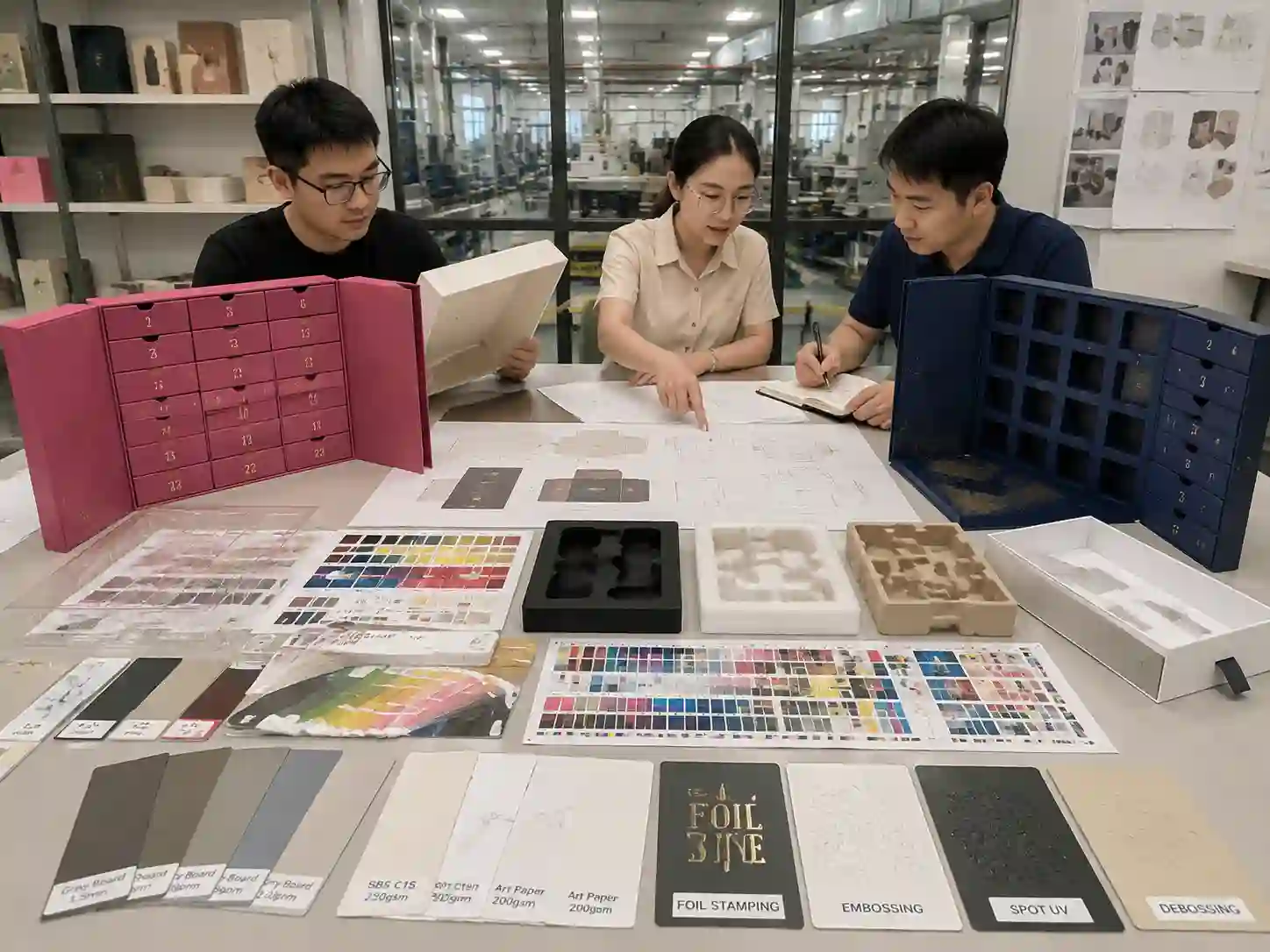
The printed sample is where buyers evaluate the final visual appearance and production details. It combines approved structure testing with artwork, printing, and finishing processes.
The factory typically checks:
- CMYK printing accuracy
- Pantone color matching requirements
- Matte lamination or gloss lamination performance
- Foil stamping positioning
- Embossing depth and clarity
- Spot UV placement
- Surface resistance against scratches and scuffing
Premium skincare packaging often uses high-end finishes, but every finishing choice should consider transportation conditions. Soft-touch surfaces, dark colors, and large solid printing areas may require additional handling protection because fingerprints or scratches become more visible.
How should buyers compare sample approval with different suppliers?
Buyers should compare suppliers by the quality of their sampling process, not only by sample cost. A lower sample fee does not always indicate a lower total project cost if poor sampling causes production delays or rework.
| Evaluation Area | Supplier Questions | Buyer Decision Point |
|---|---|---|
| Structure development | Can the supplier recommend box styles and inserts? | Choose suppliers with packaging engineering experience |
| Sample process | Do they provide blank and printed approval stages? | Avoid approving bulk production without physical verification |
| Artwork checking | Do they review dielines and printing files? | Reduce color, alignment, and folding errors |
| Production preparation | Do they confirm materials and specifications before mass production? | Reduce manufacturing risk |
Giftpackpro provides custom advent calendar box services covering structure development, sampling support, customization, and production preparation for international buyers.
What skincare-specific problems should buyers check during sampling?
Skincare packaging requires more detailed testing because many products are sensitive to movement, impact, and incorrect positioning.
How should buyers check product fitting?
- Confirm every bottle, jar, tube, dropper, and pump sits securely.
- Check that caps do not press against surrounding compartments.
- Verify that glass containers have enough protection from impact.
- Test whether products can be removed easily without damaging inserts.
How should buyers check leakage and contamination risks?
Although the box does not replace the primary product packaging, the advent calendar structure should prevent unnecessary movement. Loose products can increase the risk of cap damage, leakage during transport, or customer complaints.
How should buyers check retail appearance?
- Confirm label orientation when compartments are opened.
- Ensure product visibility matches the intended presentation.
- Check that premium finishes remain clean after handling.
What pre-production checks should happen before mass production?
Before mass production begins, buyers should complete a final pre-production sample approval. This stage confirms that the approved sample matches the production specifications.
A pre-production checklist should include:
- Approved box structure and dimensions
- Confirmed material specifications, including greyboard, paperboard, and insert materials
- Final artwork approval
- Printing and finishing confirmation
- Insert fit verification
- Assembly method confirmation
- Packaging and export requirements
Factory tip: Many production problems are caused by missing approvals, not manufacturing ability. Clear approval records help factories produce consistently according to buyer expectations.
How do MOQ, lead time, and quotation preparation affect sampling?
Sampling decisions directly influence MOQ planning, production schedules, and quotations. Buyers who provide complete specifications usually receive more accurate pricing and faster production planning.
Important quotation information includes:
- Box structure preference
- Required quantity and estimated MOQ
- Product dimensions
- Insert type
- Printing method
- Surface finishing requirements
- Sample requirements
- Shipping destination
The main cost drivers for custom advent calendar boxes include material selection, structural complexity, insert design, printing coverage, finishing processes, labor requirements, and packing method.
Buyers can review additional advent calendar box buying guides to understand sourcing decisions before preparing an RFQ.
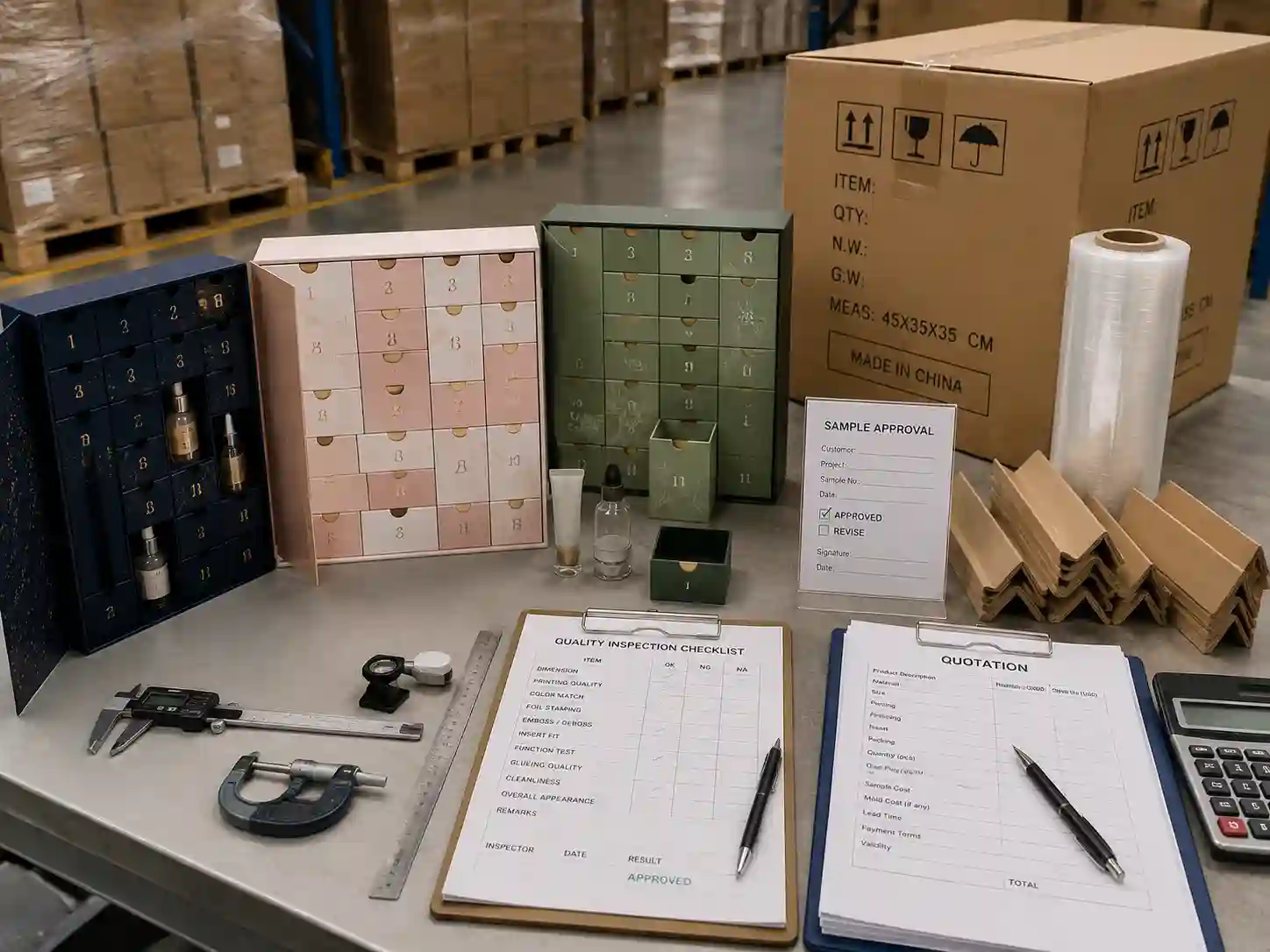
What QC checks should buyers complete after sample approval?
Quality control should continue after sample approval because bulk production must match the approved reference sample.
- Material inspection before production
- Printing color comparison against approved samples
- Insert fitting checks
- Assembly accuracy inspection
- Surface damage inspection
- Carton packing verification
For export orders, buyers should also review export cartons, pallet protection, corner protectors, stretch wrap, and shipping marks to reduce transportation risks.
What information should buyers prepare before requesting a sample or quotation?
A complete RFQ helps suppliers create a more accurate sample and quotation. Before contacting a packaging factory, prepare:
- Product photos and dimensions
- Target box style
- Quantity estimate
- Artwork files or design references
- Preferred materials and finishes
- Insert requirements
- Delivery location and timeline
Buyers looking for a production partner can contact the Giftpackpro packaging factory to discuss custom structures, samples, and manufacturing requirements.
FAQ: Skincare Advent Calendar Boxes Sampling Process
How long does the skincare advent calendar boxes sampling process take?
Sampling time depends on structure complexity, materials, finishing requirements, and revision rounds. Simple samples may require less development time, while complex rigid boxes with custom inserts require more testing.
Should buyers request a blank sample before a printed sample?
Yes. A blank sample helps confirm dimensions, structure, and product fit before spending additional resources on printing and finishing.
Can suppliers change inserts after the sample stage?
Insert adjustments are possible, but late changes may affect cost and lead time. Approving insert fit early helps avoid production delays.
What is the biggest mistake buyers make during sampling?
The most common mistake is approving appearance without checking functionality. Packaging must protect products, support assembly, and survive export handling.
Where can buyers request custom advent calendar box samples?
Buyers can prepare their product dimensions, design requirements, quantity, and delivery information, then request a custom quote for sampling and production discussion.
Final guide: How to manage the skincare advent calendar boxes sampling process successfully
The skincare advent calendar boxes sampling process should be treated as a production risk-control step. The strongest results come from checking structure, inserts, artwork, materials, printing, finishing, product fit, QC requirements, and export packing before mass production.
For overseas brands, retailers, wholesalers, and purchasing teams, choosing a supplier with a clear sample approval workflow can reduce unexpected costs and improve production reliability.
When preparing your next project, provide product dimensions, packaging expectations, quantity, artwork, and delivery requirements before starting development with Giftpackpro.