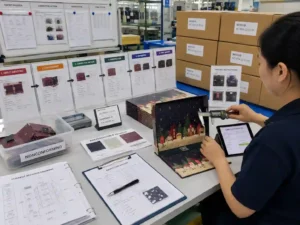
Quick answer: A multi-drawer advent calendar is prevented from tipping forward by controlling the relationship between drawer weight, center of gravity, base depth, panel strength, and opening resistance. The most effective advent calendar anti tipping design usually combines structural stability checks, controlled drawer travel, reinforced panels, and prototype testing before production approval. The final solution depends on the calendar size, drawer quantity, product weight, and how the drawers are used.
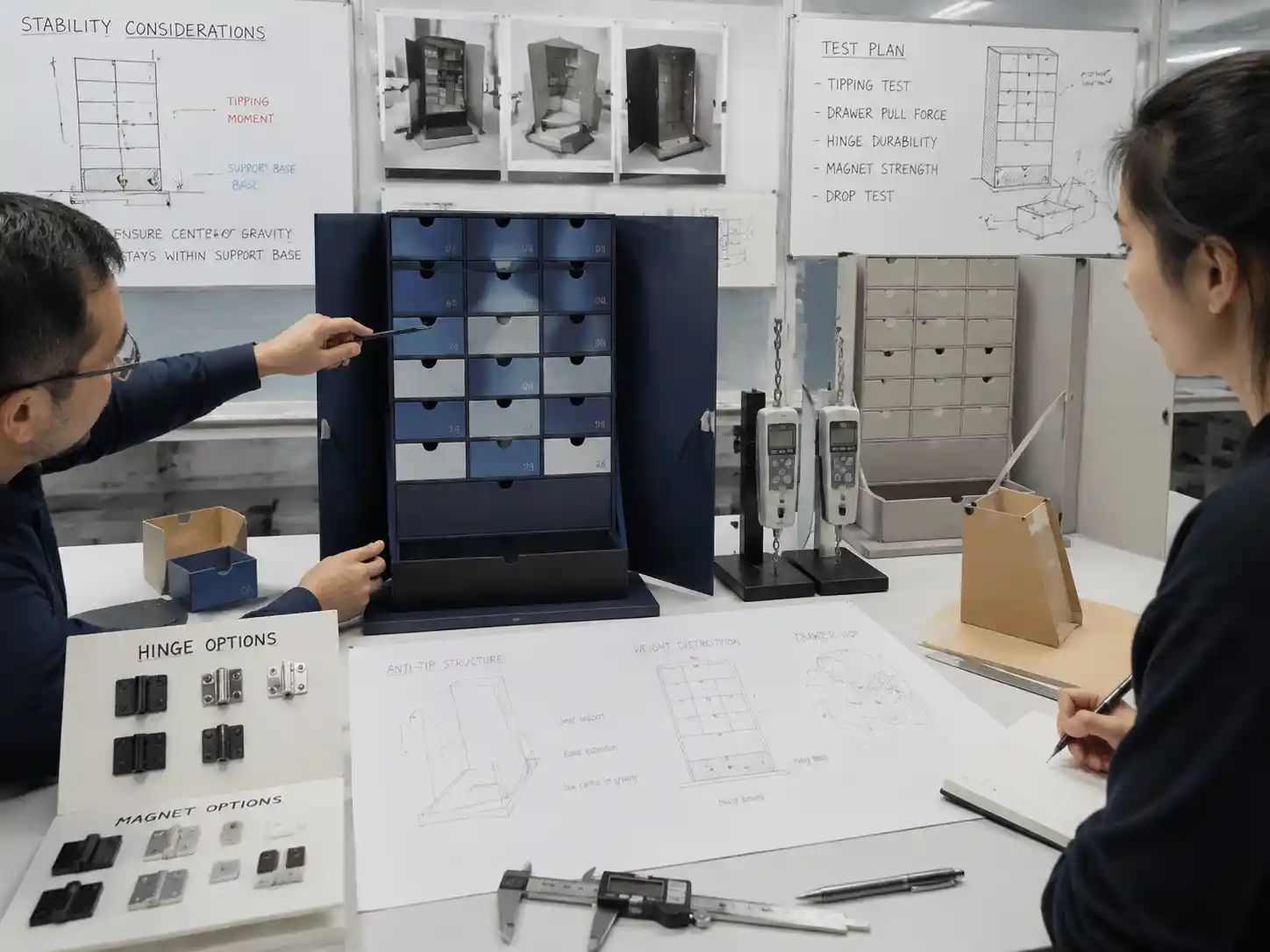
Why can a multi-drawer advent calendar tip forward during use?
A multi-drawer advent calendar can tip forward when the open drawers create a forward pulling force that exceeds the stability provided by the base, rear structure, and overall weight distribution. The risk increases when multiple heavy drawers are opened at the same time or when the upper section carries more weight than the lower structure.
Common causes include:
- Heavy products stored in upper drawers that shift the center of gravity forward.
- Drawer extension distance creating additional forward leverage.
- A shallow base footprint compared with the overall calendar height.
- Weak rear panels or side structures that allow deformation.
- Loose drawer movement that creates sudden pulling forces during opening.
How does advent calendar anti tipping design improve stability?
The purpose of advent calendar anti tipping design is to keep the center of gravity within the stable support area while maintaining smooth drawer operation. Designers normally evaluate the complete box structure rather than adding a single reinforcement after production problems appear.
Important design controls include:
- Base stability: A wider or stronger base improves resistance against forward rotation.
- Weight distribution: Heavier products should be considered during layout planning, not only after the insert is completed.
- Drawer travel control: Drawer stops or controlled opening distances can reduce excessive forward loading.
- Panel reinforcement: Stronger side walls, rear panels, and internal supports help maintain alignment.
- Closure interaction: Magnets, doors, and hinges should not create additional stress during opening and closing.
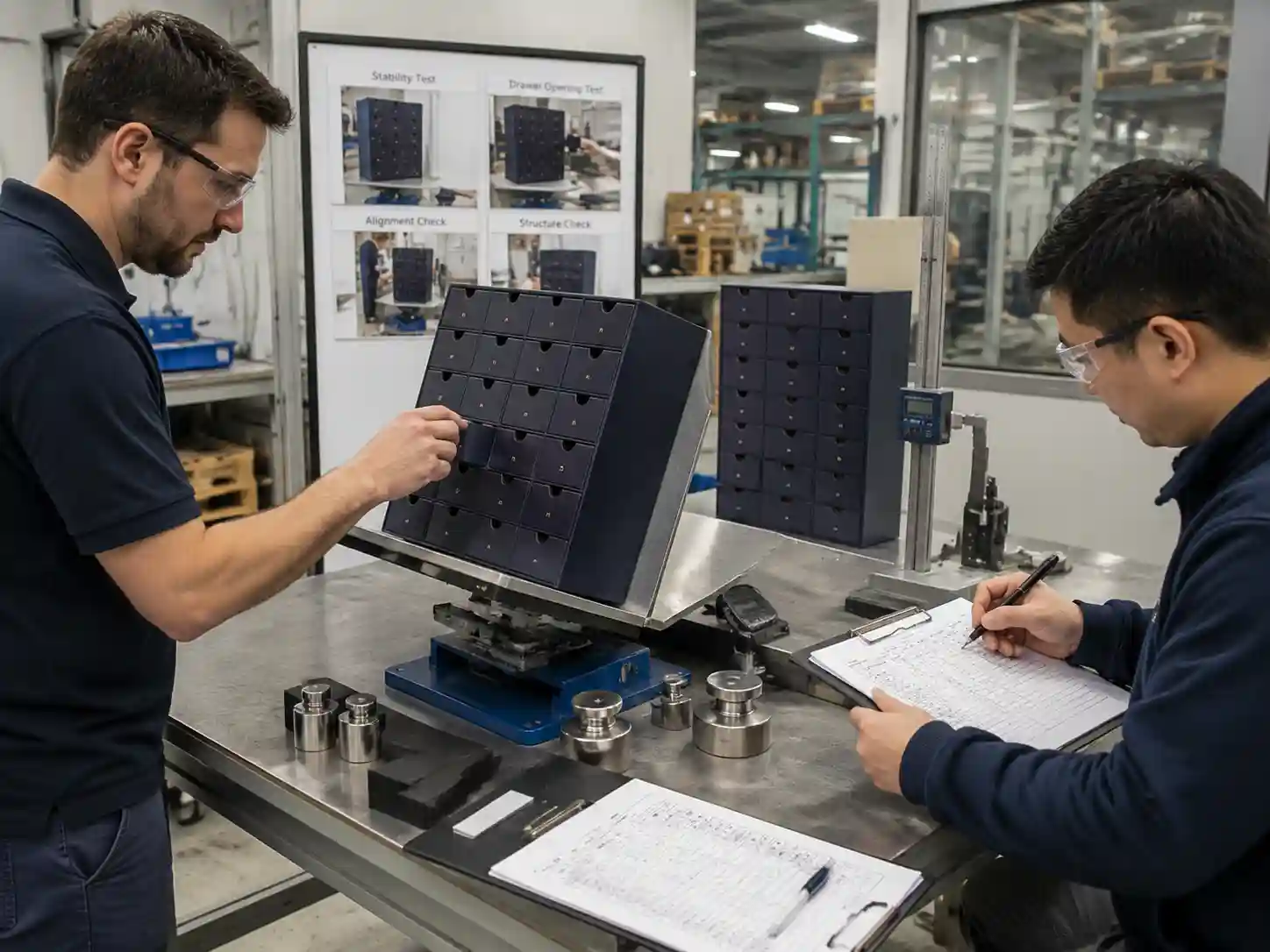
What structural factors should be checked before approving a design?
The first approval step is a structural review using drawings, prototypes, and weight assumptions. A stable appearance alone does not confirm that a drawer calendar will remain secure during repeated use.
| Structural factor | What to review | Verification method |
|---|---|---|
| Drawer layout | Number of drawers, drawer position, and expected product weight | Dimension drawings and loaded samples |
| Base structure | Footprint depth, board thickness, and support points | Prototype standing test |
| Drawer movement | Opening resistance and extension distance | Manual pull test and measurement records |
| Main body strength | Side panel stiffness and rear support performance | Assembly inspection and deformation checks |
Project-dependent recommendations may vary depending on whether the calendar contains lightweight samples, glass containers, bottles, or heavier retail products. A structure suitable for empty display samples may not perform the same way when all compartments are loaded.
How should engineers test a multi-drawer advent calendar prototype?
A practical validation process should use a loaded prototype that represents the final product condition. Testing an empty box can hide stability problems caused by actual drawer weight.
- Assemble the prototype using the intended board structure, wrapping materials, and hardware.
- Load drawers with representative product weights or approved test samples.
- Open individual drawers and observe forward movement, body deformation, and base contact.
- Check whether doors, hinges, magnets, or drawer components affect overall balance.
- Record measurements, observations, and required design adjustments.
Which failure modes should packaging teams check before mass production?
A failure-mode review helps identify stability risks before production approval. The following checklist can be used during engineering and QC discussions.
- Drawer opens smoothly but pulls the entire calendar forward.
- Lower base bends or lifts when upper drawers are opened.
- Rear panel flexing causes drawer alignment problems.
- Heavy products are positioned in locations that create excessive forward loading.
- Drawer stops, magnets, or hinges do not maintain intended movement control.
- Assembly variation changes the final balance of the finished box.
These risks should be supported by inspection records, approved structural drawings, prototype photos, and sample approval documents so production teams understand the final accepted configuration.

How do buyers approve anti-tipping performance with a packaging supplier?
Buyers should review evidence from the development stage rather than relying only on visual samples. Useful approval materials include:
- Structural drawings showing base, drawer, and support construction.
- Loaded prototype photos showing actual product placement.
- Measurement records for dimensions and drawer movement.
- Sample review notes describing approved modifications.
- QC inspection records confirming production follows the approved structure.
Giftpackpro supports custom advent calendar development through structural review, sampling, and production verification. For projects requiring specific drawer layouts or stability requirements, teams can begin with custom advent calendar box services and review suitable structures through custom advent calendar box products.
FAQ: Can adding more weight inside the box always prevent tipping?
No. Additional weight may improve stability in some designs, but uncontrolled weight placement can also create new balance problems. The position of the weight is usually more important than the total weight alone.
FAQ: Are drawer stops necessary for every multi-drawer advent calendar?
No. Drawer stops are project-dependent. They are considered when drawer extension, product weight, or repeated opening creates a stability risk that cannot be solved through basic structural design.
FAQ: What documents help verify a stable advent calendar structure?
Structural drawings, loaded prototypes, measurement sheets, sample approval records, and QC inspection documents provide practical evidence that the approved design matches production requirements.
To develop a stable multi-drawer advent calendar structure, contact Giftpackpro for a project review and request a custom packaging solution through request a custom quote.