
Quick answer: To calculate advent calendar box size, buyers need to start with the product dimensions inside each compartment, then add insert clearance, structural space, opening mechanism requirements, material thickness, and assembly tolerance. The final box size depends on whether the design uses a rigid box, folding carton, drawer box, door-opening box, or fold-out structure. For B2B buyers ordering custom advent calendar boxes, the correct sizing process begins with product samples, compartment layout planning, dieline development, and prototype testing before mass production.
Choosing the right dimensions is not only a design decision. Box size affects material usage, insert cost, shipping volume, MOQ planning, production lead time, and final retail performance. A packaging supplier should evaluate the complete structure rather than calculating only the outside length, width, and height.
How do you calculate advent calendar box size before requesting a quotation?
To calculate advent calendar box size accurately, buyers should define the internal product arrangement first. The supplier then converts the product layout into compartment dimensions, insert dimensions, and final box dimensions through structural engineering and dieline development.
A practical calculation process usually follows these steps:
- Measure the product or sample item: Record length, width, height, shape, weight, and any fragile areas.
- Define the compartment layout: Decide how many doors, drawers, trays, or sections are required.
- Add insert clearance: Allow space for paper insert, PET tray, EVA insert, foam, or molded pulp protection.
- Select the box structure: Choose rigid box, folding carton, drawer box, door-opening box, or fold-out style.
- Create and test the dieline: Confirm folding areas, glue zones, opening performance, and assembly tolerance.
Factory tip: Many sizing mistakes happen because buyers provide only the final product size. A packaging factory needs the product dimensions plus quantity per box, display requirements, insert preference, and shipping expectations.

What factors determine the final size of a custom advent calendar box?
The final size of a custom advent calendar box is determined by the combination of product fit, structure type, insert system, and manufacturing requirements. Two boxes containing the same products can have different outside dimensions because their construction methods use different materials and mechanisms.
| Factor | How It Affects Box Size | Buyer Consideration |
|---|---|---|
| Product dimensions | Defines the minimum compartment size | Provide actual samples or accurate measurements |
| Insert design | Adds internal walls, spacing, and protection | Select paper insert, PET tray, EVA, foam, or molded pulp based on product needs |
| Structure type | Changes folding, drawer, hinge, and panel requirements | Compare rigid, folding carton, drawer, and door-opening options |
| Material thickness | Affects internal capacity and outside dimensions | Consider greyboard thickness, paperboard weight, and wrapping paper |
| Retail requirements | Influences display footprint and shelf height | Confirm store, e-commerce, or promotional requirements |
Which advent calendar box structures require different size calculations?
Different structures require different dimensional calculations because each design uses space differently. Buyers should compare structures before approving artwork or requesting final pricing.
How is a rigid advent calendar box size calculated?
A rigid advent calendar box usually requires additional allowance for greyboard thickness, wrapped paper layers, magnetic closures, hinges, and internal trays. The outside size is normally larger than the product compartment size because rigid structures use thicker materials and stronger panels.
Rigid boxes are commonly selected for premium gift sets, cosmetics, luxury products, and retail campaigns where presentation quality is important.
How is a drawer advent calendar box size calculated?
A drawer box requires space for sliding movement, drawer walls, pull tabs, and internal compartments. The calculation must include operating clearance so the drawer opens smoothly after printing, lamination, and assembly.
For drawer structures, suppliers normally test:
- Drawer opening resistance
- Internal product movement
- Insert stability
- Assembly tolerance after mass production
How is a door-opening advent calendar box size calculated?
A door-opening box requires additional space for hinged panels, numbered doors, magnetic closures, and internal compartment layouts. The supplier must confirm that doors open correctly without damaging printed surfaces.
How is a folding carton advent calendar box size calculated?
Folding cartons generally use thinner paperboard, so the dimensional calculation focuses more on folding lines, locking tabs, insert fit, and efficient flat packing. They are often considered when buyers need lighter shipping weight or higher quantity production.
How do inserts change advent calendar box dimensions?
Insert selection directly changes the internal size calculation because inserts create the product holding system inside the box. The same outer box can require different internal dimensions depending on whether the buyer chooses a simple paper divider or a molded protective tray.
| Insert Type | Size Impact | Common Application |
|---|---|---|
| Paper insert | Lower thickness and flexible layout | Lightweight products and promotional sets |
| PET tray | Requires precise cavity dimensions | Cosmetics samples and small retail items |
| EVA insert | Adds protective thickness | Premium products requiring cushioning |
| Foam insert | Needs compression allowance | Fragile or delicate items |
| Molded pulp insert | Requires structural cavity planning | Eco-focused packaging solutions |
Buyer tip: A good supplier calculates the insert and box together. Designing the box first and adding the insert later can create fitting problems, wasted space, or increased shipping costs.

What information should buyers prepare before asking for a size quotation?
Before requesting pricing, buyers should prepare technical information that allows the supplier to calculate materials, tooling, production steps, and packaging volume accurately.
- Product size and product samples if available
- Number of compartments required
- Preferred structure: rigid, drawer, door-opening, folding carton, or fold-out
- Target box dimensions or retail display requirements
- Insert requirements and product protection needs
- Printing requirements including CMYK, Pantone, foil stamping, embossing, spot UV, matte lamination, or gloss lamination
- Expected quantity and target MOQ range
- Destination market and export packing requirements
Providing this information helps suppliers prepare a more accurate quotation instead of estimating based only on a general box size.
How do materials and printing choices affect box size and cost?
Materials and finishing options influence both the physical dimensions and production cost of advent calendar boxes. A thicker structure may improve durability but can increase material consumption and shipping volume.
Common factors include:
- Greyboard thickness: affects rigid box strength and internal capacity.
- Paperboard selection: affects folding carton stiffness and folding performance.
- Printing method: CMYK and Pantone requirements influence artwork preparation and color control.
- Surface finishing: foil stamping, embossing, spot UV, matte lamination, and gloss lamination can affect production steps and sample approval.
Professional buyers should compare the complete packaging solution rather than selecting the smallest possible box size. A smaller box may reduce material cost but create product damage risks or poor retail presentation.
How should buyers check the size during sampling and prototype approval?
The sample stage is the most important opportunity to confirm box size before mass production. A pre-production sample should be checked with actual products whenever possible.
Advent calendar box size approval checklist
- Does each compartment fit the product correctly?
- Is there enough clearance for inserting and removing products?
- Do drawers slide smoothly?
- Do doors open without bending or tearing?
- Does the insert hold products securely during transport?
- Does the assembled box match approved dimensions?
- Does the artwork align correctly after folding and assembly?
QC tip: Production teams should check not only the outside dimensions but also internal tolerance. A box can match the approved size and still fail if inserts shift or compartments are too tight.
How do MOQ and export packing influence the calculated box size?
MOQ and export packing requirements influence size decisions because packaging volume affects carton quantity, pallet loading, freight cost, and warehouse efficiency.
For international shipments, buyers should confirm:
- Master carton dimensions
- Number of finished boxes per export carton
- Corner protection requirements
- Pallet stacking method
- Shipping marks and carton labels
A supplier experienced in export packaging will consider both the retail box size and the shipping carton size during development.
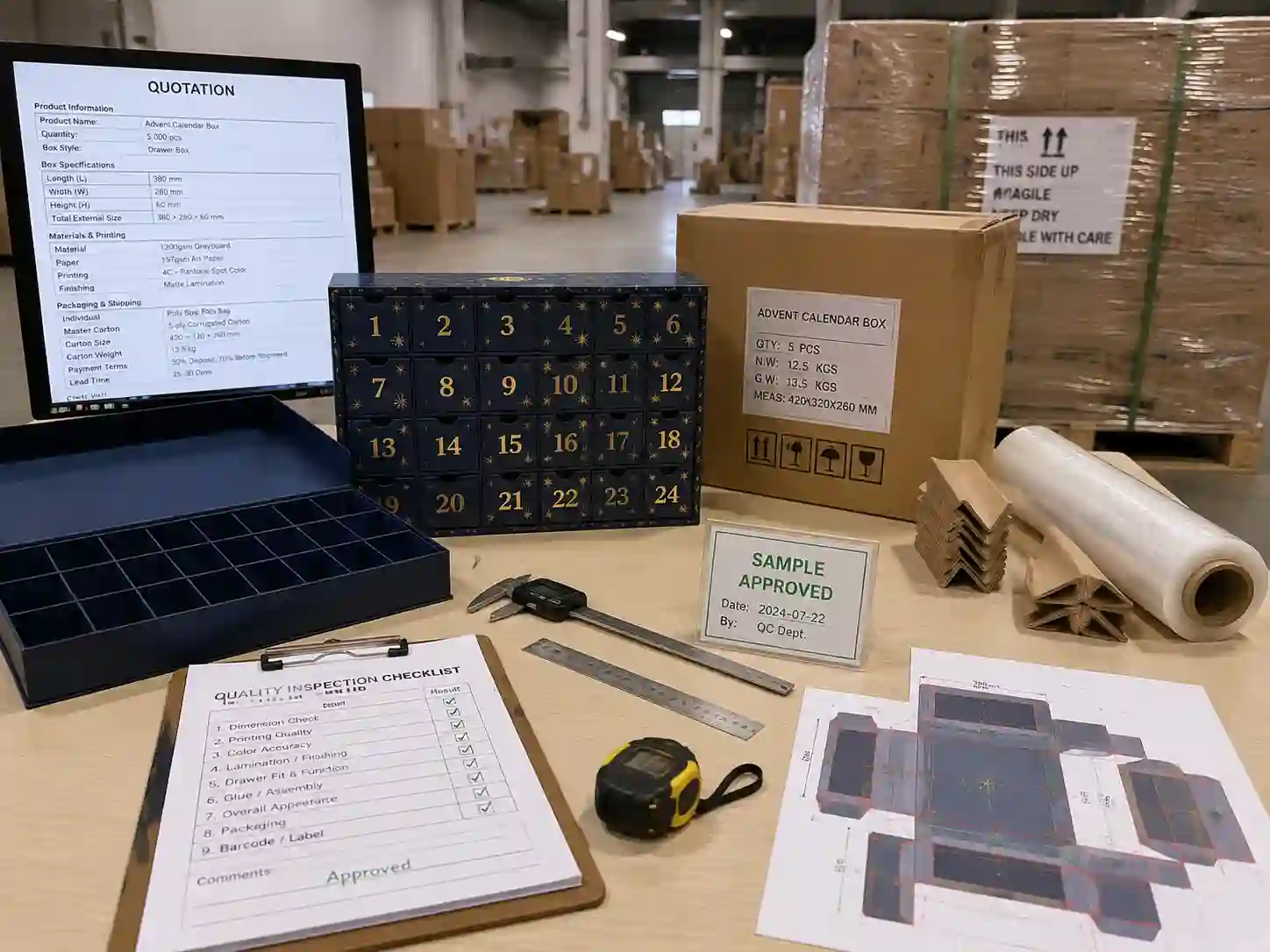
How can buyers compare suppliers for custom advent calendar box sizing?
The best supplier is not only able to manufacture a box with a requested measurement but can also help optimize the structure, cost, and production risk.
| Supplier Evaluation Point | Questions Buyers Should Ask |
|---|---|
| Engineering ability | Can the supplier create dielines and test prototypes? |
| Sampling process | Is there a clear sample approval workflow before mass production? |
| Material knowledge | Can they recommend suitable inserts and board thickness? |
| Quality control | Do they inspect printing, assembly, dimensions, and packing? |
| Export experience | Can they manage cartons, pallets, and shipping protection? |
Giftpackpro supports buyers from structure planning through production with custom advent calendar boxes manufacturer capabilities, including engineering review, sampling, and bulk production support.
What are common mistakes when calculating advent calendar box size?
Common sizing mistakes usually happen when buyers focus only on appearance instead of production requirements.
- Using product size without insert allowance
- Approving artwork before confirming the dieline
- Ignoring material thickness
- Choosing a structure without considering shipping conditions
- Skipping physical sample testing
- Requesting quotations without enough product information
Working with a supplier that understands custom advent calendar box services can reduce these risks by connecting design, sampling, production, QC, and export packing decisions.
Frequently asked questions about calculating advent calendar box size
Can I calculate the box size from product dimensions alone?
No. Product dimensions provide the starting point, but the final size also depends on inserts, materials, structure type, and manufacturing tolerance.
Does a larger advent calendar box always cost more?
Usually, larger dimensions increase material usage and shipping volume, but structure complexity, inserts, finishing, and production quantity can also significantly affect cost.
Should buyers finalize artwork before calculating size?
No. The structure and dieline should be confirmed first. Artwork should be prepared according to the approved dieline to avoid alignment issues.
How early should buyers confirm dimensions?
Buyers should confirm dimensions during the development stage before sampling and bulk production. Early confirmation helps control lead time and avoid production changes.
What should buyers prepare before requesting an advent calendar box quotation?
To receive an accurate quotation, prepare product dimensions, quantity, structure preference, insert requirements, artwork direction, finishing requirements, destination information, and timeline expectations.
Buyers can review more packaging examples through custom advent calendar box products and explore additional advent calendar box buying guides before starting a project.
For a professional RFQ, send your product details, target size, preferred structure, and sample requirements through request a custom quote. Giftpackpro can help evaluate structure options, prepare prototypes, and develop a production-ready packaging solution.
Conclusion: How do you calculate advent calendar box size correctly?
To calculate advent calendar box size correctly, buyers should combine product measurements, compartment layout, insert design, material selection, structure engineering, and production testing. The most reliable approach is to develop the size through a supplier-led process involving dielines, prototypes, QC checks, and export packing planning.
Choosing the correct dimensions early helps buyers control cost, improve product protection, reduce production risks, and create custom advent calendar boxes that are ready for retail, e-commerce, and seasonal campaigns.


