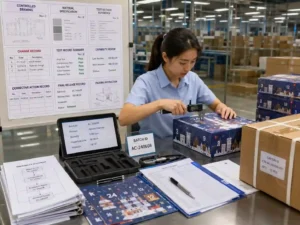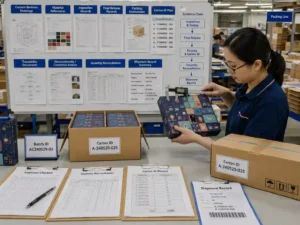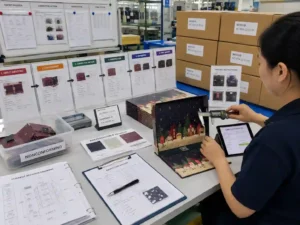
Embossing advent calendar packaging can add a clear tactile effect to seasonal gift boxes, but it needs to be planned early with the box structure, paper material, insert design, and artwork file. For B2B buyers, the goal is not decoration alone. The goal is to make the package feel more premium while still passing production, packing, shipping, and retail display requirements.
This guide explains when to use embossing or debossing for cosmetics, chocolate, candles, jewelry, toys, tea, coffee, beverages, and gift sets. It also covers sample checks, MOQ planning, quotation details, and export packing points for brands, wholesalers, gift companies, and retail purchasing teams.
What Are Embossing and Debossing in Advent Calendar Packaging?
Embossing raises part of the printed surface. Debossing presses part of the surface inward. Both effects are created with a die and pressure, usually after printing and before final box assembly.
For advent calendar boxes, embossing and debossing are commonly used on the front cover, drawer faces, door numbers, logo area, pattern details, borders, and premium gift-set panels. They are especially useful when a buyer wants a more physical, shelf-ready finish without changing the whole packaging structure.
As a custom advent calendar boxes manufacturer, Giftpackpro usually recommends checking embossing together with the dieline, paperboard thickness, printing method, lamination, foil stamping, inserts, and packing method. These items affect each other during bulk production.
Where Embossing Works Best on Advent Calendar Structures
The best embossing position depends on the calendar style. A drawer-style calendar can use embossed numbers or drawer-front logos. A book-style calendar may use an embossed cover logo or pattern. A double-door calendar can use debossed borders, icons, or opening instructions. A rigid gift-set calendar can use a larger tactile brand panel.
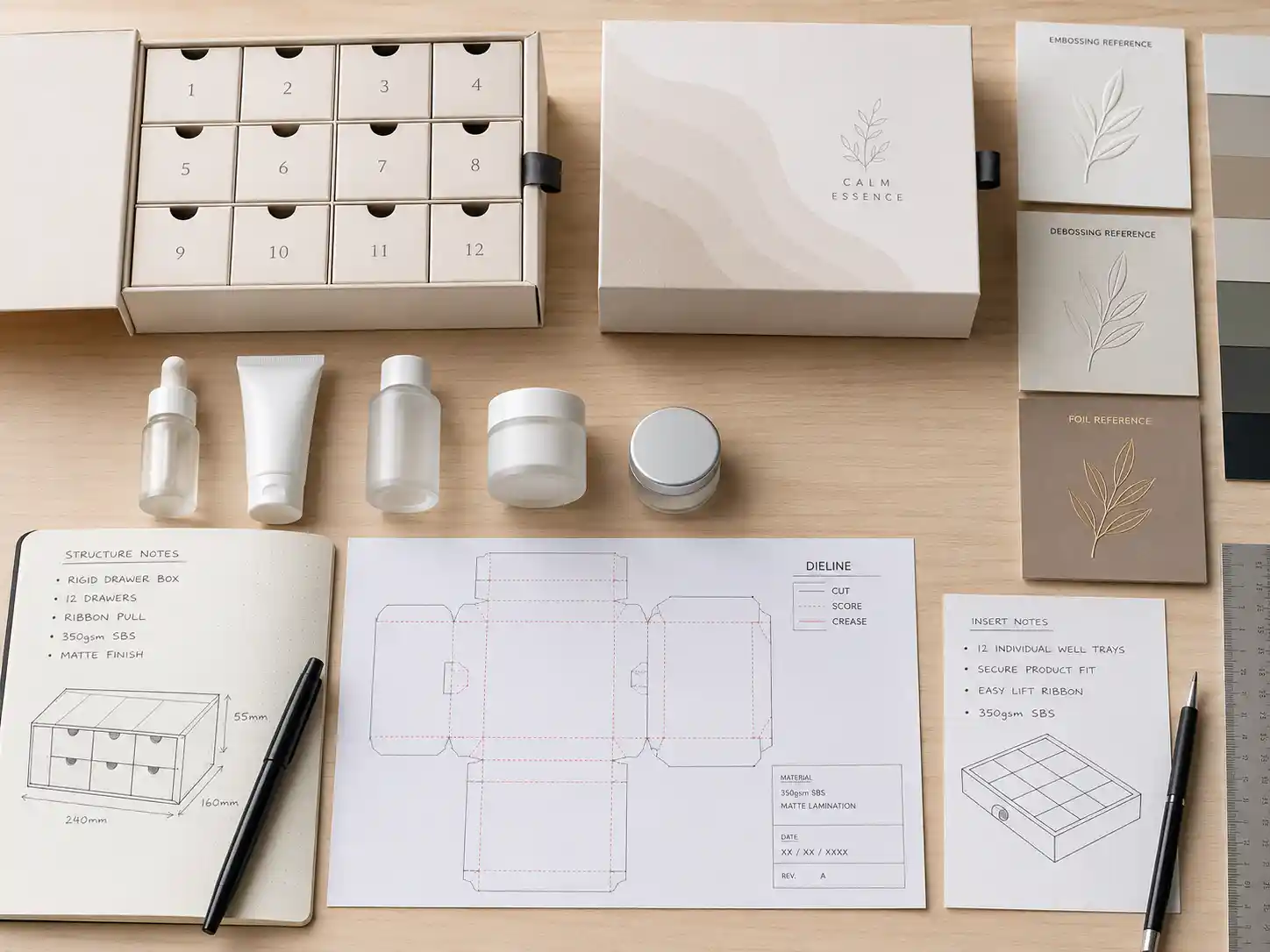
Drawer Advent Calendar Boxes
Drawer calendars are popular for cosmetics, skincare, candles, jewelry, tea bags, coffee capsules, and small gifts. Embossing can be applied to each drawer face, but buyers should be careful with very small numbers or thin lines. If the drawer face is small, the embossed area should stay simple and readable.
For skincare and cosmetics, raised logos, product-category icons, and clean number layouts often work better than complex full-surface patterns. These products usually need neat presentation and stable drawer movement, so the embossing pressure should not deform the drawer panel.
Door-Opening Advent Calendar Boxes
Door-style advent calendar packaging is often used for chocolate, toys, small beverages, tea, coffee, beauty samples, and mixed gift products. Embossed door numbers can look attractive, but the door cutting line must remain easy to open. The embossing area should not interfere with perforation, half-cut lines, or tear-open points.
For chocolate and food gifts, buyers should also consider food-contact safety, inner wrapping, compartment cleanliness, and separation between printed board and edible products. Official food-contact guidance from the U.S. FDA can be useful when planning food-related packaging requirements: FDA food contact substances guidance.
Rigid Book-Style and Magnetic Calendar Boxes
Rigid book-style calendars and magnetic gift boxes are suitable for premium cosmetics, jewelry, candles, fragrance sets, and luxury gifts. These structures can support more noticeable embossing or debossing because the cover panel is usually thicker and more stable.
For high-end retail gift sets, a debossed logo with matte lamination can feel clean and controlled. Embossing with foil stamping can look stronger, but it requires tighter artwork registration and more careful sample approval.
Industry Applications: Which Products Benefit Most?
Different product categories need different finishing logic. Cosmetics buyers often care about brand feeling and drawer smoothness. Chocolate buyers care about food-safe compartment planning. Candle buyers care about weight support and fragrance protection. Jewelry buyers care about small-product presentation. Toy buyers care about child-friendly opening and durability.
| Product Category | Recommended Embossing Area | B2B Production Notes |
|---|---|---|
| Cosmetics and Skincare | Logo, drawer numbers, cover pattern, product icons | Check drawer movement, insert fit, lamination choice, and color proofing before bulk production. |
| Chocolate and Food Gifts | Outer cover, door numbers, border details | Keep food products wrapped or separated. Confirm compartment layout, food-contact requirements, and carton protection. |
| Candles and Fragrance | Cover logo, scent labels, premium border lines | Check product weight, insert strength, fragrance protection, and shipping vibration resistance. |
| Jewelry and Accessories | Brand mark, small icons, drawer face details | Use precise inserts and avoid over-complicated embossing on tiny drawers. |
| Toys and Mini Gifts | Door numbers, playful icons, simple patterns | Make openings easy to use and test the box for repeated handling during retail display. |
| Tea, Coffee, and Beverages | Cover logo, flavor sections, category labels | Plan compartment depth, product orientation, moisture protection, and export carton layout. |
Embossing vs. Debossing: How to Choose
Embossing is usually better when the buyer wants a raised logo, number, or pattern that customers can feel immediately. Debossing is better when the design needs a quieter, pressed-in premium effect. Both can work well for embossing advent calendar packaging, but the correct choice depends on design style, paper material, and budget.
Choose Embossing When You Need a Visible Premium Detail
Embossing is suitable for cosmetic advent calendars, jewelry gift calendars, and premium gift sets that need stronger shelf impact. It works well with simple logos, large numbers, geometric patterns, and clean border lines.
However, embossing small text is risky. Fine letters may lose clarity after pressure is applied. If the design includes tiny product claims, ingredient notes, barcode areas, or compliance text, keep those areas flat and printed only.
Choose Debossing for a Minimal Luxury Look
Debossing gives a more subtle effect. It is useful for rigid book-style boxes, candle gift boxes, tea calendars, and business gift packaging. Debossing also works well with matte lamination because the pressed area creates a soft shadow without needing extra color.
For purchasing teams comparing finishing choices, custom advent calendar box services can help confirm whether the design should use embossing, debossing, foil stamping, spot UV, or a simpler printed effect.
Artwork and Dieline Preparation for Embossing
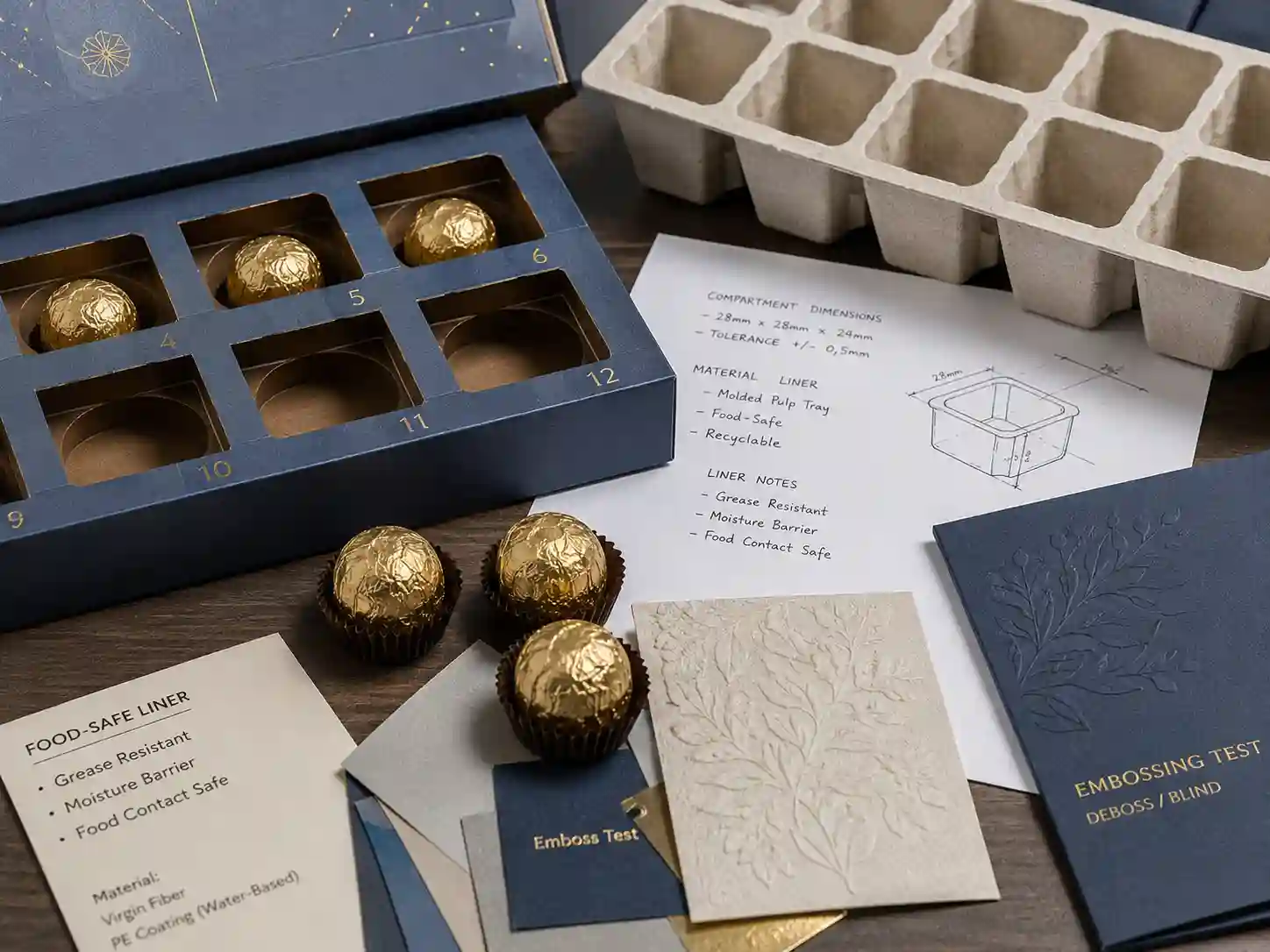
Embossing cannot be treated as a last-minute artwork layer. It should be planned at the same time as printing, dieline engineering, insert design, and sample making. Buyers should provide vector artwork for the embossed area and mark the finishing layer clearly.
Keep Embossing Areas Simple
Large clean shapes usually perform better than thin lines. If the embossed design includes numbers from 1 to 24 or 1 to 25, the font should be thick enough for the die. Decorative fonts may look good on screen but fail during production if the lines are too narrow.
A good rule for B2B buyers is to prepare three artwork layers: printing layer, cutting and creasing layer, and embossing or debossing layer. The embossing layer should use a clear spot color or label, so the factory can identify it quickly during prepress review.
Check the Relationship Between Embossing and Inserts
Advent calendar packaging usually includes inserts, compartments, trays, dividers, or product cavities. Embossing pressure can affect the board surface, while inserts affect the way products sit inside the calendar. These details should be reviewed together, not separately.
For chocolate calendars, the compartment plan must match product size, wrapping thickness, and door opening position. For cosmetics, the insert must hold bottles, tubes, jars, or sample sachets without pushing against the drawer or door. For candles, the insert must support heavier product weight during export shipping.
Buyers can review more structure options through custom advent calendar box products before deciding which finishing effect fits the package format.
Material Choices That Affect Embossing Quality
Paperboard thickness, surface paper, lamination, and box structure all affect embossing quality. Thick rigid board supports deeper tactile effects. Folding carton board may need lighter embossing pressure. Textured paper may reduce the visibility of fine embossing details.
Rigid Board and Mounted Paper
Rigid advent calendar boxes are often made with greyboard wrapped by printed art paper. This structure can create a strong premium effect, especially for cosmetics, jewelry, candles, and gift sets. Embossing on the cover can look stable when the paper wrapping and board thickness are well matched.
Folding Carton Board
Folding carton advent calendars are lighter and can be more cost-efficient for larger programs. Embossing is still possible, but the effect is usually shallower. Buyers should test whether the embossed area affects folding, creasing, and door-opening performance.
FSC and Sustainability Considerations
If the buyer needs certified paper or responsible sourcing claims, this should be stated before quotation. FSC-related requirements should be confirmed early because material selection, documentation, and lead time may be affected. Buyers can review official information from FSC when preparing sourcing requirements.
Combining Embossing with Foil, Lamination, and Spot UV
Embossing can be combined with foil stamping, matte lamination, gloss lamination, soft-touch lamination, or spot UV. The more finishes you combine, the more important sample approval becomes.
For example, a cosmetic advent calendar may use matte lamination, gold foil, and logo embossing. A chocolate calendar may use printed numbers with light debossed borders. A tea gift calendar may use debossed pattern details and a simple printed logo. A jewelry calendar may use foil stamping on a debossed brand mark for a more premium retail effect.
For buyers who are still comparing finishing options, the advent calendar box buying guides section can support early planning before a formal quote request.
Sample Approval Before Bulk Production
A physical sample is important for embossing advent calendar packaging because photos and digital mockups cannot fully show pressure depth, shadow, paper texture, or hand feel. Buyers should review the sample under normal office light and retail-style light.
What to Check on the Embossed Sample
Check whether the embossed logo is centered, the depth is consistent, the paper surface is not cracked, and the printed artwork remains aligned. Also check whether drawers slide smoothly, doors open correctly, and inserts still hold products securely.
For 24-day or 25-day calendars, buyers should check several different doors or drawers, not just the front logo area. Small repeated embossing details may vary if the die, paper, or pressure is not controlled properly.
Pre-Production Sample vs. Mass Production Sample
A white sample checks structure. A digital printed sample checks appearance. A pre-production sample checks the final printing, embossing, lamination, inserts, and packing method as close to bulk production as possible.
Giftpackpro usually recommends confirming the pre-production sample before large-volume production, especially when the project includes custom drawers, food compartments, fragile products, or multiple finishing processes.
MOQ, Lead Time, and Cost Factors
Embossing requires a custom die, so it affects cost and lead time. The final price depends on box size, board material, structure, printing method, number of embossed areas, die size, insert type, order quantity, and export packing method.
MOQ may vary by structure and material. A simple folding carton calendar usually has a different MOQ from a rigid drawer calendar with custom inserts and multiple finishing effects. Buyers should avoid comparing only unit price without checking structure, material, finishing, packing, and quality standard.
Main Cost Factors
The main cost factors include embossing die fee, printing plates or setup, material grade, lamination type, insert tooling, labor for assembly, packing method, carton size, and shipping volume. For heavy gift sets such as candles, beverages, or multi-product cosmetics, export carton strength may also affect cost.
When sending an inquiry, include your target order quantity, product size, product weight, box style, artwork status, preferred finish, destination market, and delivery schedule. This helps the factory prepare a clearer quotation and avoid repeated back-and-forth.
Quality Control and Export Packing for Embossed Calendars
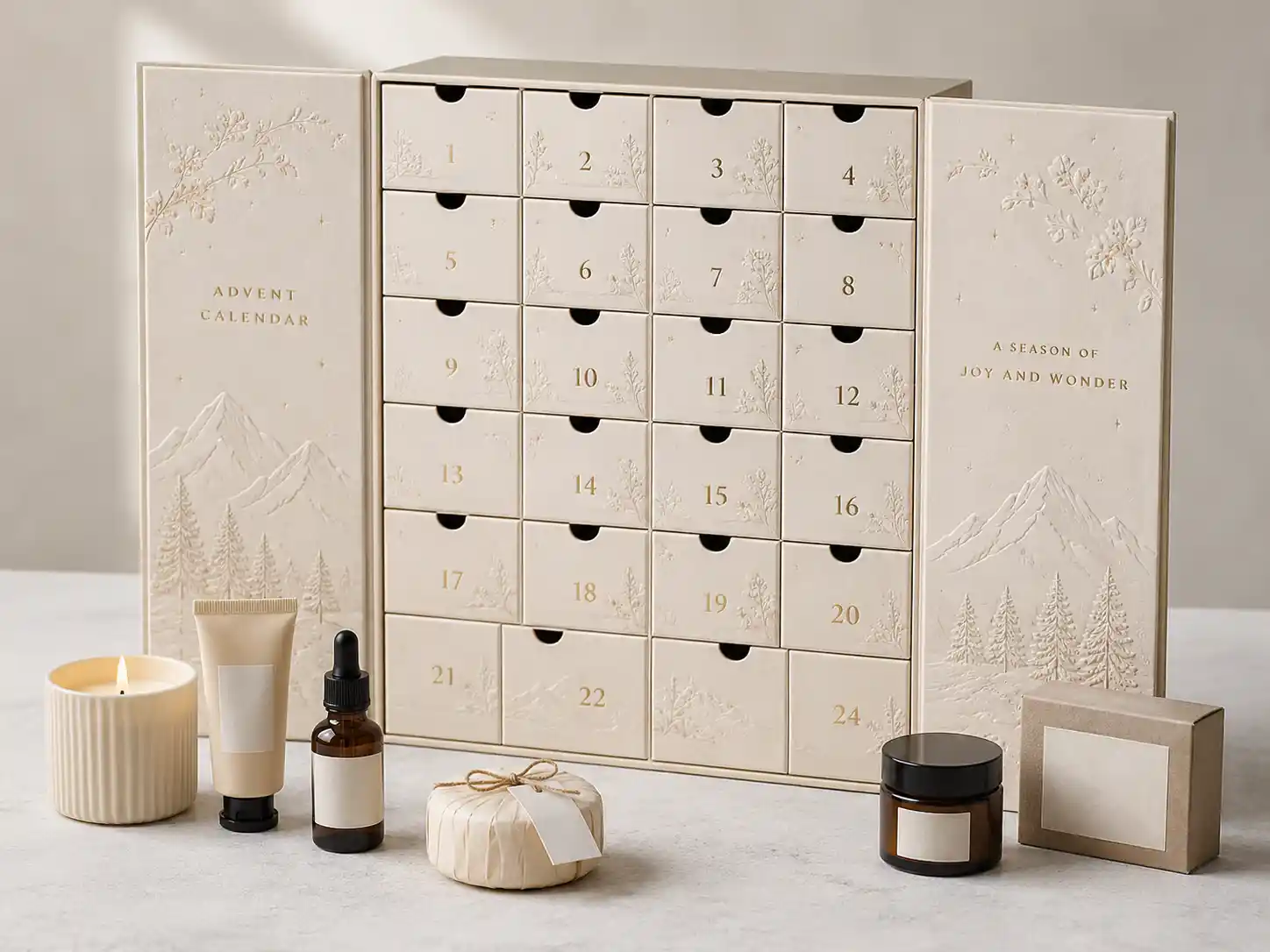
Embossed and debossed surfaces need protection during packing because raised or pressed details can be marked by friction, pressure, or rough handling. Export packing should consider carton strength, inner protection, pallet loading, and storage conditions.
QC Points for Bulk Production
Quality control should check embossing position, depth consistency, print registration, lamination surface, edge wrapping, drawer movement, door opening, insert fit, carton label information, and final packing quantity. For retail programs, the approved sample should be kept as the reference during inspection.
For cosmetic and skincare calendars, QC should also check whether bottles and jars remain stable in the insert. For chocolate calendars, each compartment should match the food product size and wrapping. For candle calendars, the carton and insert should support the weight during transport.
Export Packing Considerations
Export cartons should protect the printed and embossed surface from compression. Large rigid advent calendar boxes may need corner protection, dividers, or stronger cartons. If the products are pre-filled before shipment, packing tests become even more important.
Buyers can review production and factory capability through the Giftpackpro packaging factory page, then request a custom quote with project details when the artwork and product list are ready.
Quote Preparation Checklist for Buyers
To receive an accurate quote for embossing advent calendar packaging, prepare clear project information before contacting the supplier. A vague request such as “premium calendar box with embossing” is not enough for accurate pricing.
Information to Send
Send the box style, open size, closed size, product quantity, product dimensions, product weight, insert preference, artwork file, target quantity, destination country, packing method, and delivery deadline. If you already have a reference sample, share photos from the front, side, inside, and packing angle.
Also explain where embossing or debossing should be applied. For example, the front logo, 24 drawer numbers, outer sleeve pattern, door borders, or retail gift-set cover. If foil stamping or spot UV is also required, mark each finish as a separate layer in the artwork file.
Questions to Ask the Factory
Ask whether the embossing area is suitable for the chosen paperboard. Ask whether the die size affects the cost. Ask whether the finish will affect folding, drawer movement, door opening, or insert assembly. Ask how many days are needed for sample making and mass production after artwork approval.
For buyers planning several seasonal gift programs, custom advent calendar box services can help compare structure, material, insert, and finishing choices before confirming the final calendar style.
Final Advice for B2B Advent Calendar Buyers
Embossing and debossing can make advent calendar packaging feel more premium, but the effect should support the product category and production plan. Cosmetics, chocolate, candles, jewelry, toys, tea, coffee, beverages, and gift sets all have different structure and insert requirements.
The safest approach is to decide the product layout first, then confirm the box structure, insert type, paper material, printing method, and finishing effect. After that, approve a physical sample before bulk production.
If your team is comparing styles, start with custom advent calendar box products and related advent calendar box buying guides. When the product list, quantity, and artwork direction are ready, you can request a custom quote for a more accurate project plan.