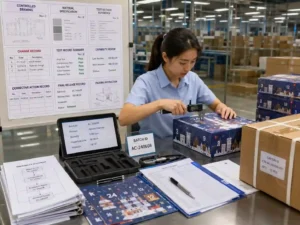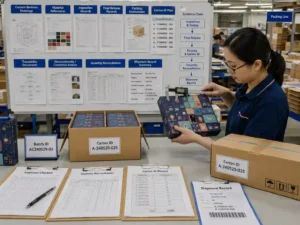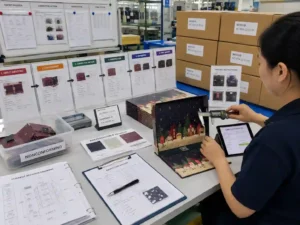
Quick answer: To verify packaging insert tooling capability, buyers should review supplier evidence instead of relying only on finished samples. Check structural drawings, tooling ownership, prototype records, measurement reports, production methods, and inspection procedures. A capable supplier should be able to explain how an insert moves from design approval to tooling, sampling, production control, and corrective action when dimensions or product requirements change.
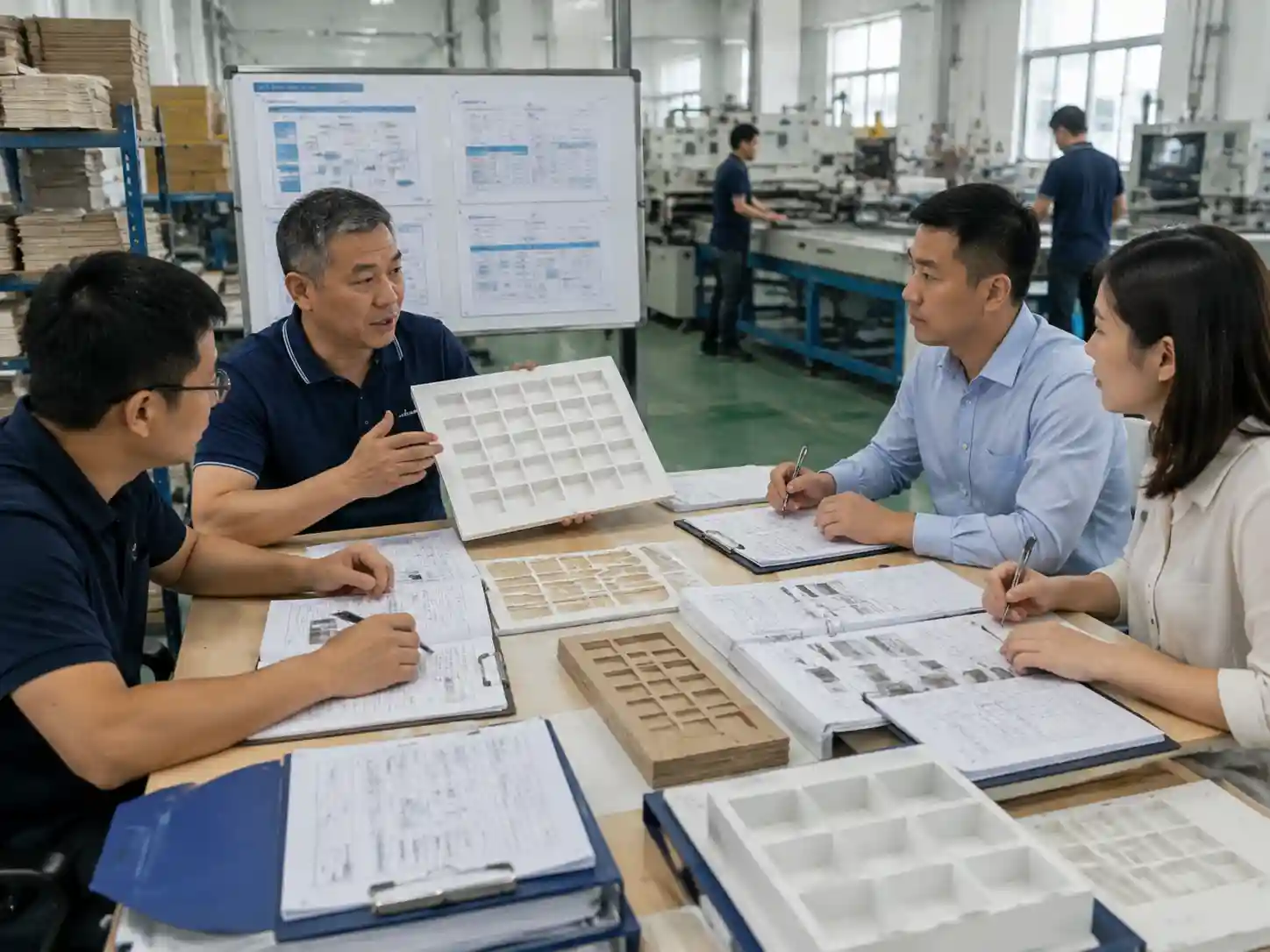
Why should buyers verify a supplier’s insert design and tooling capability before production?
Insert performance depends on more than appearance. The supplier must be able to convert product dimensions, protection requirements, and packaging structure into repeatable tooling and production processes.
For custom advent calendar packaging, inserts may need to control product movement, maintain compartment spacing, support different item shapes, and protect surfaces during transport. A supplier that cannot explain the design-to-production process may rely heavily on external partners or make uncontrolled adjustments during manufacturing.
Verification helps buyers understand whether the supplier can manage:
- Insert structural design and cavity layout.
- Tooling preparation and revision control.
- Prototype sampling and approval changes.
- Production consistency between approved samples and bulk output.
- Inspection methods for dimensions and fit.
How can buyers verify packaging insert tooling capability?
Buyers should verify packaging insert tooling capability by reviewing technical evidence, production records, and physical samples together. A single product photo or sample is not enough because it does not show how the supplier controls repeat production.
Can supplier drawings prove insert design capability?
Yes, approved drawings are one of the first pieces of evidence. Buyers should request examples of structural drawings, cavity layouts, material specifications, and revision records related to similar insert projects.
Useful drawing checks include:
- Overall insert dimensions and tolerance notes.
- Individual cavity measurements.
- Material thickness and folding or forming methods.
- Product clearance areas.
- Revision history after sample feedback.
The purpose is not to review confidential customer designs, but to confirm that the supplier follows a controlled engineering process.
What tooling records should a supplier provide?
Tooling evidence should show how the approved design is converted into a production-ready insert. The exact tooling method varies depending on the insert material and structure.
Buyers can request evidence such as:
- Tooling preparation records.
- Cutting die, forming tool, or production fixture references where applicable.
- Tool adjustment records.
- Tooling revision history.
- Maintenance or replacement records when relevant.
The key verification point is whether the supplier can explain the relationship between the approved design, tooling setup, and final production result.
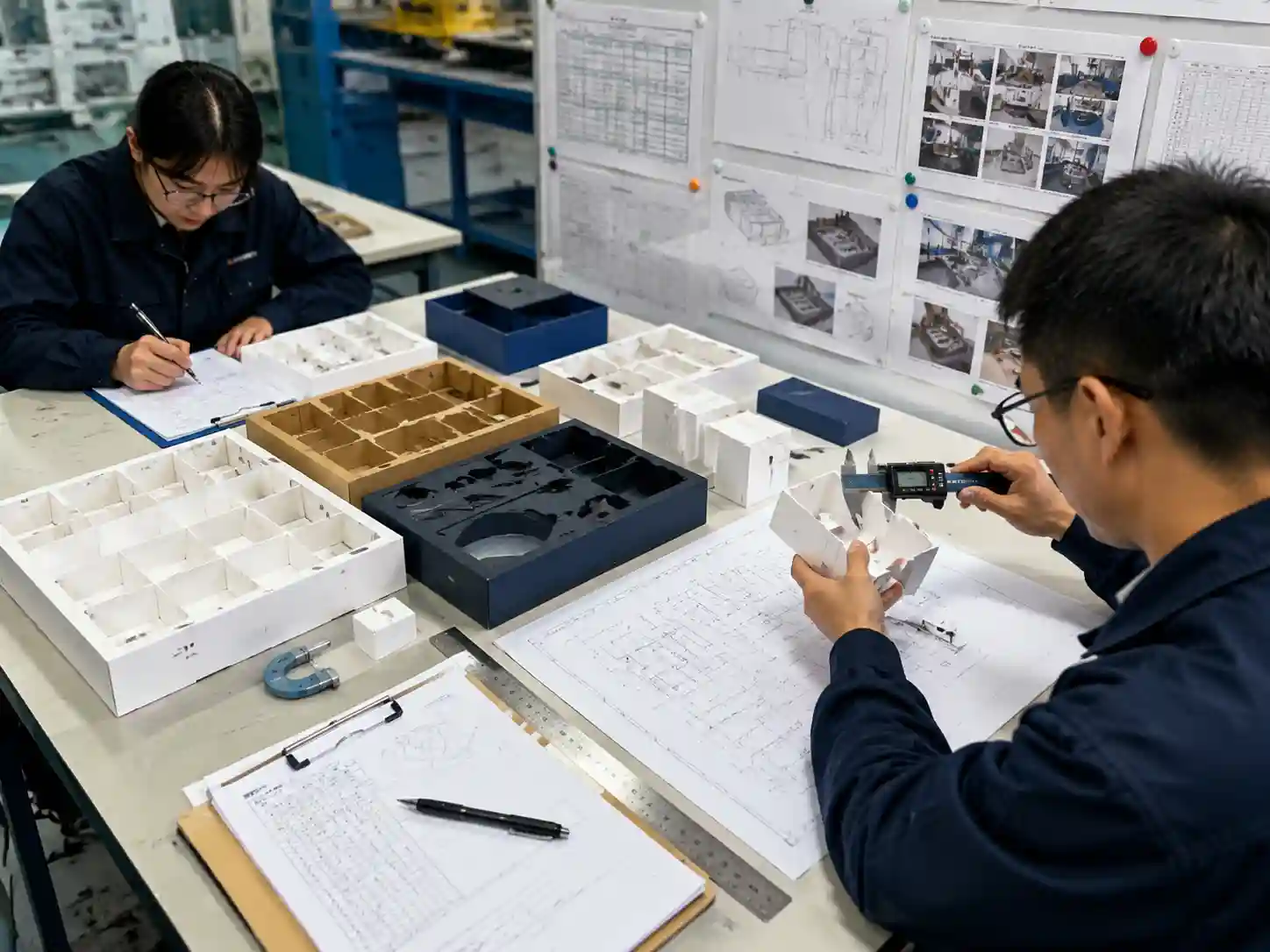
What physical checks confirm insert engineering capability?
Physical verification should compare approved drawings, prototype inserts, and actual product-fit results. Measurements should support the supplier’s explanation.
Common checks include:
| Verification Item | Evidence to Review | Risk if Missing |
|---|---|---|
| Insert dimensions | Measurement sheets, samples, drawings | Cavities may not match product requirements |
| Product fit testing | Loaded sample checks and approval records | Items may move, compress, or become difficult to remove |
| Tooling consistency | Tool records and production references | Bulk production may differ from approved samples |
| Revision control | Updated drawings and approval history | Old versions may be used during production |
For complex advent calendar inserts, buyers may also review multiple sample positions rather than checking only one cavity. This helps identify variation across the full layout.
How can buyers check whether insert production is controlled?
A supplier with strong tooling capability should have clear controls between design approval and mass production. Buyers should review how changes are recorded and approved.
Important questions include:
- Who approves insert design changes?
- How are tooling revisions recorded?
- How are production samples compared with approved references?
- How are dimensional problems corrected?
- How are subcontracted processes controlled if used?
These controls are especially important when inserts involve multiple cavities, mixed product sizes, or tight fit requirements.
What supplier evidence should buyers collect during verification?
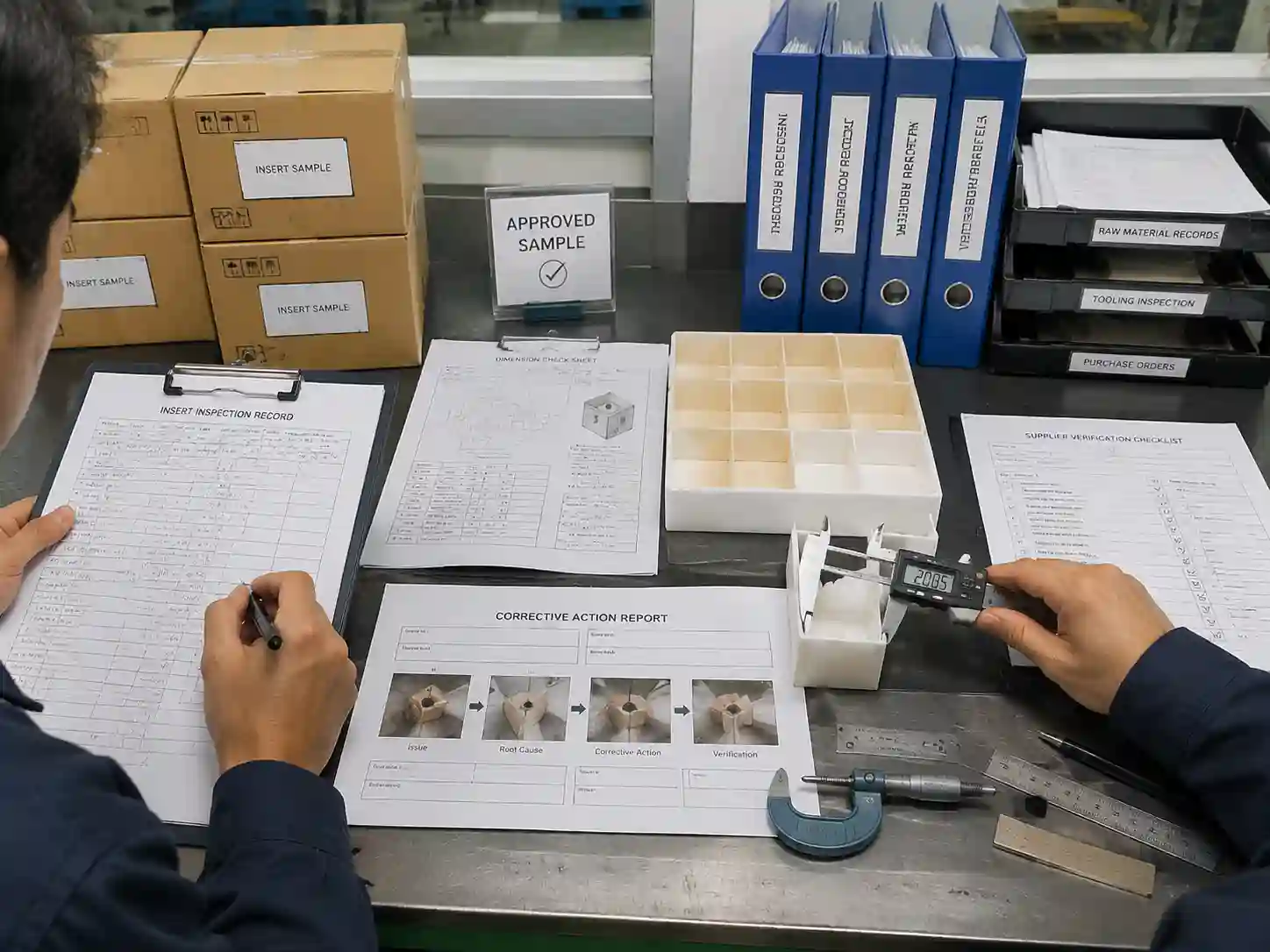
Buyers should build a verification file containing documents, samples, and inspection evidence. The exact documents required depend on the project complexity and insert structure.
| Evidence Category | Examples | Buyer Purpose |
|---|---|---|
| Design evidence | Drawings, layouts, revisions | Confirm engineering process |
| Sample evidence | Prototype inserts, fit samples, approval records | Confirm design execution |
| Production evidence | Process records, tooling references, inspection plans | Confirm repeatability |
| Corrective action evidence | Problem reports, adjustment records | Confirm response capability |
What are common sourcing risks when verifying insert capability?
The biggest risk is assuming that a supplier who can provide a finished box automatically controls insert engineering. Insert production may involve separate design, tooling, forming, or assembly steps.
A typical sourcing risk example is when a supplier presents an attractive prototype but cannot provide the drawing revision used for production. If product dimensions change later, the supplier may recreate the insert without a controlled approval process, increasing the risk of fit problems or inconsistent results.
Buyers can reduce this risk by requiring documented approvals before production and maintaining reference samples for comparison.
How should buyers evaluate insert suppliers before placing an order?
A practical evaluation should combine documentation review, sample inspection, and production-process verification. Buyers should separate confirmed supplier evidence from project-specific recommendations and final approvals.
- Verifiable facts: drawings, measurements, tooling records, inspection documents, and physical samples.
- Project-dependent recommendations: insert materials, tolerance requirements, testing frequency, and approval stages.
- Buyer approvals: final insert design, sample acceptance, production release, and any changes after approval.
Giftpackpro supports custom advent calendar box projects by helping buyers review packaging structures, product requirements, and production considerations. Learn more about Giftpackpro packaging factory capabilities or explore custom advent calendar box services for project requirements.
FAQs
Can a supplier have insert tooling capability without making all tools internally?
Yes. Capability verification should focus on process control, technical understanding, and quality responsibility. Whether certain tooling steps are performed internally or through approved partners should be clearly controlled and documented.
Should buyers approve insert samples before mass production?
Yes. Sample approval helps establish the reference standard for dimensions, appearance, and product fit before production begins.
What is the most important evidence when checking insert capability?
The strongest evidence is usually a combination of approved drawings, physical samples, measurement records, and production control documents rather than any single document.
For a custom insert project, buyers can request a custom quote and discuss required design, sampling, and verification steps before production.