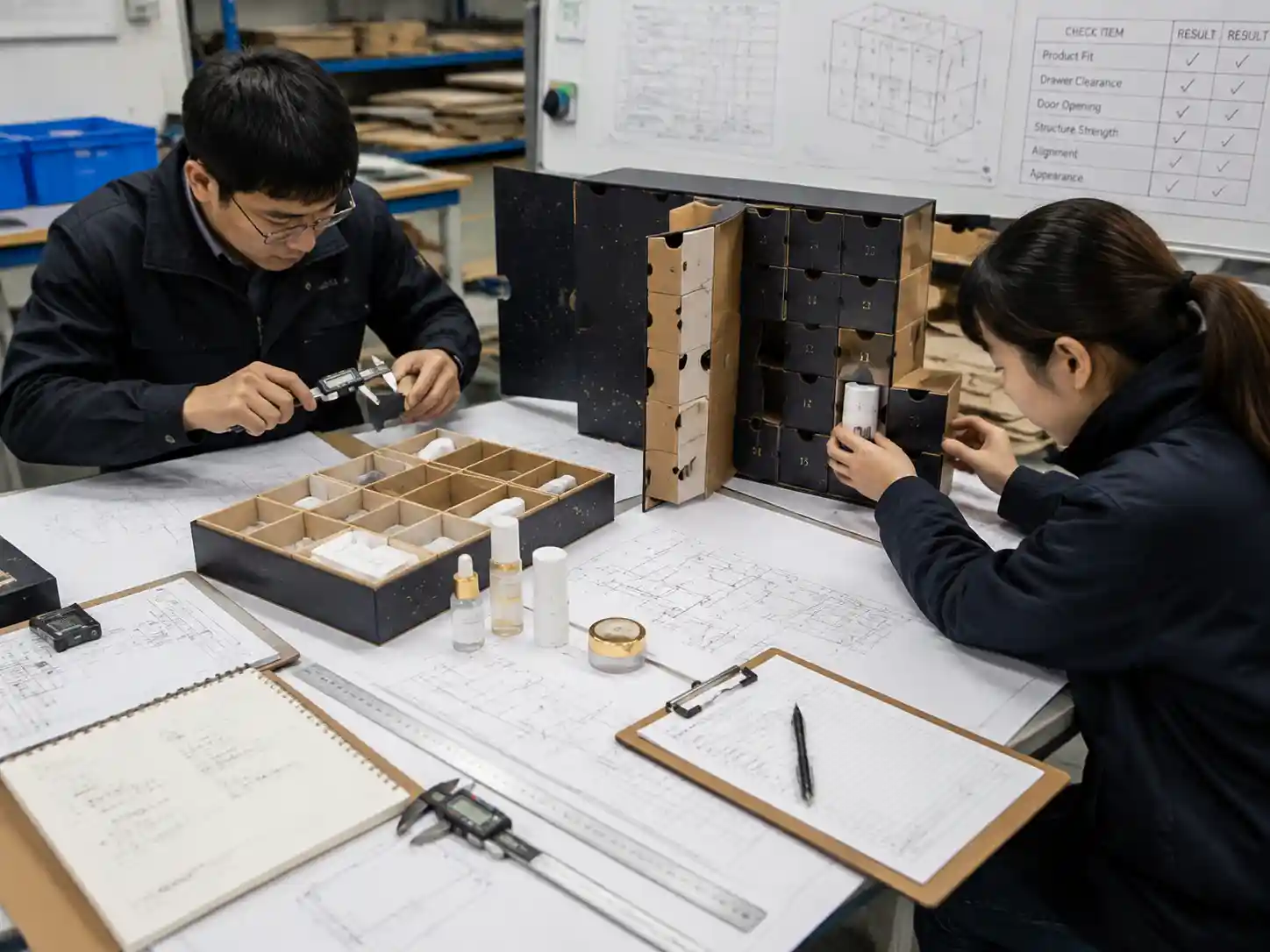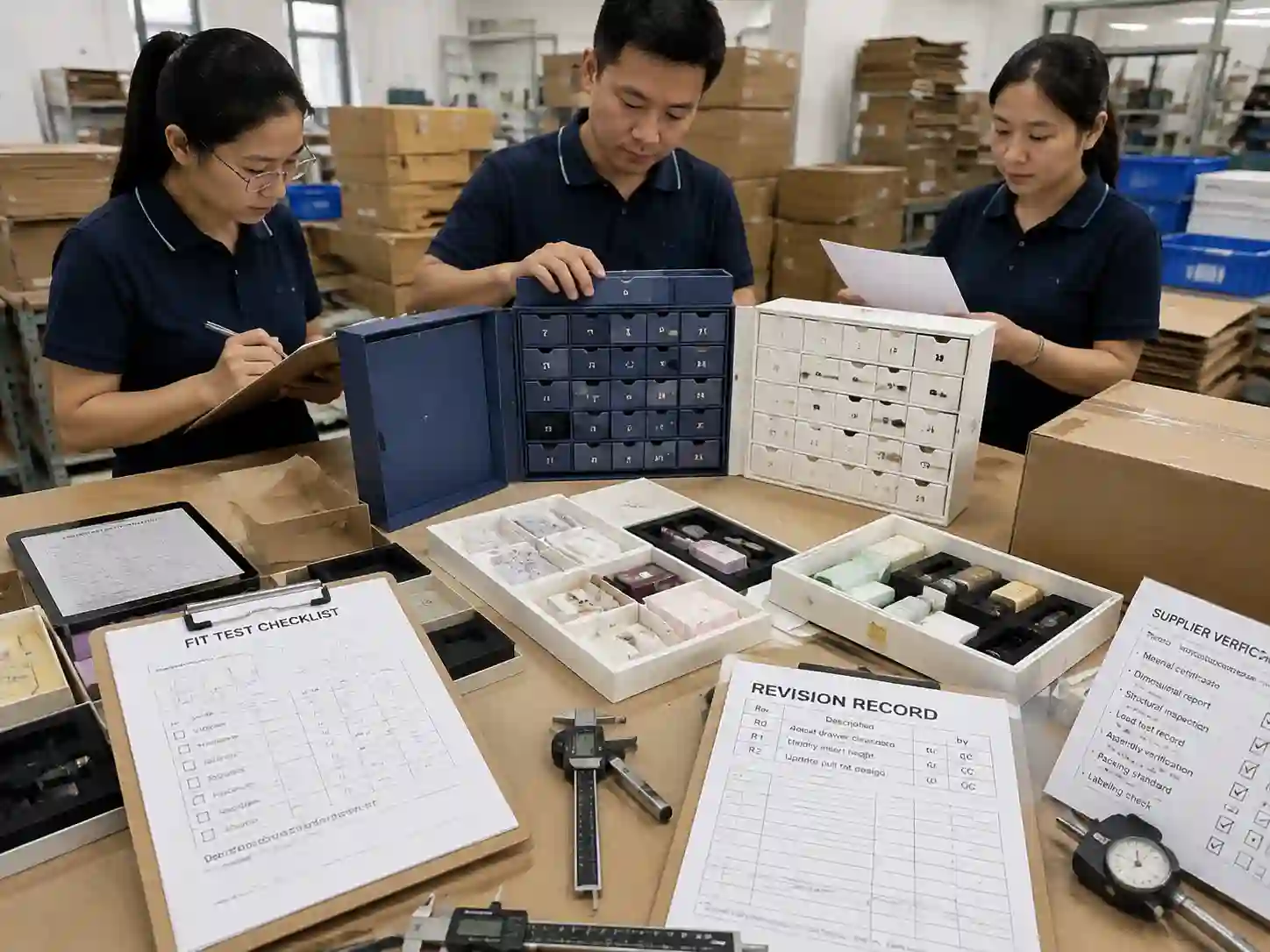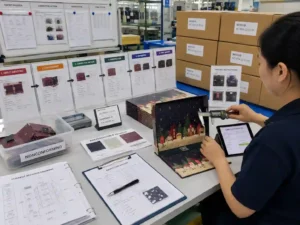
Quick answer: A first product fit test verifies whether the actual products can be placed, retained, accessed, and handled correctly inside the packaging structure before final approval. The trial should check product dimensions, compartment clearance, insert performance, weight distribution, opening sequence, and handling risks. Evidence from this stage should be recorded through measurements, photos, revision notes, and approval records so later production decisions are based on an agreed sample.
What is the purpose of a first product fit test?
The purpose of a first product fit test is to confirm that the packaging structure works with the real product before design freeze and mass production preparation. It is not only a visual check; it is a practical evaluation of how the product and package interact.
For custom advent calendar boxes, the trial helps teams verify whether compartments, drawers, doors, trays, or inserts match the intended product dimensions. A structure that looks correct in drawings may still require adjustment when loaded with actual items.
The trial sample may be used alongside structural drawings, sample revision records, and product dimension data. The goal is to identify problems early, when changes are easier to manage.
What product dimensions should be checked during the trial?
The first product fit test should confirm the product dimensions against the packaging design, including height, width, depth, shape variation, and any required clearance. Each compartment should be checked with the intended product or a representative sample.
- Product size compared with compartment dimensions
- Clearance for inserting and removing products
- Contact points that may cause scratches or damage
- Variation between product samples from different production batches
- Space needed for protective inserts or retention features
Measurements should be recorded rather than judged only by visual inspection. A simple measurement record helps purchasing, engineering, and quality teams understand why a revision is required.
Which loading and retention checks should be performed?
The first product fit test should include actual loading checks to confirm that products stay secure during handling but remain easy to remove. Retention should balance protection, usability, and manufacturing practicality.
| Trial Check | What to Verify | Evidence to Record |
|---|---|---|
| Product loading | Products fit into each designed position without forcing | Loaded sample photos and measurement notes |
| Retention performance | Products remain stable during normal movement | Handling observations and revision comments |
| Access sequence | Products can be removed without damaging packaging | User handling notes and sample feedback |
| Weight distribution | Heavy items do not affect structure balance | Loaded structure review record |
For mixed product assortments, the test should include the heaviest, largest, and most sensitive items because these usually create the highest structural risks.
How should opening and handling performance be tested?
The first product fit test should evaluate how the package behaves when opened, closed, carried, and handled repeatedly. Product fit is connected to the complete user interaction with the structure.
Important checks may include:
- Drawers opening smoothly without excessive resistance
- Doors or flaps closing correctly after loading
- Products remaining in position during movement
- Panels, hinges, and connection points maintaining shape
- Insert components staying correctly positioned
Project requirements vary depending on the product category, package structure, and expected handling conditions. A lightweight product assortment may require different checks from a calendar containing heavier or fragile products.
What records should be created after the first product fit test?
The test should create a clear record of findings, decisions, and required changes. This information becomes the reference for the next sample revision and final approval process.
| Record Item | Purpose |
|---|---|
| Sample identification | Shows which prototype version was tested |
| Product loading photos | Provides visual evidence of fit conditions |
| Measurement results | Confirms actual clearance and dimensions |
| Revision comments | Tracks structural changes needed before approval |
| Approval status | Shows whether the sample can proceed |
A revision record example may include: “Drawer clearance increased after product loading trial because the original compartment created excessive friction during removal.” Clear descriptions help prevent repeated adjustments in later sampling stages.
Which issues should be corrected before design freeze?
Problems affecting fit, function, or product protection should normally be resolved before design freeze. Continuing with an unverified structure can create production changes after tooling, artwork, or manufacturing preparation has progressed.
Common issues found during a first product fit test include:
- Compartments that are too tight or too loose
- Products shifting during movement
- Insufficient allowance for product variation
- Difficulty removing products without damaging the package
- Structural stress caused by product weight
The exact acceptance criteria depend on the project requirements and buyer approval process. Some projects may require additional loaded sample checks before approving the final reference sample.
What should buyers approve after the product-fit trial?
Buyer approval should confirm that the tested sample represents the required product fit condition. The approval decision should be based on documented evidence, not only appearance.
- Approved product dimensions and loading method
- Accepted structural revisions
- Confirmed sample version
- Recorded approval comments
- Reference sample status for future comparison
After approval, the accepted sample can become part of the project reference system before production preparation. For buyers developing custom seasonal packaging, working with an experienced custom advent calendar box service provider helps organize sampling, revision tracking, and approval communication.
FAQs About First Product Fit Testing
Is a first product fit test the same as a final production sample?
No. A first product fit test is an earlier validation stage focused on product compatibility and structure performance. A final production reference sample may include additional approvals for materials, printing, finishing, and manufacturing details.
Should real products be used during the fit trial?
Whenever possible, real products or accurate production-equivalent samples should be used because weight, shape, and surface conditions can affect packaging performance.
What happens if the product does not fit correctly?
The sample should be revised based on recorded findings. Typical actions include adjusting compartment dimensions, modifying inserts, changing clearances, or reviewing structural details before approval.
How can teams prepare for a successful first product fit test?
A successful trial requires accurate product information, a defined sample version, measurement records, and clear approval responsibilities. Preparing these items before testing reduces uncertainty and makes revision decisions faster.
Giftpackpro supports commercial packaging projects with structured sampling workflows for custom advent calendar box products, helping teams evaluate fit, structure, and sample approval requirements.
Need to review a packaging structure for your product range? Contact our team through the request a custom quote page to discuss your sampling requirements.