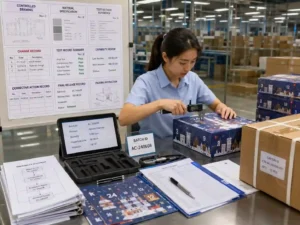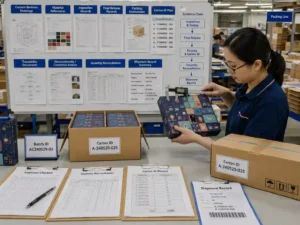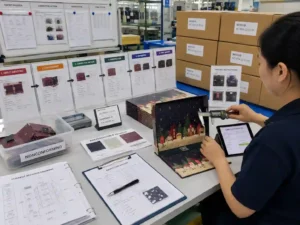
Quick answer: Set packaging inspection rework terms before production by defining what will be inspected, when inspections may occur, how defects are classified, what evidence controls acceptance, who pays for corrective work, and what must happen before shipment release. For custom advent calendar boxes, these terms should reference approved drawings, samples, specifications, inspection methods, and purchase-order requirements so that a defect or rework decision is based on documented criteria rather than opinion.
What should packaging inspection rework terms define before production?
They should define the inspection scope, acceptance references, defect categories, inspection timing, rework responsibilities, verification method, and shipment-release authority. These points should be agreed before materials are committed and mass production begins.
The purpose is not simply to give the buyer a right to inspect. The terms need to establish what happens when inspection finds a problem and what evidence determines whether corrected goods are acceptable.
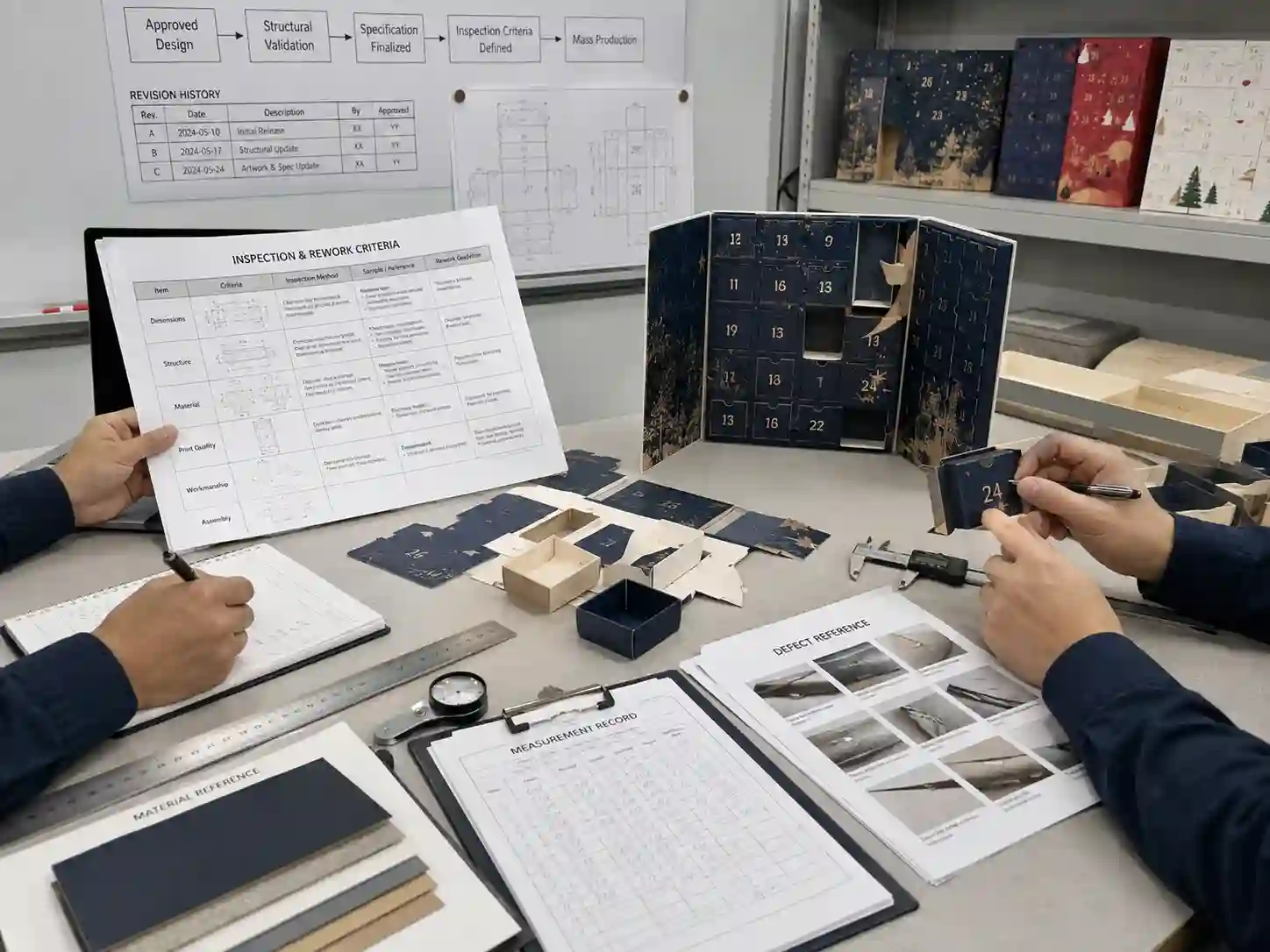
For an advent calendar order, controlled references may include the approved structural drawing, artwork revision, material specification, approved sample, product-fit requirements, workmanship criteria, packing instructions, and purchase order. The applicable references vary by project, so the PO or inspection agreement should identify the controlling revision rather than relying on informal messages.

Which acceptance references should control an inspection?
The inspection should be performed against documents and samples approved before production. A supplier should not have to interpret a vague instruction such as “quality must be good,” and a buyer should not have to accept production merely because it resembles an earlier prototype.
A practical document hierarchy can identify which evidence controls each characteristic:
| Inspection item | Useful controlling evidence | What the inspector verifies |
|---|---|---|
| Dimensions and structure | Approved drawing and dimensional specification | Overall dimensions, drawer or door geometry, alignment, fit and relevant tolerances |
| Materials | Approved material specification and reference sample | Specified board, paper, components and other identifiable construction requirements |
| Print and finishing | Approved artwork, finishing specification and approved reference where applicable | Correct artwork revision, placement, finishing presence and defined workmanship criteria |
| Function | Approved sample and documented functional requirements | Opening, closing, drawer movement, component retention or other specified functions |
| Packing | Approved packing instruction or PO requirement | Quantity, orientation, protection, identification and carton configuration |
Measurements should use an agreed method where the result can change acceptance. For example, the parties may need to specify measurement locations, instruments, sample condition, or reference points for dimensions that are difficult to reproduce consistently.
How should defects be classified before the first inspection?
Define defect categories using product-specific examples rather than relying only on labels such as critical, major, or minor. The classification should reflect the effect of the defect on safety requirements, function, appearance, assembly, packing, or the buyer’s approved specification.
Examples for paper advent calendar packaging might include an unusable opening mechanism, incorrect artwork revision, missing components, structural separation, unacceptable alignment, visible surface damage, or a dimensional condition that prevents the intended product from fitting.
The exact classification is project-dependent. A cosmetic variation that is acceptable on one design may be unacceptable on packaging with a highly visible premium finish. Buyer approval is therefore needed for the defect definitions and acceptance criteria that affect commercial acceptance.
Should an AQL level be written into every order?
Not automatically. If statistical sampling is used, the PO or inspection specification should identify the agreed sampling plan, lot definition, defect classifications, and acceptance criteria rather than mentioning “AQL inspection” without enough detail to reproduce the decision.
Some characteristics may also require a different control method. A buyer may specify broader sampling for workmanship while requiring particular functional, identification, or mixed-artwork checks to follow separate verification rules. The appropriate approach depends on product risk and the agreed quality plan.
When should the buyer be allowed to inspect production?
Inspection rights should identify the production stages at which verification may occur and whether the buyer can use its own personnel or an authorized third-party inspector. The terms should also require reasonable access to the goods, relevant records, and inspection area.
Possible checkpoints include first-article review, in-process inspection, pre-shipment inspection, or verification after corrective work. Not every order requires every stage.
The appropriate sequence depends on the risk. A new structure, difficult assembly, multiple artwork versions, or production involving approved subcontracted processes may justify earlier verification because discovering a systematic error only after completion can make correction more difficult.
Buyers evaluating a production source can also review the Giftpackpro packaging factory and discuss project-specific controls before placing an order.
How should rework responsibility be written into the purchase order?
The PO should state what the supplier must do when goods fail an agreed requirement: contain affected production, identify the scope, investigate the cause where appropriate, propose corrective action, complete authorized rework or replacement, and provide evidence for reinspection.
A useful rework clause should address:
- who must be notified when a nonconformity is discovered;
- whether affected goods must be segregated and identified;
- whether the supplier needs buyer approval before performing a proposed repair or deviation;
- how corrected goods are distinguished from unchecked goods;
- which records must document the corrective work;
- whether reinspection is required before shipment release; and
- how responsibility for agreed rework and reinspection costs is determined.
Cost responsibility should be written carefully. It should distinguish supplier-caused nonconformity from buyer-requested specification changes after approval. A production error against an approved drawing is different from rework caused because the buyer changes artwork, dimensions, or construction after production has started.
Can a factory repair defective packaging without buyer approval?
Only within the authority agreed for the project. Rework that can alter appearance, dimensions, function, durability, or compliance with the approved specification should normally have a defined approval route before the supplier changes the product.
This prevents an unacceptable situation in which one defect disappears but another is introduced. For example, additional adhesive might address a loose joint but create visible glue marks, deformation, or restricted movement elsewhere.
What evidence should the supplier provide after rework?
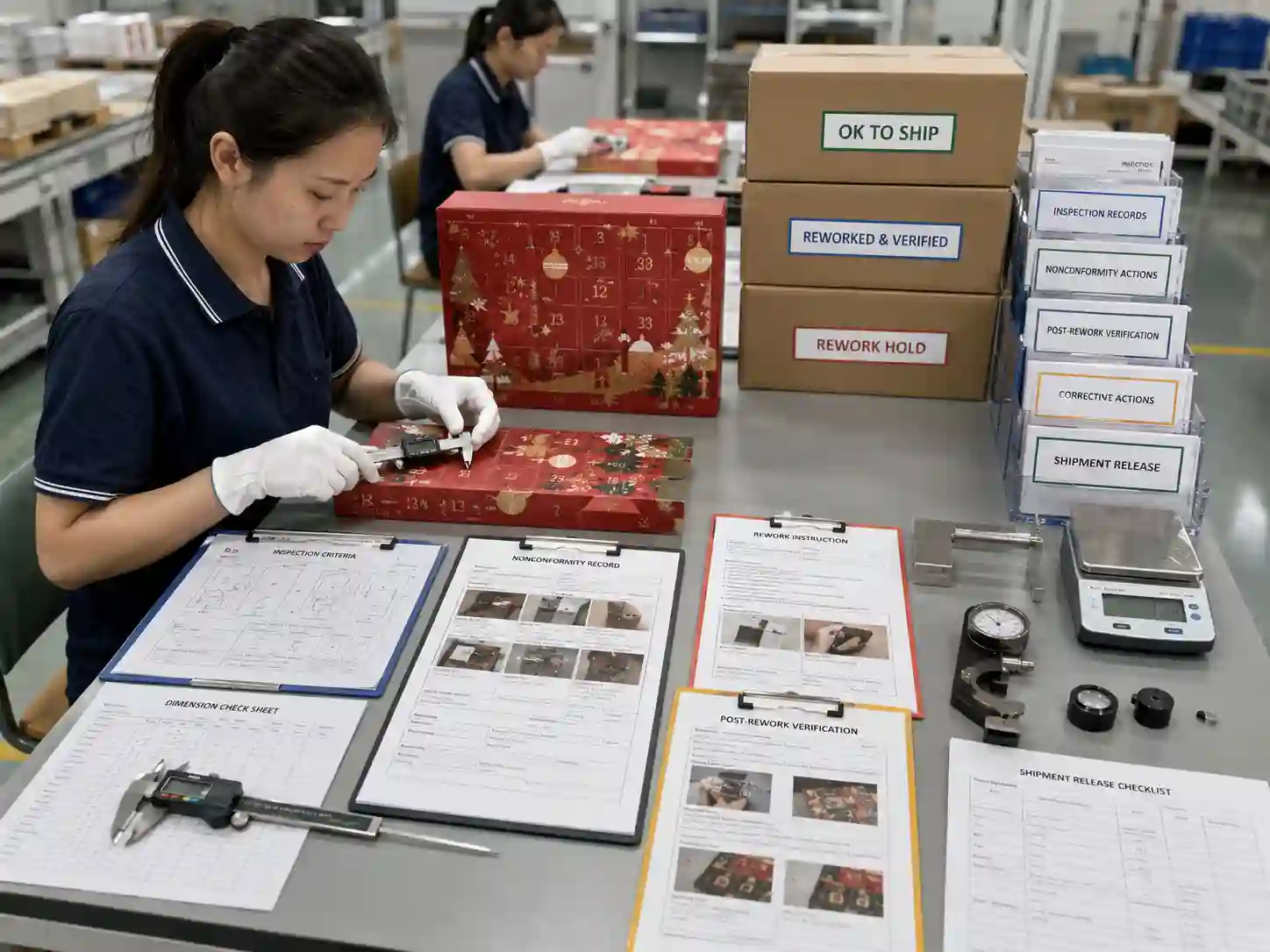
The evidence should demonstrate what was affected, what was done, and whether the corrected goods now meet the original approved requirement. Photographs alone may be insufficient when acceptance depends on dimensions, quantities, functionality, or lot identification.
| Supplier evidence | Verification purpose | Buyer check |
|---|---|---|
| Nonconformity record | Defines the observed problem and affected production | Does it match the inspection finding? |
| Segregation or quantity record | Identifies affected and unaffected units | Is the scope traceable? |
| Rework instruction | Explains the authorized correction method | Was the method approved where required? |
| Measurement or functional results | Shows corrected characteristics were checked | Were the agreed methods and criteria used? |
| Reinspection report | Provides post-rework acceptance evidence | Does the inspected lot meet the release criteria? |
For repeated or systemic defects, a corrective-action record can also document the suspected cause and the process change intended to prevent recurrence. The required depth should match the seriousness and recurrence of the issue.
What is the biggest sourcing risk if rework terms are vague?
The main risk is that both parties discover after production that they have different definitions of “acceptable” and “fixed.” That can turn a measurable quality issue into a commercial dispute just when shipment is approaching.
For example, suppose inspection finds that a group of drawers does not move within the agreed functional requirement. The factory manually adjusts the affected units and reports that production has been repaired. If the PO never defined reinspection, lot identification, or shipment-release authority, the buyer may have no evidence that every affected unit was contained or that the correction remained effective.
A stronger process records the affected quantity, approves the rework method when necessary, identifies corrected production, repeats the relevant functional check, and records the release decision.
What should buyers verify before authorizing production?
Before production authorization, confirm that the supplier and buyer are working from the same inspection criteria and that responsibility for a failed inspection is documented. This review is especially important before a deposit or other milestone triggers material commitment or mass production.
- Confirm the current approved drawing, artwork, specification, sample, and PO revisions.
- List measurable dimensions and functions that affect acceptance.
- Define workmanship defects with practical examples where subjective interpretation is possible.
- Document the sampling or verification method for relevant characteristics.
- Identify permitted inspection stages and access to records or goods.
- Define containment, segregation, rework, replacement, and reinspection responsibilities.
- State which deviations or repair methods require written buyer approval.
- Define the evidence required after corrective work.
- Identify who has authority to release goods for shipment.
- Keep approvals and inspection results traceable to the applicable production lot or order.
These checks can be incorporated into the purchasing documentation for custom advent calendar box services rather than being discussed only when a defect appears.
Should final payment be linked to inspection acceptance?
Payment milestones and inspection status can be linked when agreed commercially, but the exact arrangement is project-dependent. The important point is to define the relationship before production rather than attempting to introduce a new payment condition after a quality dispute occurs.
The PO should make clear which inspection or documentary evidence is required for the relevant milestone and who records acceptance. Inspection acceptance should also not be described more broadly than the agreed scope: passing a defined inspection does not prove characteristics that were never inspected or tested.
Who should approve deviations from the original specification?
The buyer should identify an authorized person or function for deviations that change an approved requirement. Factory production staff should not assume that an informal discussion automatically changes the PO, drawing, approved sample, or inspection criteria.
A deviation record should identify the affected requirement, proposed departure, quantity or lot, reason, and approval. If accepted, it should be clear whether the approval applies only to a specific lot or becomes a controlled specification revision for future production.
What should happen if reworked goods fail again?
The terms should require another documented disposition rather than automatic shipment. Depending on the defect and agreement, the next action may involve further controlled rework, replacement, sorting, rejection, or an explicitly approved deviation.
Repeated failure is also evidence that the original correction may not have addressed the underlying process. Buyers can therefore request additional corrective-action evidence or verification before authorizing release.
How detailed should inspection terms be for a repeat order?
Repeat orders can reuse established criteria only when the relevant specification, construction, materials, process, and approved references remain applicable. Previous acceptance should not silently replace current production controls.
If artwork, structure, material, production site, subcontracted process, or another controlled requirement changes, review whether the existing inspection plan still covers the new risk. Keep the resulting approval with the order records.
How do you finalize inspection and rework terms before production?
Finalize them by converting quality expectations into controlled acceptance criteria, inspection rights, documented rework procedures, evidence requirements, and named approval authority. The strongest terms are specific enough that a buyer, supplier, and independent inspector can reach the same decision from the same evidence.
Giftpackpro buyers can request a custom quote and discuss the drawings, samples, inspection requirements, and approval records appropriate to a specific advent calendar packaging project.