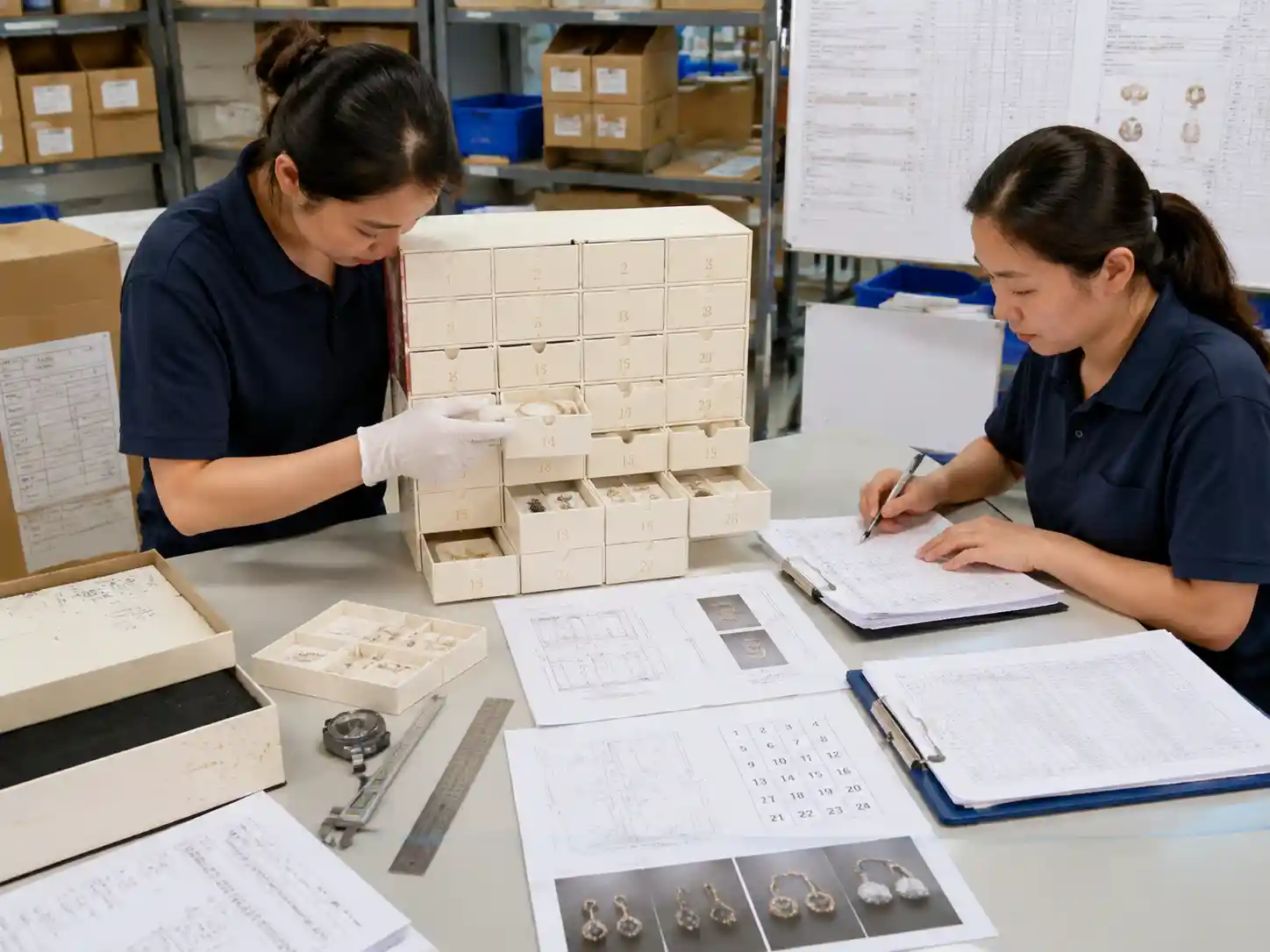
A jewelry advent calendar needs more than separate drawers or cavities to protect mixed accessories. A successful jewelry advent calendar insert design controls movement, prevents chain tangling, keeps small pieces separated, and provides the correct support for different shapes and weights. The solution is usually developed through product measurements, cavity drawings, sample loading checks, and approval records that confirm earrings, rings, and bracelets remain protected without excessive empty space or pressure.

How does a jewelry advent calendar insert design separate earrings, rings, and bracelets?
The insert should create dedicated spaces based on each jewelry category’s physical risks. Earrings need small secure areas that prevent pairs from separating, rings need stable positioning to avoid rolling or shifting, and bracelets require enough length control to prevent tangling.
Mixed jewelry calendars often fail when one universal cavity size is used for all products. Different item dimensions, clasp structures, chain lengths, and decorative parts require different retention methods.
| Jewelry type | Main packaging risk | Typical design consideration |
|---|---|---|
| Earrings | Small components can move, separate, or become difficult to retrieve | Use controlled cavities or holders that keep pairs together without excessive pressure on posts or decorative parts |
| Rings | Rolling, rattling, or surface contact during movement | Use fitted positions that limit movement while allowing easy removal |
| Bracelets | Chain tangling, clasp damage, and excess movement | Use length management features, separation points, and sufficient clearance |
What measurements are needed before designing jewelry calendar compartments?
Accurate product measurements should guide cavity design before samples are approved. Important inputs include jewelry length, width, thickness, weight, clasp size, hanging parts, and any protective packaging already applied to the product.
Packaging engineers typically review product drawings, dimension sheets, physical samples, and cavity layouts together. The purpose is to confirm that the compartment supports the jewelry without creating compression points or unnecessary movement.
- Overall product dimensions and irregular shapes
- Maximum thickness of decorative sections
- Chain or bracelet length requiring movement control
- Clearance needed for removal without scratching
- Relationship between product weight and insert support
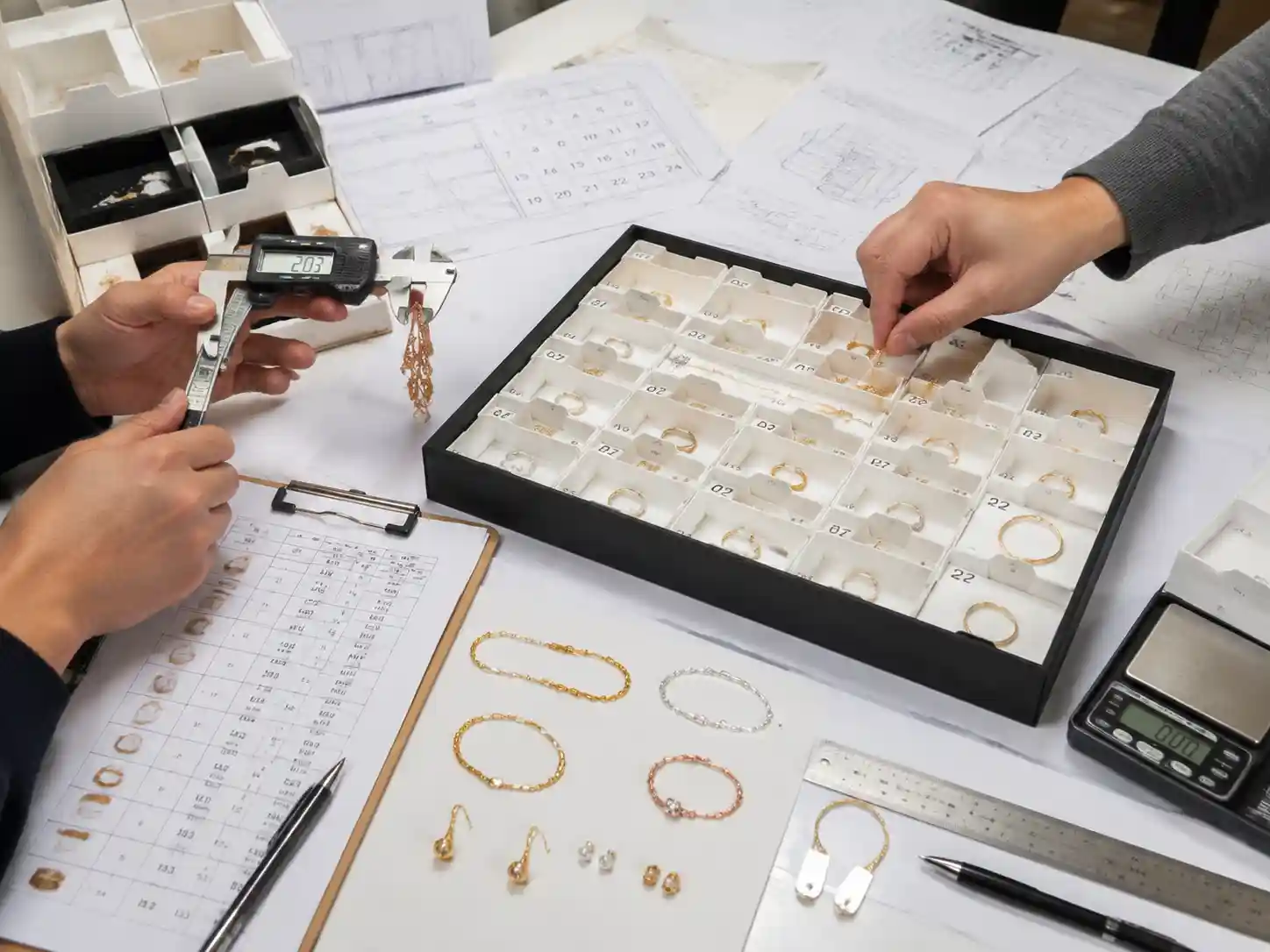
How do inserts prevent jewelry from tangling inside small drawers?
Tangling prevention depends on controlling how jewelry moves inside the compartment. The insert should limit free movement, especially for necklaces, bracelets, and chain-style accessories that can wrap around nearby items.
Common approaches include separating long chains from smaller pieces, adding individual product positions, controlling depth, and avoiding oversized cavities where items can shift during handling or transport.
Why is clearance important for jewelry protection?
Too little clearance can create pressure on delicate components, while too much clearance allows movement that increases scratches, tangling, and noise during shipping.
The correct balance varies by jewelry style, material, surface finish, and product weight. Verification usually requires loading real samples into prototype compartments rather than relying only on drawings.
How do you check whether the calendar structure protects mixed jewelry?
Protection should be verified through physical checks using approved samples and documented inspection points. A loaded calendar should be reviewed for product position, drawer operation, surface contact, and movement after handling.
| Check | Purpose | Evidence |
|---|---|---|
| Compartment fit check | Confirm each item sits correctly | Loaded samples, cavity drawings, measurement records |
| Movement check | Identify shifting or rattling risks | Inspection notes and handling observations |
| Surface protection check | Prevent scratches or contact damage | Sample approval records and visual inspection |
| Drawer operation check | Confirm products do not interfere with opening | Functional inspection checklist |
What packaging risks should buyers review for jewelry calendars?
Buyers should review several connected risks because jewelry products vary significantly in shape and sensitivity.
- Tangling: Long chains and bracelets need controlled placement to avoid wrapping around other items.
- Crushing: Insert depth and panel clearance should prevent pressure from closing structures.
- Scratching: Product contact points should be reviewed for finished surfaces and delicate coatings.
- Odor transfer: Paper packaging materials and storage conditions should be considered where jewelry is sensitive to surrounding odors.
- Weight distribution: Heavier pieces may require stronger local support to avoid insert deformation.
Which approvals help confirm the final jewelry calendar design?
Approval should be based on physical evidence rather than appearance alone. Useful records include approved samples, product-position maps, cavity layouts, inspection checklists, and supplier communication records showing agreed requirements.
The final decision depends on the jewelry assortment, insert material, calendar structure, and handling conditions. A design that works for lightweight earrings may not provide enough control for heavier bracelets or mixed metal accessories.
Can one insert design fit all jewelry collections?
Usually not. A reusable insert concept may work for similar product ranges, but mixed collections normally require adjustments based on product dimensions, weight, and movement risk.
Should jewelry remain loose inside advent calendar drawers?
Loose placement increases the chance of movement, tangling, and inconsistent presentation. Controlled positioning is generally preferred when multiple jewelry categories share one calendar.
Giftpackpro develops custom seasonal packaging solutions with attention to product fit, structural requirements, and verification steps. Explore our custom advent calendar box services or review custom advent calendar box products for packaging options suited to different specialty products. You can also request a custom quote for a project-specific packaging discussion.