Quick answer: Protecting atomizer tops in perfume sample calendars requires controlling movement, pressure, and contact points around the pump assembly. The packaging design should secure each vial upright, prevent caps or sprayers from rubbing against inserts, and maintain enough clearance for different bottle shapes. Engineers typically verify protection through dimensional drawings, loaded samples, fit checks, and production inspections before approving the final configuration.
Why does perfume atomizer top protection matter in sample calendars?
Perfume atomizer tops are vulnerable because the spray head, collar, and cap area often contain small components that can loosen, scratch, or become misaligned during handling. A calendar insert must protect the upper assembly without creating excessive pressure.
The main risks are different from simple bottle protection. A glass vial may survive contact while the atomizer can still suffer from:
- Cap movement or separation caused by repeated impact.
- Scratching around metallic or coated pump collars.
- Side pressure that affects sprayer alignment.
- Reduced label visibility when the vial rotates inside the cavity.
- Mixed-SKU fit problems when several vial sizes share one calendar.
How should packaging engineers design protection around atomizer tops?
The first step is defining the protected zone around the atomizer. The insert should support the vial body while avoiding direct force on the spray button, collar, or cap edge.
What design features help prevent atomizer damage?
Effective designs usually combine controlled cavity dimensions, stable orientation, and protective contact points. The exact structure depends on vial diameter, height, cap style, and whether the product uses a removable cap or integrated sprayer.
| Risk area | Packaging control | Verification method |
|---|---|---|
| Atomizer cap pressure | Maintain clearance above the top assembly | Loaded sample inspection and measurement records |
| Vial movement | Use fitted cavities and support areas around the bottle body | Movement check with approved samples |
| Surface scuffing | Control insert contact points and material selection | Visual inspection after handling simulation |
| Mixed bottle sizes | Match cavity geometry to each SKU or approved grouping | Dimension comparison against product drawings |
How do you test atomizer fit before production?
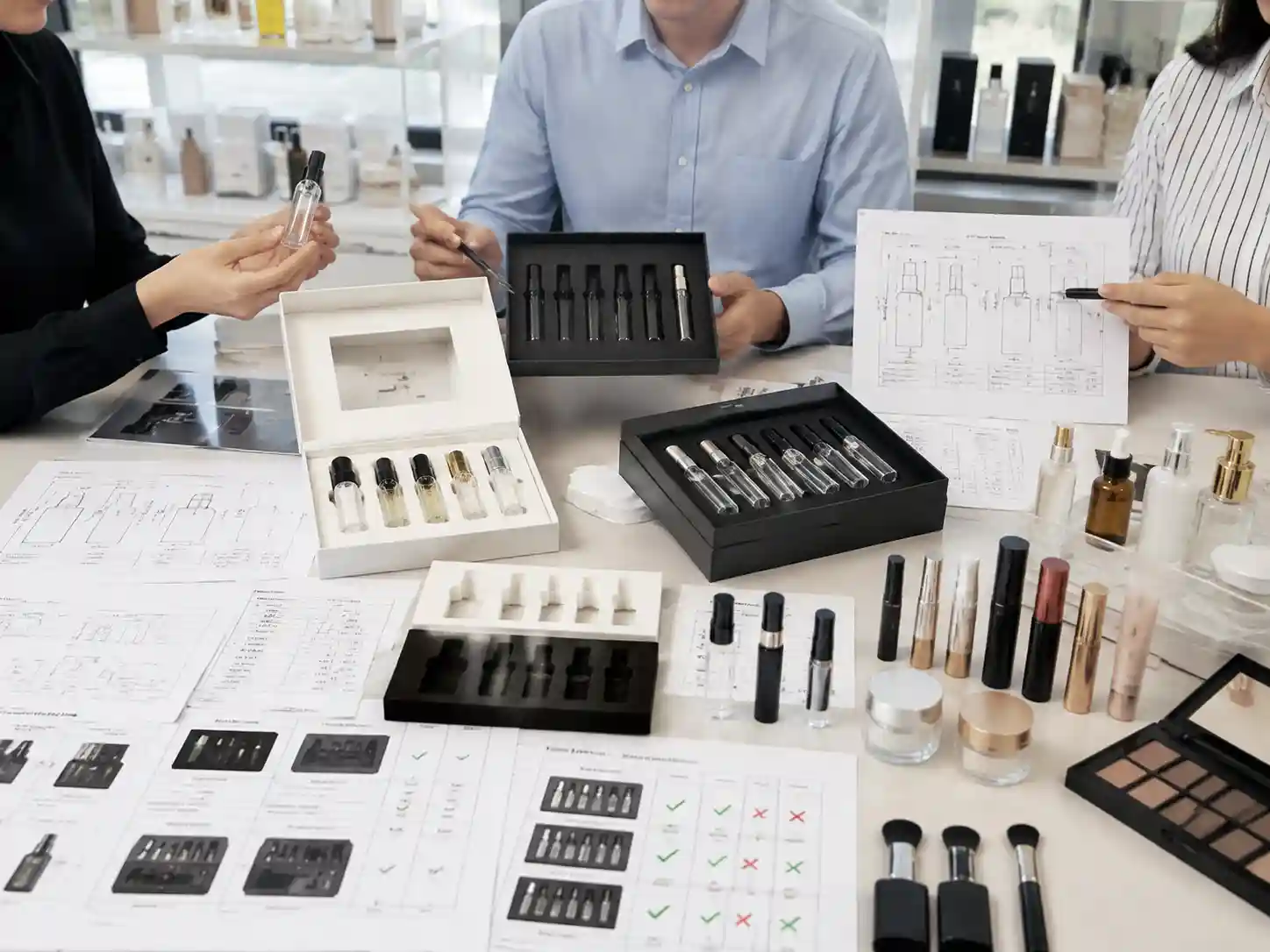
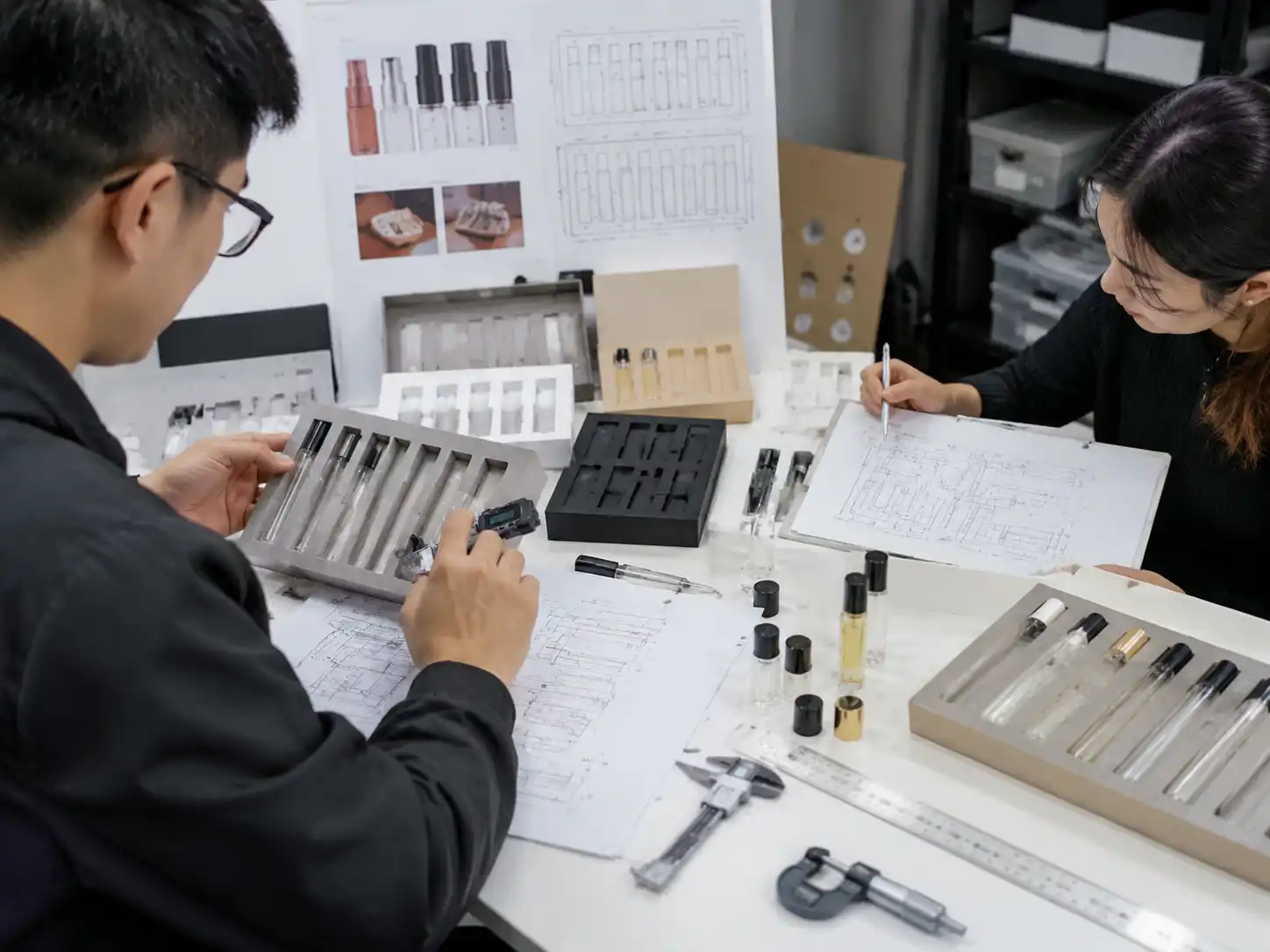
A reliable approval process uses physical samples rather than relying only on drawings. The goal is to confirm that the assembled calendar protects the real product configuration.
- Measure vial diameter, height, cap height, and atomizer clearance requirements.
- Load representative perfume samples into the intended insert cavities.
- Check that the bottle remains upright during handling and movement.
- Inspect the sprayer area for contact marks, compression, or interference.
- Confirm that labels remain visible and product orientation matches the approved layout.
Project-dependent factors include bottle tolerances, cap designs, insert materials, and whether the calendar contains one perfume format or multiple sample sizes.
What should buyers review before approving atomizer protection?
Buyers should review evidence that connects the packaging design with the actual perfume samples. Approval is stronger when the supplier provides clear records instead of only finished appearance photos.
- Approved structural drawings showing cavity dimensions and clearance zones.
- Loaded sample photos showing vial orientation and atomizer spacing.
- Measurement sheets confirming key product dimensions.
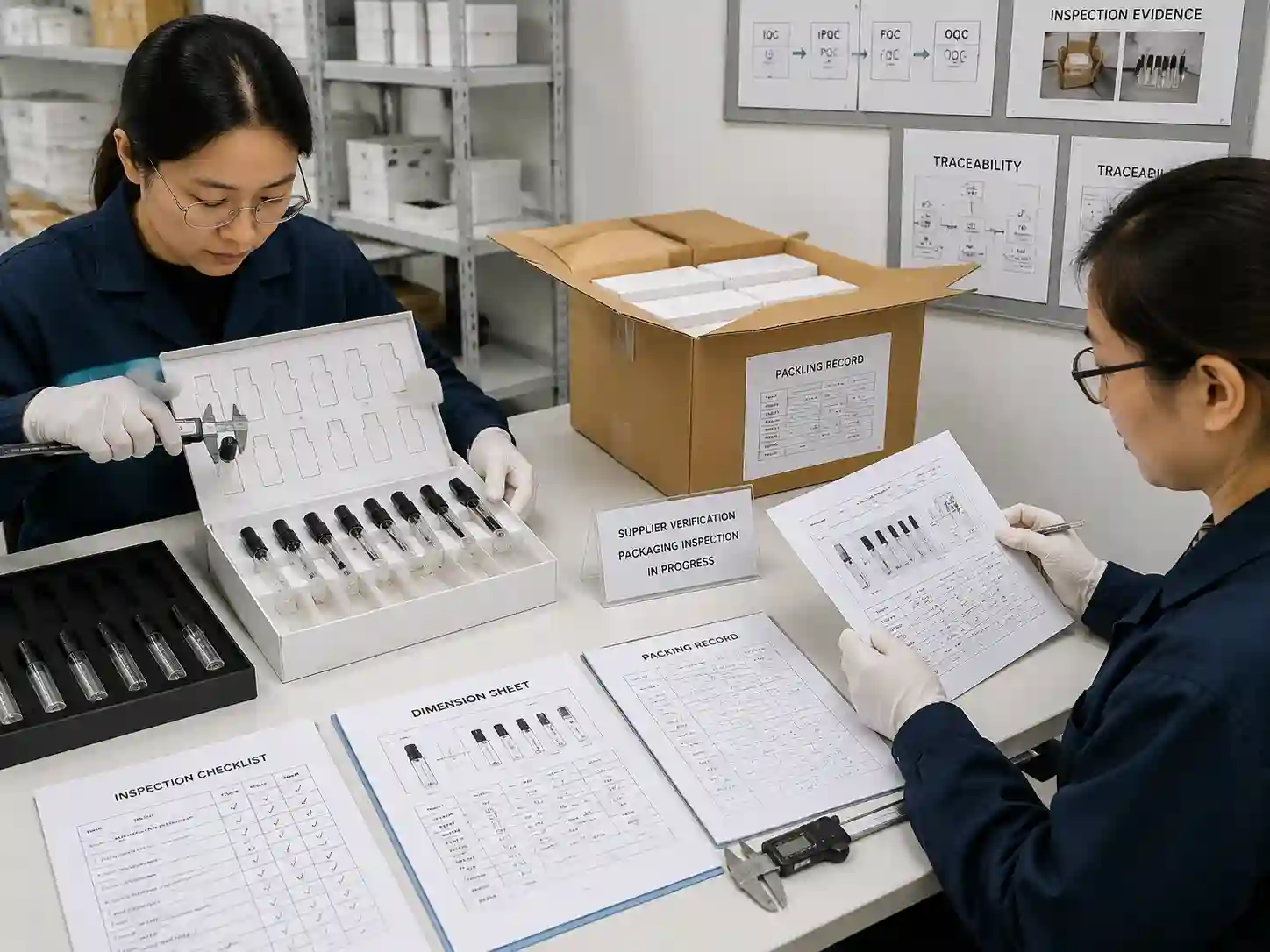
- Inspection records showing cavity fit, alignment, and surface condition checks.
- Approval records identifying the accepted product configuration.
How does mixed-SKU packaging affect atomizer protection?
Mixed-SKU perfume calendars require additional attention because different atomizer heights and bottle diameters can create inconsistent protection levels. A cavity that fits one vial may place another vial under unnecessary pressure.
For mixed collections, engineers should separate products by measurable characteristics rather than assuming similar appearance means similar fit. Important differences include:
- Bottle diameter and shoulder shape.
- Atomizer height above the vial body.
- Cap thickness and outer diameter.
- Label position and visible presentation requirements.
What QC checks confirm atomizer tops are protected during packing?
Quality checks should verify both the packaging condition and the loaded product position. A finished calendar can look correct externally while internal movement remains uncontrolled.
| QC check | Purpose |
|---|---|
| Atomizer clearance check | Confirm no insert or carton component presses against the spray area |
| Orientation check | Verify bottles remain positioned as approved |
| Visual surface inspection | Identify scratches, scuffing, or contact marks |
| Packing record review | Confirm the approved configuration was used |
What varies by perfume calendar project?
Some protection methods cannot be standardized across all perfume samples. The correct approach depends on product dimensions, insert structure, transport requirements, and presentation goals.
Verifiable facts include measured product dimensions, approved drawings, sample inspection results, and packing records. Project recommendations depend on the specific vial design and should be confirmed through physical evaluation before bulk production.
FAQ: Can one insert design protect different perfume atomizer sizes?
Sometimes, but only when the size range and support method are carefully evaluated. Large differences in vial diameter or atomizer height usually require separate cavities or controlled design adjustments.
FAQ: Should the atomizer top touch the insert for extra stability?
Generally, the atomizer area should not carry unnecessary load. Stability should come mainly from supporting the vial body while maintaining clearance around sensitive pump components.
FAQ: How can buyers verify the supplier followed the approved atomizer design?
Buyers can compare production samples, inspection records, approved drawings, and packing evidence. These records help confirm that the final calendar matches the accepted configuration.
Giftpackpro helps commercial teams develop custom packaging solutions for beauty and fragrance products. Explore our custom advent calendar box services or request a custom quote for project-specific packaging discussions.