
Material substitutions can change a box’s structural performance, surface appearance, and production reliability even when the replacement material looks similar. For custom advent calendar boxes and paper gift packaging, buyers should evaluate board construction, paper behavior, moisture response, scuff resistance, and recyclability evidence before approving a material change. The impact depends on the replacement board grade, thickness, coating, supplier consistency, and how the packaging structure uses the material.
How does material substitution affect box strength?
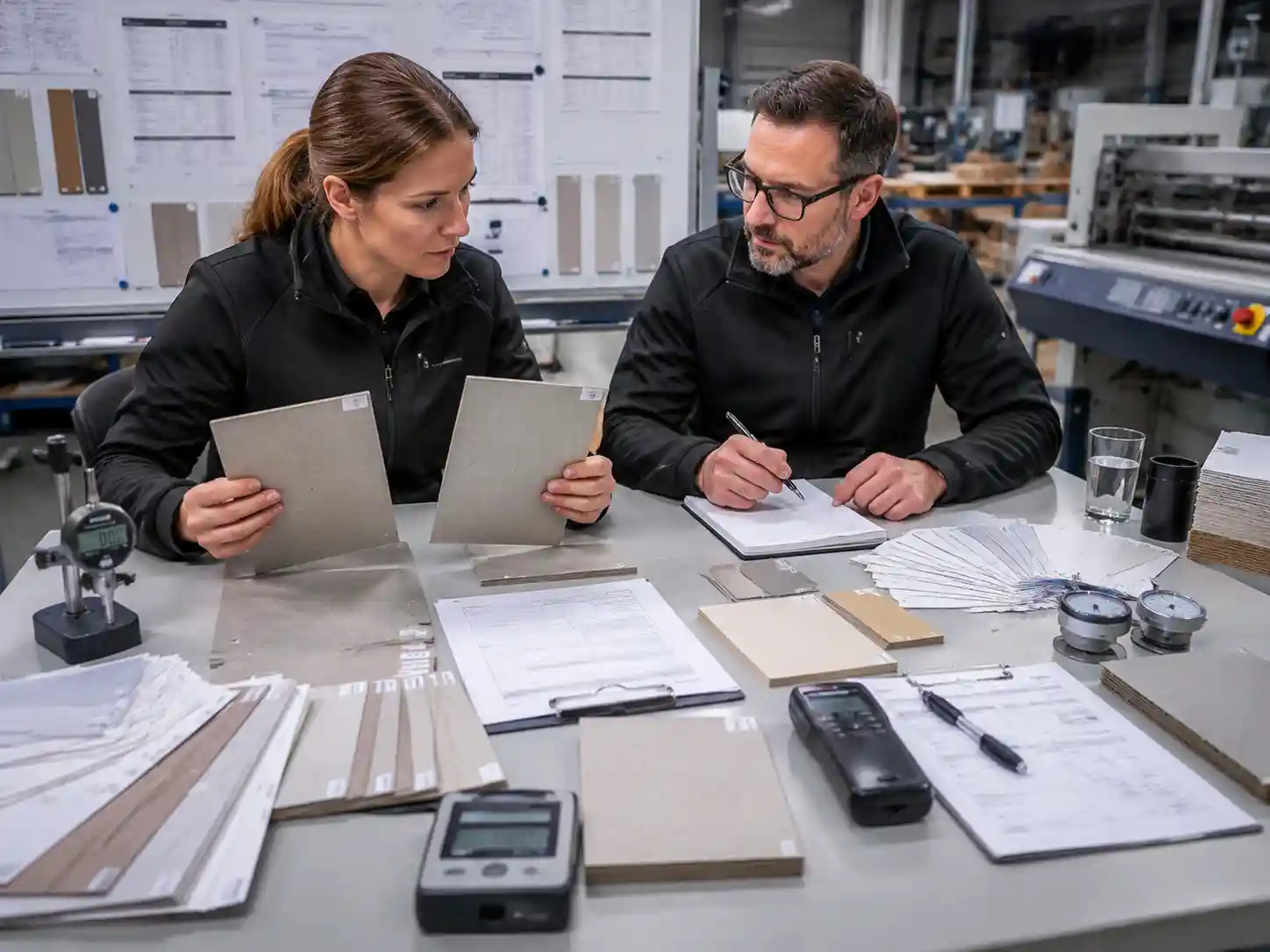
Material substitution affects box strength because different boards can have different stiffness, compression resistance, folding behavior, and moisture response. A replacement paperboard or greyboard may appear equivalent but perform differently during forming, assembly, storage, and handling.
Packaging engineers typically review the material change by comparing the original specification with the proposed substitute. Important factors include board thickness, fibre composition, density, grain direction, surface treatment, and structural load requirements.
Which material properties should be checked before approval?
| Material factor | Possible impact on packaging | Typical verification method |
|---|---|---|
| Board thickness and density | Changes panel stiffness, support strength, and folding behavior | Thickness measurement and supplier material data review |
| Fibre structure and grain direction | Affects bending, cracking risk, and crease quality | Grain direction checks and folding evaluation |
| Moisture response | Can influence warping, dimensional stability, and adhesive performance | Moisture readings and environmental condition review |
| Surface finish and coating | May change print appearance, scuff resistance, and tactile feel | Surface inspection and appearance comparison |
How can a material change alter box appearance?
A material substitution can affect appearance through changes in surface texture, colour consistency, print absorption, edge quality, and finishing performance. Even when the structural result is acceptable, the final packaging may look different if the paper surface reacts differently during printing or finishing.
For premium paper gift packaging, appearance checks should include visual comparison under consistent lighting conditions. Buyers should review whether the substituted material changes:
- Surface smoothness and tactile impression.
- Colour reproduction and ink absorption.
- Foil, coating, or decorative finishing behaviour.
- Edge sharpness after cutting and folding.
- Resistance to scratches, scuffs, and handling marks.
What checks should buyers complete before accepting a substitute material?
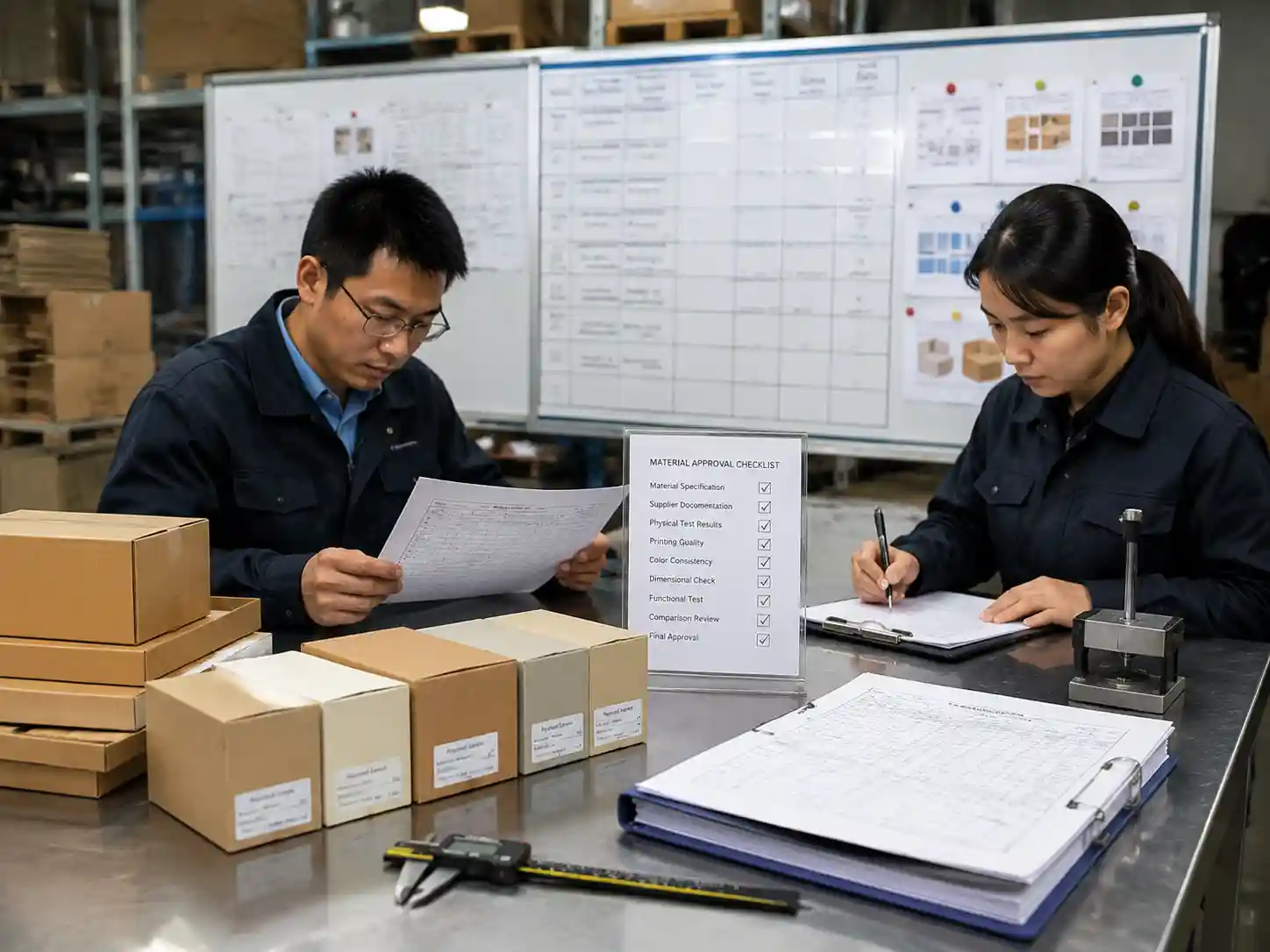
Buyers should confirm the material change through documented comparison rather than relying only on visual similarity. A structured approval process reduces the risk of unexpected performance changes during production.
- Review supplier material information: Compare the original and replacement material specifications, including board type, thickness, surface treatment, and sustainability documentation where applicable.
- Check physical samples: Evaluate folded structures, cut edges, surface quality, and handling performance using the intended packaging design.
- Measure critical properties: Record dimensions, board thickness, and other project-relevant measurements before approval.
- Document approval decisions: Maintain comparison records showing why the substitute material was accepted or rejected.
Why does humidity matter when changing packaging materials?
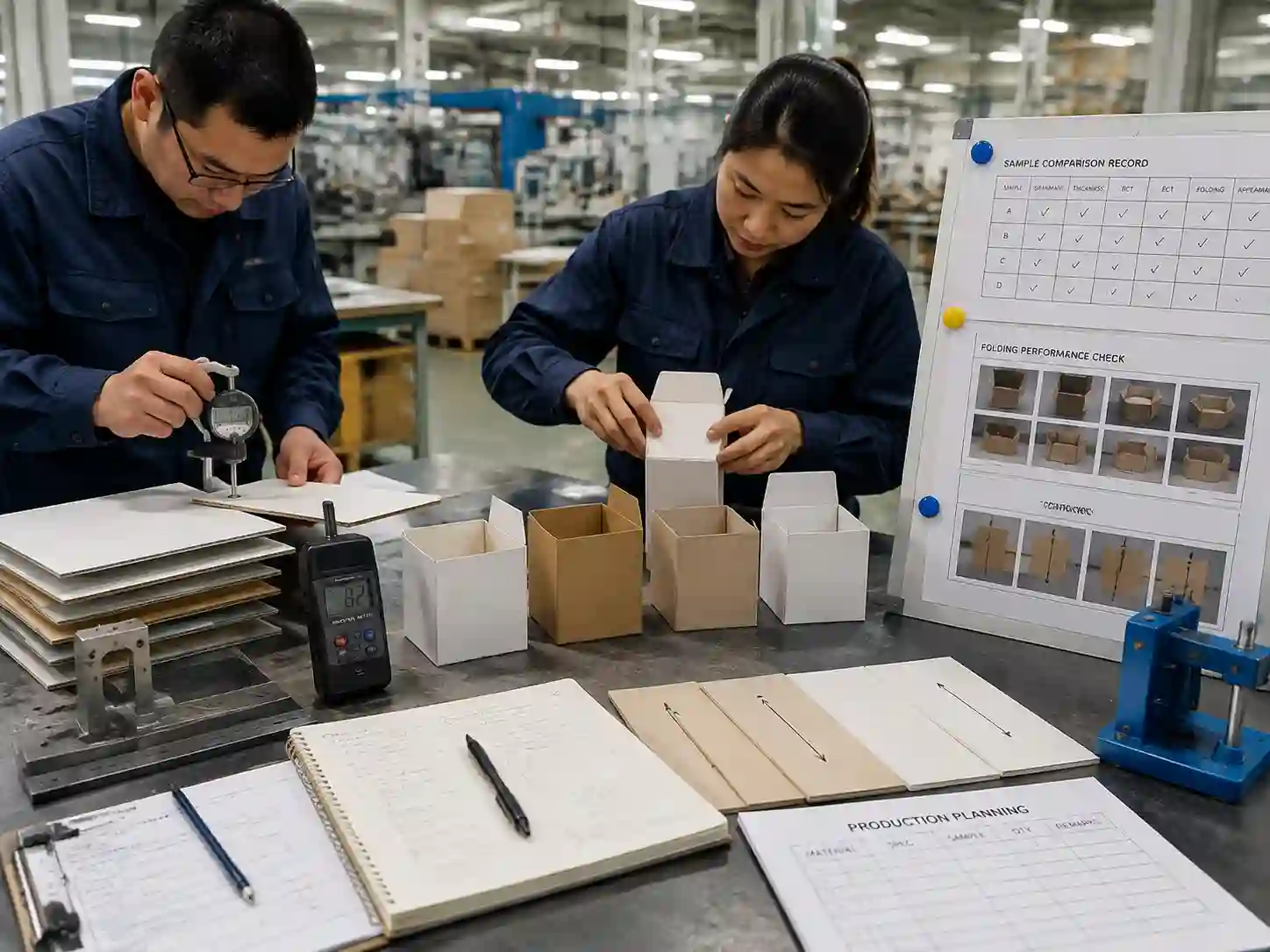
Humidity can influence paper-based packaging because paper fibres absorb and release moisture. A substitute material with different moisture behaviour may experience different levels of expansion, contraction, curling, or stiffness changes.
This is especially important for packaging that includes large panels, fitted structures, drawers, doors, or tightly controlled clearances. The same design may behave differently if the replacement board responds differently to storage or production conditions.
How should recyclability evidence be considered during material substitution?
Recyclability considerations should be reviewed as part of the material approval process, not treated as a visual feature. A replacement material may require updated supplier documentation or confirmation of its composition and finishing layers.
Useful evidence can include:
- Material specifications from the supplier.
- Composition information for paperboard layers and coatings.
- Documentation describing recycled or certified material content when applicable.
- Records showing approval of the final material choice.
Specific recyclability outcomes can vary depending on the complete packaging construction, adhesives, coatings, and local recycling requirements.
What risks can occur if a material substitution is not evaluated?
Unverified material changes can create production and quality risks because packaging performance depends on the interaction between material and structure.
| Risk area | Potential issue | Recommended evidence |
|---|---|---|
| Structural performance | Panels may become weaker, softer, or harder to fold | Sample evaluation and structural inspection records |
| Appearance | Surface finish or print result may differ | Approved comparison samples and visual inspection notes |
| Production consistency | Material variation may affect manufacturing stability | Supplier documents and incoming material checks |
| Sustainability claims | Previous material evidence may no longer apply | Updated material information and approval records |
How does a material substitution decision vary by project?
The acceptable level of material change depends on the packaging structure, product weight, finishing requirements, shipping conditions, and appearance expectations. A substitute board suitable for a simple sleeve may not perform the same way in a complex advent calendar structure with multiple folds or moving parts.
Project teams should define which properties are critical before approval. Structural engineers may focus on stiffness and folding performance, while designers may prioritise surface appearance, and sustainability teams may focus on material evidence.
What evidence should be kept after approving a material change?
Approval records should show the reasoning behind the decision and provide traceability for future production checks.
- Original and substituted material descriptions.
- Supplier documentation and specification records.
- Sample comparison notes.
- Measurement results and inspection records.
- Final approval confirmation from responsible teams.
Frequently asked questions
Can a thicker board always improve box strength?
No. Strength depends on the complete structure, fibre direction, material density, folding design, and how loads are distributed. Thickness alone does not determine final performance.
Does a similar-looking paperboard guarantee the same appearance?
No. Surface texture, coating, absorbency, and fibre characteristics can change how printing and finishing appear.
Should every material substitution require a new sample?
The need depends on the level of change and the sensitivity of the packaging design. Significant changes affecting structure, appearance, or performance should be evaluated through appropriate sample checks.
How can buyers manage material substitution decisions?
A controlled material approval process helps buyers balance cost, availability, sustainability requirements, and packaging performance. Giftpackpro supports commercial packaging projects through structured material review, sample evaluation, and production communication. Explore our custom advent calendar box services, review available custom advent calendar box products, or request a custom quote for project-specific packaging requirements.


