
Products stay upright during parcel shipping when the insert system controls movement in multiple directions without making removal difficult. The design process normally combines accurate product measurements, cavity geometry, retention points, support height, and loaded transit checks. For custom advent calendar boxes and premium paper packaging, upright product shipping retention depends on balancing stability, accessibility, and protection throughout handling.
Why is upright product shipping retention important for insert design?
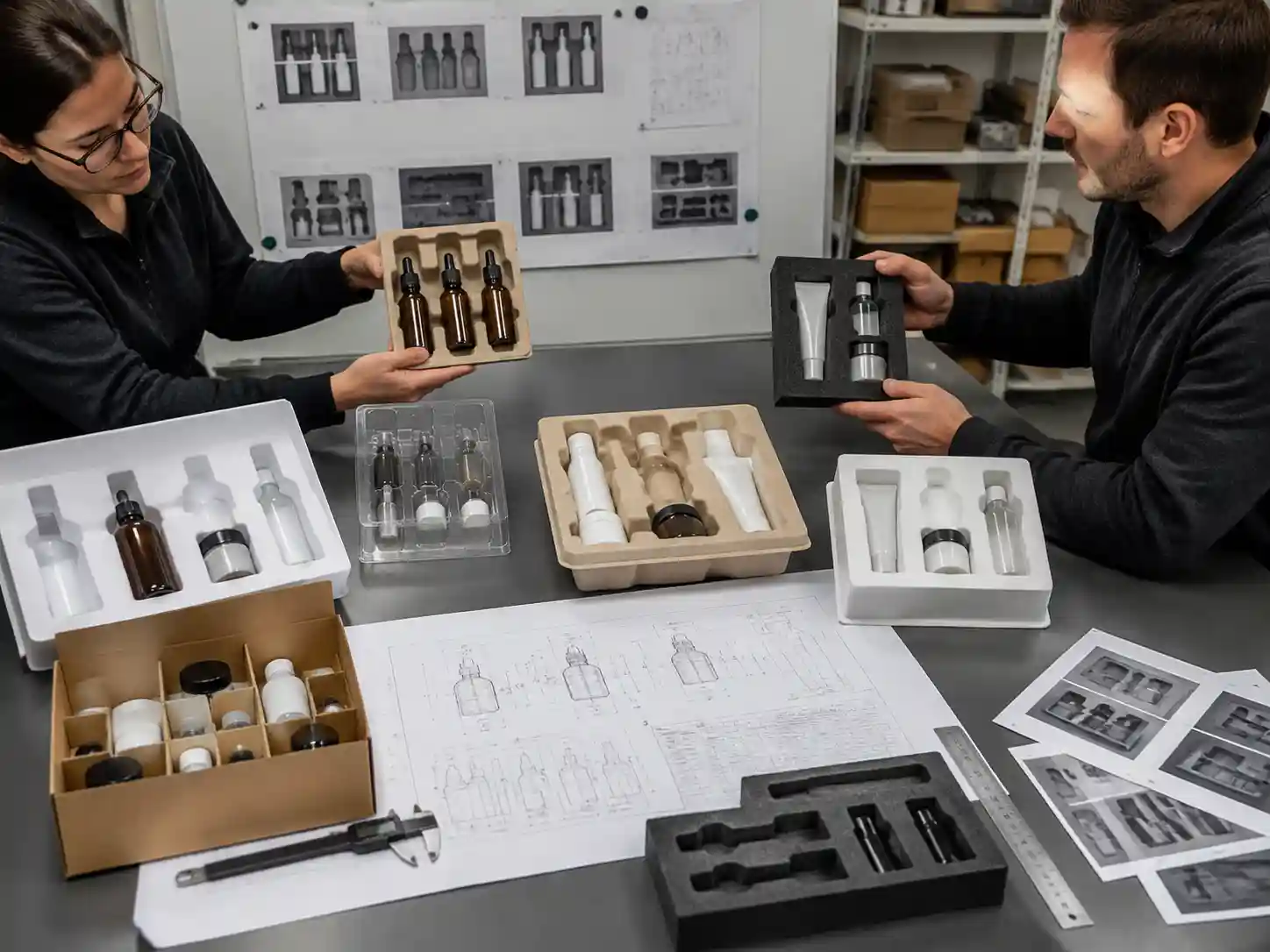
Upright product shipping retention prevents products from leaning, rotating, or shifting when cartons experience vibration, impact, or changes in orientation during parcel delivery. The insert must control the product’s center of gravity while avoiding excessive pressure on sensitive surfaces.
Common risks include tall bottles tipping inside cavities, tubes sliding sideways, caps contacting neighboring products, and mixed-size items moving after repeated handling. These issues are usually identified during structural review before bulk production.
How does cavity geometry keep products vertical during shipping?
Cavity geometry keeps products upright by matching the support points of each item rather than relying only on friction. The cavity depth, side walls, base support, and opening clearance work together to maintain product orientation.
What cavity features improve vertical stability?
- Base support: A stable bottom area prevents rocking and reduces concentrated pressure.
- Side restraint: Controlled contact points limit sideways movement while allowing easy removal.
- Upper guidance: Taller products may need additional support near the shoulder, neck, or upper body.
- Clearance control: Correct spacing prevents both excessive movement and difficult extraction.
For example, a glass vial, cosmetic tube, or small jar may require different retention points because the weight distribution and contact surface are different. The final structure varies according to product shape, material strength, and shipping conditions.
Which retention methods are used to keep products upright in parcel shipping?
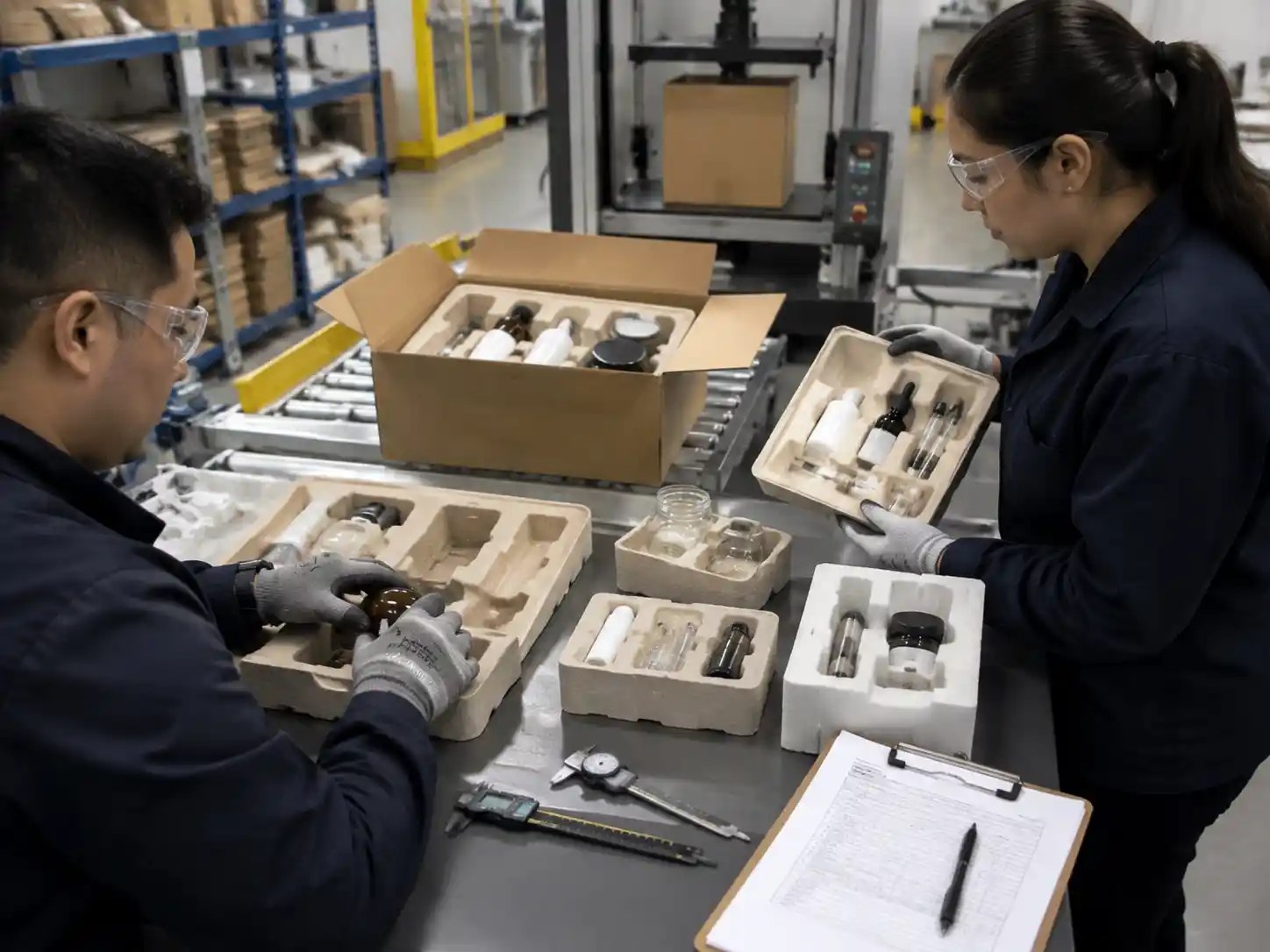
Different insert materials use different methods to stabilize products. The correct choice depends on product weight, surface sensitivity, cavity layout, and required presentation quality.
| Retention method | How it works | Suitable applications |
|---|---|---|
| Paperboard locking features | Uses folded tabs, partitions, or shaped supports to limit movement. | Lightweight bottles, cartons, samples, and mixed compartments. |
| PET tray cavities | Uses formed pockets to position products with consistent geometry. | Products requiring clear visibility and precise placement. |
| EVA or foam supports | Uses controlled compression and cushioning contact points. | Fragile, heavier, or premium products requiring soft contact. |
| Molded pulp cavities | Uses shaped fiber structures for support and separation. | Products needing sustainable material options and dimensional control. |
How do you test whether an insert keeps products upright?
Insert performance should be verified with physical samples rather than relying only on drawings. A fit test checks whether the product remains positioned correctly while still allowing normal removal.
What steps are included in an upright retention fit test?
- Confirm the product dimensions, weight, and orientation requirements.
- Load actual or representative products into the insert sample.
- Check vertical alignment, cavity contact points, and removal access.
- Inspect movement after manual handling or simulated shipping conditions.
- Record adjustments needed for cavity size, support areas, or material selection.
Evidence from this stage may include cavity drawings, measurement sheets, prototype samples, fit-test notes, and approved reference samples. These records help suppliers and buyers confirm that the final insert matches the approved design direction.
What should buyers check before approving upright shipping performance?
Buyers should review both the insert structure and the validation evidence before approving production. A visually attractive insert is not enough if products can shift during transport.
- Product dimensions match the cavity design.
- Orientation requirements are clearly defined.
- Retention points do not damage labels, coatings, or sensitive surfaces.
- Products can be removed without excessive force.
- Approved samples represent the intended production standard.
The inspection method depends on the product category. Heavy glass containers, irregular shapes, and mixed product sets usually require more detailed checks than lightweight uniform items.
How can QC teams verify upright product retention before shipment?
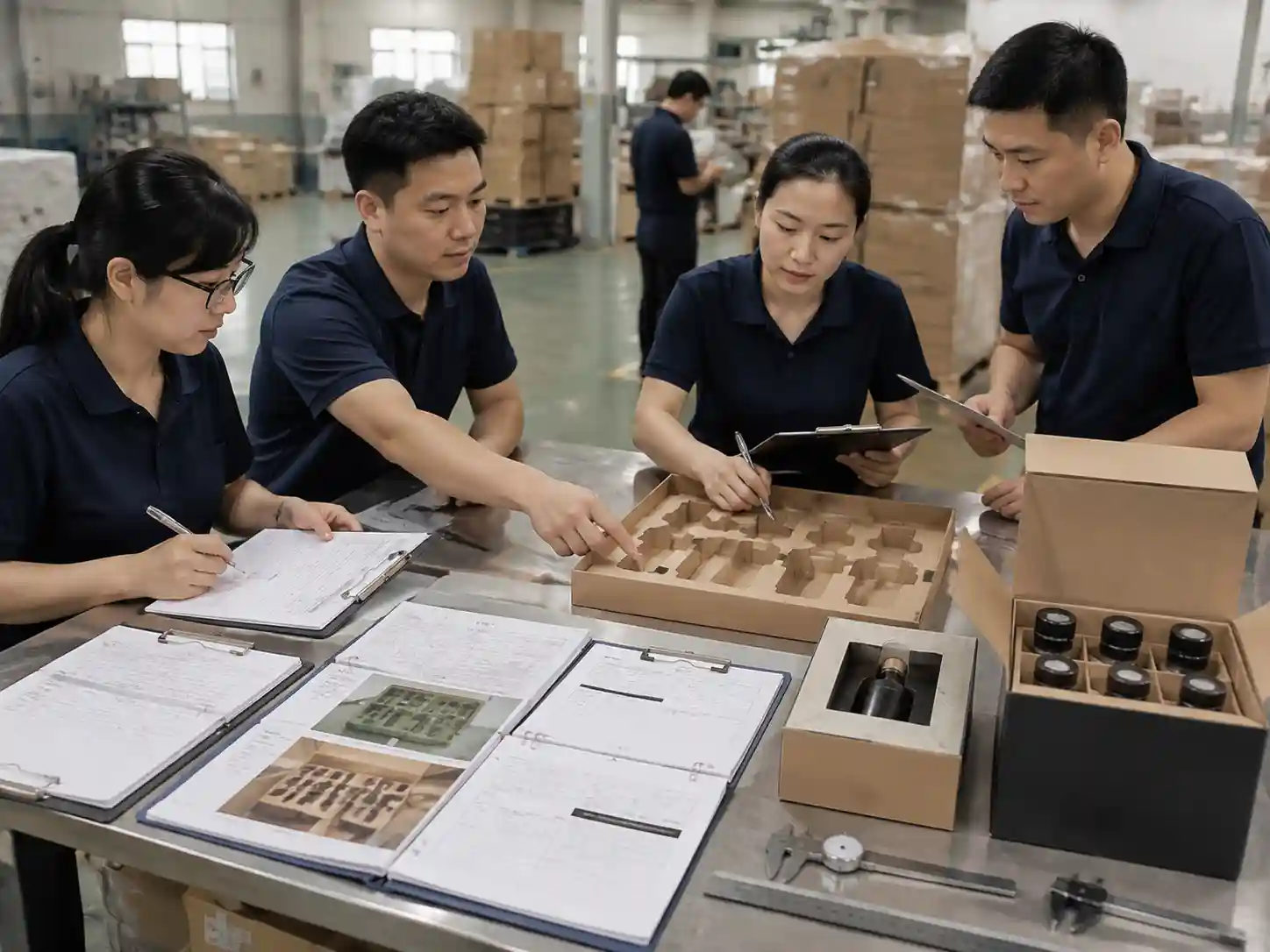
QC teams verify retention by comparing production samples against approved drawings, measurement records, and reference samples. The focus is consistency between the approved insert design and the finished packaging.
What documents support retention verification?
- Approved cavity drawings and structural specifications.
- Product measurement records.
- Fit-test reports and sample approval notes.
- Inspection records showing dimensional checks.
- Packing verification records for finished cartons.
These records provide traceability when investigating movement issues or production changes. They also help buyers communicate technical requirements clearly with packaging suppliers.
What factors change the required retention design?
The required retention approach changes according to product weight, shape, fragility, material selection, and shipping environment. There is no single cavity design that works for every product type.
- Tall narrow products usually need stronger upper guidance.
- Heavy products require stronger base support.
- Fragile surfaces may require softer contact materials.
- Mixed-size advent calendars require individual cavity analysis.
Giftpackpro develops custom packaging structures based on product requirements, insert selection, and packaging performance needs. Buyers can explore related custom advent calendar box products or review custom advent calendar box services when planning a project.
FAQs About Upright Product Shipping Retention
Can a tighter cavity always improve upright stability?
No. An overly tight cavity may make removal difficult or create unwanted pressure on the product. Stability requires controlled support rather than maximum compression.
Do all products need foam or EVA inserts to stay upright?
No. Lightweight products may perform well with engineered paperboard or molded pulp structures. Material selection depends on product requirements and protection needs.
Why are physical samples needed if CAD drawings are approved?
Drawings confirm dimensions, but physical samples verify real product interaction, removal access, and practical retention performance.
For packaging projects requiring tested product positioning and stable parcel performance, request a custom quote to discuss your insert requirements with Giftpackpro.


