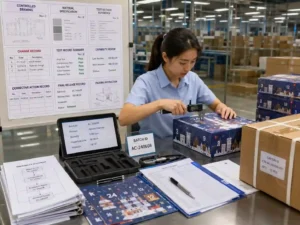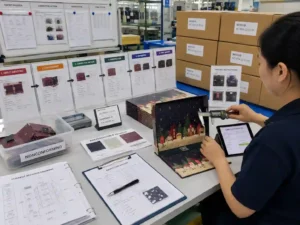
Pre countdown retail display design focuses on making an advent calendar ready for store presentation before customers begin opening compartments. The process combines shelf dimensions, display visibility, packaging structure, case packing, labeling, and fulfillment checks. Buyers should validate the calendar format with retail requirements, engineering drawings, physical samples, and approval records before production quantities are finalized.

What should be decided first in pre countdown retail display design?
The first step is defining how the calendar will appear on the shelf before the countdown period begins. The display format should match available shelf space, retailer handling requirements, and the way customers will view the product from the front and side.
Important early decisions include:
- Overall calendar footprint and shelf-facing dimensions.
- Whether the product is displayed standing, hanging, stacked, or placed in a tray.
- How front graphics, opening areas, and product visibility work before use begins.
- How many units fit in a retail case pack without damaging the presentation surface.
How do you check shelf dimensions before approving the calendar structure?
Shelf compatibility should be verified using actual dimensional information rather than estimated appearance. Packaging teams normally compare product drawings, sample measurements, and retailer requirements before approving the final structure.
| Check area | Verification method | Risk if ignored |
|---|---|---|
| Front width and height | Measure approved sample against shelf plan | Product may not fit the intended display position |
| Depth | Compare calendar thickness with fixture space | Products may sit incorrectly or block neighboring items |
| Display stability | Review base, support structure, and loaded sample | Calendar may lean or collapse during handling |
| Case pack quantity | Confirm carton layout and unit orientation | Retail replenishment may become inefficient |
How do packaging teams design the calendar for store handling before the countdown?
The calendar structure should support retail handling before opening begins. Engineering teams typically review the outer shell, doors, drawers, or compartments to ensure the display appearance remains consistent during storage and movement.
Project checks may include:
- Structural drawings showing final dimensions and opening areas.
- Physical samples reviewed in retail display orientation.
- Measurement records for width, height, depth, and clearance.
- Approval notes confirming the selected display configuration.

How do case packs and labels affect store display readiness?
Case packing decisions influence how quickly products can move from warehouse receiving to retail shelves. The outer carton should protect the calendar while keeping identification and handling information clear.
Teams should review:
- Carton dimensions compared with storage and transport limitations.
- Barcode and label placement for receiving processes.
- Unit orientation inside the carton to prevent display damage.
- Unpacking steps required by store staff.
What evidence should buyers request before approving a retail display calendar?
Buyers can reduce launch risks by requesting documented verification rather than relying only on appearance. Useful evidence includes drawings, sample photos, measurement records, inspection sheets, and supplier approval documents.
Verification records should show:
- The approved display orientation.
- Confirmed dimensions from physical samples.
- Packaging condition after handling checks.
- Alignment between approved samples and production instructions.
How do retail and fulfillment requirements change the design approach?
Retail display design must balance shelf presentation with fulfillment efficiency. A visually strong calendar may still require adjustment if it creates excessive carton volume, poor packing efficiency, or increased damage risk.
| Scenario | Design consideration |
|---|---|
| Limited shelf depth | Reduce unnecessary projection while maintaining visual impact |
| Large seasonal shipments | Review carton efficiency and handling requirements |
| E-commerce fulfillment | Consider parcel limits and protection needs |
| Retail replenishment | Make case opening and product identification simple |
What should be included in a pre-launch display approval checklist?
A practical approval checklist helps buyers, packaging engineers, and suppliers confirm that the calendar is ready for retail placement.
- Confirm approved calendar dimensions.
- Verify shelf orientation and display stability.
- Check case pack layout and carton identification.
- Review product handling risks during delivery.
- Compare production specifications with approved samples.
- Record final buyer and supplier approvals.

What varies between different advent calendar display projects?
Display requirements depend on retailer standards, product size, opening format, shipping method, and sales environment. Some projects prioritize shelf impact, while others require stronger focus on compact packing, parcel limits, or warehouse handling efficiency.
Verified facts should come from retailer requirements, drawings, measurements, and inspection records. Project-dependent recommendations should be confirmed through sample reviews and buyer approvals before production decisions are completed.
FAQs
Does store display design affect the calendar box structure?
Yes. Shelf position, viewing angle, and stability requirements can influence the outer structure, support features, and dimensions of the calendar.
Should the retail display format be approved before production?
Yes. Approving the intended display format before production helps prevent changes caused by shelf fit, handling, or presentation problems.
Can the same calendar design work for retail and e-commerce?
Sometimes. A design may require adjustments when parcel shipping, protective packing, or online product presentation creates different requirements.
Giftpackpro supports commercial buyers with custom advent calendar box solutions, helping teams align display requirements, packaging structure, and fulfillment considerations. Explore custom advent calendar box services or request a custom quote for project discussions.
[/ARTICLE_BODY_HTML]