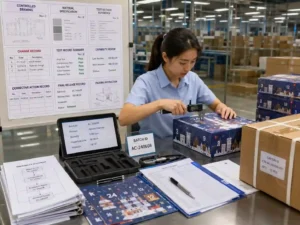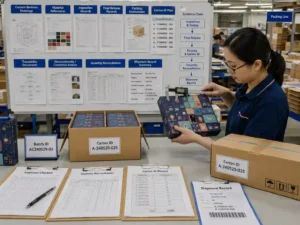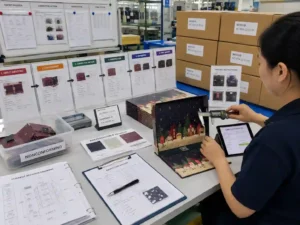
When comparing suppliers that outsource printing or hand assembly, buyers should evaluate control systems rather than only factory size or quoted price. A reliable supplier can explain which processes are internal, which are subcontracted, how production records are controlled, and how inspections are performed. An outsourced printing assembly supplier comparison should focus on evidence, approval procedures, subcontractor management, and corrective-action capability.

How should buyers compare suppliers that outsource printing or hand assembly?
The most effective comparison is based on process ownership, documentation, and control points. A supplier using subcontractors is not automatically unsuitable; the key question is whether the supplier manages outsourced steps with clear specifications, purchase orders, inspection rights, and approval records.
For custom advent calendar boxes and seasonal paper packaging, outsourced processes may include specialized printing, finishing, die cutting, lamination, or manual assembly support. The risk depends on how the supplier controls these steps and maintains consistency between approved samples and mass production.
What evidence should suppliers provide about outsourced processes?
Suppliers should be able to provide process-related evidence that shows how outsourced work is managed. Buyers should review documents and records rather than relying only on verbal explanations.
| Verification area | Useful supplier evidence | Buyer concern |
|---|---|---|
| Printing control | Artwork approval records, printing specifications, color references, production instructions | Risk of inconsistent appearance between samples and production |
| Hand assembly control | Assembly instructions, work procedures, inspection checkpoints, output records | Risk of missing components, incorrect sequence, or uneven workmanship |
| Subcontractor management | Purchase orders, supplier records, incoming inspection records | Unknown responsibility if defects occur |
| Quality response | Inspection reports, corrective-action records, approval history | Slow reaction when problems appear |
Should buyers avoid suppliers that outsource printing?
No. Outsourcing can be acceptable when the supplier maintains technical control and quality responsibility. The important distinction is between managed outsourcing and uncontrolled outsourcing.
A managed supplier should know which subcontractor performs each process, provide clear production requirements, verify incoming materials or finished components, and maintain inspection records. A supplier that cannot explain these controls creates higher sourcing risk.
How can buyers verify subcontracting controls before placing an order?
Buyers should confirm the supplier’s subcontracting process before production approval. This verification should focus on responsibility, communication flow, and inspection access.
- Ask which production steps are completed internally and which are outsourced.
- Request process flow information showing where printing, finishing, and assembly activities occur.
- Confirm who approves materials, artwork, samples, and production changes.
- Review how outsourced components are checked before final assembly.
- Confirm that inspection findings can trigger corrective actions before shipment.
Project-dependent requirements may vary. For a simple printed carton, outsourcing one finishing step may create limited risk. For a multi-component advent calendar with multiple compartments, drawers, inserts, and manual assembly steps, stronger process control is usually required.

What production and purchasing records should be compared?
Production records help buyers compare whether suppliers can control outsourced work consistently. The comparison should include both commercial documents and manufacturing records.
- Purchase orders between the main supplier and subcontractors
- Approved artwork and production specifications
- Material confirmation records
- Production schedules and capacity planning records
- Inspection plans and quality checkpoints
- Corrective-action reports for previous production issues
These records help separate suppliers that simply coordinate factories from suppliers that actively manage production quality.
How should buyers score suppliers with outsourced assembly?
A supplier scorecard can make comparisons more objective. Buyers can adjust the weighting depending on product complexity and risk level.
| Evaluation factor | Example scoring question | Importance |
|---|---|---|
| Process transparency | Can the supplier explain all outsourced steps? | High |
| Documentation control | Are specifications, approvals, and changes recorded? | High |
| Inspection capability | Can the supplier inspect outsourced work before final delivery? | High |
| Production coordination | Can the supplier manage schedules across multiple processes? | Medium to High |
| Corrective action | Can problems be tracked and resolved with records? | High |
What approval points reduce outsourcing risks?
Buyer approvals should be placed before major production commitments. Clear approval points reduce disputes about responsibility and prevent unauthorized changes.
- Approve final artwork before printing.
- Approve structural samples before large-scale production.
- Confirm assembly instructions before manual packing begins.
- Review inspection results before shipment release.
Payment milestones and purchase order terms should also define responsibilities. Buyers should confirm what happens if outsourced components fail inspection, require rework, or do not match approved references.

What are common risks when comparing outsourced printing assembly suppliers?
The main risk is not outsourcing itself but unclear ownership. Problems usually occur when multiple parties are involved and no supplier has clear responsibility for final quality.
Example: inconsistent printed components
A supplier may use a separate printing partner for special finishes. If color references, material specifications, and approval samples are not controlled, the finished packaging may differ from the approved version. A stronger supplier will have documented approval records and inspection procedures before assembly.
Example: manual assembly variation
Hand assembly can involve many repeated actions, such as inserting components, attaching accessories, or completing multi-step packing sequences. Suppliers should use instructions and checks to reduce variation between workers and production batches.
How does Giftpackpro approach supplier verification?
For buyers evaluating custom advent calendar packaging, verification should focus on production visibility, documented approvals, and quality control throughout the manufacturing process. Giftpackpro supports commercial buyers through structured packaging development and supplier communication processes for custom calendar projects.
Learn more about our custom advent calendar boxes manufacturer, explore custom advent calendar box services, or review packaging solutions through our custom advent calendar box products.
FAQs
Is a supplier with outsourced assembly always higher risk?
No. Risk depends on how outsourcing is managed. A supplier with clear records, inspections, and corrective-action procedures may control outsourced processes effectively.
What is the most important document when comparing suppliers?
There is no single document that proves capability. Buyers should review a combination of production records, approval documents, inspection plans, and subcontracting controls.
Should buyers request subcontractor names?
This depends on commercial agreements and project requirements. The important point is confirming that the supplier can explain process ownership and quality responsibility.
Need support evaluating a custom packaging supplier? request a custom quote to discuss your project requirements.