Quick answer: Pet treat odor barrier packaging starts by defining the primary package boundary, then designing the calendar structure around odor-sensitive products, separation needs, and compartment fit. The paper calendar itself is not usually the only barrier. Product developers should review sealed pouches, wrappers, cavity spacing, insert materials, and inspection records together to reduce odor transfer, crushing, bulging, and product movement risks.

What is the role of pet treat odor barrier packaging in an advent calendar?
Pet treat odor barrier packaging helps control how smells move between individual products and protects the intended condition of each compartment. The main barrier function normally comes from the primary product packaging, while the advent calendar box and inserts support separation, positioning, and protection.
Before developing the structure, teams should identify whether pet treats are packed in sealed pouches, foil bags, wrapped pieces, or other formats. The barrier requirement varies because different materials and seals provide different levels of odor containment.
Why should the primary package boundary be reviewed first?
The primary package is the first control point for odor, moisture, and product protection. Packaging engineers should confirm that the product pack is suitable before adjusting the outer calendar design.
- Check whether seals remain closed after filling and handling.
- Review whether flexible pouches expand under product weight or internal pressure.
- Confirm that labels, codes, and product information remain visible when placed inside compartments.
- Record the approved primary package format before final structural decisions.
How do you plan odor separation between pet treat compartments?
Odor separation is planned by controlling contact, airflow paths, and product positioning inside the calendar. Compartments should prevent direct rubbing between products and reduce unnecessary movement during handling.
| Risk area | Packaging consideration | Verification method |
|---|---|---|
| Strong-smelling treats | Increase separation between product positions and confirm primary pack integrity. | Sample review with sealed products placed in final compartments. |
| Mixed product formats | Use compartment layouts that prevent small items from contacting larger pouches. | Fit inspection using product samples and cavity drawings. |
| Flexible treat pouches | Allow enough clearance to avoid compression and bulging. | Measurement records and loaded sample checks. |
| Multiple daily openings | Maintain clear boundaries between unopened and opened positions. | Structural review of drawer, door, or insert movement. |
Project recommendations depend on the actual pet treat size, packaging material, filling level, and required presentation format. A structure that works for small dry treats may require changes for larger soft treats or higher-weight products.
How do you check odor barrier risks during packaging design?
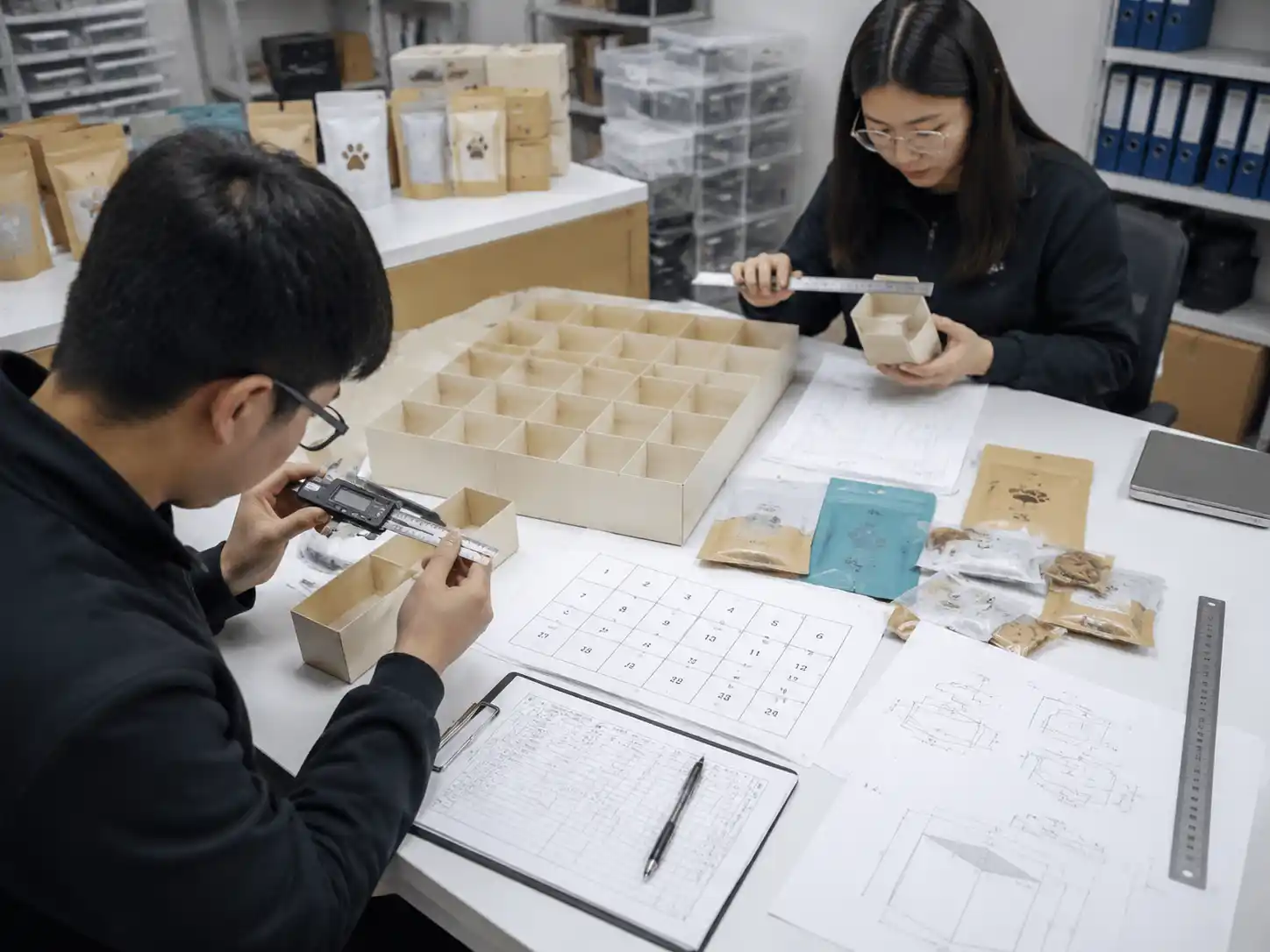
Packaging design reviews should combine product drawings, physical samples, and measurements rather than relying only on visual appearance. The purpose is to confirm that the calendar structure supports the product package instead of creating additional risks.
- Measure the product package dimensions, including thickness variations.
- Review cavity depth, width, and clearance around the primary package.
- Check whether inserts prevent movement without compressing the product.
- Confirm that adjacent compartments do not create pressure points.
- Document approved samples and any required design changes.
What other product risks should be considered with odor control?
Odor planning is connected with other protection requirements because product movement and compression can affect package performance.
- Crushing: Heavy items or stacked products may damage smaller treat packages.
- Tangling: Strings, tags, or attached components can interfere with separation.
- Bulging: Flexible pouches may push against dividers or outer panels.
- Weight distribution: Uneven loading can affect structure stability.
- Compartment fit: Excessive space may allow movement, while insufficient space may create pressure.
How can buyers verify that odor barrier planning is controlled?
Buyers can verify the approach through documented reviews, physical samples, and supplier records. The most useful evidence usually shows how the product was evaluated rather than only showing the finished calendar.
Useful verification records may include:
- Product dimension sheets and cavity layout drawings.
- Sample approval records showing the reviewed product configuration.
- Inspection checklists for fit, separation, and visible defects.
- Supplier photos or videos showing loaded samples during review.
Inspection methods and acceptance criteria vary by project. Final approval should be based on the buyer’s product requirements, packaging specifications, and internal quality process.

How does Giftpackpro support odor-sensitive advent calendar packaging projects?
Giftpackpro develops custom advent calendar packaging structures by focusing on product fit, compartment organization, and practical protection requirements. For pet treat applications, teams can review structural concepts, product placement, and packaging details through the development process.
Related packaging options can be explored through our custom advent calendar box products and custom advent calendar box services. For broader planning references, visit our advent calendar box buying guides.
FAQ: Does the advent calendar box itself block pet treat odors?
The outer box mainly provides presentation and physical protection. Odor control usually depends on the primary product packaging, sealing method, and separation design inside the calendar.
FAQ: Can all pet treats use the same compartment design?
No. Compartment design depends on product dimensions, package type, weight, flexibility, and odor sensitivity. Different treat formats may require different cavity sizes and support methods.
FAQ: What documents help approve an odor barrier packaging design?
Common approval materials include product measurements, structural drawings, loaded samples, inspection records, and sample approval documentation. The exact requirements depend on the buyer’s quality process.
To discuss a custom structure for odor-sensitive pet treat advent calendars, request a custom quote with your product dimensions and packaging requirements.