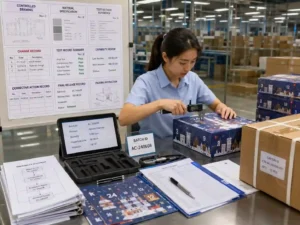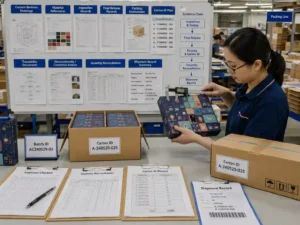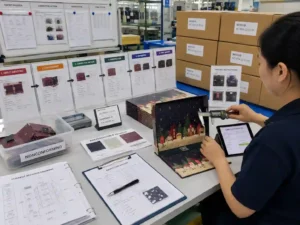
Preventing pet treat pouch bulging in an advent calendar requires controlling pouch dimensions, internal air volume, product weight distribution, and compartment clearance before production. The packaging design should define limits for pouch thickness, expansion space, compression risk, and daily compartment fit. Engineering samples, loaded prototypes, measurement records, and production inspections help verify that flexible pet treat packs stay separated without distorting the calendar structure.
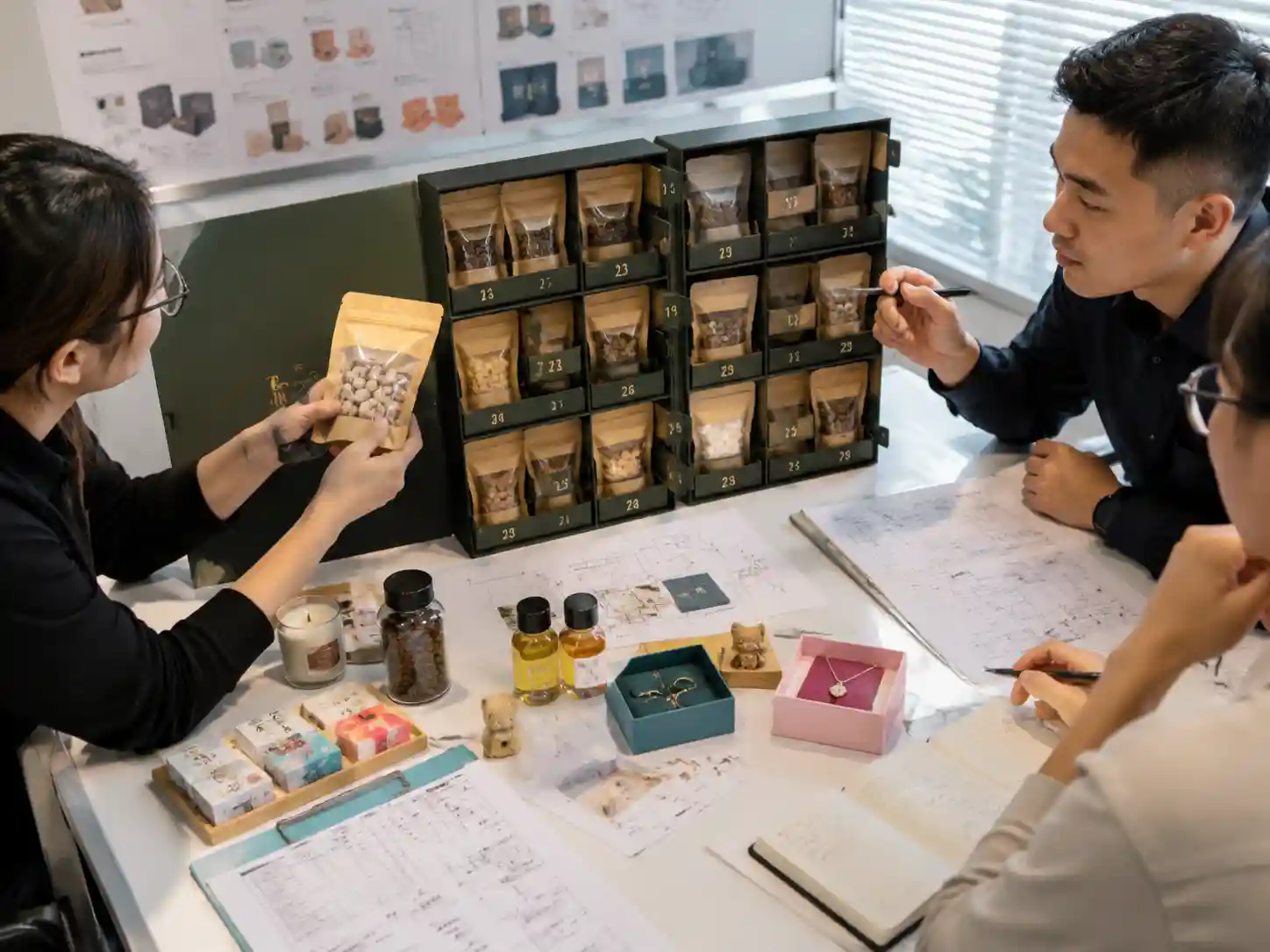
Why do pet treat pouches cause calendar bulging problems?
Pet treat pouches can create bulging when their flexible structure expands beyond the planned compartment space. The main causes are inconsistent pouch filling volume, trapped air, oversized seals, uneven product shapes, or insufficient clearance between neighboring compartments.
Unlike rigid products, flexible pouches can change shape after packing. A pouch that fits during an empty-box review may press against doors, drawers, inserts, or surrounding products after filling. This can affect opening performance, appearance, and protection of adjacent compartments.
How does pet treat pouch bulging prevention start during packaging design?
Pet treat pouch bulging prevention starts with defining the real packed dimensions rather than using only the flat pouch size. Packaging engineers should review the filled pouch thickness, width variation, seal areas, product movement, and compression points before finalizing compartment layouts.
- Measure filled pouch thickness at multiple locations.
- Check the maximum expected pouch height after handling.
- Identify whether treats settle, shift, or create uneven pressure.
- Allow enough clearance without making compartments unnecessarily loose.
- Review how neighboring products may affect pouch expansion.
Project requirements vary depending on treat format, pouch material, filling method, product density, and the number of compartments in the calendar.
What packaging risks should teams evaluate for pet treat pouches?
| Risk area | Potential problem | Verification method |
|---|---|---|
| Pouch thickness variation | Doors or drawers may become difficult to close | Measure filled samples at different points |
| Internal air or loose filling | Pouches may expand after packing or transport | Review loaded samples and movement after handling |
| Compartment pressure | Adjacent cavities may deform or transfer pressure | Check assembled calendar samples with all products loaded |
| Weight distribution | Heavy sections may stress inserts or panels | Compare product weight records with structural design |
These checks help separate confirmed packaging measurements from project assumptions. Final acceptance criteria should be agreed through approved samples and buyer review records.
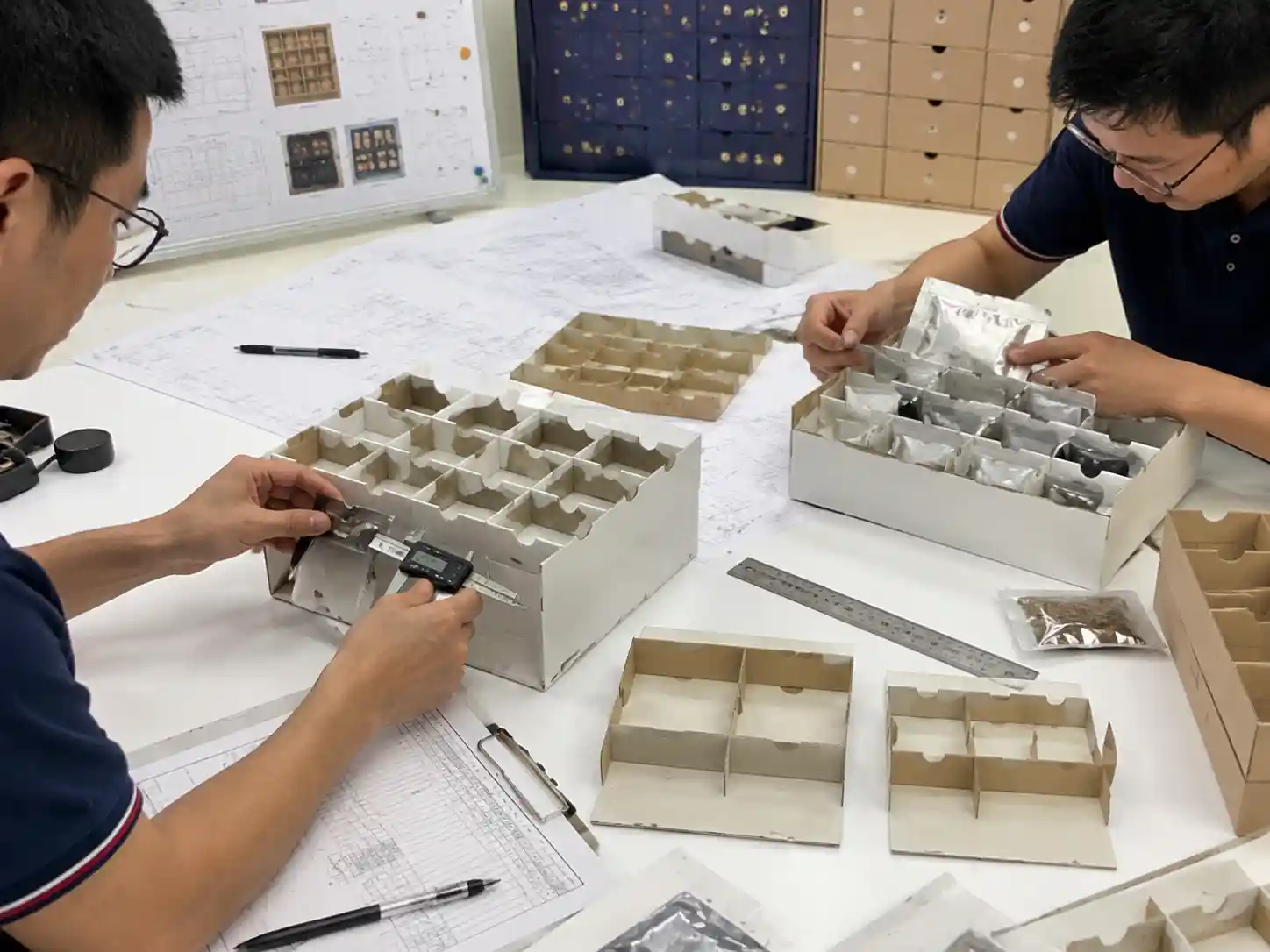
How do engineers design compartments for flexible pet treat pouches?
Engineers usually design compartments around the filled product condition, not only the empty pouch outline. The goal is to provide controlled support while preventing excessive compression.
Common design considerations include:
- Cavity depth: enough space for the thickest expected pouch condition.
- Side restraint: prevents movement while avoiding pressure on seals.
- Divider strength: keeps neighboring compartments separated.
- Removal access: allows customers or operators to remove pouches without forcing the structure.
Prototype testing may include loading all compartments with representative pet treat pouches, checking door closure, measuring deformation, and comparing the result with product drawings and approved samples.
How can buyers verify that a calendar design will handle pet treat pouch expansion?
Buyers can verify performance by reviewing evidence from loaded samples, dimensional checks, and inspection records rather than relying only on empty packaging photos.
A practical fit checklist includes:
- Filled pouch dimensions recorded before packaging approval.
- Loaded calendar samples reviewed with all compartments occupied.
- Clearance checked around doors, drawers, and separators.
- Photographs or records showing final product positioning.
- Inspection notes covering bulging, closing force, and visible deformation.
Supplier documents, sample approval records, and production inspection reports help confirm that the final packaging follows the approved design.
How do different pet treat products change the compartment design?
Pet treat pouch requirements depend on the product format. Small dry treats in slim pouches may need only moderate clearance, while larger flexible packs or irregular treats may require more expansion allowance.
Category-specific example: mixed pet treat calendars
A calendar containing multiple treat pouch sizes may require different cavity dimensions rather than identical compartments. A large pouch placed into a small cavity can create pressure that transfers through the insert structure, while an oversized cavity may allow unwanted movement.
For mixed formats, packaging teams typically compare product samples, pouch measurements, and cavity layouts together before approving the final structure.
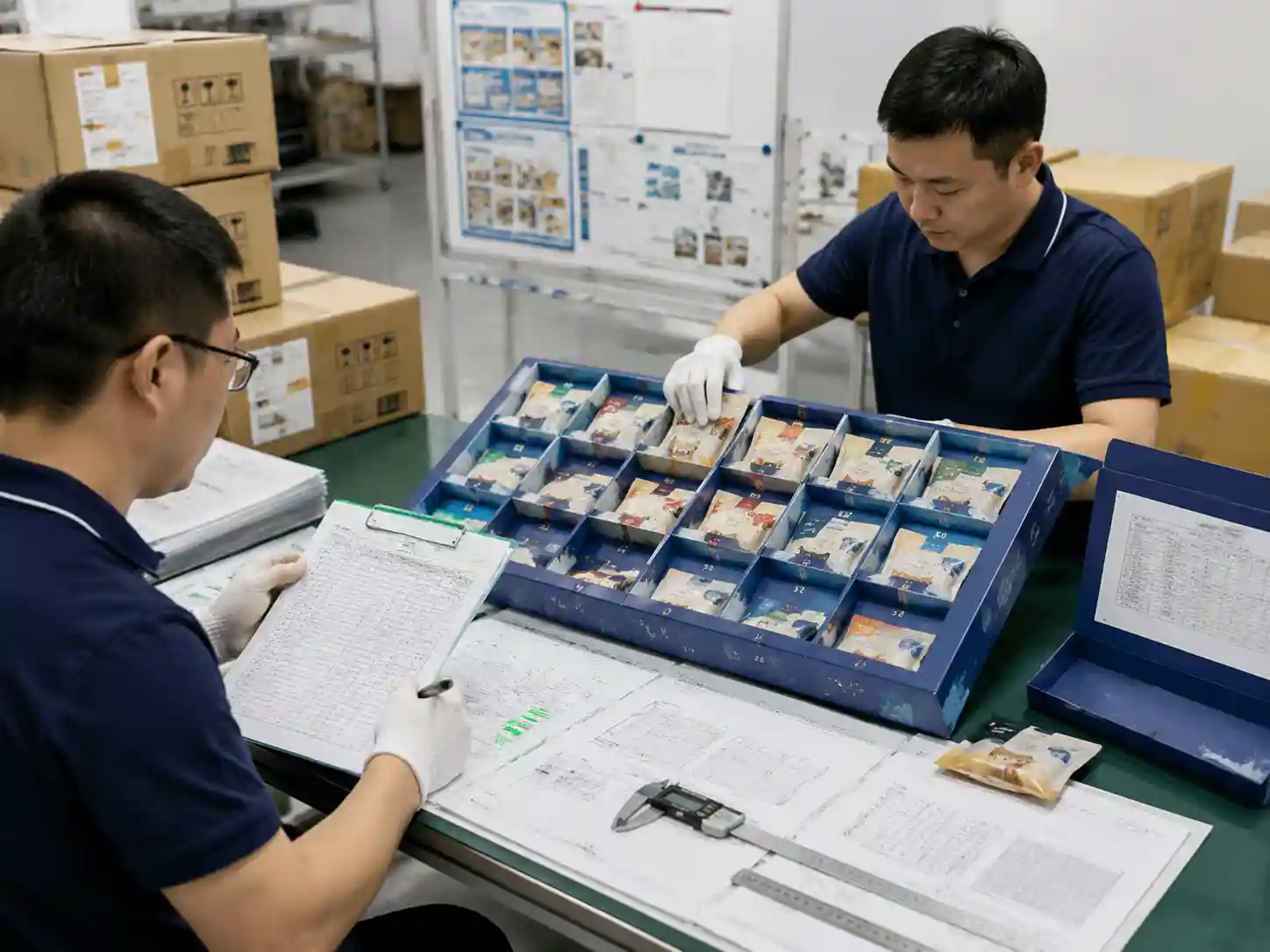
What should QC teams inspect before shipping pet treat pouch calendars?
QC teams should inspect the assembled packaging condition with representative loaded products. The inspection should focus on whether the calendar remains structurally stable after realistic packing conditions.
- Check for visible panel bulging or distortion.
- Confirm compartment separation remains intact.
- Verify pouch positions match approved layouts.
- Review carton packing condition if compression risk exists.
- Record any variation requiring adjustment or approval.
Inspection scope depends on the packaging structure, product variation, and buyer requirements. The most reliable checks use actual packed products rather than empty packaging tests alone.
How does Giftpackpro approach pet treat pouch packaging projects?
Giftpackpro develops custom seasonal paper gift packaging solutions where compartment structure, product fit, and presentation requirements are reviewed together. For pet treat applications, teams can evaluate packaging options through custom advent calendar box services and explore related custom advent calendar box products.
For projects involving flexible pet treat pouches, buyers should provide product dimensions, filled samples, and packaging requirements early so the compartment design can be evaluated accurately. To discuss a custom structure, request a custom quote.