
Returns and replacement parts should be planned during packaging development, not after products reach customers. Effective returns replacement part planning defines which components may need replacement, how parts are identified, how inventory is controlled, and how returned products are inspected. The goal is to reduce unnecessary replacements while maintaining efficient fulfillment, accurate records, and consistent customer service.

Why should returns and replacement parts be considered during packaging planning?
Returns and replacement parts should be considered because advent calendar packaging often contains multiple structural components that may fail separately. A drawer, tray, door, insert, sleeve, or decorative element may require different handling if damage occurs.
Early planning helps teams decide whether a damaged product should be repaired, partially replaced, or fully replaced. The decision should be based on product structure, fulfillment cost, inspection findings, and the availability of compatible components.
What does returns replacement part planning include?
Returns replacement part planning includes identifying replaceable components, defining inspection criteria, preparing part records, and establishing approval methods. The exact approach varies depending on calendar construction, packaging complexity, sales channels, and return handling processes.
| Planning area | Practical check | Evidence to maintain |
|---|---|---|
| Component identification | List removable or replaceable packaging elements such as drawers, covers, trays, or sleeves. | Approved drawings, component lists, and reference samples. |
| Replacement suitability | Confirm whether a component can be replaced without affecting appearance or function. | Assembly notes, fit checks, and inspection records. |
| Inventory handling | Define how replacement components are stored, labeled, and matched to production versions. | Part records and warehouse identification documents. |
| Return inspection | Determine whether damage requires a repair, component replacement, or full product replacement. | Inspection reports and decision records. |
How should packaging teams identify replacement parts before production?
Packaging teams should identify replacement parts by reviewing the approved structure and assembly sequence. Drawings, prototypes, and approved samples can show which components are independent and which parts depend on precise alignment.
Useful checks include:
- Confirming component names and reference numbers match approved packaging drawings.
- Checking whether replacement parts maintain the original dimensions and visual appearance.
- Reviewing whether replacement components require special packing protection.
- Recording version differences when artwork, materials, or structures change.

How can return inspection decisions be standardized?
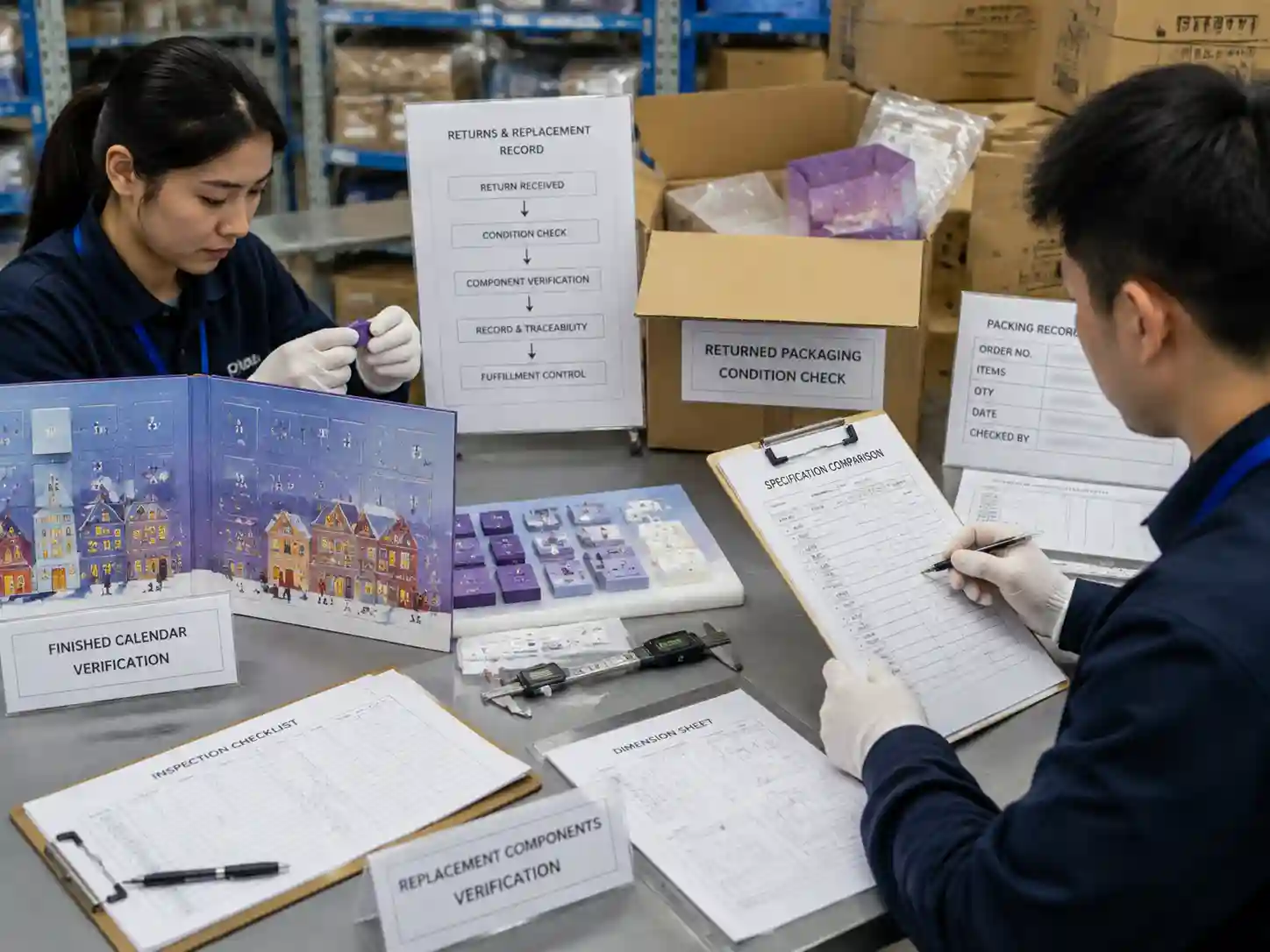
Return inspection decisions can be standardized by creating clear evaluation criteria before products enter distribution. Inspectors should know what conditions qualify for repair, component replacement, or full replacement.
A practical inspection flow may include:
- Verify the returned product identity and packaging version.
- Check external condition, closure function, and component alignment.
- Identify damaged or missing parts.
- Compare findings with approved quality requirements.
- Record the final disposition decision.
Buyer approvals are important when replacement decisions affect product presentation, retailer requirements, or customer expectations.
How do shelf, parcel, and fulfillment requirements affect replacement planning?
Shelf and fulfillment requirements affect replacement planning because replacement components must still support the original selling configuration. A replacement drawer or sleeve that does not match the final packed dimensions may create additional handling problems.
- Shelf scenario: Replacement components should maintain the approved retail appearance and fit within the intended display configuration.
- Parcel scenario: Replacement packaging parts should be protected and packed efficiently without creating unnecessary shipping volume.
- Fulfillment scenario: Warehouse teams need clear identification methods to select the correct component quickly.
What documents help verify replacement part readiness?
Replacement part readiness can be verified through supplier documents, inspection records, and approved references. The exact documentation depends on the project requirements and supply chain process.
Common verification records include:
- Packaging drawings showing component relationships.
- Approved samples or retained reference samples.
- Component inspection checklists.
- Return evaluation records.
- Packing instructions for replacement shipments.
What risks occur when replacement planning is not prepared?
The main risks are delayed customer resolution, incorrect replacement components, inconsistent product appearance, and unnecessary logistics costs. Without clear records, teams may send parts that do not match the original production version.
Another risk is unclear responsibility between sourcing, quality, warehouse, and fulfillment teams. Defined records and approval points help prevent decisions based only on visual judgment.
What should buyers approve before finalizing a replacement process?
Buyers should approve the replacement strategy, identification method, and decision criteria before large-scale fulfillment begins. The required approval level varies by retailer expectations, sales channel, and packaging complexity.
- Approved component list and naming method.
- Replacement acceptance criteria.
- Return inspection workflow.
- Storage and packing method for replacement items.
Frequently asked questions about returns and replacement parts
Can every advent calendar packaging component be replaced separately?
No. Replaceability depends on the construction method. Some components can be exchanged independently, while others require full replacement because they are permanently assembled or affect structural integrity.
Should replacement parts be included in every packaging project?
Not necessarily. The need depends on product value, packaging complexity, expected return handling, and operational requirements.
How can teams prevent incorrect replacement parts from being shipped?
Teams can reduce errors by using component records, version identification, inspection checks, and approved reference information before fulfillment.
Giftpackpro supports commercial buyers with custom advent calendar packaging solutions designed around product structure, fulfillment requirements, and packaging control. Explore custom advent calendar box services or request a custom quote to discuss packaging requirements.


