
Quick answer: Shelf-ready cases for advent calendar boxes are designed by matching the outer case structure with retail shelf requirements, product protection needs, handling processes, and replenishment workflows. The process usually starts with shelf measurements, case pack planning, and packaging drawings, then moves through sample checks, dimensional verification, and buyer approval before production. A well-designed shelf-ready case should support efficient stocking while protecting the finished calendar presentation.
What is a shelf-ready case for advent calendar boxes?
A shelf-ready case is a transport carton designed so that retail staff can move, open, and display products with minimal handling. For advent calendar boxes, the case must balance product protection with easy shelf placement and clear product identification.
Unlike a standard shipping carton, a shelf-ready case may require controlled opening areas, suitable carton strength, visible product orientation, and dimensions that match the retailer’s shelf or display environment. The exact design depends on the retail channel, product size, and handling requirements.
How do you determine the requirements before designing a shelf-ready case?
The first step is collecting the information that affects the case structure. Packaging teams typically review the finished advent calendar dimensions, shelf space, case quantity, handling method, and distribution requirements.
| Requirement area | What should be checked | Evidence used for approval |
|---|---|---|
| Product dimensions | Finished calendar length, width, height, and surface protection needs | Approved product drawings and measured samples |
| Shelf fit | Shelf depth, display height, opening position, and product visibility | Retail shelf measurements and layout drawings |
| Case pack | Number of units per case and product orientation | Case pack specification and packing sample |
| Identification | Barcode access, carton markings, and inventory information | Label placement records and approval documents |
Verified measurements are important because small changes in calendar thickness or protective materials can affect case dimensions and shelf efficiency.
How do you design case dimensions for retail shelves?
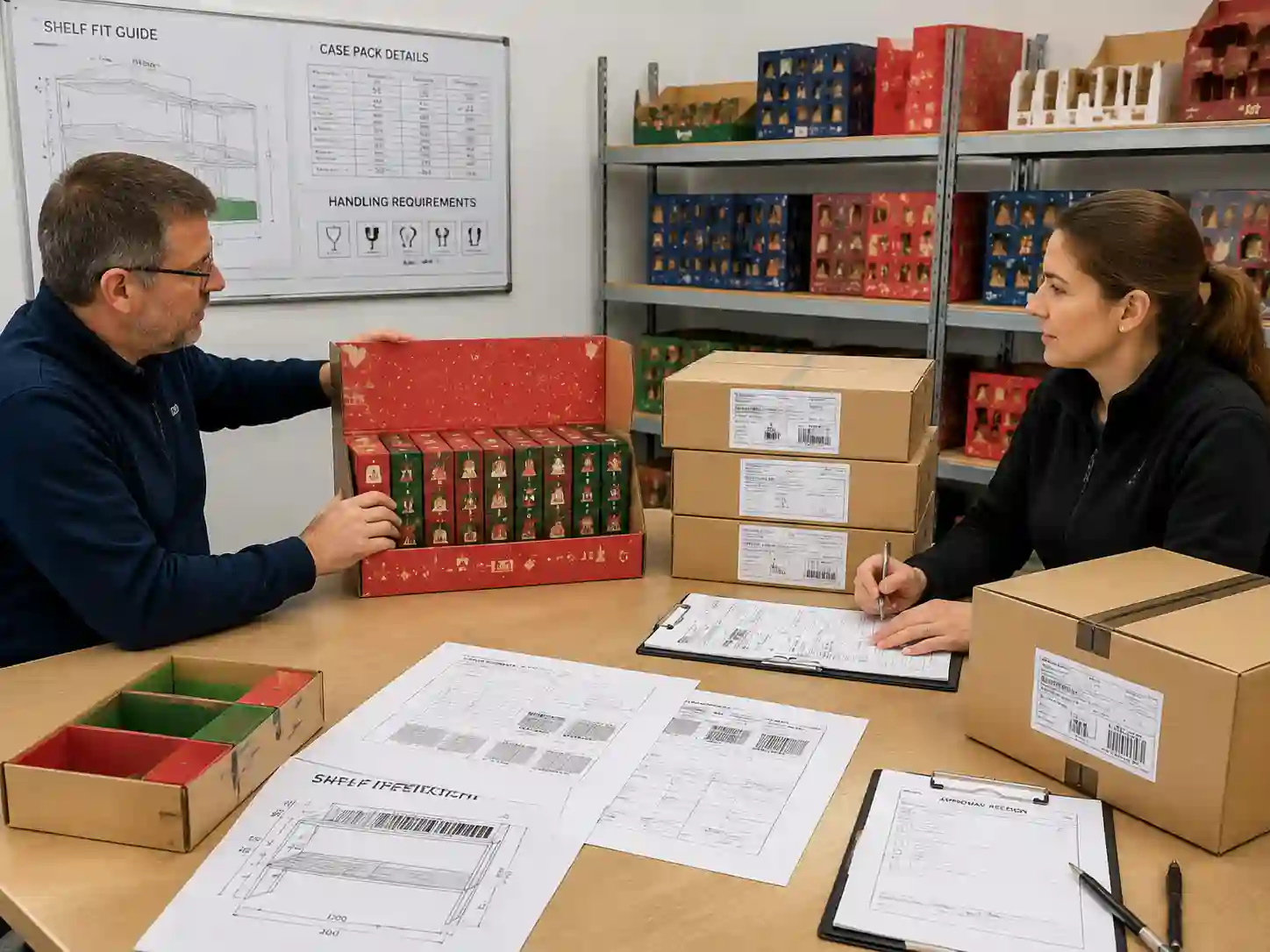
Shelf-ready case dimensions are usually developed by working backward from the retail display requirement. The finished case should fit the available shelf space while leaving enough protection around the products.
Packaging engineers normally evaluate:
- Finished advent calendar dimensions after all components are assembled.
- Internal clearance needed to prevent movement or surface damage.
- Case opening design and how products will be removed by store staff.
- External dimensions for storage, transportation, and distribution handling.
Drawings and physical samples help confirm that the case design matches the intended shelf position. Project recommendations can vary depending on whether the calendar is displayed individually, in a tray, or directly from the shipping case.
How do you choose the right case pack quantity?
The correct case pack quantity depends on product size, shelf replenishment needs, handling limits, and distribution requirements. A larger quantity may improve shipping efficiency, but it can increase case weight and make shelf handling more difficult.
Teams usually compare several case pack options by reviewing:
- Number of advent calendars per case.
- Total packed weight and handling requirements.
- Product orientation inside the carton.
- Available shelf or storage space.
- Ease of opening and removing individual units.
The final case pack should be approved using physical packing samples rather than only relying on theoretical calculations.
How do you test whether a shelf-ready case works?
A shelf-ready case should be checked through samples before bulk production. Testing focuses on whether the carton performs correctly during packing, handling, stocking, and product removal.
Common verification steps include:
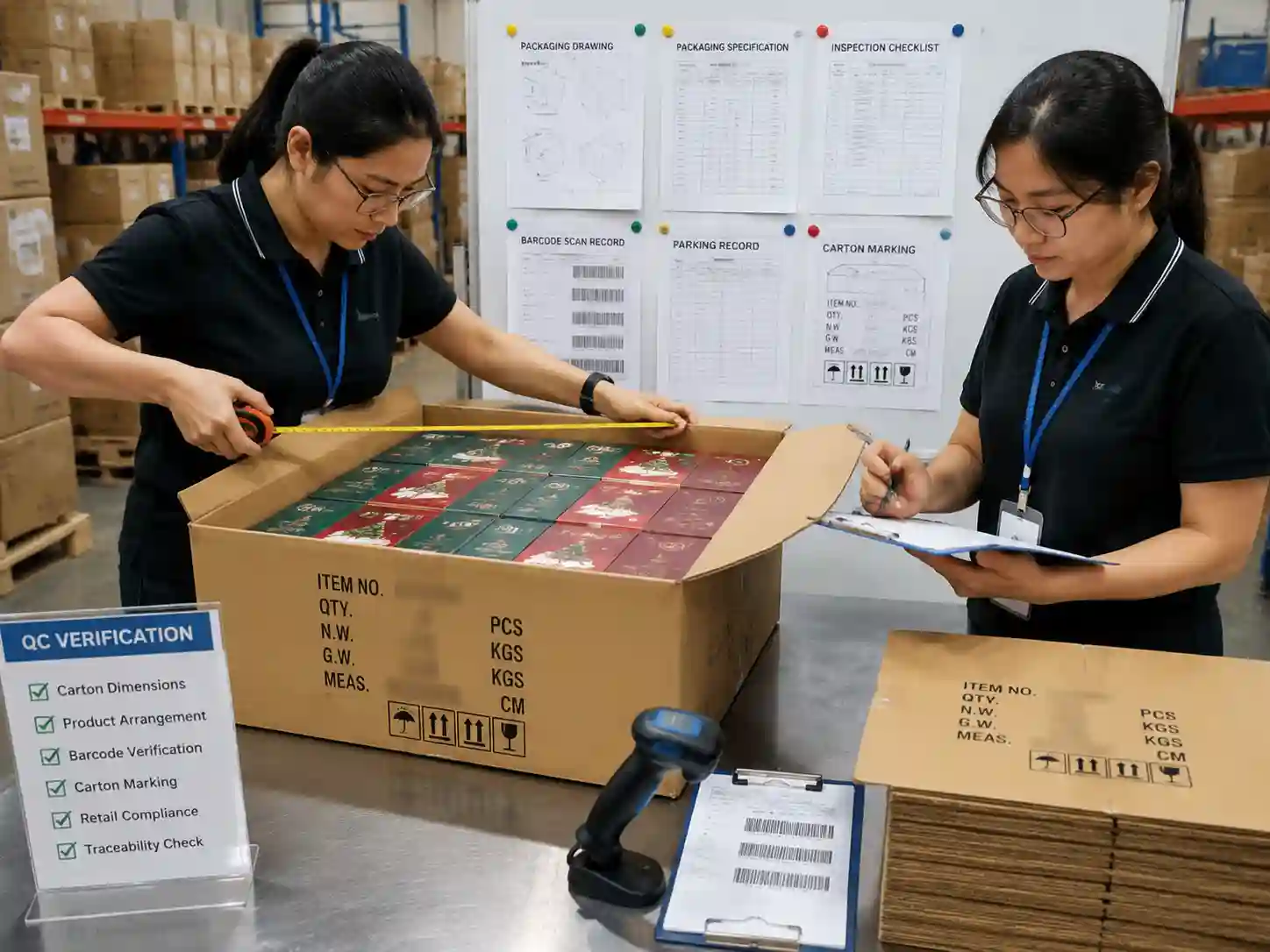
- Measure finished case dimensions against approved drawings.
- Confirm the product orientation and internal spacing.
- Check opening features and accessibility.
- Review barcode and identification visibility.
- Record any changes needed before production approval.
Useful records include packaging drawings, sample approval forms, measurement sheets, packing instructions, and inspection photos. These documents create traceability between the approved design and the manufactured cartons.

What risks should buyers consider when designing shelf-ready cases?
The main risks involve poor shelf fit, difficult handling, insufficient protection, and incorrect information on the case. These risks can affect retail presentation and fulfillment efficiency.
- Incorrect dimensions: A case that is too large may waste space, while an overly tight case may increase product damage risk.
- Poor opening design: Staff may need extra handling if the case cannot be opened or positioned efficiently.
- Product movement: Excess internal space can allow calendars to shift during transportation.
- Missing identification: Incorrect barcode or carton information can slow receiving and inventory processes.
How does shelf-ready case design support fulfillment operations?
Shelf-ready cases can improve fulfillment efficiency when the carton design matches warehouse and retail workflows. Clear case identification, consistent packing orientation, and accurate dimensions help reduce handling steps.
For e-commerce or mixed distribution environments, buyers may need different case considerations because warehouse picking, parcel shipping, and retail shelf replenishment have different requirements. The selected design should reflect the actual sales channel.
| Scenario | Design consideration |
|---|---|
| Retail store replenishment | Prioritize easy opening, shelf fit, and product visibility. |
| Distribution center handling | Prioritize consistent dimensions, identification, and stacking stability. |
| Mixed retail and online channels | Balance display convenience with warehouse handling requirements. |
What approvals are needed before producing shelf-ready cases?
Final approval normally requires agreement on the case drawing, packing arrangement, dimensions, and product presentation method. The exact approval process depends on the buyer, retailer, and project requirements.
Buyers should confirm:
- Approved case dimensions and product orientation.
- Correct carton identification and barcode placement.
- Final sample appearance and opening method.
- Packing instructions used by production teams.
Giftpackpro supports commercial packaging projects with custom advent calendar box development, including packaging specifications and production coordination through its custom advent calendar box services.
FAQs
Can one shelf-ready case design work for every retailer?
No. Retail shelf dimensions, handling methods, and display requirements vary by retailer and distribution channel. Case designs should be validated against the intended selling environment.
Should shelf-ready cases be designed before or after the calendar structure is finalized?
Shelf-ready cases should be developed after the main product dimensions are confirmed, because changes to the calendar structure can affect case size, packing quantity, and shelf fit.
What documents help verify a shelf-ready case design?
Common verification records include product drawings, case drawings, measurement reports, packing samples, inspection checklists, and approval records.
For help planning a shelf-ready packaging solution for custom advent calendar boxes, request a custom quote with your product dimensions, retail requirements, and fulfillment needs.


