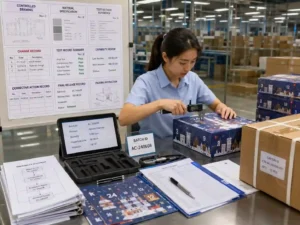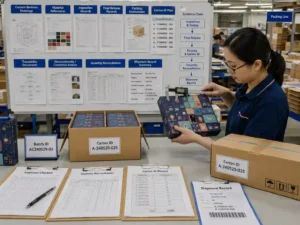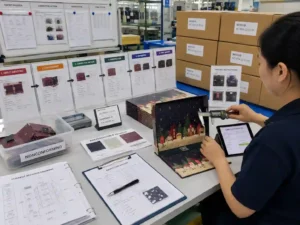
Designing an advent calendar for a specific retail shelf depth starts with converting the available shelf space into packaging requirements. The process requires accurate shelf measurements, calendar dimensions, case pack planning, barcode placement, and fulfillment checks before production approval. A successful design balances product visibility, storage efficiency, shipping limits, and customer handling requirements without creating unnecessary carton volume or retail fit problems.

Why should retail shelf depth be confirmed before designing an advent calendar?
Retail shelf depth determines the maximum front-to-back packaging dimension and influences the entire structural design. Buyers should confirm the actual shelf clearance, display method, and replenishment process before finalizing the advent calendar structure.
Retail environments vary by store format, fixture design, and category requirements. A calendar designed only around product appearance may create issues such as poor shelf fit, reduced facing space, unstable placement, or inefficient inventory handling.
What information should be collected before packaging design?
| Requirement | Why It Matters | How It Can Be Verified |
|---|---|---|
| Shelf depth and usable clearance | Defines maximum packaging depth and display compatibility | Retail fixture drawings, buyer specifications, or physical measurements |
| Finished calendar dimensions | Controls shelf fit, case packing, and parcel planning | Prototype measurement records and approved drawings |
| Facing orientation | Determines front panel visibility and customer access | Shelf mockups or merchandising layouts |
| Case pack quantity | Affects warehouse storage and replenishment efficiency | Carton loading samples and packing records |
| Barcode and label position | Ensures scanning and inventory handling | Artwork approval records and label placement checks |
How do you design an advent calendar around retail shelf depth requirements?
The design process begins by establishing a packaging envelope that fits within the available shelf space while protecting the calendar structure. Engineers normally review the maximum depth, width, and height limits together rather than adjusting only one dimension.
- Measure the available retail shelf depth and confirm required clearance.
- Define the maximum external calendar dimensions.
- Review drawer movement, opening features, and internal component placement.
- Create structural drawings showing the approved footprint.
- Build samples to verify shelf fit before bulk production.
The final dimensions may vary depending on whether the product is displayed upright, stacked, hanging, or placed in a seasonal retail fixture. These decisions should be approved using drawings, physical samples, and buyer feedback.

How do case packs and fulfillment requirements affect shelf depth design?
Retail shelf depth decisions should also consider how the finished calendars move through warehouses and fulfillment channels. A compact retail design may still create handling issues if the case pack becomes inefficient or exceeds parcel limitations.
Packaging teams should evaluate:
- Number of calendars packed per master carton.
- Carton dimensions after protective materials are added.
- Stacking stability during warehouse handling.
- Parcel size and weight limitations for e-commerce fulfillment.
- Storage efficiency before store delivery or customer shipment.
What shelf and parcel scenarios should be reviewed?
| Scenario | Design Check | Potential Risk |
|---|---|---|
| Retail shelf display | Confirm front visibility and depth clearance | Package may not fit or may reduce shelf capacity |
| Master carton storage | Check case dimensions and stacking method | Low packing efficiency or unstable cartons |
| E-commerce parcel | Review packed size and shipping restrictions | Higher fulfillment cost or damage exposure |
How should labels and listing data be considered during design?
Retail packaging dimensions should match the information used by inventory and fulfillment systems. Incorrect product dimensions, barcode locations, or carton data can create receiving and listing problems even when the physical packaging is well designed.
Teams should confirm:
- Retail barcode visibility and scanning position.
- Outer carton identification requirements.
- Finished package dimensions used for product listings.
- Warehouse handling information.
Important data should be supported by measurement records, approved artwork files, and final packaging samples rather than estimated dimensions.
What inspections help confirm retail shelf depth compliance?
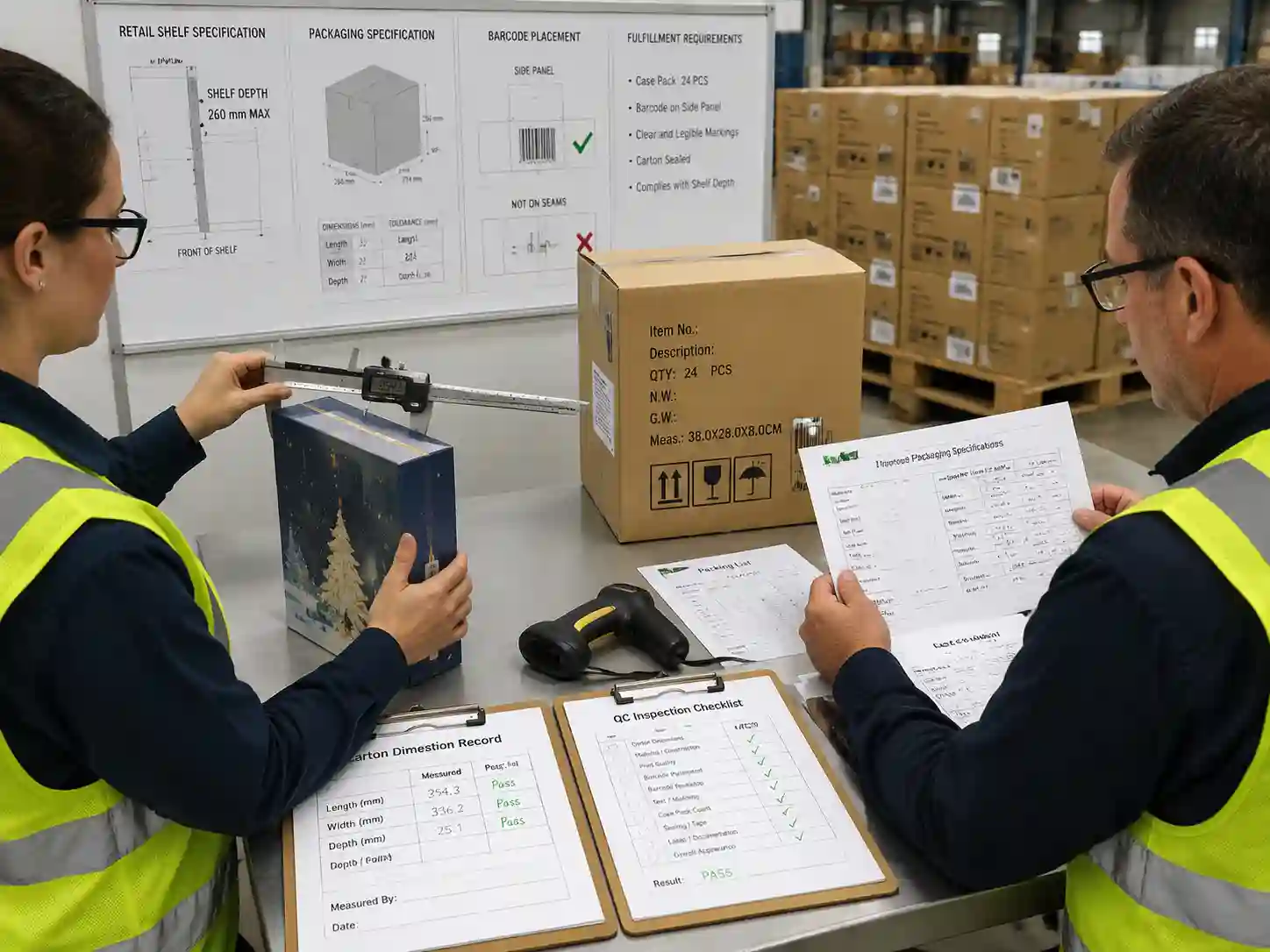
Verification should happen at sample approval and production stages. Inspectors can compare finished packaging against approved drawings, shelf requirements, and fulfillment specifications.
- Measure finished length, width, and depth.
- Confirm shelf-facing orientation.
- Check barcode and label placement.
- Review case pack quantity and carton dimensions.
- Record approval results for future reference.
Inspection records, dimension sheets, sample photos, and approved packaging drawings provide evidence that the retail fit requirements were controlled.
What varies between different retail shelf depth projects?
Retail shelf depth requirements are project-dependent. Store fixtures, regional distribution systems, product size, display strategy, and fulfillment channels can all change the preferred packaging dimensions.
Some projects prioritize maximum shelf visibility, while others prioritize compact storage, parcel efficiency, or simplified replenishment. Buyers should define the priority before structural decisions are finalized.
How can buyers reduce retail shelf depth design risks?
The most effective approach is to approve dimensions with evidence before production begins. A practical workflow includes:
- Collect retail shelf specifications.
- Review packaging drawings with measured dimensions.
- Approve structural samples.
- Confirm case pack and fulfillment requirements.
- Record final specifications for production control.
Giftpackpro supports commercial packaging projects by combining structural design review, custom advent calendar box development, and packaging verification. Learn more about custom advent calendar box services or explore custom advent calendar box products for packaging options.
FAQs
Can an advent calendar be redesigned after retail shelf measurements are received?
Yes. If shelf requirements change, the structure, dimensions, internal layout, and carton configuration may need review. The impact depends on how far the design has progressed.
Should retail shelf depth be measured from the fixture or estimated from product size?
Retail shelf depth should be confirmed from actual fixture requirements or buyer specifications. Product assumptions alone may not account for display clearance and handling space.
Does a smaller package always improve fulfillment efficiency?
No. A smaller package may reduce shelf space but can create tighter packing conditions or protection challenges. Efficiency depends on the complete retail and logistics system.
For a retail-ready advent calendar packaging project, request a custom quote and provide your shelf, fulfillment, and packaging requirements for review.