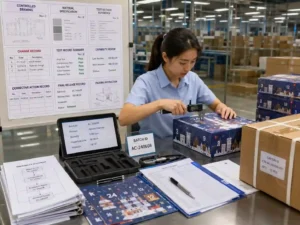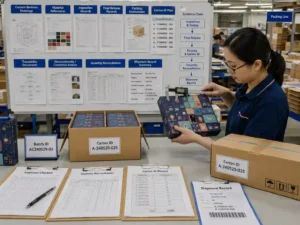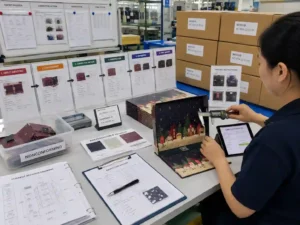
A vibration test helps reveal whether inserts, drawers, and internal components remain stable during transportation. For advent calendar boxes, the test can identify hidden movement, friction, shifting, noise, surface damage, and structural weaknesses before shipment. By comparing test samples with approved packaging drawings, carton layouts, and inspection records, teams can decide whether internal supports, clearances, or packing methods need adjustment.
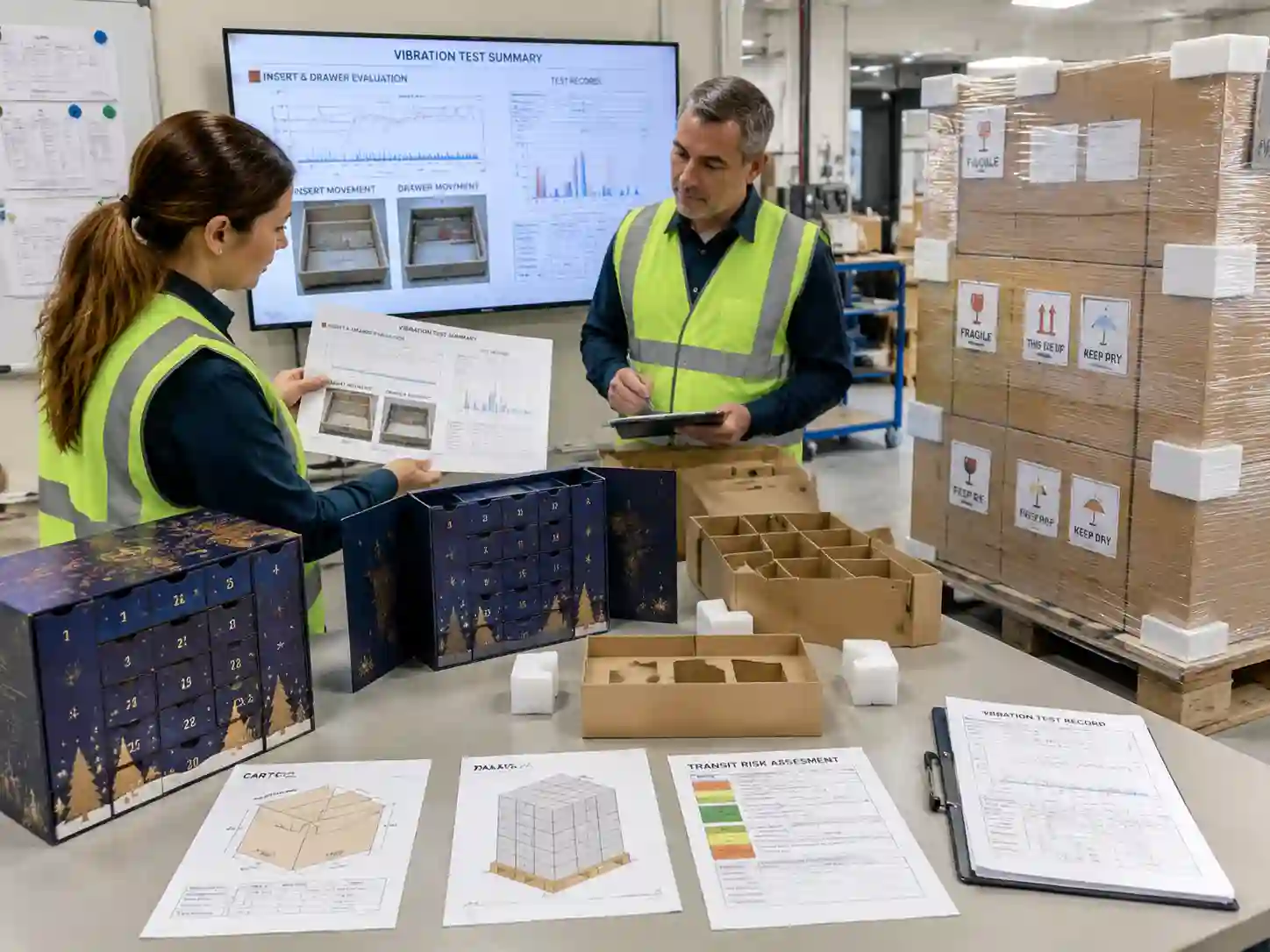
What problems can vibration tests reveal in advent calendar packaging?
Vibration testing reveals movement that may not appear during static inspection. The main purpose is to simulate repeated transport stress and check whether drawers, inserts, compartments, and protective materials maintain their intended position.
Common issues identified during vibration testing include:
- Drawer movement caused by excessive internal clearance.
- Insert shifting that changes compartment alignment.
- Friction between drawers and surrounding paperboard structures.
- Loose components creating noise or impact marks.
- Compression or deformation caused by unstable carton packing.
For custom advent calendar boxes, the result is not only whether the package survives vibration. It also shows whether the internal experience remains consistent after transportation and handling.
How does a vibration test check insert and drawer movement?
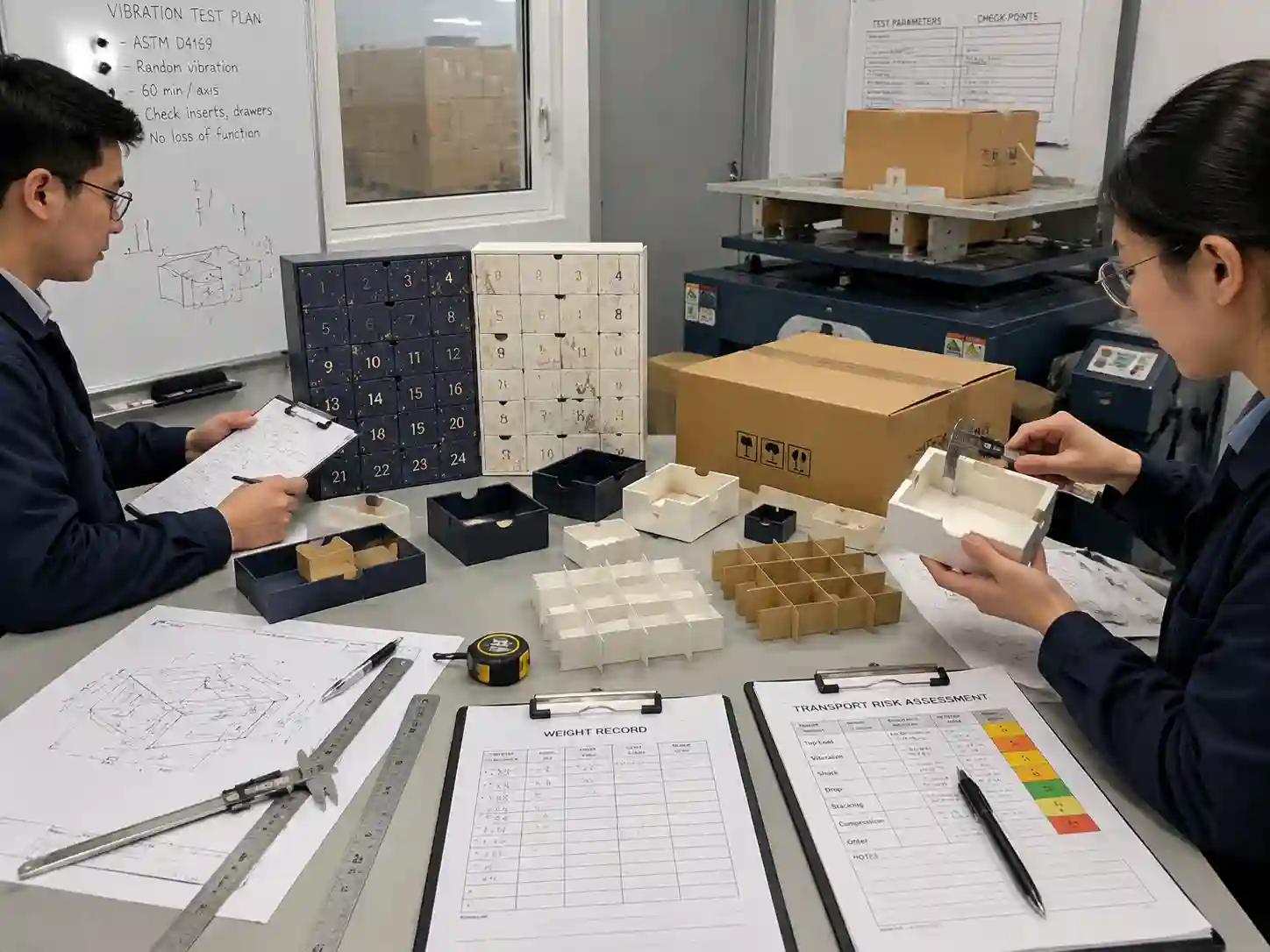
The vibration test insert drawer movement evaluation normally begins with a defined packaging configuration. The tested sample should represent the approved product structure, including the finished box, inserts, drawers, protective materials, and shipping carton arrangement.
What is checked before the vibration test?
Before testing, engineers and suppliers usually record the starting condition of the sample. Useful evidence includes:
- Finished sample photos before testing.
- Drawer opening and closing condition.
- Insert position and compartment alignment.
- Carton dimensions and packing configuration.
- Sample weight and internal protection method.
These records allow teams to compare the condition before and after vibration exposure rather than relying only on visual judgment.
What happens during and after vibration testing?
During the test, the packaged sample experiences repeated movement that represents transport conditions. After testing, inspectors check whether internal parts have moved, loosened, worn, or damaged surrounding surfaces.
| Inspection area | Possible vibration issue | Verification method |
|---|---|---|
| Drawer structure | Drawer shifts, rubs, or becomes difficult to open | Opening test, gap measurement, visual inspection |
| Internal inserts | Insert movement or compartment misalignment | Position check against approved drawing or sample |
| Surface protection | Scratches, scuffing, or contact marks | Surface inspection and photo records |
| Master carton packing | Internal movement caused by excess space | Carton fit review and packing condition check |
Why can drawer movement happen even when the box passes visual inspection?
A finished advent calendar box may look acceptable before shipment but still contain movement risks. Static inspection only shows the condition at one moment, while transportation creates repeated forces over time.
Typical causes include:
- Drawer dimensions allowing too much side-to-side clearance.
- Inserts that are not sufficiently supported inside the structure.
- Protective materials that compress during handling.
- Master cartons with unnecessary empty space.
- Pallet arrangements that increase vibration exposure.
The exact risk depends on the calendar structure, material combination, carton design, transport route, and handling conditions. A packaging decision should therefore be based on measured results and approved specifications.
How should buyers review vibration test results?
Buyers should review vibration test results together with packaging evidence, not only a pass or fail statement. The most useful records connect the test outcome with the actual production packing method.
Important review points include:
- Confirm that the tested sample matches the approved production structure.
- Check whether drawer movement increased after testing.
- Review photos showing before and after conditions.
- Compare carton dimensions and internal protection with approved records.
- Confirm whether corrective actions require approval before production shipment.
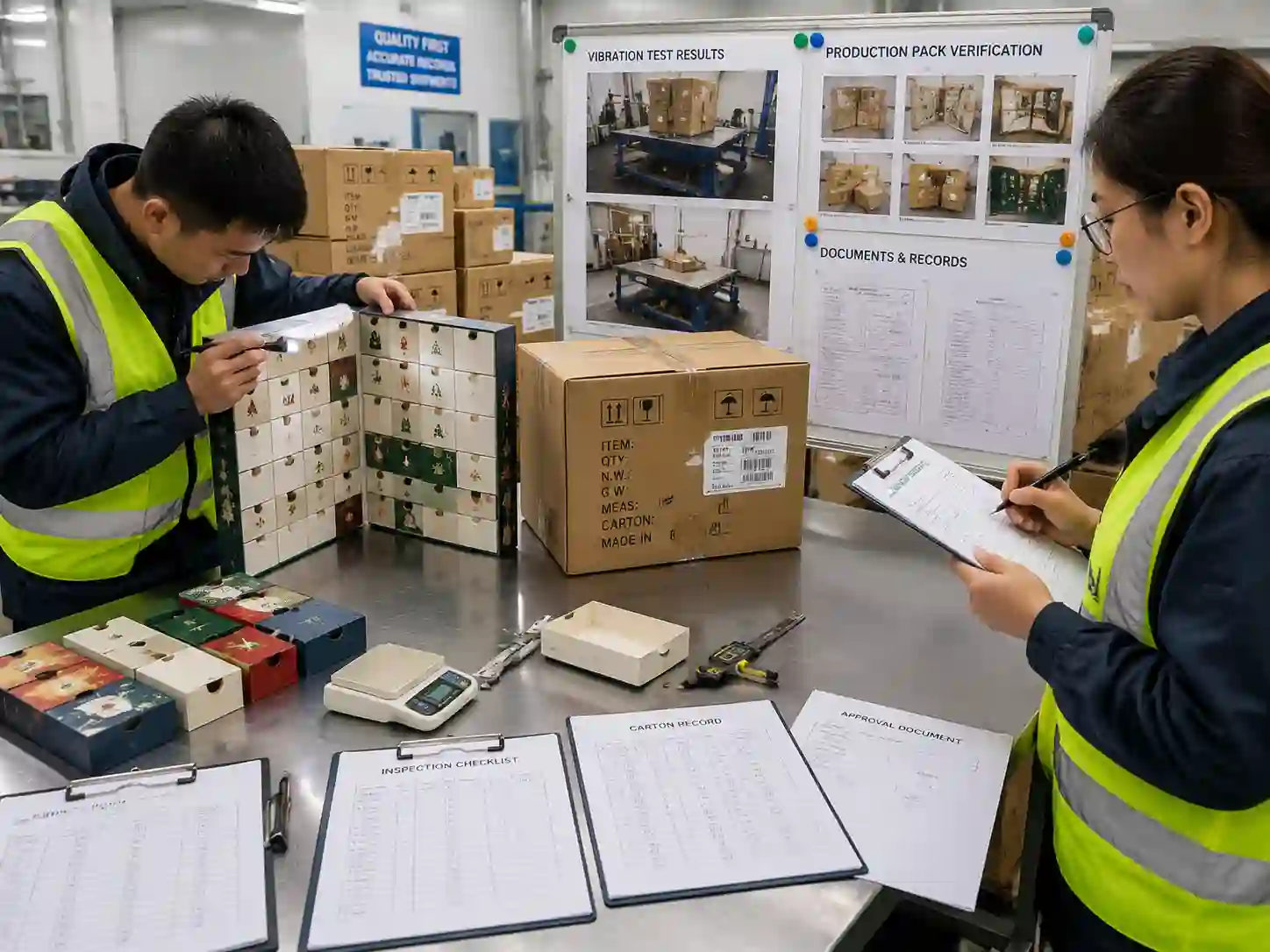
Supplier documentation may include test photos, inspection sheets, packaging drawings, carton specifications, and corrective-action records. These documents help purchasing and logistics teams understand whether a packaging change affects transport reliability.
How do vibration risks connect with master cartons and pallet packing?
Vibration problems are often influenced by the complete shipping system, not only the individual advent calendar box. Master carton size, internal clearance, pallet pattern, and load stability can all affect movement during transportation.
| Shipping factor | Risk created by poor control | Recommended review |
|---|---|---|
| Master carton clearance | Products move repeatedly inside cartons | Verify carton fit and internal support |
| Pallet pattern | Uneven loading increases vibration stress | Compare actual loading with pallet plan |
| Void reduction | Excess space allows product movement | Check approved packing configuration |
| Shipping marks | Incorrect handling information increases risk | Confirm carton markings match shipment requirements |
For export shipments, vibration testing is most valuable when combined with packaging engineering review and production verification. The objective is to control movement before the cartons enter the transportation network.
What should be included in a pre-shipment vibration risk checklist?
A practical checklist helps confirm that test findings are reflected in production packing before shipment approval.
- Approved packaging structure is available for reference.
- Drawer movement has been checked before and after testing.
- Insert position matches the approved configuration.
- Carton dimensions and packing method are recorded.
- Master carton arrangement matches the shipping plan.
- Corrective actions have been reviewed and approved when required.
- Production inspection records can trace the final packing condition.
What varies between different vibration test projects?
Testing requirements vary depending on product structure, shipping method, carton design, destination handling environment, and buyer expectations. A rigid advent calendar box with multiple drawers may require different evaluation points from a simpler folded paper structure.
Project-dependent decisions may include vibration duration, test setup, acceptance criteria, and the level of documentation required. Buyers should define these requirements with packaging teams before production approval.
FAQ: Can vibration testing replace drop testing?
No. Vibration testing and drop testing evaluate different transportation risks. Vibration focuses on repeated movement and friction, while drop testing evaluates impact events. Many packaging projects consider both when transport conditions require it.
FAQ: Does vibration testing only check the outer carton?
No. The outer carton is important, but the test can also reveal internal problems such as drawer shifting, insert movement, and contact damage between components.
FAQ: Who should approve vibration-related packaging changes?
Approval responsibilities depend on the project structure. Typically, packaging, purchasing, quality, and product teams review changes that affect the approved packaging configuration.
Giftpackpro supports commercial buyers with custom advent calendar packaging development, production coordination, and packaging documentation. For projects requiring vibration-risk evaluation, contact the team to discuss your packaging requirements and request a custom quote: request a custom quote.